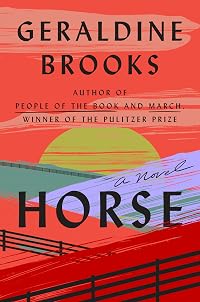
Horse
by Geraldine Brooks
On This Page
Description
"A discarded painting in a junk pile, a skeleton in an attic, and the greatest racehorse in American history: from these strands, a Pulitzer Prize winner braids a sweeping story of spirit, obsession, and injustice across American history Kentucky, 1850. Jarrett, an enslaved groom, and a bay foal forge a bond of understanding that will carry the horse to record-setting victories across the South. As the nation erupts in civil war, an itinerant young artist who has made his name painting the show more racehorse takes up arms for the Union. On a perilous night, he reunites with the stallion and his groom, very far from the glamor of any racetrack. New York City, 1954. Martha Jackson, a gallery owner celebrated for taking risks on edgy contemporary painters, becomes obsessed with a 19th equestrian oil painting of mysterious provenance. Washington, DC, 2019. Jess, a Smithsonian scientist from Australia, and Theo, a Nigerian-American art historian, find themselves unexpectedly drawn to one another through their shared interest in the horse - one studying the stallion's bones for clues to his power and endurance, the other uncovering the lost history of the unsung Black horsemen who were critical to his racing success. Based on the remarkable true story of the record-breaking thoroughbred, Lexington, who became America's greatest stud sire, Horse is a gripping, multi-layered reckoning with the legacy of enslavement and racism in America"-- show lessTags
Recommendations
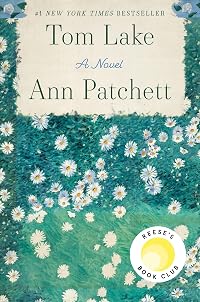
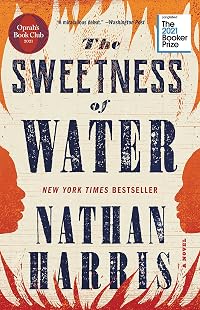
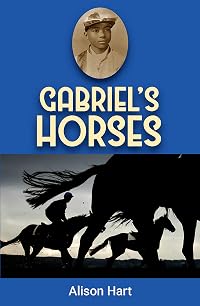
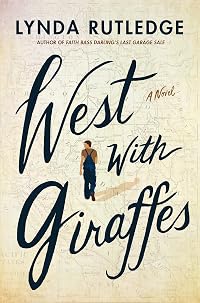





Member Recommendations
Member Reviews
CW: slavery, broken family, unkind/abusive treatment of animals
In Horse, Geraldine Brooks weaves together across time a group of narratives focused on, no surprise, a Horse—a famous pre-Civil War racehorse. There's the horse's origin story in set in the south. He's raised by Harry and Jarret, a Black freeman and his enslaved son. In the present day in the Smithsonian, the articulated skeleton of this very horse is discovered in an attic, and Jess, a curator, along with a bio-movement researcher agree to begin a project together based on this skeleton. Meanwhile, Theo, a Black art history grad student in DC finds an aged, discarded painting of a horse, which leads him to other horse paintings from the Civil War era and to a possible show more new dissertation topic.
As always, Brooks' writing is lovely: straightforward enough not to interfere with the narrative, but still adding moments of lexical/syntactical frisson. All of the narratives Brooks is working with are compelling, but to be utterly honest, the strand about Jarret, the young slave, and the horse was absolutely heart-breaking. Reading those chapters was so painful that I wound up skimming them and putting my full focus on the more recent threads. Usually, I appreciate a painful read, but this one, centered on a boy who is a piece of property and the horse he loves whole-heartedly was more than I could bear.
Whether or not you're a "horse person," Horse will provide an excellent read, if you're able to hold one of the narrative strands at arm's length.
I received a free electronic review copy of this title from the publisher via NetGalley; the opinions are my own. show less
In Horse, Geraldine Brooks weaves together across time a group of narratives focused on, no surprise, a Horse—a famous pre-Civil War racehorse. There's the horse's origin story in set in the south. He's raised by Harry and Jarret, a Black freeman and his enslaved son. In the present day in the Smithsonian, the articulated skeleton of this very horse is discovered in an attic, and Jess, a curator, along with a bio-movement researcher agree to begin a project together based on this skeleton. Meanwhile, Theo, a Black art history grad student in DC finds an aged, discarded painting of a horse, which leads him to other horse paintings from the Civil War era and to a possible show more new dissertation topic.
As always, Brooks' writing is lovely: straightforward enough not to interfere with the narrative, but still adding moments of lexical/syntactical frisson. All of the narratives Brooks is working with are compelling, but to be utterly honest, the strand about Jarret, the young slave, and the horse was absolutely heart-breaking. Reading those chapters was so painful that I wound up skimming them and putting my full focus on the more recent threads. Usually, I appreciate a painful read, but this one, centered on a boy who is a piece of property and the horse he loves whole-heartedly was more than I could bear.
Whether or not you're a "horse person," Horse will provide an excellent read, if you're able to hold one of the narrative strands at arm's length.
I received a free electronic review copy of this title from the publisher via NetGalley; the opinions are my own. show less
On a recent trip to Barnes & Noble, I spotted this on a Buy 1 Get 1 table. The author's name was familiar, I knew she'd won a Pulitzer for March—a book I've attempted to read more than once but have never gotten very far. I knew that she also wrote nonfiction, even recently publishing a memoir about grieving. (I also thought she wrote poetry, but that's because I'm an idiot who didn't realize that Gwendolyn and Geraldine are NOT the same G Brooks.) But the description mentioned art and the fastest horse in history and I was like, OK, I'll give Geraldine another chance.
This book has everything I love: art, multiple perspectives, non-linear structure, and history mixed with current events. I love a book that feels like we're (me and the show more author) putting together a historical puzzle, like in Happy Land by Dolen Perkins-Valdez. The history of a winning racehorse as the puzzle to solve brought in even more recent interests: the Smithsonian (The Feather Detective) and horses (Pony Confidential, Moo).
Recently, I've avoided the 1800s in America because the books showed the violence; I understand the horror without having to read it in detail (I abandoned The Sweetness of Water at the halfway point and will never go back). This book doesn't gloss over the atrocities enslaved people endured but I am grateful it did not go into great detail. My imagination can fill in the blanks—I do not need even more horrors roaming around the pathways of my brain. Even the 2019 narrative reminded me that we can't escape the atrocities committed by my fellow white folks every single damn day.
Overall, I loved this book and appreciated it even more when I read the author's note at the end describing the real people depicted. I think I need to find more horse books for adults...maybe in my 40s I'll become a horse girl. show less
This book has everything I love: art, multiple perspectives, non-linear structure, and history mixed with current events. I love a book that feels like we're (me and the show more author) putting together a historical puzzle, like in Happy Land by Dolen Perkins-Valdez. The history of a winning racehorse as the puzzle to solve brought in even more recent interests: the Smithsonian (The Feather Detective) and horses (Pony Confidential, Moo).
Recently, I've avoided the 1800s in America because the books showed the violence; I understand the horror without having to read it in detail (I abandoned The Sweetness of Water at the halfway point and will never go back). This book doesn't gloss over the atrocities enslaved people endured but I am grateful it did not go into great detail. My imagination can fill in the blanks—I do not need even more horrors roaming around the pathways of my brain. Even the 2019 narrative reminded me that we can't escape the atrocities committed by my fellow white folks every single damn day.
Overall, I loved this book and appreciated it even more when I read the author's note at the end describing the real people depicted. I think I need to find more horse books for adults...maybe in my 40s I'll become a horse girl. show less
Page by page, just a book you cannot put down!! Incredible writing, providing the flavor of the times with so many detailed examples. I was really in tears at the end because this book provides history within a fictional story but in the end we are faced with our continuing flaws as a society and that made me wonder if this, too, would be a banned book in certain states.
Horse - Geraldine Brooks
5 stars
Not another split timeline historical book. The thought was making me feel tired. I’m not interested in horses and I find horse racing somewhat abusive. However, I’ve enjoyed 7 of this author’s previous books. I trusted her to make it work. She did. This may be the best book I’ve read all year.
I listened to some author interviews. In one of them, Brooks described the timelines of this book as being ‘braided’. That says it perfectly. I loved People of the Book in which the timelines connected like linked short stories. In this book, the stories complimented each other. They were entwined in a way that was balanced, each story supporting the others. The pages turned easily. I will admit to show more skimming the pages of the actual horse races, but the horse, Darcy/Lexington, was an endearing character. With a book like this I usually prefer the historical timeline. However, I was completely hooked by the backdoor look at the research areas of the Smithsonian Institution in the contemporary plot of this book. (I love the National Mall and its museums. This book made me want to schedule a visit.)
I did enjoy the historical trivia of this book. (How did the articulated skeleton of this famous horse end up collecting dust in a Smithsonian attic ?!?) But, I realized right away that historical trivia and even horse racing were not the most important aspects of this story. This is a book about race, racial discrimination, racial atrocity, racially impelled violence. I felt Brooks did something very well in telling the stories as she did. She showed that there was really no ‘split’ between the the antebellum, slave holding 19th century story and the 21st century story. The timelines are braided and so are the scars. If there was only one book that I could recommend for book club discussion this year, it would be this book.
I started with the audiobook and there was absolutely nothing wrong with the multivoiced production. I switched to text less than a third of the way through the book. It deserved my full attention and occasional rereading of key points. show less
5 stars
Not another split timeline historical book. The thought was making me feel tired. I’m not interested in horses and I find horse racing somewhat abusive. However, I’ve enjoyed 7 of this author’s previous books. I trusted her to make it work. She did. This may be the best book I’ve read all year.
I listened to some author interviews. In one of them, Brooks described the timelines of this book as being ‘braided’. That says it perfectly. I loved People of the Book in which the timelines connected like linked short stories. In this book, the stories complimented each other. They were entwined in a way that was balanced, each story supporting the others. The pages turned easily. I will admit to show more skimming the pages of the actual horse races, but the horse, Darcy/Lexington, was an endearing character. With a book like this I usually prefer the historical timeline. However, I was completely hooked by the backdoor look at the research areas of the Smithsonian Institution in the contemporary plot of this book. (I love the National Mall and its museums. This book made me want to schedule a visit.)
I did enjoy the historical trivia of this book. (How did the articulated skeleton of this famous horse end up collecting dust in a Smithsonian attic ?!?) But, I realized right away that historical trivia and even horse racing were not the most important aspects of this story. This is a book about race, racial discrimination, racial atrocity, racially impelled violence. I felt Brooks did something very well in telling the stories as she did. She showed that there was really no ‘split’ between the the antebellum, slave holding 19th century story and the 21st century story. The timelines are braided and so are the scars. If there was only one book that I could recommend for book club discussion this year, it would be this book.
I started with the audiobook and there was absolutely nothing wrong with the multivoiced production. I switched to text less than a third of the way through the book. It deserved my full attention and occasional rereading of key points. show less
In the 1800s in Kentucky, Jarret lives with his horse trainer father, Harry Lewis, on Warfield's horse farm. All three are excited about a new foal, Darley (later renamed Lexington), who shows great promise. Jarret, who is enslaved, trains him to victory, but Warfield sells the horse out from under Harry - and sells Jarret with him, to Ten Broeck in Louisiana.
In the near-present, white Australian Jess works for the Smithsonian. She finds a horse skeleton in an attic for an English researcher, and their quest intersects with that of Theo, a Black PhD candidate at Georgetown, who has found a painting of a horse in his neighbor's junk pile.
In New York in the 1950s, Martha Jackson, who collects and sells contemporary art, buys a painting show more from her housecleaner, Annie: the painting, of famous racehorse Lexington, has been in Annie's family for generations.
These three stories, and more (including the diary of the painter), are woven together over the years, through the Civil War and up to the present, where racism again has tragic results for one of the characters.
Quotes (large-print edition)
Life did seem to him to work like that: contrariwise. (Jarret, 26)
"My way of thinking, a good horse has no color. It's what's inside that's worth the fret." (Harry Lewis, 30)
How could we be so creative and so destructive at the same time? (Jess, 69)
"I might as well be dead, if this"--he lifted both hands, palms upward, in a wide, all-encompassing shrug--"if this is how living gone be." (Jarret to Mary Barr Clay, 172)
"That is the world as it is. If you do not like it, join me in attempting to change it. Otherwise, keep your peace." (Cassius Clay to Mary Barr, 183)
Even as his world contracted and pressed in upon them, in equal measure his heart expanded. (Jarret, 233)
Any notions he'd had about natural inferiority had long ago been rasped away by the evidence of his own experience. (Gilpatrick, 405)
"You chose a side, you also chose an enemy." (Jarret, 431)
As I began to research Lexington's life, it became clear to me that this novel could not merely be about a racehorse; it would also need to be about race. (Afterword, 551) show less
In the near-present, white Australian Jess works for the Smithsonian. She finds a horse skeleton in an attic for an English researcher, and their quest intersects with that of Theo, a Black PhD candidate at Georgetown, who has found a painting of a horse in his neighbor's junk pile.
In New York in the 1950s, Martha Jackson, who collects and sells contemporary art, buys a painting show more from her housecleaner, Annie: the painting, of famous racehorse Lexington, has been in Annie's family for generations.
These three stories, and more (including the diary of the painter), are woven together over the years, through the Civil War and up to the present, where racism again has tragic results for one of the characters.
Quotes (large-print edition)
Life did seem to him to work like that: contrariwise. (Jarret, 26)
"My way of thinking, a good horse has no color. It's what's inside that's worth the fret." (Harry Lewis, 30)
How could we be so creative and so destructive at the same time? (Jess, 69)
"I might as well be dead, if this"--he lifted both hands, palms upward, in a wide, all-encompassing shrug--"if this is how living gone be." (Jarret to Mary Barr Clay, 172)
"That is the world as it is. If you do not like it, join me in attempting to change it. Otherwise, keep your peace." (Cassius Clay to Mary Barr, 183)
Even as his world contracted and pressed in upon them, in equal measure his heart expanded. (Jarret, 233)
Any notions he'd had about natural inferiority had long ago been rasped away by the evidence of his own experience. (Gilpatrick, 405)
"You chose a side, you also chose an enemy." (Jarret, 431)
As I began to research Lexington's life, it became clear to me that this novel could not merely be about a racehorse; it would also need to be about race. (Afterword, 551) show less
“...a racehorse is a mirror, and a man sees his own reflection there. He wants to think he’s from the best breeding. He wants to think himself brave. Can he win against all comers? And if not, does he have self-mastery to take a loss, stay cool in defeat, and try again undaunted? Those are the great qualities of a great racehorse and a great gentleman.”
“Only horses were honest, in the end.”
“You have to know that bigots are unwittingly handing you an edge. By thinking you're lesser than they are, they underestimate you. Lean on that. Learn to use it, and you'll get the upper hand.”
This is a story about Lexington, the greatest American racehorse. He was also a racehorse that very few people know about. The novel follows show more several different timelines from 1850 to 2019. Lexington’s beginnings as a promising colt, with a fine bloodline, being groomed to be a fierce competitor. The story is also about slaves and ex-slaves who worked as horse trainers and were incredibly gifted. Another historical fact, that has been lost. A very ambitious book, meticulously researched and beautifully written. Brooks is a horse lover and you can see it on every page. show less
“Only horses were honest, in the end.”
“You have to know that bigots are unwittingly handing you an edge. By thinking you're lesser than they are, they underestimate you. Lean on that. Learn to use it, and you'll get the upper hand.”
This is a story about Lexington, the greatest American racehorse. He was also a racehorse that very few people know about. The novel follows show more several different timelines from 1850 to 2019. Lexington’s beginnings as a promising colt, with a fine bloodline, being groomed to be a fierce competitor. The story is also about slaves and ex-slaves who worked as horse trainers and were incredibly gifted. Another historical fact, that has been lost. A very ambitious book, meticulously researched and beautifully written. Brooks is a horse lover and you can see it on every page. show less
Geraldine Brooks has done it again: written a transcendent book that is so much more than the sum of its parts. Brooks is a must-read author for me, but Horse was made even more special by my teenage racehorse madness years. I read every book I could get my hands on about Thoroughbred racing and its stars. My mother indulged my obsession: when she went to Kentucky on a genealogy trip, I got to overdose on racehorses, meeting greats like Citation and actually seeing the grave of Lexington, the horse that Brooks centered her book upon.
In Brooks' Afterword, she says, "As I began to research Lexington's life, it became clear to me that this novel could not merely be about a racehorse, it would also need to be about race," and she does this show more in masterful fashion. Whether it's watching the years pass and Lexington's groom being known as one owner's Jarret after another to-- finally-- having his own name untainted by slavery (Jarret Lewis) or watching the unfolding relationship between the interracial couple Jess and Theo in 2019 and the differences in their experiences and outlooks on the world, the reader becomes totally engaged in the characters' lives.
Horse is so much more than a fascinating animal story. It is also a powerful story of art, science, and-- above all-- race. It is a story to take in deep. It is a story to remember show less
In Brooks' Afterword, she says, "As I began to research Lexington's life, it became clear to me that this novel could not merely be about a racehorse, it would also need to be about race," and she does this show more in masterful fashion. Whether it's watching the years pass and Lexington's groom being known as one owner's Jarret after another to-- finally-- having his own name untainted by slavery (Jarret Lewis) or watching the unfolding relationship between the interracial couple Jess and Theo in 2019 and the differences in their experiences and outlooks on the world, the reader becomes totally engaged in the characters' lives.
Horse is so much more than a fascinating animal story. It is also a powerful story of art, science, and-- above all-- race. It is a story to take in deep. It is a story to remember show less
Members
- Recently Added By
Lists

Recommend the 20 best books you've read in the last five years
2,168 works; 608 members

Top Five Books of 2022
736 works; 272 members

Books Read in 2023
5,638 works; 147 members

2022 Christmas Gifts
60 works; 13 members

Five star books
1,767 works; 110 members

Books Read in 2022
5,226 works; 115 members

Fiction: Historical
288 works; 3 members

Still to Read 2023
5 works; 1 member

Library List - Pulitzer Adjacent
40 works; 1 member

Books Read in 2025
4,128 works; 98 members

List of Removed Books from Nimitz Library
353 works; 1 member

Books Read in 2024
4,727 works; 128 members

Top Five Books of 2024
795 works; 264 members

Queen Camilla's Reading Room
65 works; 6 members
Top Five Books of 2023
767 works; 317 members

2023 Notable Books for Adults
26 works; 2 members
Literary Hub Summer 2022 Reading List
19 works; 1 member

NTS Book Channel
316 works; 1 member
Talk Discussions
Past Discussions
Group Read: Horse by Geraldine Brooks in 75 Books Challenge for 2023 (February 2023)
Author Information

15+ Works 39,625 Members
Geraldine Brooks is the author of two acclaimed works of nonfiction, "Nine Parts of Desire" and "Foreign Correspondence." A former war correspondent, her writing has appeared in The Wall Street Journal, The New York Times, and The Washington Post. (Publisher Provided) Geraldine Brooks was born in Sydney, Australia on September 14, 1955. She show more attended Bethlehem College Ashfield and the University of Sydney. She worked as a feature writer with a special interest in environmental issues for The Sydney Morning Herald for three years. In 1982, she won the Greg Shackleton Australian News Correspondents scholarship to the journalism master's program at Columbia University in New York City. She later worked for The Wall Street Journal, where she covered the Middle East, Africa, and the Balkans. She has written both fiction and non-fiction books including Year of Wonders, Nine Parts of Desire, and The Secret Chord. She has won several awards including the Nita Kibble Literary Award for Foreign Correspondence, the Pulitzer Prize in fiction in 2006 for March, the New England Book Award for Fiction and the Christianity Today Book Award for Caleb's Crossing, and the Australian Book of the Year Award and the Australian Literary Fiction Award in 2008 for People of the Book. (Bowker Author Biography) show less
Some Editions
Awards and Honors
Awards
Distinctions
Notable Lists
Common Knowledge
- Canonical title
- Horse
- Original publication date
- 2022
- People/Characters
- Jess; Theo; Harry Lewis; Jarret Lewis; Thomas J. Scott; Richard Ten Broeck (show all 10); Mary Barr Clay; Cassius Clay; Martha Jackson; Lexington
- Important places
- Washington, D.C., USA; Natchez, Mississippi, USA; New Orleans, Louisiana, USA; Kentucky, USA; New York, New York, USA
- Important events
- Slavery; American Civil War
- Epigraph
- He was as far superior to all horses that have gone before him as the vertical blaze of a tropical sun is superior to the faint and scarcely distinguishable glimmer of the most distant star.
Joseph Cairn Simpson, T... (show all)urf, Field and Farm
After him there were merely other horses.
Charles E. Trevathan, The American Thoroughbred - Dedication
- For Tony
It will be the past
and we'll live there together
Patrick Philips, Heaven - First words
- No. Nup. That wouldn't do.
- Quotations
- In Washington, the seasons slammed her— summer's soup-pot heat, autumn's extravagant arboreal fireworks, winter's iciness, spring's intoxicating explosion of bloom, birdsong, and fragrance.
Anyway, he liked Lior, a blunt Israeli—was it stereotyping to wonder if “blunt Israeli” was a redundancy? - Last words
- (Click to show. Warning: May contain spoilers.)All around him, a herd of tiny Dawn Horses gamboled at his feet.
- Blurbers
- Patchett, Ann
Classifications
- Genres
- Historical Fiction, General Fiction, Fiction and Literature
- DDC/MDS
- 823.914 — Literature & rhetoric English & Old English literatures English fiction 1900- 1901-1999 1945-1999
- LCC
- PR9619.3 .B7153 .H67 — Language and Literature English English Literature English literature: Provincial, local, etc.
- BISAC
Statistics
- Members
- 2,721
- Popularity
- 6,831
- Reviews
- 138
- Rating
- (4.23)
- Languages
- English, German, Italian
- Media
- Paper, Audiobook, Ebook
- ISBNs
- 21
- ASINs
- 5