On This Page
Description
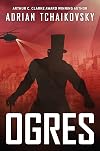
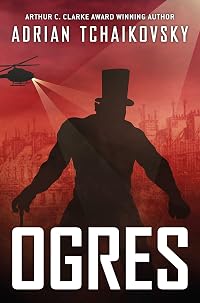
Ogres are bigger than you. Ogres are stronger than you. Ogres rule the world. It's always idyllic in the village until the landlord comes to call. Because the landlord is an Ogre. And Ogres rule the world, with their size and strength and appetites. It's always been that way. It's the natural order of the world. And they only eat people sometimes. But when the headman's son, Torquell, dares lift his hand against the landlord's son, he sets himself on a path to learn the terrible truth about show more the Ogres, and about the dark sciences that ensured their rule. show lessTags
Recommendations









Member Reviews
Torquell lives in a world that looks beautiful, but under the surface is quite grim. He's a young man, an ordinary human, the son of the headman of his village, and will almost certainly be the next headman himself.
The headman's responsibility is to keep order in the village, keep things running smoothly, and above all, to make sure the village makes a good impression and can pat the required taxes when the Landlord comes to visit. The required taxe are whatever the Landlord says they are.
The Landlord is an Ogre. Bigger, stronger, more powerful, reactive emotions. Those appetites include eating meat, which just makes ordinary humans sick. Ogres rule the world, and humans serve them. Torquell, though, there's a little bit of rebellion in show more him. He's a bit of a lovable rogue, who pulls pranks and commits minor acts of vandalism--most of which are in the interest of righting some wrong that can't or won't be set right by the ordinary system of law and order. One day, Torquell's spirit of justice and rebellion collides with the latest visit of the Landlord. This time, the Landlord has brought his son and heir
I don't want to say that the Landlord is a nice guy. He's not, at all. He is, however, a practical man, who does not have his son's sheer, unmotivated meanness. Torquell's meeting with Sir Peter's son, Gerald, is a disaster for both of them.
It's also the start of what the (second person, present tense) narrator tells us is Torquell's hero's journey. Torquell was never much interested in the book learning required of him as the headman's heir, but that's a matter of interest, not ability. He's smart, tough, and he really tries to do the right thing. In a twisted sort of way, things tend to work out for him. Yes, he becomes an outlaw, but he survives and learns new skills. Yes, he's caught by a bounty hunter, but that ultimately leads to him becoming part of the household of a very different ogre, where he is slowly prodded to become interested in book learning and big questions.
Big questions like, where did the ogres come from. The answer is fascinating, and horrifying, and, it turns out, this is actually the wrong question. When he figures out the right question, it's the start of Torquell becoming the surprisingly effective leader of a rebellion against the ogres.
But does he have the ability and the character to bring it to a successful conclusion?
This doesn't sound like all that grim a story, does it? For most of the novella, the tone doesn't sound grim. I could point you at books of overall grim tone that don't include the nasty features of this one. The tone doesn't match, for me, the fact that there are two prominent instances of cannibalism, ogres eating humans, and it's indicated to be a fairly common practice. And no, the reader isn't supposed to approve of or even accept it. It's one of the clues to what the world run by ogres is really like.
There's the peaceful, beautiful, bucolic world of the villages, and pre-OSHA, pre-union factories that exist that way because the ogres explicitly want them to.
I'm not sure I'm articulating well what creeped me out about this novella. There's also, of course, the fact that I don't like stories that, um, how to put this without spoilers. I don't like stories where the protagonist's character arc winds up where this one winds up.
It's well-written. It's just not written for me. And it doesn't have the characteristics that cause me to regard some other stories I don't personally like as worthy Hugo finalists. There's just none of that added value that makes me respect the story despite not enjoying it.
It's not even the political subtext, which is there, though not overly blatantly. On that basis, it actually winds up making a point I completely agree with. Nevertheless, the overall effect for me is just--icky.
I received this story as part of the 2023 Hugo Voters Packet. show less
The headman's responsibility is to keep order in the village, keep things running smoothly, and above all, to make sure the village makes a good impression and can pat the required taxes when the Landlord comes to visit. The required taxe are whatever the Landlord says they are.
The Landlord is an Ogre. Bigger, stronger, more powerful, reactive emotions. Those appetites include eating meat, which just makes ordinary humans sick. Ogres rule the world, and humans serve them. Torquell, though, there's a little bit of rebellion in show more him. He's a bit of a lovable rogue, who pulls pranks and commits minor acts of vandalism--most of which are in the interest of righting some wrong that can't or won't be set right by the ordinary system of law and order. One day, Torquell's spirit of justice and rebellion collides with the latest visit of the Landlord. This time, the Landlord has brought his son and heir
I don't want to say that the Landlord is a nice guy. He's not, at all. He is, however, a practical man, who does not have his son's sheer, unmotivated meanness. Torquell's meeting with Sir Peter's son, Gerald, is a disaster for both of them.
It's also the start of what the (second person, present tense) narrator tells us is Torquell's hero's journey. Torquell was never much interested in the book learning required of him as the headman's heir, but that's a matter of interest, not ability. He's smart, tough, and he really tries to do the right thing. In a twisted sort of way, things tend to work out for him. Yes, he becomes an outlaw, but he survives and learns new skills. Yes, he's caught by a bounty hunter, but that ultimately leads to him becoming part of the household of a very different ogre, where he is slowly prodded to become interested in book learning and big questions.
Big questions like, where did the ogres come from. The answer is fascinating, and horrifying, and, it turns out, this is actually the wrong question. When he figures out the right question, it's the start of Torquell becoming the surprisingly effective leader of a rebellion against the ogres.
But does he have the ability and the character to bring it to a successful conclusion?
This doesn't sound like all that grim a story, does it? For most of the novella, the tone doesn't sound grim. I could point you at books of overall grim tone that don't include the nasty features of this one. The tone doesn't match, for me, the fact that there are two prominent instances of cannibalism, ogres eating humans, and it's indicated to be a fairly common practice. And no, the reader isn't supposed to approve of or even accept it. It's one of the clues to what the world run by ogres is really like.
There's the peaceful, beautiful, bucolic world of the villages, and pre-OSHA, pre-union factories that exist that way because the ogres explicitly want them to.
I'm not sure I'm articulating well what creeped me out about this novella. There's also, of course, the fact that I don't like stories that, um, how to put this without spoilers. I don't like stories where the protagonist's character arc winds up where this one winds up.
It's well-written. It's just not written for me. And it doesn't have the characteristics that cause me to regard some other stories I don't personally like as worthy Hugo finalists. There's just none of that added value that makes me respect the story despite not enjoying it.
It's not even the political subtext, which is there, though not overly blatantly. On that basis, it actually winds up making a point I completely agree with. Nevertheless, the overall effect for me is just--icky.
I received this story as part of the 2023 Hugo Voters Packet. show less
Fair warning. Ogres is not a fantasy novella. Adrian Tchaikovsky doesn’t do fantasy. He does science fiction based on genetics and biotechnology. In this case, a future dystopia is populated by hulking beasts that their smaller slaves call ogres. Trouble starts when one of the slaves kills the plantation owner’s son. Think Nat Turner and you won’t go far wrong. Tchaikovsky is not shy about experimenting with style. Here, he uses a second-person point of view most of the time. It is a device that encourages you to reevaluate your assumptions about characters. 4 stars.
Told in second person to the protagonist who rebels against the Ogres, this is not a happy end of oppression yarn but a, thankfully not too prolonged, snark.
I always wondered what a book written in the 2nd person would sound like. Turns out, if written well, it can be very immersive.
It's a another good novella from Tchaikovsky.
I didn't notice anything below the surface, so you may not ponder upon it for too long after finishing it. Nevertheless, it does get the 5 stars because it did multiple things right: good pace, good legth, plays with perspectives(Tchaikovsky does this much better in later novellas, but it's still good), uses the 2nd person and the themes of class conflict and revolution are well developed. For some reason, the feeling of revolt comes across really well.
Also, bonus points for the narrator - she did an excellent job.
It's a another good novella from Tchaikovsky.
I didn't notice anything below the surface, so you may not ponder upon it for too long after finishing it. Nevertheless, it does get the 5 stars because it did multiple things right: good pace, good legth, plays with perspectives(Tchaikovsky does this much better in later novellas, but it's still good), uses the 2nd person and the themes of class conflict and revolution are well developed. For some reason, the feeling of revolt comes across really well.
Also, bonus points for the narrator - she did an excellent job.
I received this book from the publisher in exchange for an honest review.
Torquell lives in the land of Ogres. Oh, some may call them Masters, God’s Chosen, or Landlords, but there is no doubt that they are monsters. They come into the human villages, take their best, and leave the rest for the people to barely survive on. It’s just the way life is. Ogres rule and humans serve.
That is until one-day Torquell turns the natural order upside down. Soon he is on the run. Dodging Ogre hunters, human servants, and giant dogs, Torquell has to answer an important question: Which is more important, survival or the truth?
This novella by Adrian Tchaikovsky is a fast-paced, engaging look at a world that is strange but familiar. "Ogres" seeks show more to look at the nature of being human. Here, specifically, the main focus is on classism. Is the upper class naturally better? Do the working class deserve what they get? What does a class revolution look like?
I loved the twists and the turns the novella takes. Yes, it is short, but every chapter has a moment that catches you off guard. Yet, the story does not rely on twists alone. The world-building is great, the prose is beautiful, and the characters are interesting.
Though be warned, the entire story is told in the second person. There is an in-universe reason why that is, but at first, it can be a little jarring. I found it added to the story overall, however, but I recognize there are readers that shy away from stories told in such a way.
If you can get used to that narration style, then you will find a great novella filled with twists and mystery. The social commentary is insightful and thought-provoking without feeling preachy or ham-fisted. A great weekend read or an all-nighter. show less
Torquell lives in the land of Ogres. Oh, some may call them Masters, God’s Chosen, or Landlords, but there is no doubt that they are monsters. They come into the human villages, take their best, and leave the rest for the people to barely survive on. It’s just the way life is. Ogres rule and humans serve.
That is until one-day Torquell turns the natural order upside down. Soon he is on the run. Dodging Ogre hunters, human servants, and giant dogs, Torquell has to answer an important question: Which is more important, survival or the truth?
This novella by Adrian Tchaikovsky is a fast-paced, engaging look at a world that is strange but familiar. "Ogres" seeks show more to look at the nature of being human. Here, specifically, the main focus is on classism. Is the upper class naturally better? Do the working class deserve what they get? What does a class revolution look like?
I loved the twists and the turns the novella takes. Yes, it is short, but every chapter has a moment that catches you off guard. Yet, the story does not rely on twists alone. The world-building is great, the prose is beautiful, and the characters are interesting.
Though be warned, the entire story is told in the second person. There is an in-universe reason why that is, but at first, it can be a little jarring. I found it added to the story overall, however, but I recognize there are readers that shy away from stories told in such a way.
If you can get used to that narration style, then you will find a great novella filled with twists and mystery. The social commentary is insightful and thought-provoking without feeling preachy or ham-fisted. A great weekend read or an all-nighter. show less
I’ve read only a handful of books by Adrian Tchaikovsky so far, but enough to expect a change in style and narrative perspective in each new work I pick up, and Ogres is no different, indeed. And while it would be difficult to pin this story down to a specific genre, there is the right amount or sheer weirdness in it that I feel it would be appropriate to classify it in one of its own.
Ogres starts like a fantasy tale, both in descriptions and mood: Torquell is the son of the village headman, and is what’s usually termed as a ‘lovable rogue’; he’s known for his scarce attitude toward learning or following in his father’s footsteps and even more for his reckless pranks, which are more often than not viewed with indulgent show more annoyance and the hope that he might one day grow into his expected role. Even his forays into the forest visiting the outlaws led by a certain Roben (here the tongue-in-cheek authorial divertissement is quite plain) is viewed as nothing more than the kind of youthful enthusiasm Torquell will one day outgrow. Hopefully.
But such an idyllic setting is marred as soon as we learn about the ogres: the real rulers of the world, the Masters everyone must obey and pay homage - and taxes - to. Ogres are bigger and meaner than actual humans (or monkeys, as they are scornfully called by their masters), their rule of the land a divinely bestowed right, their powers and appetites larger than life - sometimes extending to human flesh. The arrival of Sir Peter, the village landlord, with his son Gerald, is the spark that will ignite once again Torquell’s fiery temper, leading him to an act that will forever change his life and propel him on a journey of discovery and change.
It’s with the appearance of the Ogres that the questions about this world start popping up: what, until that point, looked like a rural fantasy setting, moves toward a more modern territory with the appearance of cars, teeming cities and clearly advanced technology, so that I wondered about the Ogres’ nature and the true narrative placement of the story. Should it be considered a parallel, dystopian reality, or a SF story in which the Ogres are nothing more than aliens ruling the enslaved humans? Adrian Tchaikovsky dances around this issue for a long time, offering small details that manage to fill a little - but never completely - the picture: that is, until Torquell himself has gathered all the clues and finally arrives at the dreadful answer.
Torquell’s evolution, as a person, is the backbone of this novella, which feels quite tightly packed with information despite its brevity: he goes from happy-go-lucky, carefree youth to reluctant hero to charismatic leader, embracing the knowledge and thirst for learning that he had always spurned in the past, the process turning from a small pebble to an unstoppable avalanche and mirroring his rise as a leader with a growing following that threatens the status quo. His journey allows the reader a closer look at this world, one where the huge social divide between the Ogres and their human subject is borne out of exploitation and fear, a world where failure to perform one’s assigned tasks results in savage mistreatment at best, or ends on an ogre’s table at worst. There are passages in which Torquell witnesses teeming slums, filled with hopeless people being worked to death, which might remind the readers of some Dickensian description of the industrial revolution, and others in which ogres fight senseless wars using humans as chess pieces on a board, their equally senseless deaths being nothing more than a game played by their masters.
All these revelations, everything that Torquell witnesses and learns, create an expanding picture that moves, slowly but surely, toward the final resolution, one that’s reached forging through a constant, oppressive sense of doom that is not lifted even when our “hero” amasses success after success, threatening the Ogres’ supremacy. If there is any glimmer of hope visible at the end of this story, it’s a very remote one, and heavily dependent on our nature as people and on the troublesome realization that it might ultimately drive us to the extremes - and their consequences - depicted in this story.
My last, but by no means least, consideration about Ogres concerns the author’s use of the second person throughout the narrative - an unusual method, granted, but one which for me confers a feel of immediacy to the story that made it more real, more tangible: and in the end, where we learn who is addressing Torquell with that constant “you”, we are hit with the final, most unexpected twist in the whole story, one that would be a huge understatement to call ’surprising’. And one that proved to be the proverbial “cherry on top” of an irresistible narrative “cake”. Superbly done indeed… show less
Ogres starts like a fantasy tale, both in descriptions and mood: Torquell is the son of the village headman, and is what’s usually termed as a ‘lovable rogue’; he’s known for his scarce attitude toward learning or following in his father’s footsteps and even more for his reckless pranks, which are more often than not viewed with indulgent show more annoyance and the hope that he might one day grow into his expected role. Even his forays into the forest visiting the outlaws led by a certain Roben (here the tongue-in-cheek authorial divertissement is quite plain) is viewed as nothing more than the kind of youthful enthusiasm Torquell will one day outgrow. Hopefully.
But such an idyllic setting is marred as soon as we learn about the ogres: the real rulers of the world, the Masters everyone must obey and pay homage - and taxes - to. Ogres are bigger and meaner than actual humans (or monkeys, as they are scornfully called by their masters), their rule of the land a divinely bestowed right, their powers and appetites larger than life - sometimes extending to human flesh. The arrival of Sir Peter, the village landlord, with his son Gerald, is the spark that will ignite once again Torquell’s fiery temper, leading him to an act that will forever change his life and propel him on a journey of discovery and change.
It’s with the appearance of the Ogres that the questions about this world start popping up: what, until that point, looked like a rural fantasy setting, moves toward a more modern territory with the appearance of cars, teeming cities and clearly advanced technology, so that I wondered about the Ogres’ nature and the true narrative placement of the story. Should it be considered a parallel, dystopian reality, or a SF story in which the Ogres are nothing more than aliens ruling the enslaved humans? Adrian Tchaikovsky dances around this issue for a long time, offering small details that manage to fill a little - but never completely - the picture: that is, until Torquell himself has gathered all the clues and finally arrives at the dreadful answer.
Torquell’s evolution, as a person, is the backbone of this novella, which feels quite tightly packed with information despite its brevity: he goes from happy-go-lucky, carefree youth to reluctant hero to charismatic leader, embracing the knowledge and thirst for learning that he had always spurned in the past, the process turning from a small pebble to an unstoppable avalanche and mirroring his rise as a leader with a growing following that threatens the status quo. His journey allows the reader a closer look at this world, one where the huge social divide between the Ogres and their human subject is borne out of exploitation and fear, a world where failure to perform one’s assigned tasks results in savage mistreatment at best, or ends on an ogre’s table at worst. There are passages in which Torquell witnesses teeming slums, filled with hopeless people being worked to death, which might remind the readers of some Dickensian description of the industrial revolution, and others in which ogres fight senseless wars using humans as chess pieces on a board, their equally senseless deaths being nothing more than a game played by their masters.
All these revelations, everything that Torquell witnesses and learns, create an expanding picture that moves, slowly but surely, toward the final resolution, one that’s reached forging through a constant, oppressive sense of doom that is not lifted even when our “hero” amasses success after success, threatening the Ogres’ supremacy. If there is any glimmer of hope visible at the end of this story, it’s a very remote one, and heavily dependent on our nature as people and on the troublesome realization that it might ultimately drive us to the extremes - and their consequences - depicted in this story.
My last, but by no means least, consideration about Ogres concerns the author’s use of the second person throughout the narrative - an unusual method, granted, but one which for me confers a feel of immediacy to the story that made it more real, more tangible: and in the end, where we learn who is addressing Torquell with that constant “you”, we are hit with the final, most unexpected twist in the whole story, one that would be a huge understatement to call ’surprising’. And one that proved to be the proverbial “cherry on top” of an irresistible narrative “cake”. Superbly done indeed… show less
So Adrian Tchaikovsky has gifted us with a novel about extreme income inequality and power inequality and it is called Ogres. You need to read it immediately.
Written almost like a fairy tale, it follows the strapping young Torquell’s rise from village headman’s son to hero of a revolution against the powers that be. His sense of justice can not tolerate a structure where the Ogres, the extreme 1% who own everything, even the lives of all humans, can do whatever they like on a whim without consequences, no matter who it hurts.
Ogres are genetically engineered giant humans who have taken over the world, 9 or 10-foot tall people who are super strong and able to do whatever humans can presently do and more. Humans have been a genetically show more engineered in an attempt to stave off the problems of overpopulation and climate change to be docile, not able to eat meat, and to have a hard time reproducing. They are the size humans are now.
The story is mostly about Torquell’s hero’s journey, with quite a bit of Charles Dickens thrown in. Tchaikovsky is quirky like that. It feels like a mashup of Science Fiction, Dickens and fairy tales and it works in the same way all of them do. And what it mostly is is righteous. It’s the righteous David going after Goliath. It’s the righteous striking worker going after the corporate master. It’s the righteous peasant throwing off their feudal Lord. It’s the righteous Ally storming the beaches at Normandy to take on the Nazis.
And there’s a truly amazing twist ending, too. show less
Written almost like a fairy tale, it follows the strapping young Torquell’s rise from village headman’s son to hero of a revolution against the powers that be. His sense of justice can not tolerate a structure where the Ogres, the extreme 1% who own everything, even the lives of all humans, can do whatever they like on a whim without consequences, no matter who it hurts.
Ogres are genetically engineered giant humans who have taken over the world, 9 or 10-foot tall people who are super strong and able to do whatever humans can presently do and more. Humans have been a genetically show more engineered in an attempt to stave off the problems of overpopulation and climate change to be docile, not able to eat meat, and to have a hard time reproducing. They are the size humans are now.
The story is mostly about Torquell’s hero’s journey, with quite a bit of Charles Dickens thrown in. Tchaikovsky is quirky like that. It feels like a mashup of Science Fiction, Dickens and fairy tales and it works in the same way all of them do. And what it mostly is is righteous. It’s the righteous David going after Goliath. It’s the righteous striking worker going after the corporate master. It’s the righteous peasant throwing off their feudal Lord. It’s the righteous Ally storming the beaches at Normandy to take on the Nazis.
And there’s a truly amazing twist ending, too. show less
Members
- Recently Added By
Lists

Best Dystopias
280 works; 277 members

2023 Hugo Awards -- Eligible Works -- Novellas
32 works; 8 members

Books Read in 2023
5,547 works; 145 members

Library Fantasy/Science Fiction
159 works; 2 members

Books Read in 2025
4,091 works; 97 members
Author Information

133+ Works 27,885 Members
Adrian Tchaikovsky is a British fantasy and science fiction author, born on June 14, 1972 in Woodhall Spa, Lincolnshire. He studied Zoology and Psychology at the University of Reading. His career focus changed to law and has worked as a Legal Executive in both Reading and Leeds. He's the author of the Shadows of the Apt series, and his standalone show more novel Children of Time is the winner of the 2016 Arthur C Clarke Award for Best Science Fiction Novel. (Bowker Author Biography) show less
Awards and Honors
Awards
Distinctions
Series

Work Relationships
Is contained in
Common Knowledge
- Original publication date
- 2022
- First words
- You were always trouble.
- Last words
- (Click to show. Warning: May contain spoilers.)Until the whole world is burning, and all the masters are gone.
Classifications
Statistics
- Members
- 188
- Popularity
- 174,261
- Reviews
- 21
- Rating
- (4.10)
- Languages
- English
- Media
- Paper, Audiobook, Ebook
- ISBNs
- 3
- ASINs
- 3