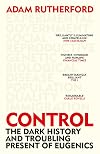
Control: The Dark History and Troubling Present of Eugenics
by Adam Rutherford
On This Page
Description
"How did an obscure academic idea pave the way to the Holocaust within just fifty years? Inspired by Darwin's ideas about evolution, the concept of race purification through eugenics arose in Victorian England and quickly spread to America, where it was embraced by presidents, funded by Gilded Age monopolists, and enshrined into racist American laws that became the ideological cornerstone of the Third Reich. Despite this horrific legacy, eugenics looms large today, suffusing our language and show more culture and echoing uneasily in discussions of modern gene editing techniques. In Control, Adam Rutherford presents "a remarkable combination of intelligence, knowledge, insight and admirable political passion, on a serious moral problem in contemporary society." (Carlo Rovelli). With disarming wit and scientific precision, he traces its intellectual origins and confronts the recurring question of whether eugenics could actually work. Control explains why eugenics remains so tempting to powerful people who wish to improve society through reproductive control, and the scientific impossibility of doing so"-- show lessTags
Recommendations






























Member Reviews
If you're concerned that in picking up this book you're going to be subjected to a polemic, rest assured, you are. Don't worry though, it'll mostly be good for you. This is as Rutherford first takes you through the dubious history of Eugenics, its rise and fall as a philosophy, the international links between the enthusiasts of the concept, and how it produced bad social policy before that fall. Rutherford dryly notes that the resulting mess is still being cleaned up.
This takes you to the "present" dealt with in the second half of this work, as Rutherford considers how advances in genetic science, and the technology for manipulating genes, have led to people with more power than sense speculating on whether one could now make good on show more the "promise" of Eugenics. As a working geneticist Rutherford is highly dubious about the whole notion, emphasizing that the study of genetics in general, and human genetics in particular, merely serves to illustrate how little we do know, particularly when one gets into dealing health conditions that are influenced by dozens of genes. Never mind the vast impact of actually existing in a given environment conditions the expression of genetic heritage. Much of this I was already aware of, having picked it up by broad reading, but Rutherford ties all these issues together with a good bit of flair. As always, the sad thing is that the people who really do need to read this book probably won't be; or they'll be trying to get it banned because it doesn't respect their pet prejudices. show less
This takes you to the "present" dealt with in the second half of this work, as Rutherford considers how advances in genetic science, and the technology for manipulating genes, have led to people with more power than sense speculating on whether one could now make good on show more the "promise" of Eugenics. As a working geneticist Rutherford is highly dubious about the whole notion, emphasizing that the study of genetics in general, and human genetics in particular, merely serves to illustrate how little we do know, particularly when one gets into dealing health conditions that are influenced by dozens of genes. Never mind the vast impact of actually existing in a given environment conditions the expression of genetic heritage. Much of this I was already aware of, having picked it up by broad reading, but Rutherford ties all these issues together with a good bit of flair. As always, the sad thing is that the people who really do need to read this book probably won't be; or they'll be trying to get it banned because it doesn't respect their pet prejudices. show less
I always enjoy Adam Rutherford and his clear, direct way of speaking about a very complicated topic. I have a mixed reaction to this book. On the one hand I think overall it's easy to read, explanatory but not labored, and wraps up with an argument summary I very much agree with. On the second hand, it took me a long time to read, mostly because I stopped to think very often; about other things I've read, about how much I dislike Galton, or to look up stories I remember or more about certain actors in these historical events. And then on a third hand, I wonder if it could have been more... different. I don't know, I think this final argument could have been more strongly supported by more examples, but that's not really the book he was show more writing; but if the focus is on this historical explanation then maybe that needed to be a bit more in depth... but would people read that, and can you do that without the argument? I'm not sure.
Anyway, it's worth reading and it's important and because it's Rutherford, it's very readable and occasionally funny. show less
Anyway, it's worth reading and it's important and because it's Rutherford, it's very readable and occasionally funny. show less
I thought this book was really good, once I got to part 2. Part 1 is really focused on history, but minutiae of individuals that I didn't find terribly readable.
Part 2 was really good and I would have appreciated an entire book just on that. It was definitely an interesting look into the actual science of heredity and genetics and really got into debunking eugenics at its core.
Part 2 was really good and I would have appreciated an entire book just on that. It was definitely an interesting look into the actual science of heredity and genetics and really got into debunking eugenics at its core.
C’è un’idea dura a morire che torna spesso alla ribalta, magari sotto forma di articoli sensazionalistici, ed è quella della scoperta del gene responsabile di una certa caratteristica. Non importa che i nostri (circa) ventimila geni siano assolutamente insufficienti per essere associati ognuno a una sola caratteristica, l’idea che esista il gene dell’introversione, il gene dell’omosessualità o il gene dell’intelligenza è ancora lì.
Rutherford è qui per dirci che non esiste alcun “gene di”. Nemmeno il colore degli occhi, che a scuola ci portano a esempio subito dopo la lezione sugli esperimenti di Mendel sui piselli, dipende da un unico gene. Ogni caratteristica è influenzata da più geni, in modi che in gran parte show more ci sono ancora oscuri e non solo: l’ambiente gioca un ruolo fondamentale e non è più il caso di litigare sulla predominanza di natura o cultura. Le due non sono mai state in competizione ed entrambe contribuiscono a plasmare chi siamo: la domanda ancora aperta è in che misura lo fanno – e non è detto che la misura sia la stessa per ogni caratteristica.
Ripercorrendo la storia dell’eugenetica insieme a Rutherford vediamo quanto l’idea di un gruppo di persone desiderabili in quanto “geneticamente migliori” implicasse una schiera di persone che invece non erano desiderabili, con conseguenze terribili per le loro vite, che andavano dalla sterilizzazione forzata all’eliminazione fisica. L’autore prende in esame solo tre Paesi (USA, Germania e Regno Unito), ma non è difficile riconoscere che certi pensieri sono passati (e passano) anche da queste parti.
Ma Rutherford va oltre e si chiede: alla fine quei Paesi che hanno applicato dei programmi di eugenetica hanno davvero visto sparire le caratteristiche che volevano eradicare? I dati dicono di no. Il che ha senso se pensate che lo stesso gene portatore di una caratteristica considerata desiderabile potrebbe anche influenzarne una indesiderabile. Gli ambiti geni che influenzerebbero l’intelligenza, per esempio, favorirebbero anche l’insorgenza di diverse malattie mentali.
L’eugenetica è un sogno di controllo da parte delle élite, che vorrebbe essere geneticamente – e quindi scientificamente e insindacabilmente – migliore della gran parte di noi. Infatti, l’ossessione per i “geni giusti” riguarda sempre il possesso delle caratteristiche ritenute necessarie per il successo: difficile sentir parlare della necessità di favorire in maniera artificiale lo spirito solidale o la gentilezza. E ancor meno si sente parlare dei metodi che si sono dimostrati più efficaci e meno costosi per aumentare l’intelligenza umana, come una banalissima istruzione pubblica di qualità. Ma immagino che questo significherebbe ammettere che niente se non il privilegio distingue la classe dominante da quelle subalterne. show less
Rutherford è qui per dirci che non esiste alcun “gene di”. Nemmeno il colore degli occhi, che a scuola ci portano a esempio subito dopo la lezione sugli esperimenti di Mendel sui piselli, dipende da un unico gene. Ogni caratteristica è influenzata da più geni, in modi che in gran parte show more ci sono ancora oscuri e non solo: l’ambiente gioca un ruolo fondamentale e non è più il caso di litigare sulla predominanza di natura o cultura. Le due non sono mai state in competizione ed entrambe contribuiscono a plasmare chi siamo: la domanda ancora aperta è in che misura lo fanno – e non è detto che la misura sia la stessa per ogni caratteristica.
Ripercorrendo la storia dell’eugenetica insieme a Rutherford vediamo quanto l’idea di un gruppo di persone desiderabili in quanto “geneticamente migliori” implicasse una schiera di persone che invece non erano desiderabili, con conseguenze terribili per le loro vite, che andavano dalla sterilizzazione forzata all’eliminazione fisica. L’autore prende in esame solo tre Paesi (USA, Germania e Regno Unito), ma non è difficile riconoscere che certi pensieri sono passati (e passano) anche da queste parti.
Ma Rutherford va oltre e si chiede: alla fine quei Paesi che hanno applicato dei programmi di eugenetica hanno davvero visto sparire le caratteristiche che volevano eradicare? I dati dicono di no. Il che ha senso se pensate che lo stesso gene portatore di una caratteristica considerata desiderabile potrebbe anche influenzarne una indesiderabile. Gli ambiti geni che influenzerebbero l’intelligenza, per esempio, favorirebbero anche l’insorgenza di diverse malattie mentali.
L’eugenetica è un sogno di controllo da parte delle élite, che vorrebbe essere geneticamente – e quindi scientificamente e insindacabilmente – migliore della gran parte di noi. Infatti, l’ossessione per i “geni giusti” riguarda sempre il possesso delle caratteristiche ritenute necessarie per il successo: difficile sentir parlare della necessità di favorire in maniera artificiale lo spirito solidale o la gentilezza. E ancor meno si sente parlare dei metodi che si sono dimostrati più efficaci e meno costosi per aumentare l’intelligenza umana, come una banalissima istruzione pubblica di qualità. Ma immagino che questo significherebbe ammettere che niente se non il privilegio distingue la classe dominante da quelle subalterne. show less
Dec 31, 2024Italian
Ratings
Members
- Recently Added By
Lists

W. W. Norton & Company
47 works; 2 members
Author Information

11+ Works 2,859 Members
Adam Rutherford, PhD, studied genetics at University College London and was part of a team that identified the first genetic cause of a form of childhood blindness. He has written and presented award-winning BBC programs and writes on science for the Guardian. His hook Creation was shortlisted for the Wellcome Book Prize.
Awards and Honors
Distinctions
The Guardian Book of the Day (2022-02-10)
Observer Book of the Week (2022-01-30)
Common Knowledge
- Original publication date
- 2022-02-03
Classifications
- Genres
- Science & Nature, General Nonfiction, Nonfiction, History
- DDC/MDS
- 363.9209 — Society, government, & culture Social problems and social services Public Safety - Police, Crime Investigation Population problems Eugenics
- LCC
- HQ751 .R87 — Social sciences The family. Marriage, Women and Sexuality The Family. Marriage. Women The family. Marriage. Home Eugenics
- BISAC
Statistics
- Members
- 163
- Popularity
- 201,411
- Reviews
- 4
- Rating
- (4.05)
- Languages
- English, Italian
- Media
- Paper, Audiobook, Ebook
- ISBNs
- 10
- ASINs
- 4