On This Page
Description
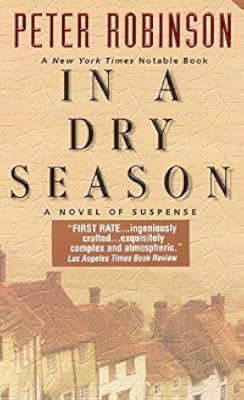
New York Times bestselling and Edgar Award-winning author Peter Robinson delivers an unforgettable, compelling thriller of a lost village and the deadly secrets that are unearthed upon its discovery-secrets that include murder. In the blistering, dry summer, the waters of Thornfield Reservoir have been depleted, revealing the ruins of the small Yorkshire village that lay at its bottom-ruins that house the unidentified bones of a murdered young woman. Detective Chief Inspector Banks faces a show more daunting challenge: he must unmask a sadistic killer who has escaped detection for half a century. For the dark secrets of Hobb's End continue to haunt the dedicated policeman, even though the town that bred them has died and its former residents have been scattered to far places-or even to their graves. Demonstrating once again why Peter Robinson is a master of suspense, In a Dry Season is a powerful, insightful, and searing novel of past crimes and present evil. show lessTags
Recommendations


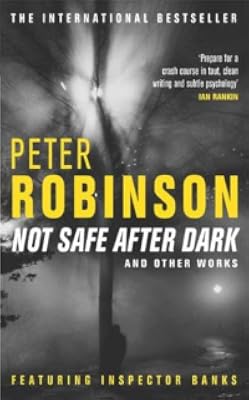
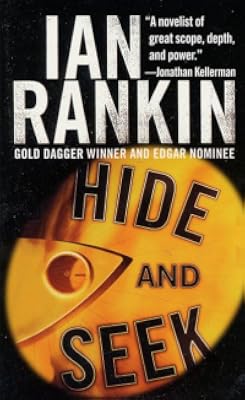

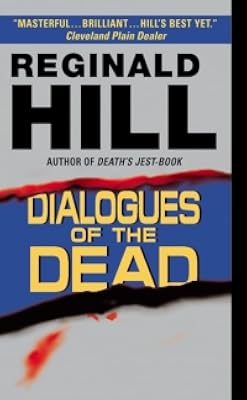
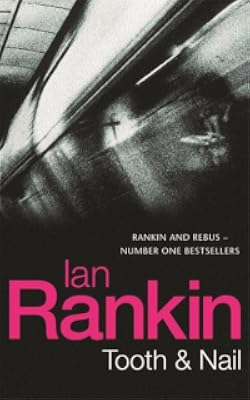








Member Recommendations

ehines Another drowned village emerges and another murder investigation is launched.
Member Reviews
In a Dry Season is Peter Robinson’s tenth Inspector Banks novel. I’ve read only two of the others, which were good. This one is very good, indeed.
North Yorkshire Police Detective Chief Inspector Alan Banks has finally gotten a field assignment after a very long “dry season” of disciplinary desk work. He is sent to investigate the accidental discovery of the long-buried bones of a hand that turns out to be human. Excavation of the area where the hand was found - at the bottom of a reservoir that had dried up over the summer (in yet another allusion to a dry season) - uncovers the complete human skeleton of a young woman who appears to have been savagely murdered by repeated knife thrusts. Unfortunately, physical evidence show more indicates that the murder took place 40-50 years earlier, possibly during World War II.
The novel then alternates between a third person narrative of Banks’ investigation and a first person narrative of a woman living in the area of the murder during the war. Both stories are well constructed and, no surprise here, they somehow come together in the dénouement. The description of civil life in war-time England is particularly fascinating, where the predominating experience is one of shortages and rationing of the necessities of life. Banks’ investigation encounters many loose ends and red herrings, but Robinson skillfully brings all of them together with a clever concluding twist.
For fans of the series, this is the book in which Inspector Banks first gets together with Detective Sergeant Annie Cabbot. DS Cabbot has been having a “dry season” of her own after a traumatic incident nearly two years before. As the book ends, the long rainy winter results in the reservoir filling up once again, and with a hint that the dry seasons of Banks and Cabbot may be over as well.
Evaluation: Robinson does not try to create the harrowing suspense or terror of a Steig Larsson or Jo Nesbo thriller, but his handling of the step-by-step solution to a puzzle is worthy of comparison to Arthur Conan Doyle.
(JAB) show less
North Yorkshire Police Detective Chief Inspector Alan Banks has finally gotten a field assignment after a very long “dry season” of disciplinary desk work. He is sent to investigate the accidental discovery of the long-buried bones of a hand that turns out to be human. Excavation of the area where the hand was found - at the bottom of a reservoir that had dried up over the summer (in yet another allusion to a dry season) - uncovers the complete human skeleton of a young woman who appears to have been savagely murdered by repeated knife thrusts. Unfortunately, physical evidence show more indicates that the murder took place 40-50 years earlier, possibly during World War II.
The novel then alternates between a third person narrative of Banks’ investigation and a first person narrative of a woman living in the area of the murder during the war. Both stories are well constructed and, no surprise here, they somehow come together in the dénouement. The description of civil life in war-time England is particularly fascinating, where the predominating experience is one of shortages and rationing of the necessities of life. Banks’ investigation encounters many loose ends and red herrings, but Robinson skillfully brings all of them together with a clever concluding twist.
For fans of the series, this is the book in which Inspector Banks first gets together with Detective Sergeant Annie Cabbot. DS Cabbot has been having a “dry season” of her own after a traumatic incident nearly two years before. As the book ends, the long rainy winter results in the reservoir filling up once again, and with a hint that the dry seasons of Banks and Cabbot may be over as well.
Evaluation: Robinson does not try to create the harrowing suspense or terror of a Steig Larsson or Jo Nesbo thriller, but his handling of the step-by-step solution to a puzzle is worthy of comparison to Arthur Conan Doyle.
(JAB) show less
Detective Chief Inspector Alan Banks remains in the doghouse to which the jealous, stubborn, petty Chief Constable Jimmy Riddle confined him in the previous novel, Blood At The Root. In this novel, Banks investigates a decades’ old skeleton exposed when the Thornfield Reservoir dries out during a summer drought. With Hobb’s End already a dying village due to the closure of the flax mill, the remaining villagers were evacuated, resettled hither and yon, and the village flooded in 1953 to create the Thornfield Reservoir; however, before that, someone killed the gorgeous blonde Gloria and buried her under an outbuilding. Just as the victim couldn’t stay buried under the reservoir, neither can Hobb’s End’s many secrets. But which show more secret killed a twenty-something woman nearly 50 years earlier? And which secret has the power to kill in the here and now?
The narrative shifts from the current investigation to an account of Hobb’s End from 1939 until its ignominious end, but author Peter Robinson deftly ensures that they won’t be confused. Each step forward in the modern-day investigation illuminates the past, just as each revelation in the war account advances the modern-day narrative. In a Dry Season won the Anthony, Barry and Macavity awards and was nominated for Hammett Prize and Edgar Award, and it’s easy to see why: Chapter after chapter, the suspense builds and builds and builds right to the unexpected denouement. The book is the best yet in this series — which is saying a lot!
DCI Banks, when under pressure, lights one cigarette off the last Silk Cut. Like him, I began reading the tenth novel in this series just minutes after finishing the ninth, Blood at the Root, due to its cliffhanger ending. Figuratively lighting the new one on the last, so to speak. Banks is trying to cut down on smoking, but, with novels as exciting as these, I don’t see myself quitting any time soon. show less
The narrative shifts from the current investigation to an account of Hobb’s End from 1939 until its ignominious end, but author Peter Robinson deftly ensures that they won’t be confused. Each step forward in the modern-day investigation illuminates the past, just as each revelation in the war account advances the modern-day narrative. In a Dry Season won the Anthony, Barry and Macavity awards and was nominated for Hammett Prize and Edgar Award, and it’s easy to see why: Chapter after chapter, the suspense builds and builds and builds right to the unexpected denouement. The book is the best yet in this series — which is saying a lot!
DCI Banks, when under pressure, lights one cigarette off the last Silk Cut. Like him, I began reading the tenth novel in this series just minutes after finishing the ninth, Blood at the Root, due to its cliffhanger ending. Figuratively lighting the new one on the last, so to speak. Banks is trying to cut down on smoking, but, with novels as exciting as these, I don’t see myself quitting any time soon. show less
DCI Banks gets a break from reports, memos, and presentations when the chief constable sends him to investigate a discovery of bones in a village drowned under a reservoir in the 1950s but which has resurfaced because of drought. He and the other police are able to find out quite quickly who the buried person was, but uncovering how she came to be there takes more effort and a bit of good luck too. With the way the book weaves in another narrative, as a reader you know more than the police and keep wondering how they might get there too.
This is #10 in the Inspector Banks series. I didn't discover this series until around #13 so I've been trying to read all the books I missed. Unfortunately, I skipped #9 somehow and that might have been the book where Banks family life imploded. At least, at the beginning of this book he is living on his own and his wife and daughter are in London. Obviously, I'll have to get my hands on #9 to find out the details.
The title gives a clue to what the case involves. It's been a very dry summer in Yorkshire and a reservoir that was filled in the 1950s, covering the village of Hobb's End, was dry, exposing the old buildings of the village. Young Adam Kelly was drawn to the abandoned village and decided to explore. He fell through the roof of show more an outbuilding, narrowly missing bodily harm but he did discover some human bones underneath the flooring. Naturally, the police were called and Chief Inspector Alan Banks was named by his superior to head up the investigation. He was told he would find DS Cabbot on the scene and he did. He didn't expect her to be a lovely young woman. Together and separately, the two talk to people who used to live in the village and they determined that the skeleton was that of Gloria Shackleton. Gloria had worked on a farm near to Hobb's End as a land girl during World War II when she met Mathew Shackleton, son of a local shop owner. The pair fell in love and married before Mathew was shipped overseas. Gloria lived in the little cottage next to the outbuilding where she was interred. As Banks and Cabbot investigate, they learn more about Gloria's life. Mathew was thought to have died in Asia but at the end of the war he was discovered in a POW camp. He returned home to Hobb's End a broken man and Gloria, who had been courted by an American serviceman, gave up her freedom to look after him. Did Mathew kill Gloria? You'll have to read the book to learn the full story.
Interspersed in the present day narrative are journal entries from Mathew's sister, Gwen, who is now a famous mystery writer. Gwen reveals many details about Gloria and Mathew and herself during the war and just after. These entries really lifted a police procedural above the common place. show less
The title gives a clue to what the case involves. It's been a very dry summer in Yorkshire and a reservoir that was filled in the 1950s, covering the village of Hobb's End, was dry, exposing the old buildings of the village. Young Adam Kelly was drawn to the abandoned village and decided to explore. He fell through the roof of show more an outbuilding, narrowly missing bodily harm but he did discover some human bones underneath the flooring. Naturally, the police were called and Chief Inspector Alan Banks was named by his superior to head up the investigation. He was told he would find DS Cabbot on the scene and he did. He didn't expect her to be a lovely young woman. Together and separately, the two talk to people who used to live in the village and they determined that the skeleton was that of Gloria Shackleton. Gloria had worked on a farm near to Hobb's End as a land girl during World War II when she met Mathew Shackleton, son of a local shop owner. The pair fell in love and married before Mathew was shipped overseas. Gloria lived in the little cottage next to the outbuilding where she was interred. As Banks and Cabbot investigate, they learn more about Gloria's life. Mathew was thought to have died in Asia but at the end of the war he was discovered in a POW camp. He returned home to Hobb's End a broken man and Gloria, who had been courted by an American serviceman, gave up her freedom to look after him. Did Mathew kill Gloria? You'll have to read the book to learn the full story.
Interspersed in the present day narrative are journal entries from Mathew's sister, Gwen, who is now a famous mystery writer. Gwen reveals many details about Gloria and Mathew and herself during the war and just after. These entries really lifted a police procedural above the common place. show less
A skeleton is found in a dried-up reservoir and the solution to the murder lies half a century in the past. This is a great installment in the series, partially because of the structure (we go back and forth in time) and partially because of the growth of the characters (DCI Banks dealing with his divorce as well as his new relationship with DS Cabbot). The mystery itself is well crafted, but the parts about life in Britain during WWII add an enormous amount of texture to the story which makes it particularly enjoyable.
One thing I have to mention is that the reader of the audio version hasn't quite understood who DCI Banks is and gives him a strong Yorkshire dialect, which makes him sound like a life-time Dales farmer rather than a show more London police officer, so it sounds like he's making fun of whoever he's talking to. So, read a paper version of this one rather than listen to it unless you want Banks to sound like he's mocking everyone. show less
One thing I have to mention is that the reader of the audio version hasn't quite understood who DCI Banks is and gives him a strong Yorkshire dialect, which makes him sound like a life-time Dales farmer rather than a show more London police officer, so it sounds like he's making fun of whoever he's talking to. So, read a paper version of this one rather than listen to it unless you want Banks to sound like he's mocking everyone. show less
I agree with a number of people that this is a great series and that this book is where the series steps over to be a serious contender in the great mystery series genre. I have enjoyed the books up to now, but they did not really prepare me for the complexity of this novel. Robinson's Chief Inspector Banks is a wonderful creation. This is a book that blends the past and the present and Robinson does this seamlessly. We flit back and forth from present-day England to England during the Second World War. The book is definitely more than an exciting murder mystery. It is an exploration of human behaviour and it is very provocatively written. Banks is currently suffering a bit both in his career and in his personal life, so when a skeleton show more is discovered buried under a reservoir that has dried up due to drought, he knows that this case will be one that will reshape his career and hopefully add some meaning to his life as he has been trying to get used to be separated from his wife of 20 years. Even he doesn't anticipate where pursuit of the solution of this case will take him. For anyone who loves to read intelligently written British police procedural mysteries, do not miss Peter Robinson. show less
Reading Peter Robinson’s series about DCI Alan Banks has me wanting to drink more gin and tonics, eat more pub style food and wanting to visit Yorkshire. This is book # 10 in the DCI Banks series and I am already tucked into the next book. More on that one later. I am absolutely addicted to these police procedurals and will be at a loss when I have caught up with Robinson’s latest books.
In a Dry Season starts with skeletal remains being discovered under an old outbuilding. A boy is exploring village structures which had been underwater for over 50 years. The village had been flooded to create a reservoir long ago but with drought conditions, the reservoir dried out, this old town emerges. It’s mostly preserved and as you can show more imagine, a child would love to snoop around in such a magical looking place. The boy falls through the roof of a structure and discovers the human bones.
The mystery starts with DCI Banks being assigned to this remote little corner, teaming up with DC Annie Cabot. They have to determine if the remains are from an accident or a covered up murder. How can they possibly know who this was or what happened since the place has been underwater for so many years. The side story features a mystery novelist who is clearly upset when she views the emerging story on television news. Obviously she knows something, you can tell that from the first few pages of her storyline, but how much involvement or information does she have? The story moves back and forth between present day and 1941 in the war era.
This book and Final Account have been my favorites so far. I love how Alan Banks’ character continues to develop and hearing about his personal life interjected into the investigation.
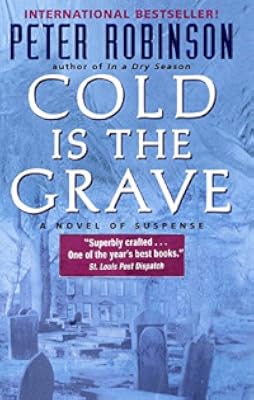
I am already reading Cold is the Grave, book #11. Totally addicted! show less
In a Dry Season starts with skeletal remains being discovered under an old outbuilding. A boy is exploring village structures which had been underwater for over 50 years. The village had been flooded to create a reservoir long ago but with drought conditions, the reservoir dried out, this old town emerges. It’s mostly preserved and as you can show more imagine, a child would love to snoop around in such a magical looking place. The boy falls through the roof of a structure and discovers the human bones.
The mystery starts with DCI Banks being assigned to this remote little corner, teaming up with DC Annie Cabot. They have to determine if the remains are from an accident or a covered up murder. How can they possibly know who this was or what happened since the place has been underwater for so many years. The side story features a mystery novelist who is clearly upset when she views the emerging story on television news. Obviously she knows something, you can tell that from the first few pages of her storyline, but how much involvement or information does she have? The story moves back and forth between present day and 1941 in the war era.
This book and Final Account have been my favorites so far. I love how Alan Banks’ character continues to develop and hearing about his personal life interjected into the investigation.
I am already reading Cold is the Grave, book #11. Totally addicted! show less
Members
- Recently Added By
Lists

Best Crime Fiction
262 works; 39 members

Crime and Mysteries to Read
746 works; 31 members

British Mystery
469 works; 14 members

...read all, pay nowt (Books set in Yorkshire)
86 works; 14 members

Rising water
19 works; 6 members

Detective Stories
343 works; 5 members

Books Read in 2017
4,249 works; 130 members

Books Read in 2021
5,361 works; 114 members

Evergreen Award™ Winners and Nominees 2005–2024
200 works; 3 members
Author Information

82+ Works 30,052 Members
Peter Robinson was born in Castleford, Yorkshire, in 1950. He received a B.A. Honours Degree in English literature from the University of Leeds, moved to Canada, and went on to earn a M.A. in English and creative writing from the University of Windsor and a Ph.D. in English from York University. His first novel, Gallows View, was published in 1987 show more and became the first book in the Inspector Banks Mystery series. His other works include Caedmon's Song, No Cure for Love, Not Safe after Dark and Other Stories, Before the Poison, and When the Music's Over. He has received several awards including the Crime Writers of Canada's Arthur Ellis Award for Best Novel in 1992 for Past Reason Hated and the Author's Award from the Foundation for the Advancement of Canadian Letters in 1994 for Final Account. He has also published many short stories in anthologies and in Ellery Queen's Mystery Magazine, including Innocence, which won the CWC Best Short Story Award, and The Two Ladies of Rose Cottage, which won a Macavity Award. He has taught at a number of Toronto colleges and served as Writer-in-Residence at the University of Windsor, Ontario, 1992-93. (Bowker Author Biography) show less
Some Editions
Awards and Honors
Awards
Notable Lists
Series

Work Relationships
Common Knowledge
- Canonical title
- In a Dry Season
- Original title
- In a Dry Season
- Original publication date
- 1999
- People/Characters
- Alan Banks (Chief Inspector); Annie Cabbot; Gloria Shackleton; Matthew Shackleton; Vivian Elmsley; Jeremiah (Jimmy) Riddle (Jimmy)
- Important events
- World War II
- Dedication
- For Dad and Averil,
Elaine and Mick,
and Adam and Nicola - First words
- AUGUST 1967
It was the Summer of Love and I had just buried my husband when I first went back to see the reservoir that had flooded my childhood village. - Last words
- (Click to show. Warning: May contain spoilers.)In the hotel room, Vivian Elmsley let her tears flow freely for the first time in over fifty years and reached again for her gin.
- Blurbers
- Connelly, Michael
- Original language*
- Engels
- Canonical DDC/MDS
- 823.914; 823.92
- Canonical LCC
- PR6068.O1964
*Some information comes from Common Knowledge in other languages. Click "Edit" for more information.
Classifications
Statistics
- Members
- 1,579
- Popularity
- 14,433
- Reviews
- 47
- Rating
- (3.86)
- Languages
- 9 — Danish, Dutch, English, Finnish, French, German, Norwegian (Bokmål), Polish, Swedish
- Media
- Paper, Audiobook, Ebook
- ISBNs
- 61
- ASINs
- 10