
On This Page
Description
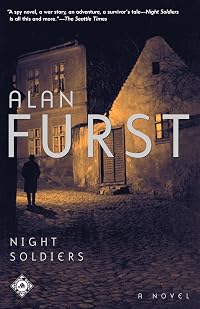
Fiction. Suspense. Thriller. Historical Fiction. HTML:Bulgaria, 1934. A young man is murdered by the local fascists. His brother, Khristo Stoianev, is recruited into the NKVD, the Soviet secret intelligence service, and sent to Spain to serve in its civil war. Warned that he is about to become a victim of Stalin's purges, Khristo flees to Paris. Night Soldiers masterfully re-createsthe European world of 1934–45: the struggle between Nazi Germany and Soviet Russia for Eastern Europe, the show more last desperate gaiety of the beau monde in 1937 Paris, and guerrilla operations with the French underground in 1944. Night Soldiers is a scrupulously researched panoramic novel, a work on a grand scale. show less
Tags
Recommendations
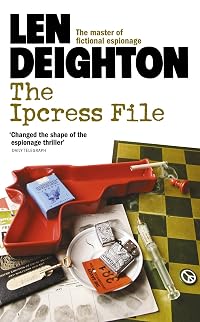
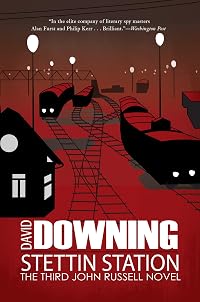


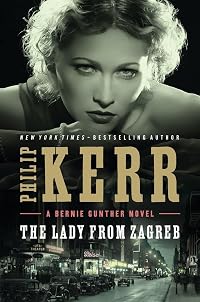
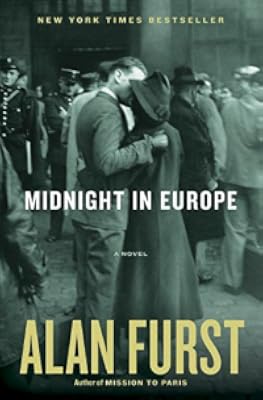
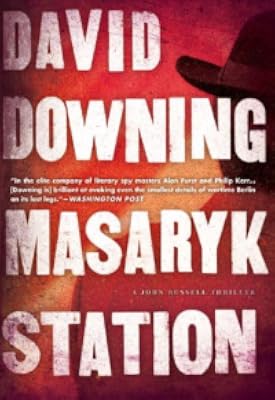
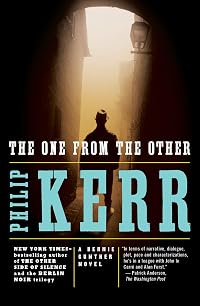

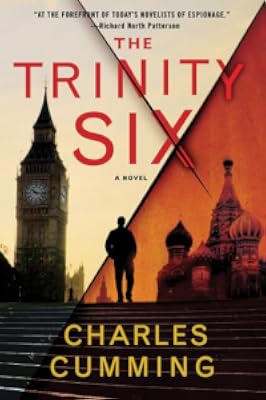
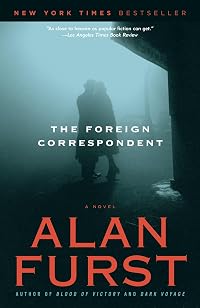
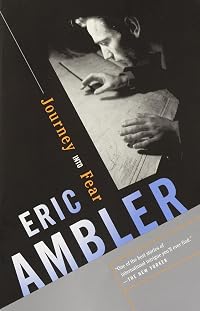
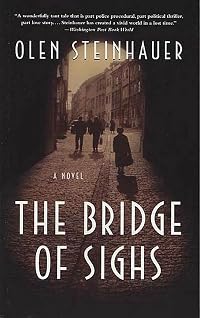
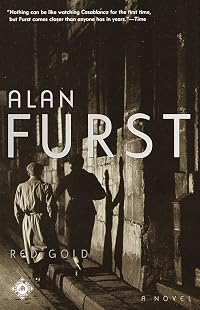
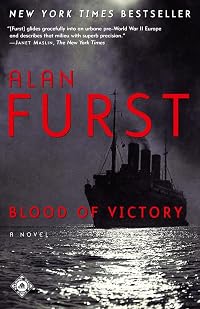

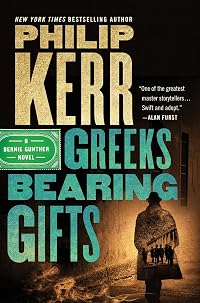
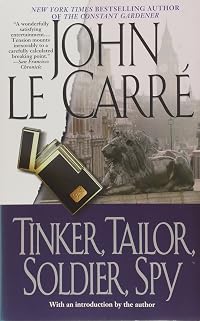
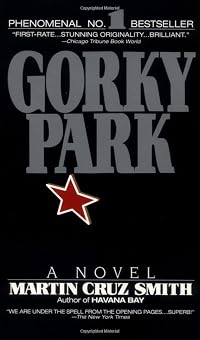
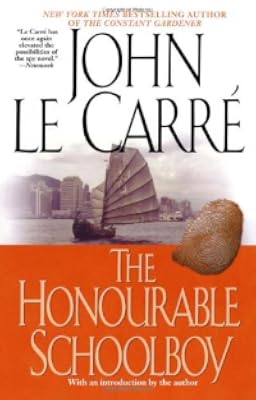
Member Recommendations
Member Reviews
Dad likes Furst so I thought I'd give it a go. This was an excellent book start to finish, and I'm excited that it's the first in a series. Furst seems to have first-hand knowledge of WWII spy craft and is an excellent storyteller. I love how he will create side characters to forward the narrative, that appear and then disappear without a trace, but who also have compelling stories and appear as three dimensional people with rich lives and real character. I also loved the time period in which this story takes place, starting pre-war and going through WWII. Furst creates that crazy pre-war turbidity swirling around Europe at the time and really makes it engagingly real. His characters all speak a dozen languages and all are smart. You show more have to be to survive very long in the world of NKVD, Gestapo, fascists partisans, communists, and every other kind of ruthless fifth column organization you can think of. He really pulls it off with amazing detail and story craft.
I listened to this on audio book, so my attention wasn't always what it should be, but even so, I could appreciate that this was a remarkable book. show less
I listened to this on audio book, so my attention wasn't always what it should be, but even so, I could appreciate that this was a remarkable book. show less
In Bulgaria, in 1934, on a muddy street in the town of Vidin, Kristo Stoianev saw his brother kicked to death by Fascist militia.
That's the first line of Furst's Night Soldiers, immediately introducing us to the book's central figure and hinting at the forces personal and political that would drive him. Kristo is soon recruited into the NKVD--the Soviet Secret Police and sent for training to Moscow. There he is part of a class in espionage drawn from throughout Europe--Yugoslavia, Poland, Romania, Germany. There he'll learn to cheat and kill to win and to survive--and those he meets there will have an impact on him and the world without for years to come.
This is a very well-written book. It has the kind of flow and strong prose you find show more in what is called literary fiction rather than a pulp thriller. I liked Kristo, but I don't know that I ever felt very attached to him as a character, or to any of the characters. It's more that Kristos and others we meet such as Faye Berns and Ilya Goldman are ways through which Furst can tell the convoluted and twisty tale of espionage and counterespionage in Europe in the 30s and 40s from the Spanish Civil War to the French Resistance during Nazi Occupation to the clanging shut of the Iron Curtain. It's a fascinating and educational tale at that. show less
That's the first line of Furst's Night Soldiers, immediately introducing us to the book's central figure and hinting at the forces personal and political that would drive him. Kristo is soon recruited into the NKVD--the Soviet Secret Police and sent for training to Moscow. There he is part of a class in espionage drawn from throughout Europe--Yugoslavia, Poland, Romania, Germany. There he'll learn to cheat and kill to win and to survive--and those he meets there will have an impact on him and the world without for years to come.
This is a very well-written book. It has the kind of flow and strong prose you find show more in what is called literary fiction rather than a pulp thriller. I liked Kristo, but I don't know that I ever felt very attached to him as a character, or to any of the characters. It's more that Kristos and others we meet such as Faye Berns and Ilya Goldman are ways through which Furst can tell the convoluted and twisty tale of espionage and counterespionage in Europe in the 30s and 40s from the Spanish Civil War to the French Resistance during Nazi Occupation to the clanging shut of the Iron Curtain. It's a fascinating and educational tale at that. show less
This is a gripping novel that is hard to put down if you are a fan of the spy/thriller genre. It will keep you awake til the wee hours, saying, "OK, just a few more pages, and then I'll put it down." Highly recommended if you want to be torn out of your doldrums and spun into a world of intrigue, conspiracies, manipulations and machinations, all with the second World War as both a prequel and a culmination.
Relying on exhaustive research, and an even more fertile imagination, Furst has created a living tableau that replays in the mind long after you've put the book down.
Why only 4 stars? Sometimes, a surfeit of something good is its own enemy. Quite frankly, at times my head ached, there was so much there to take in and digest: the show more historical verisimilitude was overwhelming and I just didn't want to take in any more. My bad. Sometimes I become a lazy reader and want to be spoon-fed cheap entertainment. There are *indeed* times when I don't want to think, or feel, too much. At another time, I no doubt would speak in superlatives and bestow 5 glowing stars. It's not him, it's me. (Imagine admitting that, in print!) show less
Relying on exhaustive research, and an even more fertile imagination, Furst has created a living tableau that replays in the mind long after you've put the book down.
Why only 4 stars? Sometimes, a surfeit of something good is its own enemy. Quite frankly, at times my head ached, there was so much there to take in and digest: the show more historical verisimilitude was overwhelming and I just didn't want to take in any more. My bad. Sometimes I become a lazy reader and want to be spoon-fed cheap entertainment. There are *indeed* times when I don't want to think, or feel, too much. At another time, I no doubt would speak in superlatives and bestow 5 glowing stars. It's not him, it's me. (Imagine admitting that, in print!) show less
I adore Alan Furst's writing. He specializes in historical fiction set in pre-World War II to early-World War II Europe, usually setting the story in one or two locales, but in this, he expanded his scope to great effect. His research is excellent, as is his attention to detail.
Night Soldiers is a sweeping novel that follows the life of Khristo Stoianev, a young Bulgarian who, in 1934, saw his younger brother stomped to death by local fascists. Soon after, a Russian shows up, recruiting young men to the Communist cause. Khristo, having nothing to look forward to in his bleak town and caught up in circumstances beyond his control, goes with him. Trained by the NKVD, the precursor to the KGB, Khristo excels at intelligence and show more counter-intelligence and is soon stationed in Spain, a country in the midst of civil war while Germany and Russia vie for influence. A dutiful officer of the NKVD, Khristo is no ideologue and when he's warned he will be swept up in Stalin's purges, he flees to France, where his life grows yet more complicated.
For much of the book, Khristo is a tool, a weapon, someone who is manipulated into playing a role. Yet despite the violence and dangers of the time, despite the conspiracies and conflicts, Khristo is a survivor, someone who longs to simply lead a normal life. By the time the story ends, in 1945, we've traveled throughout France, Spain, and Eastern Europe with Khristo and as I turned the last page and closed the cover, I was most reluctant to say goodbye to him.
If you haven't read Alan Furst, you should. And this is as good a book to start with as any.r show less
Night Soldiers is a sweeping novel that follows the life of Khristo Stoianev, a young Bulgarian who, in 1934, saw his younger brother stomped to death by local fascists. Soon after, a Russian shows up, recruiting young men to the Communist cause. Khristo, having nothing to look forward to in his bleak town and caught up in circumstances beyond his control, goes with him. Trained by the NKVD, the precursor to the KGB, Khristo excels at intelligence and show more counter-intelligence and is soon stationed in Spain, a country in the midst of civil war while Germany and Russia vie for influence. A dutiful officer of the NKVD, Khristo is no ideologue and when he's warned he will be swept up in Stalin's purges, he flees to France, where his life grows yet more complicated.
For much of the book, Khristo is a tool, a weapon, someone who is manipulated into playing a role. Yet despite the violence and dangers of the time, despite the conspiracies and conflicts, Khristo is a survivor, someone who longs to simply lead a normal life. By the time the story ends, in 1945, we've traveled throughout France, Spain, and Eastern Europe with Khristo and as I turned the last page and closed the cover, I was most reluctant to say goodbye to him.
If you haven't read Alan Furst, you should. And this is as good a book to start with as any.r show less
I really enjoyed this "spy novel", as I expected I would -- all the smart people I know who like spy novels either own it or recommend it or both. It's sort of a personal story and a sprawling story at the same time, covering the whole of World War II in its timeline, and doing a great job of giving a sense of the European perspective on that war. In particular, the middle-school history version of World War II (Hitler started killing people, so England and Russia and the U.S. stepped up) is shown to be a farce: the political tumult underlying the war is both far more complicated than that, involving ethnic groups and ideologies and religions and nations (whatever those are) that have been at war for thousands of years in Europe. One show more tries to be happy while there is no fighting, but most of the time, one just tries to survive.
I put "spy novel" in quotes above because there's almost no spying. the protagonist is a former spy for Russia, but pretty early on, he strikes out on his own, in part because he's not a True Believer and in part because of the internal power struggles that characterize Russia's approach to this unique Europe-wide turmoil. show less
I put "spy novel" in quotes above because there's almost no spying. the protagonist is a former spy for Russia, but pretty early on, he strikes out on his own, in part because he's not a True Believer and in part because of the internal power struggles that characterize Russia's approach to this unique Europe-wide turmoil. show less
Deep, poignant, dark, ultimately satisfying, like a long difficult journey where much is accomplished and much is learned.
Interesting to compare Furst's Night Soldiers with the popular WWII spy thrillers of Ken Follett. Where reading Follett is smooth and easy as a skating rink, Furst is toilsome as a narrow mountain trail, full of rocks, caves, dead-ends and thorny ledges.
Not an easy read. In part because of the brutally painful experiences lived by the characters. But also because of the fictional technique: at times as oblique and murky as the world of espionage it depicts.
Furst has a habit of introducing new viewpoint characters just for one or two scenes. The effect is enriching, as we are given multiple perspectives on events show more and characters. But it's also difficult to follow, as the reader struggles to piece together information about what is happening and why--sort of like the mental work required of a spy.
Overall this is an excellent book, but you have to think hard and pay attention. show less
Interesting to compare Furst's Night Soldiers with the popular WWII spy thrillers of Ken Follett. Where reading Follett is smooth and easy as a skating rink, Furst is toilsome as a narrow mountain trail, full of rocks, caves, dead-ends and thorny ledges.
Not an easy read. In part because of the brutally painful experiences lived by the characters. But also because of the fictional technique: at times as oblique and murky as the world of espionage it depicts.
Furst has a habit of introducing new viewpoint characters just for one or two scenes. The effect is enriching, as we are given multiple perspectives on events show more and characters. But it's also difficult to follow, as the reader struggles to piece together information about what is happening and why--sort of like the mental work required of a spy.
Overall this is an excellent book, but you have to think hard and pay attention. show less
Author Alan Furst calls it “near history.” Night Soldiers provides us a view with near-miraculous clarity of war-torn Europe in the 1940s, and this glimpse comes to us courtesy of Khristo – a nineteen-year-old Bulgarian youth who grows up by a river, watches Fascist thugs murder his younger brother, and falls into the war himself in the clutches of the Soviet secret service, the NKVD. This satisfying excursion into World War II espionage has every feature you’d want: intriguing insights into the tradecraft, a closely imagined story of a Soviet purge of its security service (Khristo is sentenced to life in prison as a result), close-ups of the cruel and genocidal regimes lording it over Europe at the time, and even a dabbling show more into the hero’s love life.
World War II nearly kills Khristo; he is one of the few survivors from the close-knit group that trained together in Moscow. Mr. Furst spares no effort in portraying the wasted Europe of the time, either. Protagonist Khristo suffers time and again in various circumstances and for various reasons, just like the devastated continent. In fact, we witness the damage done over time to the man and the place, as in parallel. That’s what remains with me after finishing this book: I remember and feel the near-death escapes, heroic perseverance, and lost opportunities for happiness. Night Soldiers is packed with diverting secondary characters, too, from Khristo’s lover in Paris, to the American adventuress fighting in the Spanish Civil War, to the stout woman who pilots the tug boat that carries Khristo to freedom.
This is an extreme page-turner. Outcomes for characters are always in doubt – some make us sorry we liked a character, but overall, Mr. Furst has cobbled together a highly satisfying yarn of suspense, featuring fully nuanced heavies, and intrepid heroes.
http://bassoprofundo1.blogspot.com/2013/05/night-soldiers-by-alan-furst.html show less
World War II nearly kills Khristo; he is one of the few survivors from the close-knit group that trained together in Moscow. Mr. Furst spares no effort in portraying the wasted Europe of the time, either. Protagonist Khristo suffers time and again in various circumstances and for various reasons, just like the devastated continent. In fact, we witness the damage done over time to the man and the place, as in parallel. That’s what remains with me after finishing this book: I remember and feel the near-death escapes, heroic perseverance, and lost opportunities for happiness. Night Soldiers is packed with diverting secondary characters, too, from Khristo’s lover in Paris, to the American adventuress fighting in the Spanish Civil War, to the stout woman who pilots the tug boat that carries Khristo to freedom.
This is an extreme page-turner. Outcomes for characters are always in doubt – some make us sorry we liked a character, but overall, Mr. Furst has cobbled together a highly satisfying yarn of suspense, featuring fully nuanced heavies, and intrepid heroes.
http://bassoprofundo1.blogspot.com/2013/05/night-soldiers-by-alan-furst.html show less
Members
- Recently Added By
Lists

Best Contemporary Literary Fiction (Around the Last 30 Years)
388 works; 124 members

Best Espionage (Fiction)
55 works; 20 members
Best Spy Fiction
153 works; 102 members

Top Five Books of 2020
982 works; 350 members

100 Mysteries and Thrillers to Read in a Lifetime
99 works; 22 members

Books Read in 2023
5,547 works; 145 members

Books I Read Before The Invention Of The Internet.
144 works; 1 member

Books Read in 2018
4,360 works; 110 members
Author Information

26+ Works 16,483 Members
Furst received a B.A. from Oberlin College in 1962 and an M.A. from Penn State in 1967. Before becoming a full-time novelist, Furst worked in advertising and wrote magazine articles, most notably for Esquire, and as a columnist for the International Herald Tribune His early novels (1976-1983) achieved limited success. However, the 1988 publication show more of Night Soldiers inspired by a 1984 trip to Eastern Europe on assignment for Esquire revitalized his career. It was the first of his highly original novels about espionage in Europe before and during the Second World War. Born in New York on February 20, 1941, he lived for long periods in France, especially Paris where he was awarded a Fulbright teaching fellowship. In 2011, the Tulsa Library Trust in Tulsa, Oklahoma selected Furst to receive its Helmerich Award, a literary prize given annually to honor a distinguished author's body of work He also made The New York Times Best Seller List in 2012 with his title The Mission to Paris and Midnight in Europe in 2014. Furst again made the New York Times Bestseller in 2016 with his novel a Hero of France. (Publisher Provided) Alan Furst is an American author of spy novels. He was born in New York City on February 20, 1941, and was raised on the Upper West Side of Manhattan. Furst received a B.A. from Oberlin College in 1962 and an M.A. from Penn State in 1967. His novels are set just prior to and during the Second World War. Titles include: Night Soldiers, Kingdom of Shadows (which won the 2001 Hammett Prize), Blood of Victory, Spies of the Balkans and Mission to Paris. In 2011, the Tulsa Library Trust in Tulsa, Oklahoma, selected Furst to receive its Helmerich Award, a literary prize given annually to honor a distinguished author's body of work. Furst made The New York Times Best Seller List in 2012 with his title The Mission to Paris and Midnight in Europe in 2014. Furst again made the New York Times Bestseller in 2016 with his novel A Hero of France. (Bowker Author Biography) show less

Alan Furst is a LibraryThing Author, an author who lists their personal library on LibraryThing.
Some Editions
Awards and Honors
Notable Lists
Series

Work Relationships
Common Knowledge
- Canonical title
- Night Soldiers
- Original title
- Night Soldiers
- Original publication date
- 1988
- People/Characters
- Khristo Stoianev; Aleksander "Sascha" Vonets; Ilya Goldman; Maltsaev; General Bloch; Ivan Ivanovich Agayants (show all 10); Colonel Vassily Antipin; Avram Roubenis / Andres Cardona; Frances Bernstein / Faye Bernes; Drazen Kulic
- Important places
- Vidin, Bulgaria; Paris, France; Prague, Czech Republic; Moscow, Russia; Brasserie Heininger, Paris, France; Utiny, Siberia, Russia (show all 7); Sfântu Ghorghe, Romania
- Important events
- World War II; Spanish Civil War
- Epigraph
- Push out a bayonet. If it strikes fat, push deeper. If it strikes iron, pull back for another day.
—V. I. Lenin
May 1922
Executive Order 9621
TERMINATION OF THE OFFICE OF STRATEGIC SERVICES (OSS)
The Secretary of War shall, whenever he deems it compatible with the national interest, discontinue any activity transfered by this para... (show all)graph and wind up all affairs relating thereto.
—Harry S. Truman
September 20, 1945 - First words
- In Bulgaria, in 1934, on a muddy street in the river town of Vidin, Khristo Stoianev saw his brother kicked to death by fascist militia.
- Quotations
- If you had nothing else in the world you could at least have a secret. (Chapter 1)
- Last words
- (Click to show. Warning: May contain spoilers.)There, Muriel thought, that's better.
Classifications
- Genres
- Fiction and Literature, General Fiction, Historical Fiction, Mystery
- DDC/MDS
- 813.54 — Literature & rhetoric American literature in English American fiction in English 1900-1999 1945-1999
- LCC
- PS3556 .U76 .N5 — Language and Literature American literature American literature Individual authors 1961-
- BISAC
Statistics
- Members
- 1,692
- Popularity
- 13,125
- Reviews
- 54
- Rating
- (3.92)
- Languages
- English, French, Hungarian, Spanish
- Media
- Paper, Audiobook, Ebook
- ISBNs
- 26
- ASINs
- 10