
Ninety-Three
by Victor Hugo
On This Page
Description
Published in 1874, "Ninety-Three" was French writer Victor Hugo's last novel published immediately subsequent to the bloody Paris Commune. It deals with the counter-revolutionary revolts in 1793 during the French Revolution, namely those in the Vendée and Chouannerie. "Ninety-Three" is split into three parts, with each part telling a different story and offering a different view of historical events. Highly recommended for those with an interest in French history and the seminal works of show more Victor Hugo. Victor Marie Hugo (1802 - 1885) was a French novelist, dramatist, and poet belonging to the Romantic movement. He is widely hailed as one of the most accomplished and well-known French writers, originally achieving renown for his poetical endeavours-the most notable of which are the volumes "Les Contemplations" and "La Légende des siècles". Outside of his native country, Hugo's best-known works are his novels: "Les Misérables" (1862) and "Notre-Dame de Paris" (1831). Many vintage books such as this are becoming increasingly scarce and expensive. We are republishing this book now in an affordable, high-quality, modern edition complete with a specially commissioned new biography of the author. show lessTags
Recommendations












Member Recommendations
rebeccanyc Hugo and Mantel both create fiction: Hugo's is closer to the passions of the time and more philosphical, involving largely fictional characters; Mantel's more distanced and historical. Hugo's novel deals with the counter-revolution in the Vendée, with a detour to Paris; Mantel's with the leaders of the revolution in Paris.
Also recommended by bibliothequaire

rebeccanyc Hugo's work is largely fictional; Schama presents a fascinating historical and cultural history of the French revolution.
Member Reviews
I must start by stating the obvious: Hugo's writing is sublime. He rises to the same rhetorical heights in 'Ninety-Three' as in 'Les Misérables'. His preoccupations remain liberty, personal conscience, justice, and duty. His fondness for two main characters that exemplify two sides of the same coin also persists, although in 'Ninety-Three' a level of complexity is added. Gauvain is placed in opposition on two levels; one with his great uncle Lantenac (a monarchist) and one with his tutor, friend, and colleague Cimourdain (a more absolute revolutionary than he). I found these tensions very powerful, as Gauvain played out dilemmas similar to those of Valjean in Les Mis. The validity of a single injustice placed against the greater good show more seems to be a major theme with Hugo, as he appears very sceptical of utilitarianism. In the context of 1793, the Vendéean uprising, and the civil war such moral dilemmas abound.
The novel is largely concerned with the Vendée and very little of it takes place in Paris. Only one scene gives us a glimpse of the figures ruling at the time; an argument occurs between Robespierre, Danton, and Marat. This degenerates into threats to one another, as each of them has a different view of which threat to the revolution should be the priority. The National Convention is also described in detail, both in terms of its architecture and in a blizzard of names. This creates considerable atmosphere. It is the woods and the mediaeval tower of La Tourgue that dominate the action, however.
What most surprised me about this novel is that it isn't really about the events of the French Revolution as such. Considering I've read Les Mis, this should not have been so surprising. Hugo uses the setting of civil war to play out conflicts on a personal level. He tends to describe abstractions in giddily epic terms, then swoop right down to a single character, personifying the concept. The civil war of rural Brittany versus Paris is personified in Lantenac versus Gauvain. It is repeatedly stated that without Lantenac the Vendée is lost, reinforcing the tension as he escapes death at the last minute by capricious fate. Then latterly the conflict between Terror and moderation within the revolution takes on the face of Cimourdain versus Gauvain. In both cases, the two figures in opposition are bound by strong links. Although in historical terms, Hugo concentrates on personality without considering the wider social trends at work (something he is much less inclined to do in Les Mis), this makes for a very appealing narrative. After all, Hugo is not writing to analyse, he is writing to inspire.
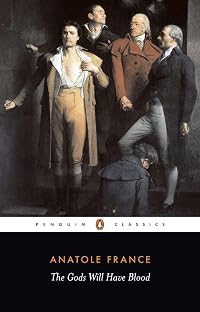
I'm also inclined to compare 'Ninety-Three' to other novels of the French Revolution. It is a great deal more epic and idealistic than 'The Gods will have Blood', but has interesting similarities concerning the momentum of revolutionary justice. Like 'The Glassblowers', this novel concentrates on the countryside during the revolution, but whilst 'The Glassblowers' concentrated on a single family at the sidelines of events, Hugo prefers to follow those actually fighting the civil war.
Although I enjoyed 'Ninety-Three' less than 'Les Mis', I remain in awe of Hugo's brilliant juxtapositions. I was shocked and moved by 'Ninety-Three', albeit not verklempt. (Gauvain may be a classically beautiful and abstemious young hero combining high ideals with human compassion, but he isn't quite an Enjolras. Not doomed enough, possibly? Insufficiently blonde?) As in 'Les Mis', Hugo uses the plight of children caught up in terrible events with great effect. As in 'Les Mis', the main characters are bedecked with classical illusions (we have another Orestes and Pylades, for instance). As in 'Les Mis', lengthy descriptions of places build up tension and anticipation of battles to come. The destructiveness and savagery of the civil war are vividly depicted. Basically, I really like Hugo's style. show less
The novel is largely concerned with the Vendée and very little of it takes place in Paris. Only one scene gives us a glimpse of the figures ruling at the time; an argument occurs between Robespierre, Danton, and Marat. This degenerates into threats to one another, as each of them has a different view of which threat to the revolution should be the priority. The National Convention is also described in detail, both in terms of its architecture and in a blizzard of names. This creates considerable atmosphere. It is the woods and the mediaeval tower of La Tourgue that dominate the action, however.
What most surprised me about this novel is that it isn't really about the events of the French Revolution as such. Considering I've read Les Mis, this should not have been so surprising. Hugo uses the setting of civil war to play out conflicts on a personal level. He tends to describe abstractions in giddily epic terms, then swoop right down to a single character, personifying the concept. The civil war of rural Brittany versus Paris is personified in Lantenac versus Gauvain. It is repeatedly stated that without Lantenac the Vendée is lost, reinforcing the tension as he escapes death at the last minute by capricious fate. Then latterly the conflict between Terror and moderation within the revolution takes on the face of Cimourdain versus Gauvain. In both cases, the two figures in opposition are bound by strong links. Although in historical terms, Hugo concentrates on personality without considering the wider social trends at work (something he is much less inclined to do in Les Mis), this makes for a very appealing narrative. After all, Hugo is not writing to analyse, he is writing to inspire.
I'm also inclined to compare 'Ninety-Three' to other novels of the French Revolution. It is a great deal more epic and idealistic than 'The Gods will have Blood', but has interesting similarities concerning the momentum of revolutionary justice. Like 'The Glassblowers', this novel concentrates on the countryside during the revolution, but whilst 'The Glassblowers' concentrated on a single family at the sidelines of events, Hugo prefers to follow those actually fighting the civil war.
Although I enjoyed 'Ninety-Three' less than 'Les Mis', I remain in awe of Hugo's brilliant juxtapositions. I was shocked and moved by 'Ninety-Three', albeit not verklempt. (Gauvain may be a classically beautiful and abstemious young hero combining high ideals with human compassion, but he isn't quite an Enjolras. Not doomed enough, possibly? Insufficiently blonde?) As in 'Les Mis', Hugo uses the plight of children caught up in terrible events with great effect. As in 'Les Mis', the main characters are bedecked with classical illusions (we have another Orestes and Pylades, for instance). As in 'Les Mis', lengthy descriptions of places build up tension and anticipation of battles to come. The destructiveness and savagery of the civil war are vividly depicted. Basically, I really like Hugo's style. show less
This book reminds me of Twenty Thousand Leagues Under the Sea, The Iliad and The Last Days of Socrates. There're memorable adventures and battles at sea, a ferocious siege that leads to a battle to the death, and finally, in the face of death, a contemplation of meaning, duty, freedom and destiny. Echoes of these contemplations are found in Tolstoy's War and Peace, especially the Epilogue.
Introduction
If you've read Les Miserables, you would notice a year mentioned throughout the book (although in the background), 93. It was the year of Terror during the French Revolution, when "many times freshly severed heads, borne aloft on the tops of pikes, sprinkled their blood-drops" over the table of the Assembly. It's also the central point of a show more debate between the bishop and the conventionist: Is bloodshed inevitable in social progress?
Reading this book is like being transported in a time machine to 18th century France during the French Revolution. First on board a battleship in the midst of a raging sea, watching a bizarre yet deadly battle between the sailors and an inanimate but powerful enemy; then to Paris,and the Assembly hall of the Convention, the Olympus, witnessing the intense struggles among powerful personalities, Danton, Robespierre and Marat, the leaders of the Revolution, where orders are issued on which lives of thousands are decided; and finally, to the final battleground, where heroes are destroyed but also born, where battles of the tongue are no less fierce than those of the cannon, but much more hilarious.
How the Heroes are Born
When I read Iliad, I couldn't help but felt depressed by a sense of fatality. Why did the Greeks and the Trojans have to kill or be killed? Both sides wanted peace and attempted a truce but the gods intervened, and the heroes fought to the death. Despite the best efforts of all reasonable and intelligent people, World War II broke out, no less inexorably than the Trojan War. Why all the senseless deaths?
Hugo contemplated these questions in the wake of the French Revolution, and in this book, he re-wrote the ending of Iliad, so to speak. There're a few unexpected turns, i.e., the offspring of free will and choice. It's no less tragic and heroic, but more than that, there're also freedom, joy and hope. Despite the apparent inevitability of events, each hero/person has to make his own choice according to his conscience, and in doing so he attains to freedom, dignity and mastery of his destiny. show less
Introduction
If you've read Les Miserables, you would notice a year mentioned throughout the book (although in the background), 93. It was the year of Terror during the French Revolution, when "many times freshly severed heads, borne aloft on the tops of pikes, sprinkled their blood-drops" over the table of the Assembly. It's also the central point of a show more debate between the bishop and the conventionist: Is bloodshed inevitable in social progress?
Reading this book is like being transported in a time machine to 18th century France during the French Revolution. First on board a battleship in the midst of a raging sea, watching a bizarre yet deadly battle between the sailors and an inanimate but powerful enemy; then to Paris,and the Assembly hall of the Convention, the Olympus, witnessing the intense struggles among powerful personalities, Danton, Robespierre and Marat, the leaders of the Revolution, where orders are issued on which lives of thousands are decided; and finally, to the final battleground, where heroes are destroyed but also born, where battles of the tongue are no less fierce than those of the cannon, but much more hilarious.
How the Heroes are Born
When I read Iliad, I couldn't help but felt depressed by a sense of fatality. Why did the Greeks and the Trojans have to kill or be killed? Both sides wanted peace and attempted a truce but the gods intervened, and the heroes fought to the death. Despite the best efforts of all reasonable and intelligent people, World War II broke out, no less inexorably than the Trojan War. Why all the senseless deaths?
Hugo contemplated these questions in the wake of the French Revolution, and in this book, he re-wrote the ending of Iliad, so to speak. There're a few unexpected turns, i.e., the offspring of free will and choice. It's no less tragic and heroic, but more than that, there're also freedom, joy and hope. Despite the apparent inevitability of events, each hero/person has to make his own choice according to his conscience, and in doing so he attains to freedom, dignity and mastery of his destiny. show less
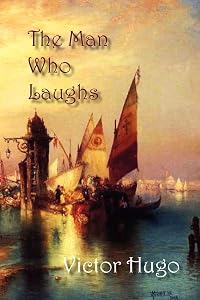
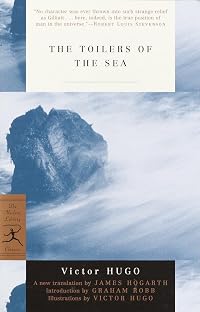
The back cover of my edition says "such diverse critics as Robert Louis Stevenson and André Maurois" consider this Hugo's "greatest work." While it has a broad scope, and Hugo's trademark usually fascinating digressions and philosophizing, it lacks the brilliant plotting and characterization that made the novels I've previously read, The Toilers of the Sea and The Laughing Man so compelling.
Ninety-three, of course, is 1793, the year of the Terror and, more apropos for this novel, the year of the revolt against the Revolution in the Vendée. Despite my previous reading about the French Revolution, I never bothered to look up where the Vendée is, but this time I did and it is just south of Brittany, where the monarchist rebellion in show more this novel takes place.
The book begins at sea, and is thrilling in the way that everything I've read by Hugo about the sea has been, and then shifts to land, in Brittany. A local aristocrat and former general (?), the Marquis de Lantenac, who fled to exile in England, has returned surreptitiously to lead the counter-revolution among the peasants. On the ground, the remnants of an elite Republican army unit attempt to track him down. In the battles that follow, three young children are separated from their mother, adopted first by this army unit and then captured by the Royalists. They, and their mother, play a key role in the plot developments at the end of the novel. This section is up to Hugo's best.
But then the scene switches to Paris, and the Convention, and Danton, Robespierre, and Marat, and endless endless conversations among them and discussions of the history of the Revolution. I can see that Hugo was trying to broaden the scope of the novel and its portrait of the horrors (and productive aspects) of Year II of the Revolution, but the novel bogs down considerably in this section and would have been unbearable if not for the end notes provided by the translator and the list of important people in the Appendix. As far as I can tell, the only important plot development in this section is the order of the Committee of Public Safety sending a former priest, Cimourdain, now a blood-thirsty revolutionary, to keep an eye on Gauvain, a Republican army leader in the Brittany region and, it turns out, the grand-nephew of the Marquis de Lantenac. (There is, it turns out, for coincidences abound in romantic fiction, also a personal connection between Cimourdain and the marquis and Gauvain.)
The last part of the novel shifts back to Brittany and the locale of the climactic scenes could not have been more dramatically portrayed: La Tourgue, a tower and attached castle dating back to the Middle Ages. Hugo's description of these structures and their dungeons and escape hatches is brilliant. The mismatched battle between the seventeen defenders and the Republican army arrayed against them offers the opportunity for intrigue, pathos, courage, character, and conscience. However, some of the plot developments strain credulity, and all in all the characters are not as fully developed as in other Hugo novels I've read.
The French Revolution is certainly fascinating, and I'm glad I read this book, but I don't consider it Hugo's best. show less
Ninety-three, of course, is 1793, the year of the Terror and, more apropos for this novel, the year of the revolt against the Revolution in the Vendée. Despite my previous reading about the French Revolution, I never bothered to look up where the Vendée is, but this time I did and it is just south of Brittany, where the monarchist rebellion in show more this novel takes place.
The book begins at sea, and is thrilling in the way that everything I've read by Hugo about the sea has been, and then shifts to land, in Brittany. A local aristocrat and former general (?), the Marquis de Lantenac, who fled to exile in England, has returned surreptitiously to lead the counter-revolution among the peasants. On the ground, the remnants of an elite Republican army unit attempt to track him down. In the battles that follow, three young children are separated from their mother, adopted first by this army unit and then captured by the Royalists. They, and their mother, play a key role in the plot developments at the end of the novel. This section is up to Hugo's best.
But then the scene switches to Paris, and the Convention, and Danton, Robespierre, and Marat, and endless endless conversations among them and discussions of the history of the Revolution. I can see that Hugo was trying to broaden the scope of the novel and its portrait of the horrors (and productive aspects) of Year II of the Revolution, but the novel bogs down considerably in this section and would have been unbearable if not for the end notes provided by the translator and the list of important people in the Appendix. As far as I can tell, the only important plot development in this section is the order of the Committee of Public Safety sending a former priest, Cimourdain, now a blood-thirsty revolutionary, to keep an eye on Gauvain, a Republican army leader in the Brittany region and, it turns out, the grand-nephew of the Marquis de Lantenac. (There is, it turns out, for coincidences abound in romantic fiction, also a personal connection between Cimourdain and the marquis and Gauvain.)
The last part of the novel shifts back to Brittany and the locale of the climactic scenes could not have been more dramatically portrayed: La Tourgue, a tower and attached castle dating back to the Middle Ages. Hugo's description of these structures and their dungeons and escape hatches is brilliant. The mismatched battle between the seventeen defenders and the Republican army arrayed against them offers the opportunity for intrigue, pathos, courage, character, and conscience. However, some of the plot developments strain credulity, and all in all the characters are not as fully developed as in other Hugo novels I've read.
The French Revolution is certainly fascinating, and I'm glad I read this book, but I don't consider it Hugo's best. show less
Ninety-Three by Victor Hugo is a glorious romantic imagining of an episode from the year 1793, during the French Revolution and the year of the Great Terror. The setting is Brittany where counter-revolutionary forces have risen up to oppose the Revolutionary leaders. The leader of this group, the aged Marquise de Lantenac, is a romantic hero in the grandest sense. A Breton noble, he disguises himself as a peasant after landing on the western coast. His mission, which he pursues with ruthless single-mindedness, is to act as a leader to the rebels, harness them to the royalist cause, and contrive an opportunity for an English military invasion.
His fate seems to be determined by the Revolutionary forces which are led by his grand-nephew, show more Gauvain. Pitted against Lantenac, Gauvain, formerly the Vicomte de Gauvain, has renounced his noble heritage and embraced the republican cause. Gauvain commands the republican troops allied with Marat and tasked with hunting down and killing Lantenac.
The third protagonist is Cimourdain, once a priest and Gauvain’s tutor, now a fervent revolutionary. It was from Cimourdain that Gauvain first learned the political ideals he has adopted. Cimourdain has a secret, the one weak spot in his ideological armour, for he loves Gauvain, has loved him since childhood, like the son he himself never had. Cimourdain is sent by the revolutionary leader, Marat, as a special agent to the Vendée to ensure that Gauvain does not waver in his loyalty, for Marat has heard disturbing rumors that Gauvain may be capable of mercy, and revolutionary leaders view this as a cardinal sin.
The tension of the story is provided not only by the action, which is fiercely exciting, but by ideas. At one point Gauvain says to Cimourdain:
"Louis XVI was a sheep thrown among lions. He tried to flee, to save himself . . . But not everyone can be a lion who wants to. His feeble attempt was regarded as a crime."
He asks Cimourdain, "lions? What are they?"
"This made Cimourdain think. He raised his head and said, 'Those lions are consciences. Those lions are ideas. Those lions are principles.'" (pp 197-98)
While Gauvain is a man of action, a revolutionary for the republic, he is also a thinker and it is his thoughts about the humanity of men that lead him to his ultimate actions.
The grandeur of this novel is superb, while Hugo builds suspense in every section. Some scenes are so vivid that you are unlikely to forget them. One scene that is sometimes excerpted from the novel is the great cannon episode; depicting a loose cannon on a ship of anti-revolutionary French Royalists sailing towards Brittany, to aid the anti-revolutionary Chouannerie rebellion.
The whole of the novel is like this, filled with one astonishing experience after another, keeping this reader spellbound. show less
His fate seems to be determined by the Revolutionary forces which are led by his grand-nephew, show more Gauvain. Pitted against Lantenac, Gauvain, formerly the Vicomte de Gauvain, has renounced his noble heritage and embraced the republican cause. Gauvain commands the republican troops allied with Marat and tasked with hunting down and killing Lantenac.
The third protagonist is Cimourdain, once a priest and Gauvain’s tutor, now a fervent revolutionary. It was from Cimourdain that Gauvain first learned the political ideals he has adopted. Cimourdain has a secret, the one weak spot in his ideological armour, for he loves Gauvain, has loved him since childhood, like the son he himself never had. Cimourdain is sent by the revolutionary leader, Marat, as a special agent to the Vendée to ensure that Gauvain does not waver in his loyalty, for Marat has heard disturbing rumors that Gauvain may be capable of mercy, and revolutionary leaders view this as a cardinal sin.
The tension of the story is provided not only by the action, which is fiercely exciting, but by ideas. At one point Gauvain says to Cimourdain:
"Louis XVI was a sheep thrown among lions. He tried to flee, to save himself . . . But not everyone can be a lion who wants to. His feeble attempt was regarded as a crime."
He asks Cimourdain, "lions? What are they?"
"This made Cimourdain think. He raised his head and said, 'Those lions are consciences. Those lions are ideas. Those lions are principles.'" (pp 197-98)
While Gauvain is a man of action, a revolutionary for the republic, he is also a thinker and it is his thoughts about the humanity of men that lead him to his ultimate actions.
The grandeur of this novel is superb, while Hugo builds suspense in every section. Some scenes are so vivid that you are unlikely to forget them. One scene that is sometimes excerpted from the novel is the great cannon episode; depicting a loose cannon on a ship of anti-revolutionary French Royalists sailing towards Brittany, to aid the anti-revolutionary Chouannerie rebellion.
The whole of the novel is like this, filled with one astonishing experience after another, keeping this reader spellbound. show less
Dans la production littéraire prodigieuse de Victor Hugo, Quatre-vingt-treize est la dernière œuvre de l'exil, une vaste fresque historique publiée en 1874, entre la première édition des Châtiments et la dernière série de La Légende des siècles. C'est donc une œuvre de la maturité, celle d'un homme éprouvé, fort de ses combats, de ses engagements, de sa réputation, au sommet de sa puissance dramatique. Comme son titre l'indique, Quatre-vingt-treize est l'épopée de la Révolution française, racontée à travers trois personnages symboliques : un vieil aristocrate, le marquis de Lantenac, son neveu, Gauvain, un noble rattaché aux humbles, et un homme du peuple, Cimourdain, père adoptif de Gauvain. C'est donc les liens show more familiaux qui unissent ses personnages avant de les voir plonger dans la tourmente des événements, et lutter les uns contre les autres. Soit par convictions de rang et de classe, soit par raison, soit encore pour un idéal. Dans l'effervescence des actes sanguinaires, seul le peuple, consciemment ou inconsciemment, semble s'imposer en héros. Résonnant comme en écho aux turbulences de la Commune, l'œuvre délivre les préoccupations sociales et humanistes d'Hugo, son idée de la fatalité, dans une imposante lutte entre le bien et le mal. --Céline Darner show less
I got about half-way through this book set during the Reign of Terror before giving up and admitting this is not a book that in any way clicks with me. Indeed, reading this book made me decide I won't read Hugo's The Hunchback of Notre Dame. I did get through his Les Miserables, with mixed feelings. I feel that Ninety-Three has some of its worst qualities, without its virtues.
I remember Jean Valjean as the best of Les Miserables--the reason to read it. He's a character with a fascinating redemptive arc. And Javert is a chilling adversary with an interesting side to him in his devotion to justice, however rigid. The two "heroes" of Ninety-Three at the half-mark on the other hand, Marquis de Lantenac and Cimourdain, leave me cold--both show more are rigid, fanatical, pitiless. It's as if we had Javert in conflict with Javert.
But more than that, my problem with Hugo is that he's the very epitome of tell, not show. Prolix, bombastic, Hugo will never give you one telling detail where pages can do. Let me give you one sentence about a canon that breaks from its moorings from the section, "Tormentum Belli:"
That mass speeds on its wheels, tilts when the ship rolls, plunges when it pitches, goes, comes, stops, seems to meditate, resumes its swift movement, goes from one end of the ship to the other with the speed of an arrow, spins around, slips to one side, dashes away, rears up, spins around, slips to one side, dashes away, rears up, collides, smashes, kills, exterminates.
It then goes on with this description for 41 lines. That's a smattering of his style. I was done in by "The Convention" chapter--by comparison, the inexorable chapter about the Parisian sewers in Les Miserables seems a lesser sin.
To be clear, this isn't the reaction of someone who despises the classics or 19th century literature. Books by Jane Austen, Charlotte Bronte, E.M. Forster and other classics have secure places on my bookshelves. But Ninety-Three is going into my try-to-sell-to-the-Used-Bookstore box. show less
I remember Jean Valjean as the best of Les Miserables--the reason to read it. He's a character with a fascinating redemptive arc. And Javert is a chilling adversary with an interesting side to him in his devotion to justice, however rigid. The two "heroes" of Ninety-Three at the half-mark on the other hand, Marquis de Lantenac and Cimourdain, leave me cold--both show more are rigid, fanatical, pitiless. It's as if we had Javert in conflict with Javert.
But more than that, my problem with Hugo is that he's the very epitome of tell, not show. Prolix, bombastic, Hugo will never give you one telling detail where pages can do. Let me give you one sentence about a canon that breaks from its moorings from the section, "Tormentum Belli:"
That mass speeds on its wheels, tilts when the ship rolls, plunges when it pitches, goes, comes, stops, seems to meditate, resumes its swift movement, goes from one end of the ship to the other with the speed of an arrow, spins around, slips to one side, dashes away, rears up, spins around, slips to one side, dashes away, rears up, collides, smashes, kills, exterminates.
It then goes on with this description for 41 lines. That's a smattering of his style. I was done in by "The Convention" chapter--by comparison, the inexorable chapter about the Parisian sewers in Les Miserables seems a lesser sin.
To be clear, this isn't the reaction of someone who despises the classics or 19th century literature. Books by Jane Austen, Charlotte Bronte, E.M. Forster and other classics have secure places on my bookshelves. But Ninety-Three is going into my try-to-sell-to-the-Used-Bookstore box. show less
I should have expected this by now, having read three or four of VH's novels already, but this book was about 50% digression. Some pretty great moments, however. Nowhere near as grand as his other novels and comparatively little time is given to developing the characters, but I did enjoy it.
Members
- Recently Added By
Lists

Stories of War and Revolution
143 works; 54 members

Top Five Books of 2017
757 works; 231 members

CCE 1000 Good Books List
1,033 works; 12 members

French Fiction of the 18th and 19th Centuries in English Translation
169 works; 3 members

Books and authors mentioned by Le Clézio in his Nobel Prize speech
87 works; 3 members

Book Titles Mentioned In Newberry Medal And Honor Books
884 works; 3 members

School Made Us Read It
380 works; 196 members
Author Information

2,154+ Works 68,168 Members
Victor Hugo was born in Besançon, France on February 26, 1802. Although he originally studied law, Hugo dreamed of writing. In 1819, he founded the journal Conservateur Litteraire as an outlet for his dream and soon produced volumes of poetry, plays, and novels. His novels included The Hunchback of Notre Dame and Les Miserables. Both of these show more works have been adapted for the stage and screen many times. These adaptations include the Walt Disney version of The Hunchback of Notre Dame, and the award-winning musical sensation Les Miserables. In addition to his literary career, Hugo also held political office. In 1841, he was elected to the Academie Francaise. After political upheaval in 1851, he was exiled and remained so until 1870. He returned to Paris in 1871 and was elected to the National Assembly, though he soon resigned. He died on May 22, 1885. (Bowker Author Biography) show less
Some Editions
Awards and Honors
Series
Belongs to Publisher Series
Work Relationships
Is contained in
4 Vintage Hardcover Books by Victor Hugo: Hunchback of Notre Dame, The Laughing Man, Toilers of the Sea, Ninety-Three by Victor Hugo
Common Knowledge
- Canonical title
- Ninety-Three
- Original title
- Quatrevingt-treize
- Alternate titles*
- Quatre-vingt-treize
- Original publication date
- 1874
- People/Characters
- Marquis de Lantenac; Vicomte Gauvain; Cimourdain; Radeloub; Halmalo; Gouge-le-Bruant "Brise-Bleu, "L'Imânus" (show all 12); Maximilien de Robespierre; Georges Danton; Jean-Paul Marat; Bataillon du Bonnet rouge; Michelle Fléchard; Tellmarch
- Important places
- Brittany, France; Paris, France; Vendée, Pays de la Loire, France; Forêt de Fougères, Brittany, France; Forêt de la Saudraie, France; Dol-de-Bretagne, Brittany, France (show all 7); Couesnon, France (river)
- Important events
- Reign of Terror
- First words
- In the latter part of May, 1793, one of the Paris battalions sent into Brittany by Santerre, searched the much dreaded forest of La Saudraie, in Astillé.
- Quotations*
- Dans la terre fatale avait germé l'arbre sinistre. De cette terre, arrosée de tant de sueurs, de tant de larmes, de tant de sang, de cette terre où avaient été creusées tant de fosses, tant de tombes, tant de cavernes, ... (show all)tant d'embûches, de cette terre où avaient pourri toutes les espèces de morts faites par toutes les espèces de tyrannies, (.. .), de cette terre profonde, était sortie, au jour marqué, cette inconnue, cette vengeresse, [... ]
- Last words
- (Click to show. Warning: May contain spoilers.)And those two souls, united still in that tragic death, soared away together, the shadow of the one mingled with the radiance of the other.
- Original language
- French
*Some information comes from Common Knowledge in other languages. Click "Edit" for more information.
Classifications
Statistics
- Members
- 1,283
- Popularity
- 19,013
- Reviews
- 29
- Rating
- (3.87)
- Languages
- 18 — Chinese, Czech, Danish, Dutch, English, Finnish, French, German, Greek, Hungarian, Italian, Lithuanian, Norwegian (Bokmål), Portuguese, Russian, Slovenian, Spanish, Swedish
- Media
- Paper, Audiobook, Ebook
- ISBNs
- 160
- ASINs
- 74