On This Page
Description
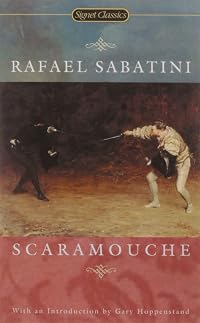
Scaramouche is a swashbuckling romantic adventure set during the French Revolution. A young lawyer becomes enmeshed in political turmoil, and goes into hiding as an actor with a traveling commedia dell'arte troupe. He plays the buffoon, Scaramouche. During his adventures he also becomes a master politician and swordsman, and though he is a revolutionary, circumstances force him to change sides several times. The tone of the book is set from the opening line: "He was born with a gift of show more laughter and a sense that the world was mad.". show less
Tags
Recommendations














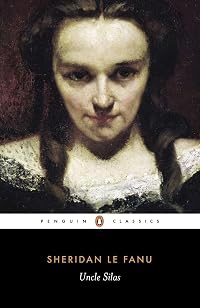
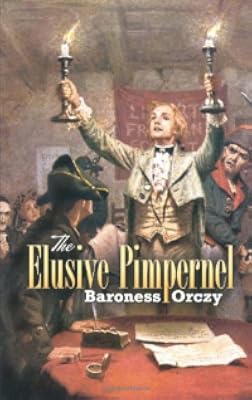
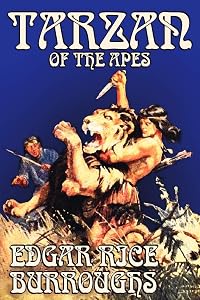


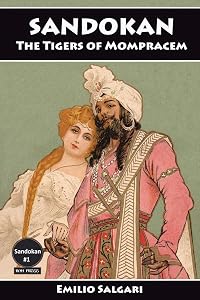


Member Recommendations
morryb The French Revolutionary Mob becomes a character in each novel.
22


themulhern Some similar plot devices
Member Reviews
This books was incredibly frustrating as the protagonist, Andre-Louis Moreau, is the definition of a Marty Stu. He's good at everything. He's super charming, so when he makes a bunch of very wrong assumptions, he's immediately forgiven. Everyone loves him, and every woman fell in love with him. On top of this, he refuses to help his friends save their friends from getting massacred in duels until he personally benefits from these encounters, even though he's the best fencer in the city. He is the definition of male privilege! Sabatini's novels are typically like this, but he usually offsets his perfect characters with descriptive prose regarding battles and genuinely clever plots to cheat the enemy that it becomes more amusing. Also, show more usually his male characters have at least one fault. AL's only fault was revealed at the end, and it was that he was a coward (which he is): he runs away from everything, but he's still celebrated as some sort of hero.
AL gets his cake and eats it too. He goes around as a republican, touting how people born into privilege shouldn't run the country or be considered great just because of their birth. While we agree with these sentiments now, that wasn't the case back then. Back then, these republicans were stealing the aristocrats of their land, homes, and their way of life. Not only that but what followed was the French Revolution, and we know how much of a mess that was. To the old-timers, the republicans had brought hellfire down on everyone. YET, at the end of the novel, AL gets the girl of his dreams and lives with his RICH AF family, completely forgiven! Seriously?!
Not only that, but the aristocrats were more likable in general. Yes, they were overpowered, but they had more heart. They looked out for each other. Granted, their friends and family have more resources than servants, but they seem to genuinely care about each other, even when they've hurt each other. AL always assumed he was right and would break his own principles for personal gain and never had an existential crisis about it. In contrast, Azyr was a terrible person, but he tried to atone for his mistakes, and he fought for what was his, while AL let himself get chased out of multiple towns. Azyr's behavior makes sense based on the ideologies he grew up with while AL is just an entitled jerk. The former is sympathetic while the latter is not.
In the end, AL changed society enough that he always ended on top, even though everyone else lost their homes, friends, and everything they owned. He might've lost some things in the process, but his mentality and heartlessness prevented him from caring. As a result, I didn't care about him or for this book. show less
AL gets his cake and eats it too. He goes around as a republican, touting how people born into privilege shouldn't run the country or be considered great just because of their birth. While we agree with these sentiments now, that wasn't the case back then. Back then, these republicans were stealing the aristocrats of their land, homes, and their way of life. Not only that but what followed was the French Revolution, and we know how much of a mess that was. To the old-timers, the republicans had brought hellfire down on everyone. YET, at the end of the novel, AL gets the girl of his dreams and lives with his RICH AF family, completely forgiven! Seriously?!
Not only that, but the aristocrats were more likable in general. Yes, they were overpowered, but they had more heart. They looked out for each other. Granted, their friends and family have more resources than servants, but they seem to genuinely care about each other, even when they've hurt each other. AL always assumed he was right and would break his own principles for personal gain and never had an existential crisis about it. In contrast, Azyr was a terrible person, but he tried to atone for his mistakes, and he fought for what was his, while AL let himself get chased out of multiple towns. Azyr's behavior makes sense based on the ideologies he grew up with while AL is just an entitled jerk. The former is sympathetic while the latter is not.
In the end, AL changed society enough that he always ended on top, even though everyone else lost their homes, friends, and everything they owned. He might've lost some things in the process, but his mentality and heartlessness prevented him from caring. As a result, I didn't care about him or for this book. show less
"Scaramouche, Scaramouche, will you do the fandango?" Whatever the heck that Queen lyric means, the Scaramouche novel by Rafael Sabatini is swashbuckling entertainment a la Dumas or Baroness Orczy. It's set during the French Revolution. Our versatile protagonist, lawyer Andre Louis-Moreau, is the bastard of a secret-shielded mother and unknown aristocratic father. He's inspired to change his life at age 20 or so when his friend is murdered in an unfair duel by an arrogant aristocrat. To honor his friend, Andre becomes an eloquent rabble-rouser in opposition to the country's uncaring elite. Forced to flee, he joins a theater troupe (where he becomes Scaramouche) and has a profound effect on them. Forced to flee again, he hides as a show more junior instructor in a fencing school, where the constant swordplay advances him toward mastery.
Dedicated to bringing down the arrogant aristocrat who killed his friend, Andre finds he must use all his acquired skills to even have a chance. Andre is complex in romance and in his revenge-fueled drive, sometimes cold, sometimes charming, sometimes vulnerable. He develops strong attachments with ladies high and low, and alternately infuriates and captivates members of his adopted family. Written by the author of Captain Blood and The Sea-Hawk, it makes for amiable summer reading with a beverage of your choice. show less
Dedicated to bringing down the arrogant aristocrat who killed his friend, Andre finds he must use all his acquired skills to even have a chance. Andre is complex in romance and in his revenge-fueled drive, sometimes cold, sometimes charming, sometimes vulnerable. He develops strong attachments with ladies high and low, and alternately infuriates and captivates members of his adopted family. Written by the author of Captain Blood and The Sea-Hawk, it makes for amiable summer reading with a beverage of your choice. show less
Do not miss this one. Captain Blood is Sabatini’s most known work but this is the best. Much like Captain Blood, Scaramouche has a protagonist you will enjoy following. Andre-Louis is a man who tries to view everything objectively, has strong opinions, and is not afraid to mock anyone. Not exactly a popular guy. While he tries to be the laughing academic he presents, he is very much driven by his emotions and he is easy to empathize with. He has some good complexity as a character, as he does not always make the best choices. Also, he has some very memorable lines and brings witty humor to the novel.
The book chronicles Andre’s life in France as the French Revolution is occurring. At times he is a lawyer, an outlaw, an actor, and a show more fencing tutor. There is not much action in the book, so most of the tension is driven by Andre’s relationships to those around him which are engaging. When there is action and suspense it is well done particularly in the finale in Paris.
Scaramouche could be classified as a revenge novel but revenge is more of an overarching theme as Andre is not constantly seeking vengeance. Andre and the man who killed his best friend continually come into contact with each other incidentally and clash. The villain is great as he is easy to hate but is understandable.
This is an all around great. A great adventure that has some thought provoking themes such as class, self preservation, and familial ties. Definitely read if you have an interest in the French Revolution, enjoy adventure novels, or enjoy sardonic humor. It is possible someone would dislike this book but it is not probable. show less
The book chronicles Andre’s life in France as the French Revolution is occurring. At times he is a lawyer, an outlaw, an actor, and a show more fencing tutor. There is not much action in the book, so most of the tension is driven by Andre’s relationships to those around him which are engaging. When there is action and suspense it is well done particularly in the finale in Paris.
Scaramouche could be classified as a revenge novel but revenge is more of an overarching theme as Andre is not constantly seeking vengeance. Andre and the man who killed his best friend continually come into contact with each other incidentally and clash. The villain is great as he is easy to hate but is understandable.
This is an all around great. A great adventure that has some thought provoking themes such as class, self preservation, and familial ties. Definitely read if you have an interest in the French Revolution, enjoy adventure novels, or enjoy sardonic humor. It is possible someone would dislike this book but it is not probable. show less
Allow me to start this review with a piece of advice: if you buy a former library book off eBay, it may still contain the security tag. If you walk into a library with such a book in your bag, it will set off alarms and librarians will be suspicious of you. This I learned today.
Anyway, ‘Scaramouche’ is an entertaining adventure set during the French Revolution. A cynical young lawyer named André-Louis becomes a revolutionary, actor, and swordsman, after the tragic killing of of his best friend. The narrative is couched in the omniscient third person, as of a biographer commenting on André-Louis’ ‘Confessions’. I found this device a little odd in places but largely unintrusive. The protagonist himself provides an interesting show more perspective on the first few pre-Terror years of the French Revolution. He is sceptical and ironic about the usefulness of political change, until the systemic injustice of the regime becomes personal. He is eventually convinced of the importance of the constitution and curtailment of noble privileges, but remains ambivalent about the sans-culottes. In fact, his resolutely non-idealistic perspective seems more appropriate to the time that Sabantini was writing (1890s to 1950). This novel was published in 1921, by which time France had been through extraordinary political upheaval throughout the 19th century and had reason to view the Revolution with jaundiced hindsight.
I did find, however, that André-Louis seemed to have an extraordinary series of talents without very much in the way of failings. I was never concerned for him when he was in peril, as he seemed to extricate himself from every scape with little effort and much aplomb. That said, other characters repeatedly chastise him for heartlessness and lofty distance, as well as his sometimes unappetising cynicism. I liked him as a character, but suspect that he would make a maddening friend. The middle section of the novel was the most compelling part, as it involved duelling, disguise, and drama. The ending was rather too melodramatic and predictable; I saw the tragic revelations coming a mile off. Nonetheless, ‘Scaramouche’ was an enjoyable romp and would make a fantastic costume drama. show less
Anyway, ‘Scaramouche’ is an entertaining adventure set during the French Revolution. A cynical young lawyer named André-Louis becomes a revolutionary, actor, and swordsman, after the tragic killing of of his best friend. The narrative is couched in the omniscient third person, as of a biographer commenting on André-Louis’ ‘Confessions’. I found this device a little odd in places but largely unintrusive. The protagonist himself provides an interesting show more perspective on the first few pre-Terror years of the French Revolution. He is sceptical and ironic about the usefulness of political change, until the systemic injustice of the regime becomes personal. He is eventually convinced of the importance of the constitution and curtailment of noble privileges, but remains ambivalent about the sans-culottes. In fact, his resolutely non-idealistic perspective seems more appropriate to the time that Sabantini was writing (1890s to 1950). This novel was published in 1921, by which time France had been through extraordinary political upheaval throughout the 19th century and had reason to view the Revolution with jaundiced hindsight.
I did find, however, that André-Louis seemed to have an extraordinary series of talents without very much in the way of failings. I was never concerned for him when he was in peril, as he seemed to extricate himself from every scape with little effort and much aplomb. That said, other characters repeatedly chastise him for heartlessness and lofty distance, as well as his sometimes unappetising cynicism. I liked him as a character, but suspect that he would make a maddening friend. The middle section of the novel was the most compelling part, as it involved duelling, disguise, and drama. The ending was rather too melodramatic and predictable; I saw the tragic revelations coming a mile off. Nonetheless, ‘Scaramouche’ was an enjoyable romp and would make a fantastic costume drama. show less
I read Sabatini's wonderful Captain Blood some time ago and have been meaning to return to his work. After my 13-year old daughter finished Scaramouche for the second time, and highly recommended it, I started reading her paperback copy, then switched to a Kindle version downloaded from Amazon. This made it much easier to look up some of the odd words or French passages the author frequently uses.
Scaramouche is a story that takes its time getting to where it is going. I was expecting a real thriller like Captain Blood, but this isn't that type of book. The characterization, at least of the title character, the adopted son of a minor nobleman, is much deeper and this is truly a piece of historical fiction rather than an adventure novel. show more We see France during the inception of the French Revolution as the protagonist, seeking to avenge the death of a friend, becomes a spokesman for the third estate--the ordinary people who are trying to put an end to the unquestioned power of the nobles and the clergy. All this is very educational and quite well done. We get to meet, in passing, some of the historical personages of the revolution such as Danton. But the fun in the story is how the hero (although he is a hero with some obvious flaws) has to reinvent himself as he is fleeing arrest. First, he joins an acting troupe and is quickly writing their scenarios and becoming their star--thus his assuming the identity of Scaramouche. Later, he becomes a fencing master, which certainly comes in handy. All the while, the story is moving toward its inevitable climax when he must confront the despicable nobleman who killed his friend at the beginning of the book. Except, nothing is quite that simple here. Sabatini has a more complex story to tell, and he tells it well. Although this isn't what I was expecting, the book is very well written and never fails to hold the attention.
There is a sequel, Scaramouche the Kingmaker, which continues the story.
Sabatini is a not-quite forgotten writer who deserves to be read and re-read. show less
Scaramouche is a story that takes its time getting to where it is going. I was expecting a real thriller like Captain Blood, but this isn't that type of book. The characterization, at least of the title character, the adopted son of a minor nobleman, is much deeper and this is truly a piece of historical fiction rather than an adventure novel. show more We see France during the inception of the French Revolution as the protagonist, seeking to avenge the death of a friend, becomes a spokesman for the third estate--the ordinary people who are trying to put an end to the unquestioned power of the nobles and the clergy. All this is very educational and quite well done. We get to meet, in passing, some of the historical personages of the revolution such as Danton. But the fun in the story is how the hero (although he is a hero with some obvious flaws) has to reinvent himself as he is fleeing arrest. First, he joins an acting troupe and is quickly writing their scenarios and becoming their star--thus his assuming the identity of Scaramouche. Later, he becomes a fencing master, which certainly comes in handy. All the while, the story is moving toward its inevitable climax when he must confront the despicable nobleman who killed his friend at the beginning of the book. Except, nothing is quite that simple here. Sabatini has a more complex story to tell, and he tells it well. Although this isn't what I was expecting, the book is very well written and never fails to hold the attention.
There is a sequel, Scaramouche the Kingmaker, which continues the story.
Sabatini is a not-quite forgotten writer who deserves to be read and re-read. show less
www.yearningtoread.blogspot.com
"He was born with the gift of laughter, and a sense that the world was mad." It is with these words that Rafael Sabatini opens Scaramouche, and they are a fitting introduction. Andre-Louis Moreau has led an easy life, studying hard and becoming a lawyer, never becoming attached to anything or anyone indefinitely. Except for his best friend, Philippe, and his angel cousin, Aline. But when tragedy strikes, Andre is pushed to the edge. He becomes a public speaker for the third estate against the Privileged in France during the French Revolution. But this is only the beginning of his journey to gain revenge on the terrible, cold Marquis la Tour d'Azyr. He is swept away by politics, danger, theater, show more swordsmanship, and finally politics again - all in hopes of getting away with his life. But life is dangerous no matter where Andre-Louis wishes to go, and the threat of the Privileged is terrible. The Nobles, all of them, must be destroyed. And Andre must settle a score he swore he would settle - and at any cost.
___________________________________________
My thoughts -
Oh, sigh... How immensely I love this book. If I could have my way, I'd write out the whole entire book as my review, just because there is really no way to do it justice. However, I will try. I will try my hardest.
This is my third time to read Scaramouche. So, as you can imagine, I've spent a lot of time with this book. I've studied it, because it's so stinking good. I could write a whole book on this book, because it had such an intense impact on me. So much of an impact that not only have I read this book three times, but in a manner of only a year and a half. Yah, this is some intense stuff. I hardly re-read books in one year.
Basically, it's beautiful. It's emotional, tragic, powerful, dramatic, crafted like a masterpiece, and it holds some of the greatest characters and character changes that I've ever read. EVER. It's full of action, romance, betrayal, secrets, disaster, political intrigue, and (I repeat) emotion.
Character notes (favorite character) -
I have a LOT to say about Andre. But let me say something quick about the others before I get into it.
Every character in this story, from the beginning, has a character handle, or something you can identify him/her with. Andre, he is the actor. Philippe, he is passionate. D'Azyr, he is cold-hearted. Aline, she is an angel. They easily form to their characters and become exactly what they need to be for the story to take flight. This is an amazing thing to see as I sometimes feel like I lack character development in my own stories. Such an inspiration...like everything else about this book.
But now, on to Andre.
Andre-Louis Moreau is complex. He is man, and therefore complex, as he would say. He has studied human nature for quite awhile - and yet he himself would be the most fitting example of a complex human being struggling to survive. This alone fascinates me. But let me take you a little deeper.
He is an actor, always. He is Scaramouche, the aloof, witty character who wishes for none to see his true feelings. But inside, he feels. He feels deeply. There are few moments when he lets his guard down, very few, but when he does, you see the hopes, fears, and loves of a man who wants to be something more.
He is also very wise and bold. In fact, his wisdom surprised me this time around. He may be jealous, act on his impulses, and manipulate his words to get his way - but there are times when he steps forward to do the right thing and he knows exactly how to make things right. Exactly how to remove himself from a bad situation.
He begins the story as a boy, searching for revenge. He is tested by love and betrayal and grows. And he comes out in the end as a man, one to be respected and trusted and truly loved. At the end of the book, I want to repeat the words of the butler Benoit, who says on page 257, "He is here....and so fine you would hardly know him. Here he is, monseigneur! Is he not beautiful?"
Favorite aspects/scenes (story notes) -
My favorite scenes include chapter 6, called "Clemene"; Chapter 8, called "The Dream"; the chapter called "Madame de Plougastel", where Andre-Louis vividly remembers his childhood - it produces a lot of emotion in the reader; any of Andre's rousing speeches.
But these are just some of my favorite scenes. My all-time favorite resides in the chapter called "Spadassinicides", Chapter 7 of book 3. It is laugh-out-loud funny, with politics, wit, danger, fencing, and something of a mix between shock, reverence, and love for Andre and his genius.
Throughout the second book (the Buskin), Andre is confronted by a wall...that wall, being M. Binet, the theater troop's director. Andre has the brains, Binet has the power. Andre is witty, Binet is tyrannical. Who will gain the upper-hand? And what of Andre's love for Binet's daughter? This aspect of the story is a neat example of human nature and the lies we believe when we want something...
And of course, I love that Scaramouche is about the French Revolution. The facts, turned into a story, are interesting to read and really give you a hard-core example of what it was like during that bloody time in France. You see the revolution from both sides - the Nobles and the Peasants. Who is right, and who is wrong? It is a complicated war, but Sabatini lays it out so it is easy to understand.
One word to sum up this book (final thoughts) -
Triumphant. When I finish this book (all three times) I want to throw my fists into the air, jump out of my seat and let out a shrill war cry of "TRIUMPH!!!" Because the book takes you on a journey, the journey of a destitute man looking for happiness amongst a bloody revolution. But more importantly, he goes through a Revolution of his own, one so profound and personal that you cannot help but feel the story for yourself. Almost every emotion known to mankind can be found in this book. As the reader, I feel these emotions along with each character - and very strongly, as though they were my own. Each time I read it, it shocks me and I fall in love all over again. And I know that soon, very soon, I will want to read it again. show less
"He was born with the gift of laughter, and a sense that the world was mad." It is with these words that Rafael Sabatini opens Scaramouche, and they are a fitting introduction. Andre-Louis Moreau has led an easy life, studying hard and becoming a lawyer, never becoming attached to anything or anyone indefinitely. Except for his best friend, Philippe, and his angel cousin, Aline. But when tragedy strikes, Andre is pushed to the edge. He becomes a public speaker for the third estate against the Privileged in France during the French Revolution. But this is only the beginning of his journey to gain revenge on the terrible, cold Marquis la Tour d'Azyr. He is swept away by politics, danger, theater, show more swordsmanship, and finally politics again - all in hopes of getting away with his life. But life is dangerous no matter where Andre-Louis wishes to go, and the threat of the Privileged is terrible. The Nobles, all of them, must be destroyed. And Andre must settle a score he swore he would settle - and at any cost.
___________________________________________
My thoughts -
Oh, sigh... How immensely I love this book. If I could have my way, I'd write out the whole entire book as my review, just because there is really no way to do it justice. However, I will try. I will try my hardest.
This is my third time to read Scaramouche. So, as you can imagine, I've spent a lot of time with this book. I've studied it, because it's so stinking good. I could write a whole book on this book, because it had such an intense impact on me. So much of an impact that not only have I read this book three times, but in a manner of only a year and a half. Yah, this is some intense stuff. I hardly re-read books in one year.
Basically, it's beautiful. It's emotional, tragic, powerful, dramatic, crafted like a masterpiece, and it holds some of the greatest characters and character changes that I've ever read. EVER. It's full of action, romance, betrayal, secrets, disaster, political intrigue, and (I repeat) emotion.
Character notes (favorite character) -
I have a LOT to say about Andre. But let me say something quick about the others before I get into it.
Every character in this story, from the beginning, has a character handle, or something you can identify him/her with. Andre, he is the actor. Philippe, he is passionate. D'Azyr, he is cold-hearted. Aline, she is an angel. They easily form to their characters and become exactly what they need to be for the story to take flight. This is an amazing thing to see as I sometimes feel like I lack character development in my own stories. Such an inspiration...like everything else about this book.
But now, on to Andre.
Andre-Louis Moreau is complex. He is man, and therefore complex, as he would say. He has studied human nature for quite awhile - and yet he himself would be the most fitting example of a complex human being struggling to survive. This alone fascinates me. But let me take you a little deeper.
He is an actor, always. He is Scaramouche, the aloof, witty character who wishes for none to see his true feelings. But inside, he feels. He feels deeply. There are few moments when he lets his guard down, very few, but when he does, you see the hopes, fears, and loves of a man who wants to be something more.
He is also very wise and bold. In fact, his wisdom surprised me this time around. He may be jealous, act on his impulses, and manipulate his words to get his way - but there are times when he steps forward to do the right thing and he knows exactly how to make things right. Exactly how to remove himself from a bad situation.
He begins the story as a boy, searching for revenge. He is tested by love and betrayal and grows. And he comes out in the end as a man, one to be respected and trusted and truly loved. At the end of the book, I want to repeat the words of the butler Benoit, who says on page 257, "He is here....and so fine you would hardly know him. Here he is, monseigneur! Is he not beautiful?"
Favorite aspects/scenes (story notes) -
My favorite scenes include chapter 6, called "Clemene"; Chapter 8, called "The Dream"; the chapter called "Madame de Plougastel", where Andre-Louis vividly remembers his childhood - it produces a lot of emotion in the reader; any of Andre's rousing speeches.
But these are just some of my favorite scenes. My all-time favorite resides in the chapter called "Spadassinicides", Chapter 7 of book 3. It is laugh-out-loud funny, with politics, wit, danger, fencing, and something of a mix between shock, reverence, and love for Andre and his genius.
Throughout the second book (the Buskin), Andre is confronted by a wall...that wall, being M. Binet, the theater troop's director. Andre has the brains, Binet has the power. Andre is witty, Binet is tyrannical. Who will gain the upper-hand? And what of Andre's love for Binet's daughter? This aspect of the story is a neat example of human nature and the lies we believe when we want something...
And of course, I love that Scaramouche is about the French Revolution. The facts, turned into a story, are interesting to read and really give you a hard-core example of what it was like during that bloody time in France. You see the revolution from both sides - the Nobles and the Peasants. Who is right, and who is wrong? It is a complicated war, but Sabatini lays it out so it is easy to understand.
One word to sum up this book (final thoughts) -
Triumphant. When I finish this book (all three times) I want to throw my fists into the air, jump out of my seat and let out a shrill war cry of "TRIUMPH!!!" Because the book takes you on a journey, the journey of a destitute man looking for happiness amongst a bloody revolution. But more importantly, he goes through a Revolution of his own, one so profound and personal that you cannot help but feel the story for yourself. Almost every emotion known to mankind can be found in this book. As the reader, I feel these emotions along with each character - and very strongly, as though they were my own. Each time I read it, it shocks me and I fall in love all over again. And I know that soon, very soon, I will want to read it again. show less
Set just before and during the French Revolution. This is a ripping good story! Dare I say, as good as A Tale of Two Cities, without the tedious bits Dickens put in. It made me want to learn about the Italian Comedy Improvisation theater, and filled in some bits about the French Revolution that I didn't know I was missing. I will be looking for more books by this author. It didn't hurt a bit that Simon Vance was the narrator, and I'm glad I listened to it because the French names would have made me stumble with pronunciation if I were trying to read a book.
Members
- Recently Added By
Lists

The Guardian's 1000 Novels Everyone Must Read
1,005 works; 550 members

Read the book and saw the movie
1,170 works; 195 members

The Top Ten: Writers Pick Their Favorite Books
240 works; 31 members

Best Adventure Stories
66 works; 15 members

Best First Lines
133 works; 8 members

A High School Trip to France
57 works; 5 members

1920s
141 works; 6 members

Revolutions
72 works; 5 members

Books Read in 2015
3,299 works; 126 members
Fiction Set During a Revolution
55 works; 24 members

Authors from Italy
13 works; 1 member

CCE 1000 Good Books List
1,033 works; 12 members

Elevenses
316 works; 88 members

Book Titles Mentioned In Newberry Medal And Honor Books
884 works; 3 members
Books With Our Favorite First Lines
168 works; 104 members

Books Read in 2024
4,623 works; 126 members

Books in The Club Dumas
72 works; 1 member
Author Information

158+ Works 7,550 Members
Rafael Sabatini was born April 29, 1875 in Jesi, Italy. At a young age, Rafael was exposed to many languages, and attending school in Portugal and, as a teenager, in Switzerland. By the time he was seventeen, when he went to England to live permanently, he could speak five languages. He quickly added English and chose to write in his adopted show more language, because, he said, "all the best stories are written in English." After a brief stint in the business world, Sabatini went to work as a writer. He wrote short stories in the 1890s, and his first novel came out in 1902. It took Sabatini almost a quarter of century before he attained success with Scaramouche in 1921. It became an international best-seller. Captain Blood followed in 1922 and was equally as successful. Sabatini was a prolific writer; he produced a new book approximately every year. While he would never achieve the success of Scaramouche and Captain Blood, Sabatini still maintained a great deal of popularity with the reading public through the decades that followed. By the 1940s, illness forced the writer to slow his prolific method of composition. However, he did write several additional works even during that time. His body of work consists of 31 novels, 8 short story colections and 6 books of poetry. He died February 13, 1950 in Switzerland. He is buried at Adelboden, Switzerland. (Bowker Author Biography) show less
Some Editions
Awards and Honors
Series

Belongs to Publisher Series
Work Relationships
Is contained in
In the shadow of the guillotine: comprising Scaramouche, The Marquis of Carabas [and] The lost king by Rafael Sabatini
International Collector's Library Classics 19 volumes: Crime & Punishment; Twenty Thousand Leagues Under the Sea; Mysterious Island; Magic Mountain; Around the World in 80 Days; Count of Monte Cristo; Camille; Quo Vadis; Hunchback of Notre Dame; Nana; Scaramouche; Pinocchio; Fernande; War and Peace; The Egyptian; From the Earth to the Moon; Candide; Treasure of Sierra Madre; Siddhartha/Steppenwolf by Jules Verne
Has the adaptation
Common Knowledge
- Canonical title
- Scaramouche
- Original title
- Saramouche: A Romance of the French Revolution; Scaramouche
- Original publication date
- 1921
- People/Characters
- André-Louis Moreau; Scaramouche; Gervais Lesarques (Marquis de La Tour d'Azyr); Aline de Kercadiou; Antoine Binet ("Pantaloon"); Climène Binet (show all 51); Camille Desmoulins; Quintin de Kercadiou (Lord of Gavrillac); Rabouillet; Philippe de Vilmorin; Bénoît; Isaac René Guy le Chapelier; Mabey; Le Chevalier de Chabrillaine; Monsieur de Lesdiguières; La Rivière; Omnes Omnibus; Fresnel; Léandre; Cordemais; Basque; Charles de Sautron; Madame de Sautron; Jacques Necker (mentioned); Bertrand des Amis; Emmanuel Joseph Sieyès (Abbé | Sieyè | s); Louis Marie Florent de Lomont d'Haraucourt, duc du Châtelet (M. du Châ | telet); Victor-François, 2nd duc de Broglie; Joseph-Ignace Guillotin; Jean-Paul Marat; Pierre Victor, Baron de Besenval de Brünstatt; Charles Eugène de Lorraine (Prince of Lambesc); Georges Danton; Le Duc; Galoche; Gilles; Thérèse de Plougastel; Jacques; Louis XVI, King of France; Honoré Gabriel Riqueti, Count of Mirabeau (Mirabeau); Jean-Sifrein Maury (Abbé | Maury); Maximilien Robespierre; Kersain (a Breton deputy); Canales; Emmanuel Lagron; Monsieur de La Motte-Royau; Monsieur de Blavon; Monsieur des Troiscantins; Monsieur d'Ormesson; Monsieur de Plougastel; Rougane
- Important places
- France; Nantes, Loire-Atlantique, Pays de la Loire, France; Rennes, Ille-et-Vilaine, Brittany, France; Guichen, Brittany, France; Paris, Île-de-France, France; Meudon, Île-de-France, France (show all 11); Gavrillac, Brittany, France (fictional); Théâtre Feydau, Nantes, Pays de la Loire, France; Salle du Manège, Paris, France; Bois de Boulogne, Paris, France; Rue du Hasard, Paris, France
- Important events
- French Revolution; Convention of the Estates-General of 1789; Reign of King Louis XVI; Storming of the Tuileries Palace (1792); Insurrection of 10 August, 1792
- Related movies
- Scaramouche (1923 | IMDb); Scaramouche (1952 | IMDb); Scaramouche (1956 | IMDb)
- First words
- He was born with a gift of laughter and a sense that the world was mad.
- Last words
- (Click to show. Warning: May contain spoilers.)M. de Kercadiou, emerging a moment later from the library window, beheld them holding hands and staring each at the other, beatifically, as if each saw Paradise in the other's face.
- Original language
- English
Classifications
Statistics
- Members
- 1,937
- Popularity
- 10,984
- Reviews
- 60
- Rating
- (4.01)
- Languages
- 10 — Dutch, English, Estonian, Finnish, French, German, Italian, Portuguese, Russian, Spanish
- Media
- Paper, Audiobook, Ebook
- ISBNs
- 131
- UPCs
- 1
- ASINs
- 79