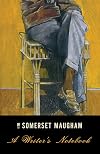
A Writer's Notebook
by W. Somerset Maugham 
On This Page
Description
Filled with keen observations, autobiographical notes, and the seeds of many of Maugham's greatest works, A Writer's Notebook is a unique and exhilarating look into a great writer's mind at work.nbsp;From nearly five decades, Somerset Maugham recorded an intimate journal. In it we see the budding of his incomparable vision and his remarkable career as a writer. Covering the years from his time as a youthful medical student in London to a seasoned world traveler around the world, it is show more playful, sharp witted, and always revealing. Undoubtedly one of his most significant works, A Writer's Notebook is a must for Maugham fans and anyone interested in the creative process. show lessTags
Recommendations






























Member Reviews
[Preface to A Writer's Notebook, Heinemann/Doubleday, 1949:]
I forget who it was who said that every author should keep a notebook, but should take care never to refer to it. If you understand this properly, I think there is truth in it. By making a note of something that strikes you, you separate it from the incessant stream of impressions that crowd across the mental eye, and perhaps fix it in your memory. All of us have had good ideas or vivid sensations that we thought would one day come in useful, but which, because we were too lazy to write them down, have entirely escaped us. When you know you are going to make a note of something, you look at it more attentively than you otherwise would, and in the process of doing so the words show more are borne in upon you that will give it its private place in reality. The danger of using notes is that you find yourself inclined to rely on them, and so lose the even and natural flow of your writing which comes from allowing the unconscious that full activity which is somewhat pompously known as inspiration. You are also inclined to drag in your jottings whether they fit in or not. I have heard that Walter Pater used to make abundant notes on his reading and reflection and put them into appropriate pigeon-holes, and when he had enough on a certain subject, fit them together and write an essay. If this is true, it may account for the rather cramped feeling one has when one reads him. This may be why his style has neither swing nor vigour. For my part, I think to keep copious notes is an excellent practice, and I can only regret that a natural indolence has prevented me from exercising it more diligently. They cannot fail to be of service if they are used with intelligence and discretion.
It is because Jules Renard’s Journal in this respect so pleasantly engaged my attention that I have ventured to collect my own notes and offer them to the perusal of my fellow writers. I hasten to state that mine are not nearly so interesting as his. They are much more interrupted. There were many years in which I never kept notes at all. They do not pretend to be a journal; I never wrote anything about my meetings with interesting or famous people. I am sorry that I didn’t. It would doubtless have made the following pages more amusing if I had recorded my conversations with the many and distinguished writers, painters, actors and politicians I have known more or less intimately. It never occurred to me to do so. I never made a note of anything that I did not think would be useful to me at one time or another in my work, and though, especially in the early notebooks, I jotted down all kinds of thoughts and emotions of a personal nature, it was only with the intention of ascribing them sooner or later to the creatures of my invention. I meant my notebooks to be a storehouse of materials for future use and nothing else.
As I grew older and more aware of my intentions, I use my notebooks less to record my private opinions, and more to put down while still fresh my impressions of such persons and places as seemed likely to be of service to me for the particular purpose I had in view at the moment. Indeed, on one occasion, when I went to China, vaguely thinking that I might write a book upon my travels, my notes were so copious that I abandoned the project and published them as they were [On a Chinese Screen, 1922]. These, of course, I have omitted from this volume. I have likewise omitted everything I have elsewhere made use of, and if I have left in a phrase or two here and there that a diligent reader of my works recalls, it is not because I am so pleased with it that I want to repeat it, but from inadvertence. On one or two occasions, however, I have deliberately left in the facts that I noted down at the time and that gave me the idea for a story or novel, thinking it might entertain the reader who chanced to remember one or the other, to see on what materials I devised a more elaborate piece. I have never claimed to create anything out of nothing; I have always needed an incident or a character as a starting point, but I have exercised imagination, invention and a sense of the dramatic to make it something of my own.
My early notebooks were largely filled with pages of dialogue for plays that I never wrote, and these, because I thought they could interest no one, I have also left out, but I have not left out a considerable number of remarks and reflections that seem to me now exaggerated and foolish. They are the expression of a very young man’s reaction to real life, or what he thought was such, and to liberty, after the sheltered and confined existence, perverted by fond fancies and the reading of novels, which was natural to a boy in the class in which I was born; and they are the expression of his revolt from the ideas and conventions of the environment in which he had been brought up. I think I should have been dishonest with the reader if I had suppressed them. My first notebook is dated 1892; I was then eighteen. I have no wish to make myself out more sensible than I was. I was ignorant, ingenuous, enthusiastic and callow.
My notebooks amounted to fifteen stoutish volumes, but by omitting so much, as I have above described, I have reduced them to one no longer than many a novel. I hope the reader will accept this as a sufficient excuse for its publication. I do not publish it because I am so arrogant as to suppose that my every word deserves to be perpetuated. I publish it because I am interested in the technique of literary production and in the process of creation, and if such a volume as this by some other author came into my hands I should turn to it with avidity. By some happy chance what interests me seems to interest a great many other people; I could never have expected it, and I have never ceased to be surprised at it; but it may be that what has happened so often before will happen again, and some persons may be found who will discover here and there in the following pages something to interest them. I should have looked upon it as an impertinence to publish such a book when I was in the full flow of my literary activity; it would have seemed to claim an importance for myself which would have been offensive to my fellow writers; but now I am an old man, I can be no one’s rival, for I have retired from the hurly-burly and ensconced myself not uncomfortably on the shelf. Any ambition I may have had has long since been satisfied. I contend with none not because none is worth my strife, but because I have said my say and I am well pleased to let others occupy my small place in the world of letters. I have done what I wanted to do and now silence becomes me. I am told that in these days you are quickly forgotten if you do not by some new work keep your name before the public, and I have little doubt that it is true. Well, I am prepared for that. When my obituary at last appears in The Times, and they say: ‘What, I thought he died years ago,’ my ghost will gently chuckle. show less
I forget who it was who said that every author should keep a notebook, but should take care never to refer to it. If you understand this properly, I think there is truth in it. By making a note of something that strikes you, you separate it from the incessant stream of impressions that crowd across the mental eye, and perhaps fix it in your memory. All of us have had good ideas or vivid sensations that we thought would one day come in useful, but which, because we were too lazy to write them down, have entirely escaped us. When you know you are going to make a note of something, you look at it more attentively than you otherwise would, and in the process of doing so the words show more are borne in upon you that will give it its private place in reality. The danger of using notes is that you find yourself inclined to rely on them, and so lose the even and natural flow of your writing which comes from allowing the unconscious that full activity which is somewhat pompously known as inspiration. You are also inclined to drag in your jottings whether they fit in or not. I have heard that Walter Pater used to make abundant notes on his reading and reflection and put them into appropriate pigeon-holes, and when he had enough on a certain subject, fit them together and write an essay. If this is true, it may account for the rather cramped feeling one has when one reads him. This may be why his style has neither swing nor vigour. For my part, I think to keep copious notes is an excellent practice, and I can only regret that a natural indolence has prevented me from exercising it more diligently. They cannot fail to be of service if they are used with intelligence and discretion.
It is because Jules Renard’s Journal in this respect so pleasantly engaged my attention that I have ventured to collect my own notes and offer them to the perusal of my fellow writers. I hasten to state that mine are not nearly so interesting as his. They are much more interrupted. There were many years in which I never kept notes at all. They do not pretend to be a journal; I never wrote anything about my meetings with interesting or famous people. I am sorry that I didn’t. It would doubtless have made the following pages more amusing if I had recorded my conversations with the many and distinguished writers, painters, actors and politicians I have known more or less intimately. It never occurred to me to do so. I never made a note of anything that I did not think would be useful to me at one time or another in my work, and though, especially in the early notebooks, I jotted down all kinds of thoughts and emotions of a personal nature, it was only with the intention of ascribing them sooner or later to the creatures of my invention. I meant my notebooks to be a storehouse of materials for future use and nothing else.
As I grew older and more aware of my intentions, I use my notebooks less to record my private opinions, and more to put down while still fresh my impressions of such persons and places as seemed likely to be of service to me for the particular purpose I had in view at the moment. Indeed, on one occasion, when I went to China, vaguely thinking that I might write a book upon my travels, my notes were so copious that I abandoned the project and published them as they were [On a Chinese Screen, 1922]. These, of course, I have omitted from this volume. I have likewise omitted everything I have elsewhere made use of, and if I have left in a phrase or two here and there that a diligent reader of my works recalls, it is not because I am so pleased with it that I want to repeat it, but from inadvertence. On one or two occasions, however, I have deliberately left in the facts that I noted down at the time and that gave me the idea for a story or novel, thinking it might entertain the reader who chanced to remember one or the other, to see on what materials I devised a more elaborate piece. I have never claimed to create anything out of nothing; I have always needed an incident or a character as a starting point, but I have exercised imagination, invention and a sense of the dramatic to make it something of my own.
My early notebooks were largely filled with pages of dialogue for plays that I never wrote, and these, because I thought they could interest no one, I have also left out, but I have not left out a considerable number of remarks and reflections that seem to me now exaggerated and foolish. They are the expression of a very young man’s reaction to real life, or what he thought was such, and to liberty, after the sheltered and confined existence, perverted by fond fancies and the reading of novels, which was natural to a boy in the class in which I was born; and they are the expression of his revolt from the ideas and conventions of the environment in which he had been brought up. I think I should have been dishonest with the reader if I had suppressed them. My first notebook is dated 1892; I was then eighteen. I have no wish to make myself out more sensible than I was. I was ignorant, ingenuous, enthusiastic and callow.
My notebooks amounted to fifteen stoutish volumes, but by omitting so much, as I have above described, I have reduced them to one no longer than many a novel. I hope the reader will accept this as a sufficient excuse for its publication. I do not publish it because I am so arrogant as to suppose that my every word deserves to be perpetuated. I publish it because I am interested in the technique of literary production and in the process of creation, and if such a volume as this by some other author came into my hands I should turn to it with avidity. By some happy chance what interests me seems to interest a great many other people; I could never have expected it, and I have never ceased to be surprised at it; but it may be that what has happened so often before will happen again, and some persons may be found who will discover here and there in the following pages something to interest them. I should have looked upon it as an impertinence to publish such a book when I was in the full flow of my literary activity; it would have seemed to claim an importance for myself which would have been offensive to my fellow writers; but now I am an old man, I can be no one’s rival, for I have retired from the hurly-burly and ensconced myself not uncomfortably on the shelf. Any ambition I may have had has long since been satisfied. I contend with none not because none is worth my strife, but because I have said my say and I am well pleased to let others occupy my small place in the world of letters. I have done what I wanted to do and now silence becomes me. I am told that in these days you are quickly forgotten if you do not by some new work keep your name before the public, and I have little doubt that it is true. Well, I am prepared for that. When my obituary at last appears in The Times, and they say: ‘What, I thought he died years ago,’ my ghost will gently chuckle. show less
A compilation of notes kept over his lifetime and published just before Maugham's death. Though there were some pearls of wisdom and insightful comments on writing it was his commentary on daily life in the late 19th and early 20th centuries he observed during his travels that was the most compelling thing about the book. From pre-WWII Britain, WWI France, the SOuth Pacific during WWI and wartime WWII USA his was a casual observers dry English wit and sensibility. His sign off about old age at the end was a fitting ending to an interesting and enjoyable book. Going to read more Maugham.
From 1892 to 1949, Somerset Maugham recorded his thoughts and observations in this journal, which confirms his acute vision and his outstanding ability as a creative artist. "The Writer's Notebook" contains his notes while a medical student in London and follows his career as he travelled around the world developing his incomparable talent. At times light-hearted, occasionally barbed, this is a revealing and curiously intimate collection of the sketches and ideas of one of literature's most compelling personalities.
Ratings
Members
- Recently Added By
Lists

Library Books/Loans
37 works; 1 member

The Non-Fiction Works of W. Somerset Maugham
19 works; 1 member
Author Information

705+ Works 46,694 Members
Writer William Somerset Maugham was born in Paris on January 25, 1874. He attended St. Thomas's Medical School in London. A prolific writer, Maugham produced novels, short stories, plays, and an autobiographical novel, "Of Human Bondage." Although he remains popular for his novels and short stories, when he was alive his plays, now dated, were show more also popular, and in 1908 four of his plays ran simultaneously. Maugham died in Nice, France, on December 16, 1965. (Bowker Author Biography) show less
W. Somerset Maugham has a Legacy Library. Legacy libraries are the personal libraries of famous readers, entered by LibraryThing members from the Legacy Libraries group.
Awards and Honors
Distinctions
Series
Belongs to Publisher Series
Work Relationships
Is contained in
Common Knowledge
- Canonical title*
- Cuadernos de un escritor
- Original title
- A Writer's Notebook
- Original publication date
- 1949
- People/Characters
- W. Somerset Maugham
- Important places
- South Sea Islands; USA; Chicago, Illinois, USA; Russia; St. Laurent de Maroni, French Guiana; India (show all 10); Hawai'i, USA; Tahiti, French Polynesia; Samoa; Borneo
- Important events
- World War I; Russian Revolution
- Dedication
- In loving memory of my friend
Frederick Gerald Haxton
1892-1944 - First words
- The Journal of Jules Renard is one of
- Last words
- (Click to show. Warning: May contain spoilers.)I am on the wing.
- Original language
- English
*Some information comes from Common Knowledge in other languages. Click "Edit" for more information.
Classifications
Statistics
- Members
- 457
- Popularity
- 66,782
- Reviews
- 4
- Rating
- (3.92)
- Languages
- 8 — Catalan, English, Estonian, French, German, Italian, Russian, Spanish
- Media
- Paper, Ebook
- ISBNs
- 18
- UPCs
- 1
- ASINs
- 23