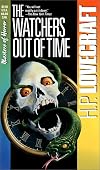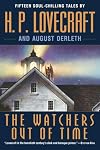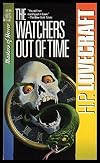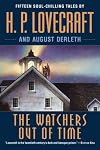
The Watchers Out of Time
by H. P. Lovecraft, August Derleth
On This Page
Description
Venture at your own risk into a realm where the sun sinks into oblivion-and all that is unholy, unearthly, and unspeakable rises. These rare, hard-to-find collaborations of cosmic terror are back in print, including * Wentworth's Day A fellow figures his debt to a dead man is null and void, until he discovers just how terrifying interest rates can be. * The Shuttered Room A sophisticated gentleman must settle his grandfather's estate, only to find that the house shelters dark secrets. * The show more Dark Brotherhood A beautiful woman and her companion meet the likes of Edgar Allan Poe, in a tale as terrifying as anything Poe himself ever created. * Innsmouth Clay A sculptor returns from Paris to create a statue not entirely of this world-and not at all under his control. * Witches' Hollow A new schoolteacher puts his soul in peril while trying to save one of his students from a ravenous creature. show lessTags
Recommendations












Member Recommendations

Member Reviews
No cabe duda de que a August Derleth hay que achacarle muchas cosas, entre ellas la explotación de toda la obra de H.P. Lovecraft desde la muerte de éste. Derleth fue un adepto de Lovecraft, un miembro de su círculo más íntimo, lo que le permitió (junto a Donald Wandrei), hacerse con todos sus papeles, novelas y esbozos. Y bien sabemos que lo aprovechó, porque no sólo publicó toda su obra conocida sino que también se dedicó a dar forma y a terminar cualquier esbozo que encontró del Maestro.
Aunque la perspectiva de Derleth respecto a la obra de Lovecraft era más económica que otra cosa, también le debemos mucho. Él acuñó el término "Mitos de Cthulhu" y promovió que otros escritores contribuyesen con sus relatos a la show more riqueza de este mundo. Pero por otra parte, también desvirtuó en buena medida la visión cósmica que tenía Lovecraft de su obra. Éste escribía sobre unos seres que dominaron la Tierra hace millones de años, para desaparecer posteriormente. Pero siguen ahí, pueden volver en cualquier momento; los seres humanos no significan nada para ellos, menos que nada; y todo aquél que intenté entrar en contacto con ellos, acabará mal parado. Sin embargo, Derleth diferencia a estos seres en buenos y malos, como si realmente les importasen los pobres humanos, y se centra demasiado en etiquetarlos.
Los cuentos de este volumen fueron escritos casi en su totalidad por Derleth, basándose en lo encontrado entre los papeles de Lovecraft. Aunque parece ser que 'El que acecha en el umbral' sí que lo dejó más perfilado. El resto se pueden adjudicar a Derleth, pero esto es algo que nunca sabremos. El último cuento, 'Los que vigilan desde el tiempo', está inconcluso por la muerte de Derleth en 1971.
Al acabar de leer este libro me queda la sensanción como si le faltase algo. Los relatos están bien escritos y documentados, y contienen todo aquello que destaca del mundo lovecraftiano, pero no llegan a crear esa atmósfera inquietante tan característica.
Estos son los cuentos contentidos en el libro:
- EL QUE ACECHA EN EL UMBRAL (The Lurker at the Threshold) (*****). En Arkham se encuentran unas tierras pertenecientes a los Billington, y que han sido heredadas por Ambrose Dewart. Tras tantos años sin habitar, Ambrose se ha propuesto rehabilitar la finca, algo que ha alterado a toda la comarca, ya que el apellido Billington es de infausto recuerdo. Reconociendo las tierras, Ambrose da con una torre rodeada por un círculo de piedras. Entonces se propone averiguar todo lo posible sobre su antepasado Alijah, leyendo los libros y papeles de la casa y consultando en universidades, así como entrevistando a los vecinos. Lo que descubre es terrorífico... y emocionante, para su desgracia. Buena novela corta, o relato largo, con muchos ingredientes de lo mejor de Lovecraft.
- LA SOMBRA DEL DESVÁN (The Shadow in the Atic) (***). Para poder heredar la casa de su tío abuelo Uriah Garrison, Adam ha de vivir en ella durante noventa días seguidos. Extraña cláusula del testamento a la que Adam accede. En el ambiente se nota una amenaza, que Adam parece no sentir pero su novia sí. Este relato no contiene casi nada del mundo de Lovecraft, es más un cuento típico de terror.
- ARCILLA DE INNSMOUTH (Innsmouth Clay) (****). El narrador nos cuenta la extraña desaparición del escultor Jeffrey Corey. A través de sus notas vamos conociendo el enigma. Lo último en lo que trabajaba llevaba por nombre "Diosa Marina", realizada con una arcilla azul que fue arrastrada hasta la orilla. Un cuento algo irregular, que podría haber dado más de sí.
- LOS QUE VIGILAN DESDE EL TIEMPO (The Watchers out of Time) (***). Nicholas Walters ha heredado la hacienda de los Whateley, en la zona de Dunwich. Cuando visita la casa, se da cuenta de algo extraño: parece que haya sido construida alrededor de la habitación central. Entonces se decide a investigar sobre sus antepasados. Y cuando más interesante se ponía el cuento, se termina, porque August Derleth falleció antes de terminarlo. show less
Aunque la perspectiva de Derleth respecto a la obra de Lovecraft era más económica que otra cosa, también le debemos mucho. Él acuñó el término "Mitos de Cthulhu" y promovió que otros escritores contribuyesen con sus relatos a la show more riqueza de este mundo. Pero por otra parte, también desvirtuó en buena medida la visión cósmica que tenía Lovecraft de su obra. Éste escribía sobre unos seres que dominaron la Tierra hace millones de años, para desaparecer posteriormente. Pero siguen ahí, pueden volver en cualquier momento; los seres humanos no significan nada para ellos, menos que nada; y todo aquél que intenté entrar en contacto con ellos, acabará mal parado. Sin embargo, Derleth diferencia a estos seres en buenos y malos, como si realmente les importasen los pobres humanos, y se centra demasiado en etiquetarlos.
Los cuentos de este volumen fueron escritos casi en su totalidad por Derleth, basándose en lo encontrado entre los papeles de Lovecraft. Aunque parece ser que 'El que acecha en el umbral' sí que lo dejó más perfilado. El resto se pueden adjudicar a Derleth, pero esto es algo que nunca sabremos. El último cuento, 'Los que vigilan desde el tiempo', está inconcluso por la muerte de Derleth en 1971.
Al acabar de leer este libro me queda la sensanción como si le faltase algo. Los relatos están bien escritos y documentados, y contienen todo aquello que destaca del mundo lovecraftiano, pero no llegan a crear esa atmósfera inquietante tan característica.
Estos son los cuentos contentidos en el libro:
- EL QUE ACECHA EN EL UMBRAL (The Lurker at the Threshold) (*****). En Arkham se encuentran unas tierras pertenecientes a los Billington, y que han sido heredadas por Ambrose Dewart. Tras tantos años sin habitar, Ambrose se ha propuesto rehabilitar la finca, algo que ha alterado a toda la comarca, ya que el apellido Billington es de infausto recuerdo. Reconociendo las tierras, Ambrose da con una torre rodeada por un círculo de piedras. Entonces se propone averiguar todo lo posible sobre su antepasado Alijah, leyendo los libros y papeles de la casa y consultando en universidades, así como entrevistando a los vecinos. Lo que descubre es terrorífico... y emocionante, para su desgracia. Buena novela corta, o relato largo, con muchos ingredientes de lo mejor de Lovecraft.
- LA SOMBRA DEL DESVÁN (The Shadow in the Atic) (***). Para poder heredar la casa de su tío abuelo Uriah Garrison, Adam ha de vivir en ella durante noventa días seguidos. Extraña cláusula del testamento a la que Adam accede. En el ambiente se nota una amenaza, que Adam parece no sentir pero su novia sí. Este relato no contiene casi nada del mundo de Lovecraft, es más un cuento típico de terror.
- ARCILLA DE INNSMOUTH (Innsmouth Clay) (****). El narrador nos cuenta la extraña desaparición del escultor Jeffrey Corey. A través de sus notas vamos conociendo el enigma. Lo último en lo que trabajaba llevaba por nombre "Diosa Marina", realizada con una arcilla azul que fue arrastrada hasta la orilla. Un cuento algo irregular, que podría haber dado más de sí.
- LOS QUE VIGILAN DESDE EL TIEMPO (The Watchers out of Time) (***). Nicholas Walters ha heredado la hacienda de los Whateley, en la zona de Dunwich. Cuando visita la casa, se da cuenta de algo extraño: parece que haya sido construida alrededor de la habitación central. Entonces se decide a investigar sobre sus antepasados. Y cuando más interesante se ponía el cuento, se termina, porque August Derleth falleció antes de terminarlo. show less
Derleth published the stories in this collection as 'posthumous collaborations' with H. P. Lovecraft, which could charitably called stretching the truth. The reality is that Derleth took story fragments or ideas from Lovecraft's notes and then wrote entire stories based off of those. I have to admit I would have been curious to know how much Lovecraft actually contributed. (How about an annotated edition? What you say, Joshi, you up for it?)
Even that wouldn't be so bad, except that it appears that the some of the notes or fragments he used to write his stories were for stories that Lovecraft had already completed. It's a little reminiscent of Borges' Pierre Menard, and Derleth is at his most Menardian with 'The Shadow Out of Space' show more which is, as the title suggests, just a rehash of 'The Shadow Out of Time.' That's the worst of it, though some of the other stories suffer from a similar déjà vu, such as 'The Peabody Inheritance' which crosses 'The Dreams in the Witch House' with 'The Rats in the Walls' while failing to be as good as either.
It's not always bad. 'The Lamp of Alhazred' is a retelling of 'The Silver Key,' though I rather liked the way it mythologized Lovecraft. (Though this does mean that you may not really enjoy it unless you're familiar with HPL.)
Derleth is actually a pretty good writer, stumbling mostly when he tries too hard to ape Lovecraft. (This is particularly noticeable in his use of italics, which he manages to push to the point of parody.) He does have a bad habit of repeating the same plots in this collection, especially of the man who inherits some ill-omened house or other piece of property.
Of the stories, I'd single out these five as the best:
The Survivor - A man rents a house that was previously owned by an eccentric old doctor. The lawyer he rents it from mentions the house is in a sort of limbo until an unnamed heir shows up. As the man settles in, he finds the old doctor's notes, which reveal a strange fascination with reptiles and life extension. Soon, he starts to hear weird sounds in the night. A nice mix of supernatural and science fiction elements.
The Ancestor - The narrator's childhood friend requests his presence in helping him with some research. When the narrator arrives, the friend reveals he has made some astonishing discoveries into the nature of memory, though at the cost of his own health. As the research progresses, the friend worsens. There's a fair amount of Poe and Machen, but it feels more like homage than theft. Marred only by the italicized and too vague ending. (An additional hint or two would have helped to make the vagueness suggestive instead of just opaque.)
The Shadow in the Attic - This is easily the best of the 'man inherits house from evil ancestor' stories. The house in question has a strange dark splotch on one of the attic walls, which looks astonishingly like a person. The heir soon begins to feel that the house wants something from him, then strange noises and sights begin to trouble his sleep. There's a great sense of mystery as well as some nice descriptive passages. Additionally, the house begins to have an effect on the heir's relationship with his fiancé, which provides an additional dynamic and sets up an eerie yet amusing ending.
The Dark Brotherhood - A young man and his (Platonic?) female friend share a passion for walking the streets of the city at night. One night they meet up with a curious fellow who resembles Edgar Allan Poe. This one eventually takes an interesting science-fiction turn, where it gets wild and surreal but in a good way.
The Fisherman of Falcon Point - There's almost a sense of myth to this tale of an old fisherman who spares the life of a rather peculiar mermaid who ends up in his nets one night. Not really scary, but a definite uncanny sadness to it.
Not an amazing collection, but with enough good stories that I'd say it's worth a look. show less
Even that wouldn't be so bad, except that it appears that the some of the notes or fragments he used to write his stories were for stories that Lovecraft had already completed. It's a little reminiscent of Borges' Pierre Menard, and Derleth is at his most Menardian with 'The Shadow Out of Space' show more which is, as the title suggests, just a rehash of 'The Shadow Out of Time.' That's the worst of it, though some of the other stories suffer from a similar déjà vu, such as 'The Peabody Inheritance' which crosses 'The Dreams in the Witch House' with 'The Rats in the Walls' while failing to be as good as either.
It's not always bad. 'The Lamp of Alhazred' is a retelling of 'The Silver Key,' though I rather liked the way it mythologized Lovecraft. (Though this does mean that you may not really enjoy it unless you're familiar with HPL.)
Derleth is actually a pretty good writer, stumbling mostly when he tries too hard to ape Lovecraft. (This is particularly noticeable in his use of italics, which he manages to push to the point of parody.) He does have a bad habit of repeating the same plots in this collection, especially of the man who inherits some ill-omened house or other piece of property.
Of the stories, I'd single out these five as the best:
The Survivor - A man rents a house that was previously owned by an eccentric old doctor. The lawyer he rents it from mentions the house is in a sort of limbo until an unnamed heir shows up. As the man settles in, he finds the old doctor's notes, which reveal a strange fascination with reptiles and life extension. Soon, he starts to hear weird sounds in the night. A nice mix of supernatural and science fiction elements.
The Ancestor - The narrator's childhood friend requests his presence in helping him with some research. When the narrator arrives, the friend reveals he has made some astonishing discoveries into the nature of memory, though at the cost of his own health. As the research progresses, the friend worsens. There's a fair amount of Poe and Machen, but it feels more like homage than theft. Marred only by the italicized and too vague ending. (An additional hint or two would have helped to make the vagueness suggestive instead of just opaque.)
The Shadow in the Attic - This is easily the best of the 'man inherits house from evil ancestor' stories. The house in question has a strange dark splotch on one of the attic walls, which looks astonishingly like a person. The heir soon begins to feel that the house wants something from him, then strange noises and sights begin to trouble his sleep. There's a great sense of mystery as well as some nice descriptive passages. Additionally, the house begins to have an effect on the heir's relationship with his fiancé, which provides an additional dynamic and sets up an eerie yet amusing ending.
The Dark Brotherhood - A young man and his (Platonic?) female friend share a passion for walking the streets of the city at night. One night they meet up with a curious fellow who resembles Edgar Allan Poe. This one eventually takes an interesting science-fiction turn, where it gets wild and surreal but in a good way.
The Fisherman of Falcon Point - There's almost a sense of myth to this tale of an old fisherman who spares the life of a rather peculiar mermaid who ends up in his nets one night. Not really scary, but a definite uncanny sadness to it.
Not an amazing collection, but with enough good stories that I'd say it's worth a look. show less
Underwhelmed. That's how I'd describe my experience with this book. Maybe it wasn't the best Lovecraft to start with, but it was the one that I found in a used bookstore. And it wasn't until I started reading that I discovered it was a collaboration(?) with August Derleth. Or maybe it was just a posthumous collection of unpublished work by Lovecraft alongside some fan fiction (if that's the right way to think of it) by Derleth?
Overall, the stories seemed to be kind of dull. There's a fair bit of vague, suggestive menace from the Elder Gods who really only show up as references in notes or books left behind in creepy libraries and attics. Calling this "cosmic horror" seems overblown to me, but maybe that's just my de-sensitized 21st show more century brain looking back on quaint mid-20th century writing that truly was horrifying at the time. It could be that, but I doubt it.
And what's with the repetitive set up of someone being bequeathed property by some great/grandfather, great/grand-uncle in Dunwich? I sense that there must be some family lines (like the Whatley's) that must feature in other Lovecraft fiction, but that set up got a little tiresome.
Those of you who enjoy Lovecraft: should I try something different from his oeuvre or am I likely to be just as frustrated with those as well? show less
Overall, the stories seemed to be kind of dull. There's a fair bit of vague, suggestive menace from the Elder Gods who really only show up as references in notes or books left behind in creepy libraries and attics. Calling this "cosmic horror" seems overblown to me, but maybe that's just my de-sensitized 21st show more century brain looking back on quaint mid-20th century writing that truly was horrifying at the time. It could be that, but I doubt it.
And what's with the repetitive set up of someone being bequeathed property by some great/grandfather, great/grand-uncle in Dunwich? I sense that there must be some family lines (like the Whatley's) that must feature in other Lovecraft fiction, but that set up got a little tiresome.
Those of you who enjoy Lovecraft: should I try something different from his oeuvre or am I likely to be just as frustrated with those as well? show less
This is the best collection of stories I've read yet! Three of the stories -- "Witches Hallow," "The Shadow in the Attic," and that "Middle Tower" story are repeats, but deliciously tasty when read again! This is why I believe Lovecraft will survive eons to be our 20th century Poe. King's work is quite different, and although he outsells just about everyone, his craft is not a fraction as sharp as Lovecraft's (no pun intended). (The only reason I didn't give this book five stars solid is the last story is unfinished, and that is thoroughly frustrating.)
This collection was hit or miss. The biggest thing that stuck out is there are at least 3 stories that have someone inheriting an old creepy house from ancestors that were cultists. The title story is actually unfinished and hence a waste of time. A couple others are interesting and couple other not so good. It's hard to tell what's Lovecraft's and what's Derleth's but I would say Lovecraft fans could live without this collection and not be the worse for it.
Ratings
Members
- Recently Added By
Lists

To Read - Horror
137 works; 14 members
Author Information

1,907+ Works 73,564 Members
Howard Phillips Lovecraft, 1890 - 1937 H. P. Lovecraft was born on August 20, 1890 in Providence, Rhode Island. His mother was Sarah Susan Phillips Lovecraft and his father was Winfield Scott Lovecraft, a traveling salesman for Gorham & Co. Silversmtihs. Lovecraft was reciting poetry at the age of two and when he was three years old, his father show more suffered a mental breakdown and was admitted to Butler Hospital. He spent five years there before dying on July 19, 1898 of paresis, a form of neurosyphillis. During those five years, Lovecraft was told that his father was paralyzed and in a coma, which was not the case. His mother, two aunts and grandfather were now bringing up Lovecraft. He suffered from frequent illnesses as a boy, many of which were psychological. He began writing between the ages of six and seven and, at about the age of eight, he discovered science. He began to produce the hectographed journals, "The Scientific Gazette" (1899-1907) and "The Rhode Island Journal of Astronomy" (1903-07). His first appearance in print happened, in 1906, when he wrote a letter on an astronomical matter to The Providence Sunday Journal. A short time later, he began writing a monthly astronomy column for The Pawtuxet Valley Gleaner - a rural paper. He also wrote columns for The Providence Tribune (1906-08), The Providence Evening News (1914-18), The Asheville (N.C.) Gazette-News (1915). In 1904, his grandfather died and the family suffered severe financial difficulties, which forced him and his mother to move out of their Victorian home. Devastated by this, he apparently contemplated suicide. In 1908, before graduating from high school, he suffered a nervous breakdown. He didn't receive a diploma and failed to get into Brown University, both of which caused him great shame. Lovecraft was not heard from for five years, re-emerging because of a letter he wrote in protest to Fred Jackson's love story in The Argosy. His letter was published in 1913 and caused great controversy, which was noted by Edward F. Daas, President of the United Amateur Press Association (UAPA). Daas invited Lovecraft to join the UAPA, which he did in early 1914. He eventually became President and Official Editor of the UAPA and served briefly as President of the rival National Amateur Press Association (NAPA). He published thirteen issues of his own paper, The Conservative (1915-23) and contributed poetry and essays to other journals. He also wrote some fiction which titles include "The Beast in the Cave" (1905), "The Alchemist" (1908), "The Tomb" and "Dagon" (1917). In 1919, Lovecraft's mother was deteriorating, mentally and physically, and was admitted to Butler Hospital. On May 24, 1921, his mother died from a gall bladder operation. While attending an amateur journalism convention in Boston, Lovecraft met his future wife Sonia Haft Greene, a Russian Jew. They were married on March 3, 1924 and Lovecraft moved to her apartment in Brooklyn. Sonia had a shop on Fifth Avenue that went bankrupt. In 1925, Sonia went to Cleveland for a job and Lovecraft moved to a smaller apartment in the Red Hook district of Brooklyn. In 1926, he decided to move back to Providence. Lovecraft had his aunts bar his wife, Sonia, from going to Providence to start a business because he couldn't have the stigma of a tradeswoman wife. They were divorced in 1929. After his return to Providence, he wrote his greatest fiction, which included the titles "The Call of Cthulhu" (1926), "At the Mountains of Madness" (1931), and "The Shadow Out of Time" (1934-35). In 1932, his aunt, Mrs. Clark, died; and he moved in with his other aunt, Mrs. Gamwell, in 1933. Suffering from cancer of the intestine, Lovecraft was admitted to Jane Brown Memorial Hospital and on March 15, 1937 he died. (Bowker Author Biography) show less

399+ Works 7,997 Members
August Derleth was born on February 24, 1909 in Sauk City, Wisconsin. He sold his first story to Weird Tales at the age of 16. He received a Bachelor's of Arts degree from the University of Wisconsin. After college, he went to work for Fawcett Publications as an editor for Mystic Magazine. In 1932, the first of his Sac Prairie stories was show more published in various local papers. In 1935, his first book, a collection of related novellas entitled Place of Hawks, was published. In 1937, his first Sac Prairie novel, Still is the Summer Night, was published. He was awarded a Guggenheim fellowship in 1938 to help him continue the Sac Prairie saga. During his lifetime, he wrote more than 90 books including The Milwaukee Road, Still Small Voice, H.P.L.: A Memoir, Restless Is the River, The Hills Stand Watch, Sweet Genevieve, Evening in Spring, The Moon Tenders, The Captive Island, and Father Marquette and the Great River. He had upward of 3,000 works published in over 350 magazines including The Catholic World, The Yale Review, The New Republic, Redbook, The New Yorker, Good Housekeeping, and The American Mercury. He died on June 6, 1971. (Bowker Author Biography) show less
Some Editions
Awards and Honors
Work Relationships
Common Knowledge
- Canonical title
- The Watchers Out of Time
- Original publication date
- 1974
- Important places
- Arkham, Massachusetts, USA
- Disambiguation notice
- This collection DOES NOT include the story "The Lurker at the Threshold". DO NOT combine with other similarly-named collections that include this story.
Classifications
Statistics
- Members
- 503
- Popularity
- 59,346
- Reviews
- 5
- Rating
- (3.18)
- Languages
- English, Polish, Spanish
- Media
- Paper, Ebook
- ISBNs
- 10
- ASINs
- 7