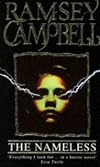
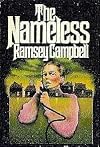
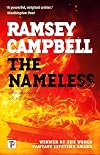
The Nameless
by Ramsey Campbell
On This Page
Description
"Was that an indrawn breath, or a hiss of static? She heard someone dialling on another line..." Barbara Waugh's daughter Angela was kidnapped aged four, and when a disfigured body turns up that appears to be the end of the matter. Dealing with grief, Barbara establishes herself as a literary agent. Years after the disappearance she receives a phone call from Angela. Convinced her daughter is alive, Barbara's investigations take her deep into London, New York, and Scotland. Was a show more brainwashing cult responsible for Angela's abduction? The more Barbara learns, the less she can trust, including those closest to her. Will she succumb to an evil so murderous it might not be of human origin? FLAME TREE PRESSis the imprint of long-standing Independent Flame Tree Publishing, dedicated to full-length original fiction in the horror and suspense, science fiction and fantasy. The list brings together fantastic new authors and the more established; the award winners, and exciting, original voices. Learn more about Flame Tree Press at www.flametreepress.com and connect on social media @FlameTreePress. show lessTags
Recommendations


















Member Reviews
Ramsey Campbell is one of the most celebrated horror authors still writing today. I first became aware of Campbell’s work years ago through his (continuing) contributions to Lovecraft’s Cthulhu Mythos, but he’s a prolific author of horror and dark fantasy who has penned a great deal of non-Lovecraftian fiction as well. THE NAMELESS is one of Campbell’s earliest novels (originally published by Fontana in 1981, then reprinted in successive editions by Tor, Panther, and Warner in the mid-‘80s through the early ‘90s). I’m happy to report that Samhain Publishing has now reprinted Campbell’s THE NAMELESS along with many of his other earlier novels.
Mild plot spoilers follow.
THE NAMELESS begins simply enough: a young widow’s show more daughter goes missing one day and it rapidly becomes apparent that the girl has been abducted. No ransom is ever demanded. A day or so later, the girl’s body is found, the head obliterated by a shotgun blast. It all seems so random, so sudden, so senseless. Fast forward a number of years, and the mother has advanced in her career as a very successful literary agent. Despite this tragic past, she’s now got a new career, a new home, a boyfriend, and a whole new life. She begins to get strange phone calls and gradually picks up circumstantial clues that point to her daughter, who would now be 13, still being alive, perhaps having been kidnapped and brainwashed by a nameless cult. Seemingly a simple premise, but this is a terrific atmospheric horror tale.
Like a lot of great horror, THE NAMELESS is a slow burn. It begins slowly, almost mundanely, with Campbell only gradually ratcheting up the tension. Don’t read this one expecting non-stop action, or even gore. That’s not the kind of experience that Campbell offers. (Because of this tendency, I’ve always thought that Campbell’s writing pace is uniquely British.) Though I should note that there was one scene about halfway through that made me really cringe – and not much does – to the extent that I could hardly bear to finish the chapter even though I knew how pivotal it was.
In THE NAMELESS Campbell explores issues of identity and self, particularly – and this is where the horror comes in – those people and things that seek to tamper with or even annihilate an individual’s sense of self. Here the touchstones are groups like the Manson family and other cults that reshape the personalities of their members to better fulfill the goals of the group, often to commit violence or other reprehensible acts. These ideas of brainwashing, mind control, and perhaps even a bit of spirit possession are horrific because they infringe on the sense of self and one’s free will. Sure, it can be terrifying to read about evil people doing terrible things. But I think it’s even more terrifying to read about someone whose mind and body are no longer their own, when they are forced to commit acts they don’t want to. And that’s exactly the kind of subtlety that, I think, Campbell is trying to explore here. It’s not for every reader to be sure, but Campbell has a deft hand.
There are tantalizing hints as to the exact nature, origins, and goals of the nameless cult. They are part of something much greater – or perhaps they only aspire to this – but I’d very much like to know more. I’ve seen Campbell criticized for his “reticence” as a horror author, and that may be a factor here. On the one hand, horror is often one of those genres where “less is more,” since the reader’s imagination can frequently conjure more terrifying imagery than the author’s mere words; on the other, a more visceral writing style can solidly deliver gut-punches the reader wasn’t expecting. Having said that, I’d actually like to see Campbell return to THE NAMELESS and craft a sequel to it for us, delving more deeply into the force behind the cult. Even after finishing the novel, I still don’t know much – or enough – about it. What little information that is revealed is scary to be sure, but I’d like to know more. Campbell is undoubtedly a stronger writer now than he was in the early ‘80s, and I think this would be a great opportunity for expansion.
Sure, the ending gets wrapped up a bit too quickly. Campbell can be criticized for his tendency to be just a bit too coy. He could have ramped up the horror factor by showing us just a bit more about the cult and its operations. But THE NAMELESS is highly recommended nevertheless. I think you’ll see why Campbell is such a renowned author of horror fiction after reading this reissued early novel.
Review copyright © 2013 J. Andrew Byers show less
Mild plot spoilers follow.
THE NAMELESS begins simply enough: a young widow’s show more daughter goes missing one day and it rapidly becomes apparent that the girl has been abducted. No ransom is ever demanded. A day or so later, the girl’s body is found, the head obliterated by a shotgun blast. It all seems so random, so sudden, so senseless. Fast forward a number of years, and the mother has advanced in her career as a very successful literary agent. Despite this tragic past, she’s now got a new career, a new home, a boyfriend, and a whole new life. She begins to get strange phone calls and gradually picks up circumstantial clues that point to her daughter, who would now be 13, still being alive, perhaps having been kidnapped and brainwashed by a nameless cult. Seemingly a simple premise, but this is a terrific atmospheric horror tale.
Like a lot of great horror, THE NAMELESS is a slow burn. It begins slowly, almost mundanely, with Campbell only gradually ratcheting up the tension. Don’t read this one expecting non-stop action, or even gore. That’s not the kind of experience that Campbell offers. (Because of this tendency, I’ve always thought that Campbell’s writing pace is uniquely British.) Though I should note that there was one scene about halfway through that made me really cringe – and not much does – to the extent that I could hardly bear to finish the chapter even though I knew how pivotal it was.
In THE NAMELESS Campbell explores issues of identity and self, particularly – and this is where the horror comes in – those people and things that seek to tamper with or even annihilate an individual’s sense of self. Here the touchstones are groups like the Manson family and other cults that reshape the personalities of their members to better fulfill the goals of the group, often to commit violence or other reprehensible acts. These ideas of brainwashing, mind control, and perhaps even a bit of spirit possession are horrific because they infringe on the sense of self and one’s free will. Sure, it can be terrifying to read about evil people doing terrible things. But I think it’s even more terrifying to read about someone whose mind and body are no longer their own, when they are forced to commit acts they don’t want to. And that’s exactly the kind of subtlety that, I think, Campbell is trying to explore here. It’s not for every reader to be sure, but Campbell has a deft hand.
There are tantalizing hints as to the exact nature, origins, and goals of the nameless cult. They are part of something much greater – or perhaps they only aspire to this – but I’d very much like to know more. I’ve seen Campbell criticized for his “reticence” as a horror author, and that may be a factor here. On the one hand, horror is often one of those genres where “less is more,” since the reader’s imagination can frequently conjure more terrifying imagery than the author’s mere words; on the other, a more visceral writing style can solidly deliver gut-punches the reader wasn’t expecting. Having said that, I’d actually like to see Campbell return to THE NAMELESS and craft a sequel to it for us, delving more deeply into the force behind the cult. Even after finishing the novel, I still don’t know much – or enough – about it. What little information that is revealed is scary to be sure, but I’d like to know more. Campbell is undoubtedly a stronger writer now than he was in the early ‘80s, and I think this would be a great opportunity for expansion.
Sure, the ending gets wrapped up a bit too quickly. Campbell can be criticized for his tendency to be just a bit too coy. He could have ramped up the horror factor by showing us just a bit more about the cult and its operations. But THE NAMELESS is highly recommended nevertheless. I think you’ll see why Campbell is such a renowned author of horror fiction after reading this reissued early novel.
Review copyright © 2013 J. Andrew Byers show less
Rather bleak even for a novel by this author, this deals with the plight of literary agent, Barbara, whose husband was killed while working abroad. His death brought on labour, but she and her daughter survived and all seemed well, until she decided to go back to work in London - and her daughter was snatched from nursery while in the care of others. The woman running the nursery fetches a psychic round against Barbara's wishes while the police are still searching, and the woman has just told Barbara that her daughter is gifted but those who have her must be prevented from corrupting that, when a policeman arrives. A child's body, which cannot be identified due to gunshot wounds, has been found. (The book was written in the late 1980s show more or so, therefore there is no DNA testing which could perhaps prove otherwise).
Nine years later Barbara is trying to rebuild her life and has a tenuous relationship with a man who is divorced but trying to see his daughter despite the mother's opposition, when she starts to receive phone calls from a girl who claims to be her daughter, who would be around 13. And so starts a wild goose chase where Barbara is sent from place to place, even to Scotland, in order to meet her daughter who somehow is never at the hinted at locations. Meanwhile, others who are drawn into Barbara's quest find they have a very short life expectancy.
The book begins with a prologue where a man visits a murderer on death row in the 1940s, posing as a psychiatrist, in order to question him on why he carried out a barbaric torture and murder of his victim. Eventually it is revealed that this man was the founder of a cult, one built on the idea of torture and murder in order to somehow feed a force from beyond. This is as far as the slightly Lovecraftian/Cthulhu Mythos parallel goes, but Barbara comes to believe that this cult has her daughter and there is a deadline to rescue her, as children are fully initiated into the cult at age 13.
The atmosphere of the story is well conveyed: urban decay, noise pollution, filth and rubbish abound and are well evoked. The cult thrives in such settings. However the ending is distinctly weak: I found it unconvincing firstly thatthe dead father manages to manifest to his daughter in time to reawaken her conscience when he has failed to do so for the past 9 years and secondly that the daughter does completely change her mind so conveniently and spectacularly . So on balance I can only rate this as an 'OK' at 2 stars. show less
Nine years later Barbara is trying to rebuild her life and has a tenuous relationship with a man who is divorced but trying to see his daughter despite the mother's opposition, when she starts to receive phone calls from a girl who claims to be her daughter, who would be around 13. And so starts a wild goose chase where Barbara is sent from place to place, even to Scotland, in order to meet her daughter who somehow is never at the hinted at locations. Meanwhile, others who are drawn into Barbara's quest find they have a very short life expectancy.
The book begins with a prologue where a man visits a murderer on death row in the 1940s, posing as a psychiatrist, in order to question him on why he carried out a barbaric torture and murder of his victim. Eventually it is revealed that this man was the founder of a cult, one built on the idea of torture and murder in order to somehow feed a force from beyond. This is as far as the slightly Lovecraftian/Cthulhu Mythos parallel goes, but Barbara comes to believe that this cult has her daughter and there is a deadline to rescue her, as children are fully initiated into the cult at age 13.
The atmosphere of the story is well conveyed: urban decay, noise pollution, filth and rubbish abound and are well evoked. The cult thrives in such settings. However the ending is distinctly weak: I found it unconvincing firstly that
Disturbing book, surprising ending, good writing tone, decent characterization, certainly worth reading for Horror fans. Slower pace and not the strongest suspense in the world, but the unusual twists and the underlying, demented theme make up for that.
Habían conducido a su hija a una pesadilla de sangre y horror...
Una llamada telefónica de su hija despierta todos los terrores del pasado de Barbara Waugh. Porque Angela había sido asesinada de forma brutal hacía años, disparada a quemarropa en la cabeza. Y si después de todo está viva, ¿dónde se encuentra? ¿Quién la ha mantenido en su poder?
¿Y quién podrá ayudar a Barbara mientras se interna en el mundo perverso que habitan aquellos que han abandonado sus nombres?
Pues éste es un mundo de tortura inhumana y sangrientos asesinatos, de terribles iniciaciones, de puertas cerradas, de gritos ahogados...
Una llamada telefónica de su hija despierta todos los terrores del pasado de Barbara Waugh. Porque Angela había sido asesinada de forma brutal hacía años, disparada a quemarropa en la cabeza. Y si después de todo está viva, ¿dónde se encuentra? ¿Quién la ha mantenido en su poder?
¿Y quién podrá ayudar a Barbara mientras se interna en el mundo perverso que habitan aquellos que han abandonado sus nombres?
Pues éste es un mundo de tortura inhumana y sangrientos asesinatos, de terribles iniciaciones, de puertas cerradas, de gritos ahogados...
Feb 13, 2023Spanish
Cinco años después del asesinato de una niña, cuando ya su madre parecía haber empezado a estabilizarse de nuevo, una llamada telefónica vuelve a sacudir su existencia: "Mamá, soy yo... Ven a abuscarme". ¿Dónde se encuentra? ¿Quién la ha mantenido en su poder?
La madre inicia una búsqueda desesperada, la búsqueda de una verdad aterradora que ha permanecido dormida hasta ahora: un grupo de gente oculta que rechaza su propio nombre, la ciencia empírica del mal, casas abandonadas y aisladas que esconden cosas, secretos... Una trampa de maldad abominable.
La madre inicia una búsqueda desesperada, la búsqueda de una verdad aterradora que ha permanecido dormida hasta ahora: un grupo de gente oculta que rechaza su propio nombre, la ciencia empírica del mal, casas abandonadas y aisladas que esconden cosas, secretos... Una trampa de maldad abominable.
Dec 7, 2011Spanish
Ratings
Members
- Recently Added By
Lists

Nightmare Magazine's Top 100 Horror Books
100 works; 7 members
Author Information

315+ Works 9,826 Members
John Ramsey Campbell was born January 4, 1946 in Liverpool, England. He is a horror fiction author and editor. At the age of 11 he wrote a collection called Ghostly Tales which was published as a special issue of Crypt of Cthulhu magazine titled- Ghostly Tales- Crypt of Cthulhu 6. He continued to write and later published his collection called The show more Inhabitant of the Lake and Less Welcome Tenants. At the suggestion of August Derleth, he rewrote many of his earliest stories, which he had originally set in the Massachusetts locales of Arkham, Dunwich and Innsmouth, and relocated them to English settings in and around the fictional Gloucestershire city of Brichester. The invented locale of Brichester was deeply influenced by Campbell's native Liverpool, and much of his later work is set in the real locales of Liverpool. In particular, his 2005 novel Secret Stories both exemplifies and satirizes Liverpoolian speech, characters and humor. John Campbell's titles include The Doll Who Ate His Mother, The One Safe Place , The Seven Days of Cain and The Last Revelation of Gla'aki. (Bowker Author Biography) show less
Some Editions
Awards and Honors
Series
Belongs to Publisher Series
Science Fiction Book Club (6393)
Common Knowledge
- Canonical title
- The Nameless
- Original publication date
- 1981 (original) (original); 1985 (revised) (revised); 2024 (revised) (revised)
- People/Characters
- Barbara Waugh; Angela Waugh; Ted Crichton
- Important places
- Otford, Kent, England, UK; London, England, UK; Glasgow, Scotland, UK
- Dedication
- For TAMSIN
(who helped without even knowing)
with my love - First words
- The yard was larger than a football field, but it felt much smaller.
- Last words
- (Click to show. Warning: May contain spoilers.)She watched the undying flames and tried to believe while she waited through the chill gray time until dawn.
Classifications
Statistics
- Members
- 261
- Popularity
- 123,496
- Reviews
- 5
- Rating
- (3.14)
- Languages
- 6 — English, Finnish, French, Greek, Polish, Spanish
- Media
- Paper, Ebook
- ISBNs
- 25
- ASINs
- 6