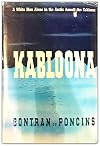
Kabloona
by Gontran de Poncins (Author), Lewis Galantière (Author)
On This Page
Description
This extraordinary classic has been variously acclaimed as one of the great books of adventure, travel, anthropology, and spiritual awakening. In 1938 and 1939, a French nobleman spent fifteen months living among the Inuit people of the Arctic. He is at first appalled by their way of life: eating rotten raw fish, sleeping with each others' wives, ignoring schedules, and helping themselves to his possessions. But as de Poncins's odyssey continues, he is transformed from Kabloona, The White show more Man, an uncomprehending outsider, to someone who finds himself living, for a few short months, as Inuk: a man, preeminently. show lessTags
Recommendations



















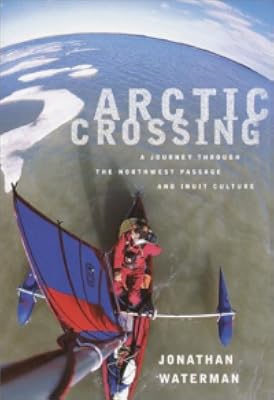




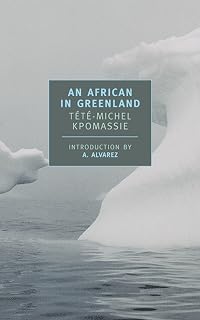

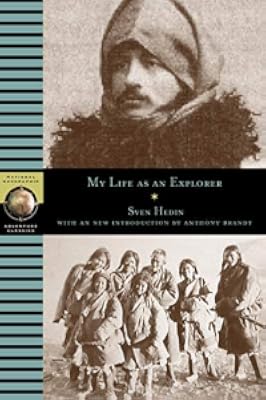

Member Recommendations

Member Reviews
Poncins went to the Great North consciously seeking to taste the life of the Eskimo--not just to see it, but to live it. Like Gauguin in the Pacific (Poncins too had travelled to Tahiti), he sought expressly the primitive life (I employ his words), the society of the primitive man. This meant long trips on dog-pulled sleds in deep freeze temperatures, living on raw meat and fish, sleeping in stinking igloos, and never ever washing. Not to spoil anything, he grows to love it, so much so he feels bereft when the time comes to go home.
Curiously, Poncins seems to confirm both Loti's and Segalen's takes on "the Other". "Dressing up" as an Eskimo will eventually turn you into an Eskimo, simply as a function of the lifestyle (in itself a show more function of physical conditions). I suppose that's at the root of great colonialist fear of "going native". But, like Segalen, Poncins runs into some final barrier. He's not as good an Eskimo as the Eskimos, and they, in turn, make bad white men.
This is a single-sitting read, lively and bursting with quotable insight. But forgive me if I skip all those for the moment which made me LOL, because I heard this effervescent Frenchman's voice in it. Also because it illustrates the dreary monotony and boredom of outpost life:
"But my ingratitude was boundless. Here was a man {Paddy Gibson, the lone white man and manager of the one general Store and Post that far north} who had taken me in, had permitted me to share his precious solitude, had guided me in my first fumbling acquaintance with a people strange to me. When I tried to buy a kulaktik, an outer coat, he insisted upon making me a gift of one. When I started off without glasses against the blinding snow of spring, he ran after me to press a pair upon me. When I came in from a long trek frost-bitten and hardly able to brew myself a pot of tea, he looked after me. And I, instead of thanking him for the tea I was drinking, would think of those pies he baked, and sit inwardly fuming.
I hate prunes. They always give you prunes in hospital. As a child, when I had to be punished, prunes were my punishment. Now that I was forty years old, I saw no reason why I should go on being punished. I was not in hospital: why should I go on eating prunes? Gibson never baked any pies but prune pies. As delicately as I could, and then as firmly as I could, I let him know there was nothing I loved so much in the world as an apple pie. Do you think that could change him? Each time that he came back from the Store with materials for his pie, I would ask casually:
"What's it going to be?"
"Prunes", he would say; and then, fearful of an outburst, he would mumble his little joke in a low voice, as if to himself: "The humble prune."
I could have murdered him! When for the third time he had pronounced those words, "The humble prune!" with that smile which said the Arctic might sink into the sea and still it would be prunes, my eyes went straight to the axe that stood in a corner of the room. "I'll crack his skull with that axe," I said to myself grinding my teeth. "And if he is still alive when I bend over him, I'll look him in the eye and say to him, 'The humble prune!'" " show less
Curiously, Poncins seems to confirm both Loti's and Segalen's takes on "the Other". "Dressing up" as an Eskimo will eventually turn you into an Eskimo, simply as a function of the lifestyle (in itself a show more function of physical conditions). I suppose that's at the root of great colonialist fear of "going native". But, like Segalen, Poncins runs into some final barrier. He's not as good an Eskimo as the Eskimos, and they, in turn, make bad white men.
This is a single-sitting read, lively and bursting with quotable insight. But forgive me if I skip all those for the moment which made me LOL, because I heard this effervescent Frenchman's voice in it. Also because it illustrates the dreary monotony and boredom of outpost life:
"But my ingratitude was boundless. Here was a man {Paddy Gibson, the lone white man and manager of the one general Store and Post that far north} who had taken me in, had permitted me to share his precious solitude, had guided me in my first fumbling acquaintance with a people strange to me. When I tried to buy a kulaktik, an outer coat, he insisted upon making me a gift of one. When I started off without glasses against the blinding snow of spring, he ran after me to press a pair upon me. When I came in from a long trek frost-bitten and hardly able to brew myself a pot of tea, he looked after me. And I, instead of thanking him for the tea I was drinking, would think of those pies he baked, and sit inwardly fuming.
I hate prunes. They always give you prunes in hospital. As a child, when I had to be punished, prunes were my punishment. Now that I was forty years old, I saw no reason why I should go on being punished. I was not in hospital: why should I go on eating prunes? Gibson never baked any pies but prune pies. As delicately as I could, and then as firmly as I could, I let him know there was nothing I loved so much in the world as an apple pie. Do you think that could change him? Each time that he came back from the Store with materials for his pie, I would ask casually:
"What's it going to be?"
"Prunes", he would say; and then, fearful of an outburst, he would mumble his little joke in a low voice, as if to himself: "The humble prune."
I could have murdered him! When for the third time he had pronounced those words, "The humble prune!" with that smile which said the Arctic might sink into the sea and still it would be prunes, my eyes went straight to the axe that stood in a corner of the room. "I'll crack his skull with that axe," I said to myself grinding my teeth. "And if he is still alive when I bend over him, I'll look him in the eye and say to him, 'The humble prune!'" " show less
Seldom have I encountered as extraordinary a book as Kabloona. It is a true example of sui generis writing and it is unlikely that anything quite like it will be written again. The author, Gontran de Poncins, spent a year traveling among the Eskimos in the Arctic. This book is the result, distilled from his diaries by Lewis Galantiere. Poncins took the perspective of the Eskimos, and as a result he, Kabloona (the White Man), took seriously what they did. The book is thus a unique combination of travelogue, memoir, and cultural study. It provides the reader with a unique picture into a society that in many ways had changed little since the stone age. It is a society that neither cultivates crops nor domesticates animals; living by the show more fruit of the sea for food and clothing. The natural beauty and its essential nature are also explored by Poncins who observed:
"Strangest of all was the absence of color in this landscape. The world of the North, when it was not brown was grey. Snow, I discovered, is not white!" (p 56)
While the Eskimos called Poncins Kabloona, sometimes in derision, they proudly called themselves Inuit ("men, preeminently").
"I was to green to have any notion of Eskimo values. Every instinct in me prompted resistance, impelled me to throw these men out [of my igloo], --to do things which would have been stupid since they would have astonished my Eskimos fully as much as they might have angered them." (p 64)
Poncins eventually embraced their culture and thereby through sharing their lives and learning their culture he began to understand them. This is demonstrated over and over in the book as Poncins tells of his experiences with the Inuit against the background of the harsh nature of the Arctic.
"Everything about the Eskimo astonishes the white man, and everything about the white man is a subject of bewilderment for the Eskimo. Our least gesture seems to him pure madness, and our most casual and insignificant act may have incalculable results for him."
I was most impressed by the description of nature and the land as in this moment from Chapter Four:
"It goes without saying that this tundra is barren of vegetation. No tree flourishes her, no bush is to be seen, the land is without pasture, without oases; neither the camel nor the wild ass could survive here where man is able to live. The Eskimo, preeminently a nomad and sea-hunter, is driven by the need to feed his family from point to point round an irregular circle, and it is the revolution of the seasons that directs his march." (p 77)
Much of what Poncins saw has disappeared over the decades since he visited the Eskimos. Their life, while still relatively unspoiled compared to most other societies is no longer one of a true Stone Age people. They live in shacks and seal oil is giving way to kerosene; even outboard motors may be seen. This remarkable book chronicles an earlier age a a people whose culture was an amazing anomaly in the twentieth century. The result is an exciting cultural and travel adventure told through a very personal narrative voice. show less
"Strangest of all was the absence of color in this landscape. The world of the North, when it was not brown was grey. Snow, I discovered, is not white!" (p 56)
While the Eskimos called Poncins Kabloona, sometimes in derision, they proudly called themselves Inuit ("men, preeminently").
"I was to green to have any notion of Eskimo values. Every instinct in me prompted resistance, impelled me to throw these men out [of my igloo], --to do things which would have been stupid since they would have astonished my Eskimos fully as much as they might have angered them." (p 64)
Poncins eventually embraced their culture and thereby through sharing their lives and learning their culture he began to understand them. This is demonstrated over and over in the book as Poncins tells of his experiences with the Inuit against the background of the harsh nature of the Arctic.
"Everything about the Eskimo astonishes the white man, and everything about the white man is a subject of bewilderment for the Eskimo. Our least gesture seems to him pure madness, and our most casual and insignificant act may have incalculable results for him."
I was most impressed by the description of nature and the land as in this moment from Chapter Four:
"It goes without saying that this tundra is barren of vegetation. No tree flourishes her, no bush is to be seen, the land is without pasture, without oases; neither the camel nor the wild ass could survive here where man is able to live. The Eskimo, preeminently a nomad and sea-hunter, is driven by the need to feed his family from point to point round an irregular circle, and it is the revolution of the seasons that directs his march." (p 77)
Much of what Poncins saw has disappeared over the decades since he visited the Eskimos. Their life, while still relatively unspoiled compared to most other societies is no longer one of a true Stone Age people. They live in shacks and seal oil is giving way to kerosene; even outboard motors may be seen. This remarkable book chronicles an earlier age a a people whose culture was an amazing anomaly in the twentieth century. The result is an exciting cultural and travel adventure told through a very personal narrative voice. show less
Only rarely do I come upon a book that I cannot imagine anyone disliking. This is such a book.
In 1938, Gontran De Poncins, a Frenchman, decided to live with the Eskimos for more than a year. Afterwards, he wrote this amazing true story of his travels. The action starts almost from page one. You're plunged into story after story, each one more unbelievable than the last. You learn about basic Eskimo life, their strange customs and norms, their fear of commitment, seal hunting, igloo building, wild springtime orgies, casual murder and wife swapping. All woven into a continuous and exciting narrative of survival, exploration and self discovery. It is equal part anthropology, travel writing, memoir, comic entertainment, and spiritual show more meditation.
What's more, our narrator is an interesting guy, a very good writer, and slightly unreliable. You never get his backstory, but I found myself wondering more than once: Who is this guy and why is he here? Throughout the book he makes incredibly un-PC (and ultimately hilarious) remarks like "Properly speaking, the Eskimo does not think at all." He portrays the Eskimos as barbarians, disgusting, dimwitted, capable of incredible laziness, unfeeling, communist rat bastards, yet he turns around and praises them often for their physical grace, zen-like composure, and miraculous zeal for life in unbearably harsh conditions. He also portrays himself as impatient, silly, and hindered by Western possessions and need for security and definite answers. It soon becomes evident that the Eskimo is only a brute because he is an entirely other being than the white man, and indeed he makes an awful white man.
But as the book nears the end, Gontran himself slowly comes around to becoming an Inuit in spirit, a "man, pre-eminently". And the whole section where he writes about the calmness and joy at his heart when he finally gave in to the Flow: The Psychology of Optimal Experience book I read last year, and how true some of what it said about happiness was. Here are a people who cannot think of much else other than the landscape and the next meal most of the time, because it takes all their energy to basically stay alive. And yet they seem like the happiest people on earth. They live a leisurely un-rushed communal life and take things in stride. There is no neurosis, everything is direct, uncomplicated. They live completely in the moment.
Of course, this is probably a bit romanticized, and some of the stories are probably embellishments of the truth (in fact, I would argue that it is precisely the flawed un-objective quality of this account that makes it so great). Still, something of the general spirit of these people comes through.
Also: if you liked the documentary Nanook of the North, you definitely will love this. A lot of the same stuff is covered here, except in more detail, and a lot of intriguing customs and ways of being are completely absent from the movie. If you haven't seen that movie, I highly recommend it as well. show less
In 1938, Gontran De Poncins, a Frenchman, decided to live with the Eskimos for more than a year. Afterwards, he wrote this amazing true story of his travels. The action starts almost from page one. You're plunged into story after story, each one more unbelievable than the last. You learn about basic Eskimo life, their strange customs and norms, their fear of commitment, seal hunting, igloo building, wild springtime orgies, casual murder and wife swapping. All woven into a continuous and exciting narrative of survival, exploration and self discovery. It is equal part anthropology, travel writing, memoir, comic entertainment, and spiritual show more meditation.
What's more, our narrator is an interesting guy, a very good writer, and slightly unreliable. You never get his backstory, but I found myself wondering more than once: Who is this guy and why is he here? Throughout the book he makes incredibly un-PC (and ultimately hilarious) remarks like "Properly speaking, the Eskimo does not think at all." He portrays the Eskimos as barbarians, disgusting, dimwitted, capable of incredible laziness, unfeeling, communist rat bastards, yet he turns around and praises them often for their physical grace, zen-like composure, and miraculous zeal for life in unbearably harsh conditions. He also portrays himself as impatient, silly, and hindered by Western possessions and need for security and definite answers. It soon becomes evident that the Eskimo is only a brute because he is an entirely other being than the white man, and indeed he makes an awful white man.
But as the book nears the end, Gontran himself slowly comes around to becoming an Inuit in spirit, a "man, pre-eminently". And the whole section where he writes about the calmness and joy at his heart when he finally gave in to the Flow: The Psychology of Optimal Experience book I read last year, and how true some of what it said about happiness was. Here are a people who cannot think of much else other than the landscape and the next meal most of the time, because it takes all their energy to basically stay alive. And yet they seem like the happiest people on earth. They live a leisurely un-rushed communal life and take things in stride. There is no neurosis, everything is direct, uncomplicated. They live completely in the moment.
Of course, this is probably a bit romanticized, and some of the stories are probably embellishments of the truth (in fact, I would argue that it is precisely the flawed un-objective quality of this account that makes it so great). Still, something of the general spirit of these people comes through.
Also: if you liked the documentary Nanook of the North, you definitely will love this. A lot of the same stuff is covered here, except in more detail, and a lot of intriguing customs and ways of being are completely absent from the movie. If you haven't seen that movie, I highly recommend it as well. show less
This book is extraordinary because it was written at a time when some Inuit were still relatively untouched by western civilization. De Poncins is honest about his initial negative reactions to arctic natives. He takes the reader through to the point where he more fully understands and is more comfortable with Inuits than the white people from "outside". It takes him 3/4 of the book to reach this point. I wish he had reached it sooner because there are some amazing and delightful descriptions of both the skills people needed to survive and the totally different outlook they had on life and relationships.
Much of the book, though, is deprecative and while some of it is an honest assessment of native people who were living close to the show more trading posts (as opposed to others he meets who are more isolated), he's seeing things through the lens of 1930s time and culture. show less
Much of the book, though, is deprecative and while some of it is an honest assessment of native people who were living close to the show more trading posts (as opposed to others he meets who are more isolated), he's seeing things through the lens of 1930s time and culture. show less
A very interesting account of life among the Inuit people of northern Canada. The author lived among them for several months in the early 20th century and brought back pictures, drawings and his impressions. His opinions reflect the euro-centric feelings of superiority of the white man over aboriginal peoples, as was par for the time period, but still a very engaging, interesting read. Couple this with the movie "The Fast Runner (Atanarjuat)" and you'll get a nice feel for the Inuit life.
A classic of travel and anthropological literature. French aristocratic Count retires from the cocktail circuit and becomes a man of worldly travel and goes to live with the Inuit for 15 months in the Canadian Artic, some who have never seen a "Kabloona" (white man) before.
Poncins explores Inuit culture and the Inuit world view, leaving the reader with a deeper understanding of such things as wife-swapping, living in an igloo at 40 degrees below zero, why and how Inuit have feasts lasting 20 hours at a stretch, their concepts of time and family life, their perspectives on Europeans and European food and gear, the Inuit diet, hunting techniques, wildlife, nomadic life, dogs, weather, clothing, communal sharing of goods and notions of show more private property.
Poncins was not a scientist and did not study the Inuit from a scientific perspective. Rather, he provides his own stylized personal points of view and descriptions of Inuit life. In the book, he is initially disparaging of the Inuit way of life, seeing it as primitive and often using the description "cave man". Indeed, a clear theme of racial superiority, described in terms of innate intelligence and physical appearances, and cultural superiority in terms of morals and ethics pervades the first part of his work. As the book progresses and his hardships in the harsh Arctic environment take their toll (at one point Poncins runs 1400 miles behind a dogsled), he begins to find a new appreciation for the Inuit way of life, for their intelligence and resourcefulness, and experiences to a spiritual awakening; ultimately reaching a point where he discovers that he himself has become so well adapted to the Inuit way of life that he is no longer a "Kabloona" and has become one of them. Made more dramatic by Frances entry into WWII while he was away (note date of publication) and subsequent return to "civilization" and sense of an unknown future.
http://en.wikipedia.org/wiki/Kabloona show less
Poncins explores Inuit culture and the Inuit world view, leaving the reader with a deeper understanding of such things as wife-swapping, living in an igloo at 40 degrees below zero, why and how Inuit have feasts lasting 20 hours at a stretch, their concepts of time and family life, their perspectives on Europeans and European food and gear, the Inuit diet, hunting techniques, wildlife, nomadic life, dogs, weather, clothing, communal sharing of goods and notions of show more private property.
Poncins was not a scientist and did not study the Inuit from a scientific perspective. Rather, he provides his own stylized personal points of view and descriptions of Inuit life. In the book, he is initially disparaging of the Inuit way of life, seeing it as primitive and often using the description "cave man". Indeed, a clear theme of racial superiority, described in terms of innate intelligence and physical appearances, and cultural superiority in terms of morals and ethics pervades the first part of his work. As the book progresses and his hardships in the harsh Arctic environment take their toll (at one point Poncins runs 1400 miles behind a dogsled), he begins to find a new appreciation for the Inuit way of life, for their intelligence and resourcefulness, and experiences to a spiritual awakening; ultimately reaching a point where he discovers that he himself has become so well adapted to the Inuit way of life that he is no longer a "Kabloona" and has become one of them. Made more dramatic by Frances entry into WWII while he was away (note date of publication) and subsequent return to "civilization" and sense of an unknown future.
http://en.wikipedia.org/wiki/Kabloona show less
While very dated in its language, Frenchman Poncins traveled to the high Canadian Arctic in the late 1930's and lived with the indigenous peoples for 15 months. His descriptions of the amazing adaptations to their difficult lives are not scientific, laced as they are with subjectivity, but very interesting nonetheless.
Members
- Recently Added By
Lists

Armed Services Editions
150 works; 1 member
Author Information

Some Editions
Awards and Honors
Notable Lists
Series
Belongs to Publisher Series
Work Relationships
Common Knowledge
- Original publication date
- 1941
- People/Characters
- Gontran De Poncins
- Important places
- Canadian Arctic
- Epigraph
- Cut off from the surround world by ice-filled seas and trackless wastes, a little handful of men calling themselves the Netsilikmiut (the Seal Eskimos) have been suffered to live their own life entirely untrammelled by outsid... (show all)e influence, up to the present time.
- Rasmussen - Dedication
- To all those who made it possible this book is dedicated in gratitude.
- First words
- This is an extraordinary book. [Editor's Preface - Time-Life Edition]
Quite by chance, a few hours before the judges of the Book of the Month Club met and decided on Kabloona as their selection for April 1941, I ran into their chairman, the late Henry Seidel Canby. [Introduction by Lewis... (show all) Galantière]
The story of my journey into the North and out again is a long one, and I have no wish to write a long book. [Foreword by Gontran de Poncins]
In the spring of 1938 I stood one afternoon before the house of the Oblate Fathers in the Rue de l'Assumption in Paris. [Chapter One] - Last words
- (Click to show. Warning: May contain spoilers.)It had seemed to me last year that the trail back ran only from King to Cambridge Bay. But for a Frenchman of our time, the trail back leads home.
Classifications
- Genres
- Anthropology, Nonfiction, Travel, General Nonfiction, Biography & Memoir
- DDC/MDS
- 917.1904 — History & geography Geography & travel Geography of and travel in North America Canada Northern territories
- LCC
- E99 .E7 .P6 — History of the United States America Indians of North America Indian tribes and cultures
- BISAC
Statistics
- Members
- 475
- Popularity
- 64,179
- Reviews
- 10
- Rating
- (4.00)
- Languages
- English, French, Italian
- Media
- Paper, Audiobook, Ebook
- ISBNs
- 15
- ASINs
- 25