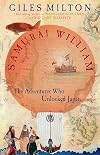
Samurai William: The Englishman Who Opened Japan
by Giles Milton
On This Page
Description
In 1611, the merchants of London's East India Company received a mysterious letter from Japan, written several years previously by a marooned English mariner named William Adams. Foreigners had been denied access to Japan for centuries, yet Adams had been living in this unknown land for years. He had risen to the highest levels in the ruling shogun's court, taken a Japanese name, and was now offering his services as adviser and interpreter. Seven adventurers were sent to Japan with orders to show more find and befriend Adams, in the belief that he held the key to exploiting the opulent riches of this forbidden land. Their arrival was to prove a momentous event in the history of Japan and the shogun suddenly found himself facing a stark choice: to expel the foreigners and continue with his policy of isolation, or to open his country to the world. For more than a decade the English, helped by Adams, were to attempt trade with the shogun, but confounded by a culture so different from their own, and hounded by scheming Jesuit monks and fearsome Dutch assassins, they found themselves in a desperate battle for their lives. Samurai William is the fascinating story of a clash of two cultures, and of the enormous impact one Westerner had on the opening of the East. show lessTags
Recommendations








































Member Recommendations

Member Reviews
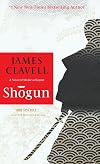
One of the major pop-cultural phenomena of the 1970s was James Clavell's novel Shogun, which told the story of an English seaman marooned in 15th century Japan. The novel spawned a television mini-series, recently re-made for the streaming generation; the story had colour, spectacle, and (for a Western audience) exoticism. It was also notable for making few concessions to audience comprehension, in that a lot of the Japanese dialogue was untranslated, putting many viewers in the same position as the central character, Blackthorne, of understanding little and being forced to rely on possibly unreliable third-party translators. Only slowly do we begin to comprehend what is happening to Blackthorne and those around him.
The surprise to many show more was that this story was essentially true. In 1598, a Dutch trading fleet recruited one William Adams, an experienced pilot (navigator) from Deptford, for a trade mission to the East Indies. The inspiration was the tales of vast riches to be made in trade with lands both known and unknown, especially "the Japans" which were the subject of a number of tantalisingly vague travellers' tales. The fleet sailed southwards, mainly keeping to the coast of the African continent; then struck out across the South Atlantic for the Straits of Magellan. They then turned north-westwards for Hawaii and then continued westwards across the Pacific. By this time, the fleet of five ships had been reduced to one, with only 25 crew remaining, and those racked with thirst, hunger and disease. On 12th April 1600, the one remaining ship fetched up off the coast of the southern Japanese island of Kyushu.
By now the only remaining senior partner in the original enterprise, William Adams stepped into a society and a political situation of which he knew nothing. What European trade there was with Japan was governed mainly by the Portuguese, who had reached Japan from the west some forty years earlier, but who maintained a monopoly on trade, in part encouraged by the Catholic Church. When the arrival of a Dutch ship became known to the effective ruler of Japan, the warlord Tokugawa Ieyasu, his interest was piqued. He was a shrewd man who wated to know more about the world outside Japan; he was also keen to exploit any advantage than newcomers might give him in the struggle for power in Japan. Days after his third meeting with Adams, Ieyasu set out at the head of his army to meet his rival at what was to become the Battle of Sekigahara, where he was victorious and secured his position as undisputed ruler of Japan. On finding that the Dutch ship and its crew were considered heretics and enemies by the Portuguese, he became even more interested. For his part, William Adams was impressed by the sophistication of Japanese society and the power exercised by Ieyasu. A close working relationship soon developed.
Giles Milton's book tells the story of William Adams, his relationship with Ieyasu, and his role in the development of trade between England and Japan. The main events of the first part if the story closely echo those of Clavell's novel, although a number of the rest of the crew also found themselves able to exploit their knowledge and trade acumen. Adams, meanwhile, became so valuable to Ieyasu that he was accorded the status of hatamoto and was granted estates and privileges in return for his knowledge, especially of shipbuilding.
Adams stayed in Japan for the rest of his life, though he worked closely with later English and Dutch traders and undertook a number of trade voyages to China and around the East Indies. Giles Milton's book tells the story of how that trading relationship developed, and then faded as antagonisms between the English and Dutch away from Japan influenced trade and relations with Ieyasu - now declared Shogun, or 'military dictator' - and his successor, his son Hidetada. These difficulties eventually led, after Adams' death, to Hidetada closing Japan to external trade. The book tells the story of these trade expeditions, as well as setting voyages to Japan in their historical perspective.
The text flows easily, and Milton paints a fascinating picture as Europeans first encounter the (to them) exotic societies of Japan and contrast it with their own. Whilst there were plenty of sailors who fully demonstrated the traditional seafarers' rumbustiousness and licentiousness, there were also others who saw the need to meet Japan on its own terms; William Adams was merely the first of these, and the most successful. Milton has done his research well, and draws on many contemporary sources.
If I have one criticism of the text, it is that we are mainly told the story from the point of view of the traders, and so their initial impressions of encounters with the Japanese display their ignorance of what they are seeing and their implications. For readers with even a slight knowledge of medieval Japan, this is occasionally restricting; we are often ahead of those telling the story. Equally, illustrations are mainly contemporary woodcuts, and so many of those produced by European artists employ a lot of imagination, and often depict the Japanese as Europeans, because (obviously) the artists were not there. Perhaps the one real irritant, though, is the way in which the illustrations are captioned with almost verbatim extracts from the text that the reader has just read.
But these are minor irritants. The book itself is a fascinating look at a world now long gone, but which has a lot of echoes down to our own time. show less
The surprise to many show more was that this story was essentially true. In 1598, a Dutch trading fleet recruited one William Adams, an experienced pilot (navigator) from Deptford, for a trade mission to the East Indies. The inspiration was the tales of vast riches to be made in trade with lands both known and unknown, especially "the Japans" which were the subject of a number of tantalisingly vague travellers' tales. The fleet sailed southwards, mainly keeping to the coast of the African continent; then struck out across the South Atlantic for the Straits of Magellan. They then turned north-westwards for Hawaii and then continued westwards across the Pacific. By this time, the fleet of five ships had been reduced to one, with only 25 crew remaining, and those racked with thirst, hunger and disease. On 12th April 1600, the one remaining ship fetched up off the coast of the southern Japanese island of Kyushu.
By now the only remaining senior partner in the original enterprise, William Adams stepped into a society and a political situation of which he knew nothing. What European trade there was with Japan was governed mainly by the Portuguese, who had reached Japan from the west some forty years earlier, but who maintained a monopoly on trade, in part encouraged by the Catholic Church. When the arrival of a Dutch ship became known to the effective ruler of Japan, the warlord Tokugawa Ieyasu, his interest was piqued. He was a shrewd man who wated to know more about the world outside Japan; he was also keen to exploit any advantage than newcomers might give him in the struggle for power in Japan. Days after his third meeting with Adams, Ieyasu set out at the head of his army to meet his rival at what was to become the Battle of Sekigahara, where he was victorious and secured his position as undisputed ruler of Japan. On finding that the Dutch ship and its crew were considered heretics and enemies by the Portuguese, he became even more interested. For his part, William Adams was impressed by the sophistication of Japanese society and the power exercised by Ieyasu. A close working relationship soon developed.
Giles Milton's book tells the story of William Adams, his relationship with Ieyasu, and his role in the development of trade between England and Japan. The main events of the first part if the story closely echo those of Clavell's novel, although a number of the rest of the crew also found themselves able to exploit their knowledge and trade acumen. Adams, meanwhile, became so valuable to Ieyasu that he was accorded the status of hatamoto and was granted estates and privileges in return for his knowledge, especially of shipbuilding.
Adams stayed in Japan for the rest of his life, though he worked closely with later English and Dutch traders and undertook a number of trade voyages to China and around the East Indies. Giles Milton's book tells the story of how that trading relationship developed, and then faded as antagonisms between the English and Dutch away from Japan influenced trade and relations with Ieyasu - now declared Shogun, or 'military dictator' - and his successor, his son Hidetada. These difficulties eventually led, after Adams' death, to Hidetada closing Japan to external trade. The book tells the story of these trade expeditions, as well as setting voyages to Japan in their historical perspective.
The text flows easily, and Milton paints a fascinating picture as Europeans first encounter the (to them) exotic societies of Japan and contrast it with their own. Whilst there were plenty of sailors who fully demonstrated the traditional seafarers' rumbustiousness and licentiousness, there were also others who saw the need to meet Japan on its own terms; William Adams was merely the first of these, and the most successful. Milton has done his research well, and draws on many contemporary sources.
If I have one criticism of the text, it is that we are mainly told the story from the point of view of the traders, and so their initial impressions of encounters with the Japanese display their ignorance of what they are seeing and their implications. For readers with even a slight knowledge of medieval Japan, this is occasionally restricting; we are often ahead of those telling the story. Equally, illustrations are mainly contemporary woodcuts, and so many of those produced by European artists employ a lot of imagination, and often depict the Japanese as Europeans, because (obviously) the artists were not there. Perhaps the one real irritant, though, is the way in which the illustrations are captioned with almost verbatim extracts from the text that the reader has just read.
But these are minor irritants. The book itself is a fascinating look at a world now long gone, but which has a lot of echoes down to our own time. show less
An excellent non-fiction companion to James Clavell's fiction epic "Shogun", describing the real-life facts surrounding Anjin-sama, aka William Adams, an English pilot who barely survived a sea voyage to Japan from England at the beginning of the 17th century and who became a close confidant of Ieyasu Tokugawa (portrayed as Toronaga in "Shogun"). But that is only a third of what this book has to offer: it also describes the history of European contact with Japan up to that point, and the plight of England's attempt to establish lasting trade relations. Minor annoyances I had with the author's style and presentation did not significantly detract from this wonderful historical. I will read other works by him if the subject matter show more interests me. show less
The story of William Adams, the first Englishman to live in Japan and gain high esteem in the shogun's court, is interesting. Giles Milton is a good storyteller, and the story is one of treacherous sea voyages, unruly seamen, and the rivalry and hate between the Catholic (Spanish and Portuguese) and Protestant (British and Dutch) colonizers. As with Nathaniel's Nutmeg, which is the only other book I have read by Milton so far, he tells the story of all, not just the title character, with its twists and turns. The wealth of information gathered here from historic records and letters is impressive, though at the same time Milton's easy going yet elegant language makes everything read like one epic story.
Why only three stars then? Well, show more compared to Nathaniel's Nutmeg, I found the fumbling adventures of Englishmen in Japan to be less captivating. It seems that there was very little business done, many incompetent "factors" who were just criminal-minded or good old drunks, and the only competent man, William Adams, was stuck in Japan, unwillingly trying to help the Englishmen to survive the shogun's and the local lord's trade policies. Beyond that there seems to be just a lot of sitting and waiting and drinking and whoring. In the end, I am not sure what the historical impact of this brief British presence in Japan was. Perhaps none. Certainly, for two centuries no other foreigner had access to the shogun's court like William Adams had. show less
Why only three stars then? Well, show more compared to Nathaniel's Nutmeg, I found the fumbling adventures of Englishmen in Japan to be less captivating. It seems that there was very little business done, many incompetent "factors" who were just criminal-minded or good old drunks, and the only competent man, William Adams, was stuck in Japan, unwillingly trying to help the Englishmen to survive the shogun's and the local lord's trade policies. Beyond that there seems to be just a lot of sitting and waiting and drinking and whoring. In the end, I am not sure what the historical impact of this brief British presence in Japan was. Perhaps none. Certainly, for two centuries no other foreigner had access to the shogun's court like William Adams had. show less
A very well-written and interesting book about William Adams, the first Englishman in Japan. It managed to give plenty of information not only about Adams, but also Japan in general and all the things influencing Adams's life in Japan. And somehow it stayed interesting all the way through. Oftentimes, such indepth nonfiction books end up boring me with dry, uninteresting writing, but Giles Milton's is trully impressive.
William Adams was the first Englishman to set foot on Japan. One of only 18 survivors of a horrific, two-year-long voyage, he became influential in the rule of eventual shogun Ieyasu. Adams convinced the East India Company (which was trading in Java at the time) to try trading in Japan, interpreted for the traders, and helped them learn local customs. Less a biography than a history of trade, this account illuminates international trade relations between the English, Dutch, Portuguese, and Japanese in the late 16th to early 17th centuries. Milton remains objective in his narration and does a good job of making a topic that was very unfamiliar to me understandable.
A remarkable story about how on Englishman, William Adams, survived, thrived and prospered greatly in Japan, well over 400 years ago. Giles Milton does a masterful job of weaving the story based on contemporary records - much as he did in the equally readable "Nathaniel's Nutmeg".
Giles Milton’s history of 17th century Japan is a superb window into Eastern philosophy and culture. In April 1600, William Adams, the pilot of a Dutch ship (the only one out of five to reach its destination) stepped off his boat and became the first Englishman to set foot in Japan. In his twenty years living there, he became the favored adviser of not one but two emperors, amassed a great fortune trading with the Javanese, Malaysian, and Chinese empires, and helped opened up a whole world of new culture and ideas to the Western hemisphere. His tale, as well as the tale of countless sailors and traders to follow, is one of detailed intrigue and peril. Milton does a very good of weaving together what little information there was and show more offers a very competent vignette of Japanese history. An excellent read.
http://lifelongdewey.wordpress.com/2012/01/29/952-samurai-william-by-giles-milto... show less
http://lifelongdewey.wordpress.com/2012/01/29/952-samurai-william-by-giles-milto... show less
Members
- Recently Added By
Author Information

31 Works 7,140 Members
Giles Milton is the author, most recently, of the critically acclaimed Nathaniel's Nutmeg (FSG, 1999). He lives in London. (Bowker Author Biography)
Common Knowledge
- Original publication date
- 2003
- People/Characters
- William Adams; Tokugawa Ieyasu
- Important places
- Japan
Classifications
Statistics
- Members
- 882
- Popularity
- 30,831
- Reviews
- 15
- Rating
- (3.71)
- Languages
- 7 — Czech, Danish, Dutch, English, French, German, Italian
- Media
- Paper, Audiobook, Ebook
- ISBNs
- 22
- ASINs
- 10