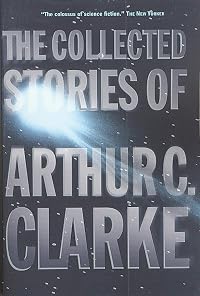
The Collected Stories of Arthur C. Clarke
by Arthur C. Clarke
The Collected Stories of Arthur C. Clarke (Collections and Selections — )
On This Page
Description
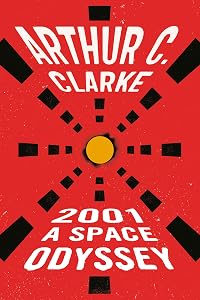
The Collected Stories of Arthur C. Clarke is a massive volume of exceptional science-fiction short stories by Arthur C. Clarke, the author of iconic works including: 2001: A Space Odyssey and Childhoods End. This collection compiles all of his shorter works written throughout his career ranging from his earliest work, to classic favorites that have defined the genre. Both exciting and philosophical, these collected stories don't just keep readers turning pages, they keep them asking big show more questions about what it means to be human, and humanity's future role in the universe. show lessTags
Recommendations











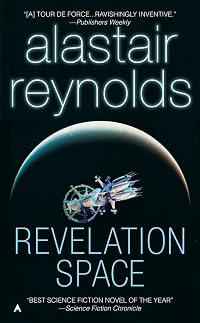
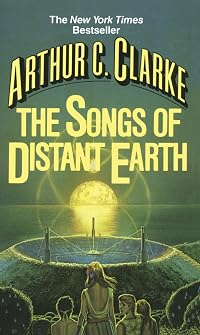
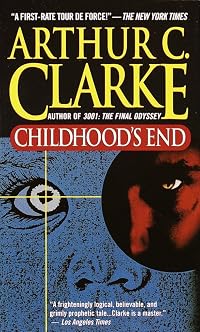
Member Reviews
I’ve never been a big fan of Clarke’s science fiction. Of the Big Three - Asimov, Clarke and Heinlein - I’ve read more by Heinlein, and I think Asimov’s fiction was terrible, but I suppose I’d considered Clarke the best writer of the trio. This collection has forced me to re-evaluate that. It’s a humongous book, 966 pages in paperback, containing 104 stories, published between 1937 and 1999. It is, according to the blurb, all of Clarke’s short fiction. And a lot of it is, well, not very good. There are sf puzzles stories, of the sort loved by readers of Analog, and typified by ‘Maelstrom II’; there are a number of plot-less stories set in the far future; and there far too many stories set in the 1970s and 1980s show more (although written in the 1950s) which feature Moon colonies and space stations, and missions to Venus and Saturn. They’re all very Bonestell and Colliers Magazine. And they have not aged well. And then there are the White Hart stories… Stories told as pub anecdotes have been a pet hate of mine for decades, and none of the White Hart stories in this collection have caused me to change my mind. However, I was surprised when reading Clarke’s short fiction how often he got shit wrong, stuff that’s trivial to look up now but would not have been difficult 70 years ago - such as claiming bees carry honey to their hive. Clarke had a very limited area of expertise, and everything else he made the shit up. And it shows. I can forgive him riffing off the science and knowledge of the time, and often coming up with totally unsupported plots or world-building - he’s pushing the science as far as it will go according to what he knows. That’s almost a dictionary definition of science fiction. And I’ll grant him that he showed a little more social inventiveness, so no Men in Fucking Hats sf. But. He makes up too much that he should have researched. It spoils his stories. This is not a good collection. I even question its value as an historical document. show less
Deservedly regarded as one of the best science fiction stories of the last century (although still within the 'punch line' tradition of the genre), this is really a disquisition on the threat of science to faith which is kindly and empathetic towards the losing side - that of religion.
The universe is a cold place working to iron laws and we try to give it meaning. The meanings we give on the information available to us out of our ignorance lose their resonance as new information appears until that point when faith becomes stubborn stupidity.
Stupidity is a reasonable option when it comes to beliefs about the world when the survival costs of not having beliefs are greater than the dangers of having beliefs that work against reality but show more Clarke was a progressive who saw knowledge acquisition as remorseless and a good in itself.
First published in 1954 and frequently anthologised since, this story is almost a manifesto for the mind-set required to conquer the universe. It is another question whether we can or should do so but, if we do, this story represents how we should probably be thinking.
But, beyond the thought, Clarke is, as usual, masterful in putting his ideas into plausible mouths and treating them fairly. The Jesuit on a space mission is someone we can feel empathy for, someone whose loss of faith makes us sad even if we have never had that faith ourselves.
The real loss here is of any prospect of delusion, of believing that the universe is good, that everything happens for a reason that is good for us in some way and that bad things do not happen to good people.
This has, however, always allowed Clarke to offer us something that would have had more resonance in the aftermath of the second world war - the prospect of heroism, an idea that has almost died outside the military in our post-modern society.
Clarke is not unaware that something is being lost in the drive to the future. It is a price he is prepared to pay but, to his credit, he does not ever believe that the future can be delivered without such a price being attached or sacrifices involving selfless heroism for the common good.
One might reasonably critique this vision by saying that belief in the future is what it says on the tin - simply another belief. The fact that it is a 'progressive' belief and more in tune with material reality than previous beliefs does not make it any less a belief, an investiture of meaning.
Clarke is less interested in this problem, that a failed meaning has merely been replaced by another belief that is equally like to fail in due course, the latest in a succession of human belief systems, each fitted to the material and informational world of its time.
We look at his story from a perspective of seventy years of vastly more information. Our belief systems have changed accordingly. Space opera optimism looks a little less viable now as we understand better our own biological vulnerabilities, physical constraints and vast distances.
And as the optimism goes, with the decline of space programmes and the loss of Cold War struggle, so does the heroism in a world made grubbier by neo-liberal market values, the theatrical politics of the spectacle and the fears and anxieties of a community now defined by distrust. show less
The universe is a cold place working to iron laws and we try to give it meaning. The meanings we give on the information available to us out of our ignorance lose their resonance as new information appears until that point when faith becomes stubborn stupidity.
Stupidity is a reasonable option when it comes to beliefs about the world when the survival costs of not having beliefs are greater than the dangers of having beliefs that work against reality but show more Clarke was a progressive who saw knowledge acquisition as remorseless and a good in itself.
First published in 1954 and frequently anthologised since, this story is almost a manifesto for the mind-set required to conquer the universe. It is another question whether we can or should do so but, if we do, this story represents how we should probably be thinking.
But, beyond the thought, Clarke is, as usual, masterful in putting his ideas into plausible mouths and treating them fairly. The Jesuit on a space mission is someone we can feel empathy for, someone whose loss of faith makes us sad even if we have never had that faith ourselves.
The real loss here is of any prospect of delusion, of believing that the universe is good, that everything happens for a reason that is good for us in some way and that bad things do not happen to good people.
This has, however, always allowed Clarke to offer us something that would have had more resonance in the aftermath of the second world war - the prospect of heroism, an idea that has almost died outside the military in our post-modern society.
Clarke is not unaware that something is being lost in the drive to the future. It is a price he is prepared to pay but, to his credit, he does not ever believe that the future can be delivered without such a price being attached or sacrifices involving selfless heroism for the common good.
One might reasonably critique this vision by saying that belief in the future is what it says on the tin - simply another belief. The fact that it is a 'progressive' belief and more in tune with material reality than previous beliefs does not make it any less a belief, an investiture of meaning.
Clarke is less interested in this problem, that a failed meaning has merely been replaced by another belief that is equally like to fail in due course, the latest in a succession of human belief systems, each fitted to the material and informational world of its time.
We look at his story from a perspective of seventy years of vastly more information. Our belief systems have changed accordingly. Space opera optimism looks a little less viable now as we understand better our own biological vulnerabilities, physical constraints and vast distances.
And as the optimism goes, with the decline of space programmes and the loss of Cold War struggle, so does the heroism in a world made grubbier by neo-liberal market values, the theatrical politics of the spectacle and the fears and anxieties of a community now defined by distrust. show less
There are over 100 stories in this impressive collection ranging from 1937 (aged 20) to 1999 (aged 82) but the golden age of Clarke (as a short story writer) starts in the second half of the 1940s and ends in the early 1960s.
The falling off is not a matter of ability (since he could pull off some excellent work when he wanted to later in life) but lack of will in this medium. By the mid-1960s, he had made his name, was living well, basking in adulation and could concentrate on enjoying life and consulting.
Of course, the classic novels are of equal importance and these did continue well into the 1990s so, to some extent, what we see is as much about the decline of the short story-based science fiction magazine as anything else. In the show more 1970s, he is writing more for Playboy than the fans.
Fortunately, the vast bulk of stories in this collection come from this long Golden Age and only 11 or so stories are from after 1970 and some of those are good.
The stories of the late-1940s, 1950s and early 1960s are, however, fascinating, partly because what comes across is both Clarke the Briton and Clarke the Humanist. And, of course, he remained busy on books and influencing popular culture - there was certainly no falling off of the intellect.
There is material here for a major study of the relationship between scientific aspiration, a declining Britain and a rising America but this is not the place - suffice it to say that Clarke's slightly outsider status (as genre writer, perhaps as gay, as creative) provides major insights here.
There are themes, of course. There are surprisingly few references to aliens or alien perspectives (though there are some). The corpus concentrates above all on human aspirations and human reactions, human follies and human courage.
Of course, he cannot write well about women though he adapts well to changing mores in his last years (Clarke is nothing if not open-minded) but he can write brilliantly about the heroic engineer in ways that would do credit to the Soviet tradition.
Indeed, it is clear that he refuses to demonise Sovietism throughout while remaining someone who clearly loves America. His stance seems to be one of continuous humanistic scientific optimism and that there is no reason why capitalists and communists cannot share equally in what is to come.
One repeated theme is the scientist-engineer or the practical pilot or worker, faced with mortality (there are as likely as not to be no last minute rescues) and choosing existentially just to finish the job to provide that extra bit of knowledge for the species in its flight to the stars.
We should also note that Clarke is always a hard science writer. The fact that the predictions may not always come true (he often gets the idea right but not the timing) is irrelevant - most of what he proposes is not (at the time of writing) impossible or truly fantastic.
His attitude to the paranormal was famously open-minded: that possibility in science fiction can permit strange things if it can be rationally drawn from what is known - the classic 'magic as undiscovered science' meme - but there is very little of that in these stories. All is science.
It is no accident that the penultimate collaboration is with Stephen Baxter, another fine British hard science fiction writer, in a superb piece of alternate history that plays brilliantly with Clarke's 'pseudo-weaknesses' and shows them to be imaginative strengths.
In The Wire Continuum Baxter (since one suspects he is driving the narrative here) pays tribute to Clarke by taking the latter's first ever story about teleportation and creating from it a structured alternate history as if Clarke's mentality had been true to actual history.
In this case, Baxter has used something that is impossible or fantastic (teleportation) but the way it is 'played' acts as beautiful counterpoint to the hard science, shining a light on Clarke's themes in a way that can only be understood if you had read the preceding 948 pages.
Perhaps (roughly) a quarter of the stories are to be regarded as humorous in a rather 'jolly jape' English academic sort of way, exemplified by those collected as Tales from the White Hart' centred around its engineer-scientist Harry Purvis whose tall tales all seem to be based on hard science.
These Tales are early stuff but very well crafted with a distinctive style, including at one point a classic of the 'perfect murder' genre. They reflect the clubbability and conviviality of the early science fiction community in London. Later humour may often be more heavy-handed.
There are too many stories here to comment on any in particular. There are very few duds. Some are undoubted literary masterpieces. Most will stand the test of time and give insights not just into the man but his time. Some became the basis of books and, famously, films.
The abiding images he leaves are two-fold - the word painting of other worlds (mostly in our own solar system) so that you feel, rightly or wrongly, that 'you have been there' and of a sense of the heroic, of men for whom knowledge and discovery are greater than life itself.
Personally, I am less simpatico with this progressive heroism in reality but only a philistine would not see its beauty aesthetically much as even an atheist can see the beauty in a Baroque martyrdom or hear the beauty in a seventeenth century religious cantata.
The age of heroes is probably now dead even though the space travel exponents (who I tend to support for practical reasons related to the asteroid problem rather than out of ideological sentiment) would like it to be otherwise.
The Baxter story links the Clarkian universe - the travel to the stars in a world changed forever by hive minds and quantum technology - back to its roots: an older heroism of gallant spitfire pilots defending a soil that no longer has much meaning but where past heroism stands on the record.
Clarke, despite his adoption by American progressives and technologists, starts off as a quintessentially British writer and transforms himself - you can trace it in the trajectory of the stories - stage by stage into a cosmic universalist. Tracing that trajectory is fascinating in itself.
In Hegelian terms, British wartime heroism and scientific prowess is the thesis, the universal destiny of mankind is the antithesis and the synthesis is a heroic humanistic progressivism. I remind the reader that the motto of the Royal Air force was and is Per Ardua Ad Astra.
As a British reader of a certain age reading Clarke from 1937 to the end of the last century is a bitter-sweet experience. On the one hand, it reminds us of the death of an England which scarcely exists now and, on the other, offers an amazing world of possibilities on its funeral pyre.
Finally, you realise in reading these stories that Clarke was unusual in another respect - high intelligence capable of understanding and expanding imaginatively on extremely complex contemporary science and a humane understanding of human (or rather male) motivation.
Yes, his women are generally ciphers. His is a male universe and one suspects he knew that this was not the whole story from the hints in the later tales. Perhaps he knew that he could only think like a male but in every respect he was decent - anti-racist, anti-imperialist, anti-militarist.
The bottom line is that the collection shows that Arthur C. Clarke deserves his place as one of the great writers in the science fiction genre. The book is highly recommended albeit requiring considerable patience to get through its 966 relatively small print pages. show less
The falling off is not a matter of ability (since he could pull off some excellent work when he wanted to later in life) but lack of will in this medium. By the mid-1960s, he had made his name, was living well, basking in adulation and could concentrate on enjoying life and consulting.
Of course, the classic novels are of equal importance and these did continue well into the 1990s so, to some extent, what we see is as much about the decline of the short story-based science fiction magazine as anything else. In the show more 1970s, he is writing more for Playboy than the fans.
Fortunately, the vast bulk of stories in this collection come from this long Golden Age and only 11 or so stories are from after 1970 and some of those are good.
The stories of the late-1940s, 1950s and early 1960s are, however, fascinating, partly because what comes across is both Clarke the Briton and Clarke the Humanist. And, of course, he remained busy on books and influencing popular culture - there was certainly no falling off of the intellect.
There is material here for a major study of the relationship between scientific aspiration, a declining Britain and a rising America but this is not the place - suffice it to say that Clarke's slightly outsider status (as genre writer, perhaps as gay, as creative) provides major insights here.
There are themes, of course. There are surprisingly few references to aliens or alien perspectives (though there are some). The corpus concentrates above all on human aspirations and human reactions, human follies and human courage.
Of course, he cannot write well about women though he adapts well to changing mores in his last years (Clarke is nothing if not open-minded) but he can write brilliantly about the heroic engineer in ways that would do credit to the Soviet tradition.
Indeed, it is clear that he refuses to demonise Sovietism throughout while remaining someone who clearly loves America. His stance seems to be one of continuous humanistic scientific optimism and that there is no reason why capitalists and communists cannot share equally in what is to come.
One repeated theme is the scientist-engineer or the practical pilot or worker, faced with mortality (there are as likely as not to be no last minute rescues) and choosing existentially just to finish the job to provide that extra bit of knowledge for the species in its flight to the stars.
We should also note that Clarke is always a hard science writer. The fact that the predictions may not always come true (he often gets the idea right but not the timing) is irrelevant - most of what he proposes is not (at the time of writing) impossible or truly fantastic.
His attitude to the paranormal was famously open-minded: that possibility in science fiction can permit strange things if it can be rationally drawn from what is known - the classic 'magic as undiscovered science' meme - but there is very little of that in these stories. All is science.
It is no accident that the penultimate collaboration is with Stephen Baxter, another fine British hard science fiction writer, in a superb piece of alternate history that plays brilliantly with Clarke's 'pseudo-weaknesses' and shows them to be imaginative strengths.
In The Wire Continuum Baxter (since one suspects he is driving the narrative here) pays tribute to Clarke by taking the latter's first ever story about teleportation and creating from it a structured alternate history as if Clarke's mentality had been true to actual history.
In this case, Baxter has used something that is impossible or fantastic (teleportation) but the way it is 'played' acts as beautiful counterpoint to the hard science, shining a light on Clarke's themes in a way that can only be understood if you had read the preceding 948 pages.
Perhaps (roughly) a quarter of the stories are to be regarded as humorous in a rather 'jolly jape' English academic sort of way, exemplified by those collected as Tales from the White Hart' centred around its engineer-scientist Harry Purvis whose tall tales all seem to be based on hard science.
These Tales are early stuff but very well crafted with a distinctive style, including at one point a classic of the 'perfect murder' genre. They reflect the clubbability and conviviality of the early science fiction community in London. Later humour may often be more heavy-handed.
There are too many stories here to comment on any in particular. There are very few duds. Some are undoubted literary masterpieces. Most will stand the test of time and give insights not just into the man but his time. Some became the basis of books and, famously, films.
The abiding images he leaves are two-fold - the word painting of other worlds (mostly in our own solar system) so that you feel, rightly or wrongly, that 'you have been there' and of a sense of the heroic, of men for whom knowledge and discovery are greater than life itself.
Personally, I am less simpatico with this progressive heroism in reality but only a philistine would not see its beauty aesthetically much as even an atheist can see the beauty in a Baroque martyrdom or hear the beauty in a seventeenth century religious cantata.
The age of heroes is probably now dead even though the space travel exponents (who I tend to support for practical reasons related to the asteroid problem rather than out of ideological sentiment) would like it to be otherwise.
The Baxter story links the Clarkian universe - the travel to the stars in a world changed forever by hive minds and quantum technology - back to its roots: an older heroism of gallant spitfire pilots defending a soil that no longer has much meaning but where past heroism stands on the record.
Clarke, despite his adoption by American progressives and technologists, starts off as a quintessentially British writer and transforms himself - you can trace it in the trajectory of the stories - stage by stage into a cosmic universalist. Tracing that trajectory is fascinating in itself.
In Hegelian terms, British wartime heroism and scientific prowess is the thesis, the universal destiny of mankind is the antithesis and the synthesis is a heroic humanistic progressivism. I remind the reader that the motto of the Royal Air force was and is Per Ardua Ad Astra.
As a British reader of a certain age reading Clarke from 1937 to the end of the last century is a bitter-sweet experience. On the one hand, it reminds us of the death of an England which scarcely exists now and, on the other, offers an amazing world of possibilities on its funeral pyre.
Finally, you realise in reading these stories that Clarke was unusual in another respect - high intelligence capable of understanding and expanding imaginatively on extremely complex contemporary science and a humane understanding of human (or rather male) motivation.
Yes, his women are generally ciphers. His is a male universe and one suspects he knew that this was not the whole story from the hints in the later tales. Perhaps he knew that he could only think like a male but in every respect he was decent - anti-racist, anti-imperialist, anti-militarist.
The bottom line is that the collection shows that Arthur C. Clarke deserves his place as one of the great writers in the science fiction genre. The book is highly recommended albeit requiring considerable patience to get through its 966 relatively small print pages. show less
http://nwhyte.livejournal.com/2733494.html
I liked the original version of "Earthlight" much more than the novel (which I reread only this summer); it much better constructed and pacier, and I would go so far as to call it the best discovery in the collection for me. However, I could also see why Clarke revised it so heavily for publication as a novel - the science had dated really rather rapidly after the 1951 publication. It's a shame that he took most of the steam out of it.
Otherwise this was mostly a reunion with old friends - almost all of the best stories by Clarke have been printed elsewhere in other collections that I own or have read, and one can see certain themes rise and fall (a lot of unsuccessful marriages at one point). I show more had not previously read many of the Tales from the White Hart, and I fear I did not have cause to regret that lapse. I was struck by how concentrated Clarke's successful story-writing career actually was, despite his longevity: the first really good story is probably "The Fires Within", from 1947, and then there is a steady rate of production with 87 stories in total from there up to "A Meeting With Medusa" in 1971; then the last stories are from 1977, 1984, two in 1986, 1992, 1997 and 1999, which is about one every four years on average.
But the good stuff remains very good, and it's nice to revisit material that had a formative effect on my thinking as I grew up, even if its limitations in terms of gender representation are a bit more obvious to me now. show less
I liked the original version of "Earthlight" much more than the novel (which I reread only this summer); it much better constructed and pacier, and I would go so far as to call it the best discovery in the collection for me. However, I could also see why Clarke revised it so heavily for publication as a novel - the science had dated really rather rapidly after the 1951 publication. It's a shame that he took most of the steam out of it.
Otherwise this was mostly a reunion with old friends - almost all of the best stories by Clarke have been printed elsewhere in other collections that I own or have read, and one can see certain themes rise and fall (a lot of unsuccessful marriages at one point). I show more had not previously read many of the Tales from the White Hart, and I fear I did not have cause to regret that lapse. I was struck by how concentrated Clarke's successful story-writing career actually was, despite his longevity: the first really good story is probably "The Fires Within", from 1947, and then there is a steady rate of production with 87 stories in total from there up to "A Meeting With Medusa" in 1971; then the last stories are from 1977, 1984, two in 1986, 1992, 1997 and 1999, which is about one every four years on average.
But the good stuff remains very good, and it's nice to revisit material that had a formative effect on my thinking as I grew up, even if its limitations in terms of gender representation are a bit more obvious to me now. show less
I consider myself a fan of Clarke, and I liked many of these stories. But I only loved a couple of them.
I read this book concurrently with the Complete Stories of J.G. Ballard (an even more massive tome). Despite the nominal genre sharing, it's hard to imagine two more profoundly different authors. Clarke wrote stories about ideas (often clever ones), and the consequences of these ideas. Ballard wrote stories about people, individually and collectively, and how they might be psychologically and emotionally affected by a changing world around them. For me, the comparison did not work in Clarke's favor.
I read this book concurrently with the Complete Stories of J.G. Ballard (an even more massive tome). Despite the nominal genre sharing, it's hard to imagine two more profoundly different authors. Clarke wrote stories about ideas (often clever ones), and the consequences of these ideas. Ballard wrote stories about people, individually and collectively, and how they might be psychologically and emotionally affected by a changing world around them. For me, the comparison did not work in Clarke's favor.
Clarke is by far my favorite science fiction author (being thoughtful, credible, and, importantly, able to put words together better than the average sixth grader), and one of my favorite authors in general, for that matter. Where Clarke really shines are his short stories. Some are notable for being ridiculously realistic (Clarke's works are exemplars of "hard science fiction", that is, realistic science fiction; the opposite of "space opera") some for being deeply philosophical, and some just for being witty. I have found very few stories by Clarke that I did not find particularly interesting. It helps also that short stories happen to be my favorite literary format, I'll admit. But still I think Clarke manages to get more out of the show more format than most. This is one of those desert island books; if I could have only one book of science fiction, this is what I would pick. (It's rather convenient, incidentally, that you can now get all of Clarke's short stories in one place for a reasonable price, though I also have lots of small anthologies floating around my bookshelves as well.) show less
This is a massive collection of short stories written by Arthur C. Clarke from the 1940s to the 1960s. As you can imagine, as with much of the science fiction written during this period, some of it doesn’t age particularly well.
In fact, many of the stories, particularly those previously published in Tales of the White Hart, only tangentially involve science fiction, focusing more on sometimes speculative scientific discoveries than on rockets, space ships and aliens. While these can certainly be deemed “science” fiction, they don’t conform to most people’s definition of “science fiction.”
As with any such collection, there are stars, there are run of the mill stories, and there is merely “filler”. All in all, not a bad show more selection for an audiobook to listen to while driving. show less
In fact, many of the stories, particularly those previously published in Tales of the White Hart, only tangentially involve science fiction, focusing more on sometimes speculative scientific discoveries than on rockets, space ships and aliens. While these can certainly be deemed “science” fiction, they don’t conform to most people’s definition of “science fiction.”
As with any such collection, there are stars, there are run of the mill stories, and there is merely “filler”. All in all, not a bad show more selection for an audiobook to listen to while driving. show less
Members
- Recently Added By
Published Reviews
ThingScore 100
Let's face it. This is a near one thousand page volume that contains every piece of short fiction the man has ever published. There is not time here to discuss more than a small portion of it. Most of it is good, some is not so good, some is brilliant. It is a big, thick weighty volume, and that is good.
added by beetle_b
Lists

The Short Story Collections of Arthur C. Clarke
10 works; 1 member

Favorite Science Fiction
456 works; 218 members
Author Information

861+ Works 130,263 Members
Arthur C. Clarke was born in Minehead, Somerset, England, on December 16, 1917. During World War II, he served as a radar specialist in the RAF. His first published piece of fiction was Rescue Party and appeared in Astounding Science, May 1946. He graduated from King's College in London with honors in physics and mathematics, and worked in show more scientific research before turning his attention to writing fiction. His first book, Prelude to Space, was published in 1951. He is best known for his book 2001: A Space Odyssey, which was later turned into a highly successful and controversial film under the direction of Stanley Kubrick. His other works include Childhood's End, Rendezvous with Rama, The Garden of Rama, The Snows of Olympus, 2010: A Space Odyssey II, 2062: Odyssey III, and 3001: The Final Odyssey. During his lifetime, he received at least three Hugo Awards and two Nebula Awards. He died of heart failure on March 19, 2008 at the age of 90. (Bowker Author Biography) show less
Some Editions
Series

Belongs to Publisher Series
Work Relationships
Contains
Common Knowledge
- Canonical title
- The Collected Stories of Arthur C. Clarke
- Original publication date
- 2000
- Publisher's editor
- Nielsen Hayden, Patrick (Tor)
- Blurbers
- Bradbury, Ray; Asimov, Isaac
- Original language
- English
Classifications
Statistics
- Members
- 1,514
- Popularity
- 15,212
- Reviews
- 21
- Rating
- (4.15)
- Languages
- English, French
- Media
- Paper, Audiobook, Ebook
- ISBNs
- 31
- ASINs
- 14