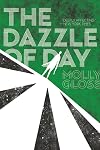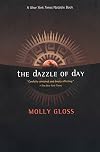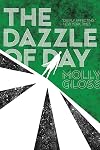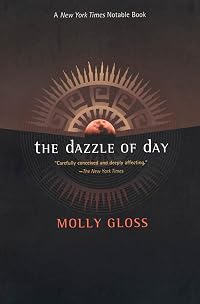
The Dazzle of Day
by Molly Gloss
On This Page
Description
"The Dazzle of Day is a brilliant and widely celebrated mixture of mainstream literary fiction and science fiction. Award-winning author Molly Gloss turns her attention to the frontiers of the future, when the people of our over-polluted planet Earth voyage out to the stars to settle new worlds, to survive unknown and unpredictable hardships, and to make new human homes. Specifically, it is a story about Quakers, people who have grown up on a ship that is traveling to a new world, and about show more the society and culture that have evolved among them by the time they arrive at their new home planet"-- show lessTags
Recommendations




























Member Recommendations


pammab Generation ship + serious treatment of religion + older and otherwise diverse POV characters. Chambers' book makes thematic points where /The Dazzle of Day/ seemed to struggle to articulate themes.
Member Reviews
I love this book.[return][return]I've loved it since the first time I read it, about 20 years ago, when it leapt off a library shelf into my hands. (I remember looking at the plain, elegant cover, and the beautiful, enigmatic title, and thinking, I'm going to like this ...) I have loved buying random copies, and presenting it to friends and students, over the years; I have loved rereading it for the first time in a while. [return][return]Why do I love it? Well, it's beautifully written, of course. But, let's be honest, beautiful writing is ten a penny: it's what you do with it. How the beautiful words, in a pleasing order, hang meat upon the narrative bones. For me, it's the way that this novel makes me feel thoroughly engaged with the show more lives of its characters, and builds up to a picture of what it means to be the "world entire," and at the same time a small cog in something much bigger than yourself. [return][return]For me, Gloss' narrative choices are ... well, dazzling. I love the framing device, of chapters set 175 years before and approximately 100 years after the main events and the main characters of the story, chapters which elegantly solve the narrative problems of putting the main story in a kind of context-- What's happening here? How did we get where we are? and What happened next? [return][return]The Prologue allows Gloss to do the heavy lifting of exposition without clumsy infodumps (or, perhaps I should say, without making the infodumps feel clumsy ...) It's the 1st person narrative of Dolores Negrete, a 60 year old woman with no immediate family, who is struggling with her decision to join a group of Quaker emigres who are fleeing the environmental and political chaos of Earth on the generation starship Dusty Miller. With no family to pressure her either way, Dolores is an individual who is perfectly poised between clinging to the devil you know, and taking a leap of faith that will inevitably involve discomfort and danger, just at a time in her life when she'd be forgiven for wanting comfort, if not safety. Dolores' ruminations, as she takes one last (perhaps) walk around the village in Costa Rica she has called home, tell us all we need to know about the mess that the Earth is in, the basics of the Dusty Miller project, and about Dolores as a person who must live (and die) with her decision.[return][return]The main events of the novel take place about 175 years later, and follow the dramatic and mundane events of the descendants of some of Dolores' friends and neighbours, as the Dusty Miller tentatively approaches the first habitable planet they have encountered in their long, multi-generation voyage. Like Dolores, 175 years before, the question is, do we stay or do we go? -- the planet they are approaching is habitable, just, but hardly an Eden. The Dusty Miller provides them all with a marvel of sustainable living, but it's old, and the infrastructure is beginning to show its cracks. Whatever they decide -- to cut bait and stay, or to limp on for four or five generations to the next star with a "Goldilocks planet," in the hope that it offers something better -- they all know that they (and their children, and grandchildren) will have to live (and die) with their decision. And against this background, our characters go through the relatively ordinary dramas of life, small, large and massively life-altering. There are suicides, and family breakdowns, anger and rape, as everyone suffers a kind of depressive madness -- the simanas -- as the residents of the Dusty Miller struggle mindfully with the pressure of the decision before them.[return][return]And then, in the final chapter, we get a hint of what happens next. I particularly love the way that Gloss neatly sidesteps full closure -- yes, of course, I would have liked to know what happens to Juko, Bjoro, Humberto, Kristina and Cejo. I'm only human, you know!!! But not knowing feels absolutely right. Like Dolores, these wonderful people -- annoying and endearing, courageous and frightened at the same time -- have slipped into memory. Tiny little hints abound: Are the precious books that are rescued from the wreck of the shuttle ferrying salvage from the abandoned Dusty Miller the ones that Dolores agonized over, almost 300 years before? Is Kristina the Pioneer woman who was buried in the regolith of the New World, instead of being cremated? We don't know. Maybe. I'm sure it's allowed to believe it is so. [return][return]I also loved the worldbuilding. Gloss develops a society based on Quaker principles that is quite amazing. (In future, I want all committees that I belong to to have a Mindful Silence before the business of the Meeting begins, to allow the Sense of the Meeting to emerge ... Fat chance ... ) I love the model of sustainability that the Dusty Miller offers -- use everything, waste nothing, figure out clever workarounds, respect your environment. Not surprising that recently Kim Stanley Robinson offered this novel as his only fiction suggestion among his list of "the best books to help us navigate the next 50 years," as an example of a novel that "can also help us imagine a better future." [return][return]https://www.theguardian.com/books/2020/oct/12/there-is-no-planet-b-the-best-books-to-help-us-navigate-the-next-50-years?fbclid=IwAR1V2XrjLEgN45wp_JW3qdfF0dkxmKhHAcJ13OUpem5Hv0neArckaNp4I6I[return][return]I don't mind saying that I glowed with very unQuakerlike pride when I realized that Stan and I are of a like mind on this one. [return][return]I love this book. show less
Quaker Business Process in The Dazzle of Day
Here’s a challenge: Write a novel in which a Quaker business meeting is the dramatic pivot point . . . and make it a compelling read.
That’s the challenge that Molly Gloss meets in her science fiction novel The Dazzle of Day.
The story begins in a Quaker community in Costa Rica. Residents are trying to decide whether to join the interstellar journey of the starship Dusty Miller, which is about to embark on a multi-century voyage in search of a habitable planet. The body of the novel then jumps 175 years ahead, when the ship is nearing a star system with a planet that is habitable but far from ideal. The passengers will have to decide whether to risk adapting to a cold windswept environment show more or to continue their search in an aging and slowly deteriorating ship. Being steeped in Quaker ways, they will engage in a lot of talking before they decide—and a business meeting will mark to point of decision.
Science fiction readers recognize that the Dusty Miller (named in unpretentious style for a simple foliage plant) is a “generation ship.” In a universe that respects Einsteinian physics, the speed of starships is limited by the speed of light. Without wormhole or warp drive as a convenient work-around, a ship will take decades or generations to reach even moderately close star systems The generation that launched the ship will die before it reaches its destination. Only their grandchildren or great-grandchildren will see a new world. In the meanwhile, successive generations live in a massive ship-world that is large enough to maintain a fully functioning ecology.
Driven through space by vast light sails, the Dusty Miller is a wheel with a central hub and a habitable ring that maintains gravity and supports dense rural settlement on the interior of its floor and sloping sides. Its 3000 or so residents have farmed, gardened, maintained mechanical systems, and waited for the voyage to end at what a promised land. Now the ship has arrived at a solar system with a disappointingly marginal planet. It is cold, rocky, and inhospitable, greatly unlike the subtropical interior of the ship with its gardens and vineyards, but it is a place where voyagers could survive if they are willing to adapt and trade their semi-tropical biosphere for the equivalent of Iceland or the Hebrides
Molly Gloss is a Portlander who writes both science fiction and historical fiction. Set in the American West, her historical novels highlight strong independent women. The Jump-Off Creek is the story of a widow who homesteads by herself in the mountains of eastern Oregon in 1895. The Hearts of Horses follows a young woman who succeeds as breaker and trainer of ranch horses during World War I, when men who had done the work were off to war. In The Dazzle of Day, women are the glue that keeps the supremely isolated community functioning.
Gloss introduces Quaker practice gradually. We first sit in on a First Day Meeting for worship, attended by half the adults in what amounts to a small co-housing community. Over several pages the attenders offer a series of disconnected by still overlapping messages. Members of the Ministry and Counsel Committee, responsible for sensing the time to close meeting have been “erring on the side of inaction.” One character likes their “inefficient spiritualness,” better than earlier committee members who “were without sufficient silence.”
Gloss is a meticulous researcher. For her most recent novel Falling from Horses, for example, she pored over historic photographs to make sure that she put Los Angeles trolley stops at the right street corner. For Dazzle of Day, she put in time in the library of George Fox University in Newberg, Oregon. Not herself a Friend, she also read through a variety of meeting minutes found in the George Fox University and Northwest Yearly Meeting archives—when most of us struggle to review last month’s minutes from our own Meeting
As the story proceeds, Gloss reproduces other familiar aspects of Quaker process. A committee meets to deal with some practical matters and goes around in circles. Different clerks have different styles. One lets the opening silence at business meeting stretch longer than many prefer. Another gets flak for sitting atop a table so she can see everyone—isn’t she putting herself above everyone else?
The individual apartment complexes group into eight neighborhoods or villages with regular monthly meetings. Attendance at Alaudo Monthly Meeting is usually fifteen or twenty out of two hundred adults, everyone else being willing to leave things up to the few folks who either like to talk or to get things done. With the momentous decision about the ships’ future before them, however, seventy or even eighty have been turning out, leading to rambling meetings that the clerk can’t keep from straying into debates about details. “Lately it was the same dozen or so who would stand and offer their voices, people not known for the weight of their judgment but for not being timid.”
Like a cozy, ingrown Meeting, the Dusty Miller has become a mental cocoon through its familiarity. The ship encapsulates and protects its inhabitants, but at the expense of a quietly mounting sense of unease and dissatisfaction. Something has to be done. A decision will have to be made before the ship’s trajectory crries it past the planet.
In the crucial meeting for business, speakers voice practical concerns about the new planet and, simultaneously, their comfort with the familiar. If they are seriously thinking about dismantling their ship to reuse its elements on the new planet, why not stay in the ship and save the trouble? “What is the point of taking the Miller apart and rebuilding it down there? I think it’s crazy, this scheme. . . . If we’re going to go on living under a roof, we ought to just stay where we are . . . [where] people with arthritis can go on without the weight getting into their bones.” That comment triggers more: “I don’t see why we need to come out into the sunlight. We’re doing pretty well, after all. . . We ought to just stay right here.”
As the meeting continues, other voices rise. The voyagers may fear the new, but they also fear for the future of their ship. Social pressure can be intense in a community with no physical escape valve—no hills to head to, no rivers to cross. Many suffer feelings of loneliness and powerlessness that lead to depression and sometimes suicide. Systems may function smoothly from day to day, but as one says, “We’re living in a mechanical thing, eh? And we’ve got to work hard to keep it from going to ruin. People can’t be expected to carry such a burden, can they?—knowing it’s our human intervention prevents the whole world from collapsing.” Having started with ideas about reproducing a protected environment on the planet, then veering into arguments for avoiding the surface entirely, the group finally acknowledge that the Miller is frightening as well as comforting. They begin to hold up the value and excitement of taking the planet on its own terms and reentering the natural world: “We ought to be listening to this New World instead of asking it so many questions.” “We ought to be asking ourselves whether there’s a place for us there, and what it is.”
The meeting ends without obvious resolution or summarizing speeches, but with a growing sense that the ship has locked minds and spirits onto narrow tracks and that there is no option but to choose the planet. Gloss does not follow this understated climax with more dramatic action. She doesn’t care to show any details of parallel discussions in other villages or the follow-up decisions or the initial colonization—simply letting readers realize that things have fallen into place, that a sense of the community has coalesced. The epilogue skips ahead by decades to show the planet-born now adapted to a new life, having found through much trouble what kind of place the new world had for them.
Molly’s version of Quaker process is spot on in the essentials, even if a bit off in occasional details. She recently wrote me that “I took some liberties, since I was writing about the future and a community that had been isolated from Earth (evolving their own ways of doing things) for 175 years. And I gave myself leeway for things to work out well. Utopia, and all that. Fiction, and all that!”
The climactic business meeting reminds me of weighty decisions in my own meeting—how to deal with the question of same-sex marriage when it arose for us in the 1980s, whether to remodel our Meetinghouse or find another location. It is easy to favor the familiar. Sometimes it is the mild voices can call forth unexpected agreement. Decisions for change come with incremental steps and then seem to fall into place, leaving us to wonder why it took so long to get there. “If we want to live there,” says one participant at the pivotal business meeting, “it ought to be on the old terms, eh?” as the old Quakers lived, joining our hands to the world God made.” show less
Here’s a challenge: Write a novel in which a Quaker business meeting is the dramatic pivot point . . . and make it a compelling read.
That’s the challenge that Molly Gloss meets in her science fiction novel The Dazzle of Day.
The story begins in a Quaker community in Costa Rica. Residents are trying to decide whether to join the interstellar journey of the starship Dusty Miller, which is about to embark on a multi-century voyage in search of a habitable planet. The body of the novel then jumps 175 years ahead, when the ship is nearing a star system with a planet that is habitable but far from ideal. The passengers will have to decide whether to risk adapting to a cold windswept environment show more or to continue their search in an aging and slowly deteriorating ship. Being steeped in Quaker ways, they will engage in a lot of talking before they decide—and a business meeting will mark to point of decision.
Science fiction readers recognize that the Dusty Miller (named in unpretentious style for a simple foliage plant) is a “generation ship.” In a universe that respects Einsteinian physics, the speed of starships is limited by the speed of light. Without wormhole or warp drive as a convenient work-around, a ship will take decades or generations to reach even moderately close star systems The generation that launched the ship will die before it reaches its destination. Only their grandchildren or great-grandchildren will see a new world. In the meanwhile, successive generations live in a massive ship-world that is large enough to maintain a fully functioning ecology.
Driven through space by vast light sails, the Dusty Miller is a wheel with a central hub and a habitable ring that maintains gravity and supports dense rural settlement on the interior of its floor and sloping sides. Its 3000 or so residents have farmed, gardened, maintained mechanical systems, and waited for the voyage to end at what a promised land. Now the ship has arrived at a solar system with a disappointingly marginal planet. It is cold, rocky, and inhospitable, greatly unlike the subtropical interior of the ship with its gardens and vineyards, but it is a place where voyagers could survive if they are willing to adapt and trade their semi-tropical biosphere for the equivalent of Iceland or the Hebrides
Molly Gloss is a Portlander who writes both science fiction and historical fiction. Set in the American West, her historical novels highlight strong independent women. The Jump-Off Creek is the story of a widow who homesteads by herself in the mountains of eastern Oregon in 1895. The Hearts of Horses follows a young woman who succeeds as breaker and trainer of ranch horses during World War I, when men who had done the work were off to war. In The Dazzle of Day, women are the glue that keeps the supremely isolated community functioning.
Gloss introduces Quaker practice gradually. We first sit in on a First Day Meeting for worship, attended by half the adults in what amounts to a small co-housing community. Over several pages the attenders offer a series of disconnected by still overlapping messages. Members of the Ministry and Counsel Committee, responsible for sensing the time to close meeting have been “erring on the side of inaction.” One character likes their “inefficient spiritualness,” better than earlier committee members who “were without sufficient silence.”
Gloss is a meticulous researcher. For her most recent novel Falling from Horses, for example, she pored over historic photographs to make sure that she put Los Angeles trolley stops at the right street corner. For Dazzle of Day, she put in time in the library of George Fox University in Newberg, Oregon. Not herself a Friend, she also read through a variety of meeting minutes found in the George Fox University and Northwest Yearly Meeting archives—when most of us struggle to review last month’s minutes from our own Meeting
As the story proceeds, Gloss reproduces other familiar aspects of Quaker process. A committee meets to deal with some practical matters and goes around in circles. Different clerks have different styles. One lets the opening silence at business meeting stretch longer than many prefer. Another gets flak for sitting atop a table so she can see everyone—isn’t she putting herself above everyone else?
The individual apartment complexes group into eight neighborhoods or villages with regular monthly meetings. Attendance at Alaudo Monthly Meeting is usually fifteen or twenty out of two hundred adults, everyone else being willing to leave things up to the few folks who either like to talk or to get things done. With the momentous decision about the ships’ future before them, however, seventy or even eighty have been turning out, leading to rambling meetings that the clerk can’t keep from straying into debates about details. “Lately it was the same dozen or so who would stand and offer their voices, people not known for the weight of their judgment but for not being timid.”
Like a cozy, ingrown Meeting, the Dusty Miller has become a mental cocoon through its familiarity. The ship encapsulates and protects its inhabitants, but at the expense of a quietly mounting sense of unease and dissatisfaction. Something has to be done. A decision will have to be made before the ship’s trajectory crries it past the planet.
In the crucial meeting for business, speakers voice practical concerns about the new planet and, simultaneously, their comfort with the familiar. If they are seriously thinking about dismantling their ship to reuse its elements on the new planet, why not stay in the ship and save the trouble? “What is the point of taking the Miller apart and rebuilding it down there? I think it’s crazy, this scheme. . . . If we’re going to go on living under a roof, we ought to just stay where we are . . . [where] people with arthritis can go on without the weight getting into their bones.” That comment triggers more: “I don’t see why we need to come out into the sunlight. We’re doing pretty well, after all. . . We ought to just stay right here.”
As the meeting continues, other voices rise. The voyagers may fear the new, but they also fear for the future of their ship. Social pressure can be intense in a community with no physical escape valve—no hills to head to, no rivers to cross. Many suffer feelings of loneliness and powerlessness that lead to depression and sometimes suicide. Systems may function smoothly from day to day, but as one says, “We’re living in a mechanical thing, eh? And we’ve got to work hard to keep it from going to ruin. People can’t be expected to carry such a burden, can they?—knowing it’s our human intervention prevents the whole world from collapsing.” Having started with ideas about reproducing a protected environment on the planet, then veering into arguments for avoiding the surface entirely, the group finally acknowledge that the Miller is frightening as well as comforting. They begin to hold up the value and excitement of taking the planet on its own terms and reentering the natural world: “We ought to be listening to this New World instead of asking it so many questions.” “We ought to be asking ourselves whether there’s a place for us there, and what it is.”
The meeting ends without obvious resolution or summarizing speeches, but with a growing sense that the ship has locked minds and spirits onto narrow tracks and that there is no option but to choose the planet. Gloss does not follow this understated climax with more dramatic action. She doesn’t care to show any details of parallel discussions in other villages or the follow-up decisions or the initial colonization—simply letting readers realize that things have fallen into place, that a sense of the community has coalesced. The epilogue skips ahead by decades to show the planet-born now adapted to a new life, having found through much trouble what kind of place the new world had for them.
Molly’s version of Quaker process is spot on in the essentials, even if a bit off in occasional details. She recently wrote me that “I took some liberties, since I was writing about the future and a community that had been isolated from Earth (evolving their own ways of doing things) for 175 years. And I gave myself leeway for things to work out well. Utopia, and all that. Fiction, and all that!”
The climactic business meeting reminds me of weighty decisions in my own meeting—how to deal with the question of same-sex marriage when it arose for us in the 1980s, whether to remodel our Meetinghouse or find another location. It is easy to favor the familiar. Sometimes it is the mild voices can call forth unexpected agreement. Decisions for change come with incremental steps and then seem to fall into place, leaving us to wonder why it took so long to get there. “If we want to live there,” says one participant at the pivotal business meeting, “it ought to be on the old terms, eh?” as the old Quakers lived, joining our hands to the world God made.” show less
Molly Gloss has written an intriguing, quiet book that speaks volumes in The Dazzle of Day. This is a very international book. Escaping from a dying Earth, Quakers from various countries (they speak Esperanto!) have found themselves a home on board the Dusty Miller, a self-sustaining but ageing spaceship. A crew has been sent out to explore a frozen planet as a possible future home. Bjoro is among the crew, and the planet isn’t something he’s prepared for:
“He had thought in the filmcards he had studied of unbounded landscapes, of storms and snows and seas, there remained no surprises. It hadn’t occurred to him, the vast depth of the third dimension. He hadn’t thought he would fear the sky.”
The funny thing about The Dazzle of show more Day is that nothing seems to be happening, although things are actually happening. The crew crashes on the frozen planet, someone dies when out working on the sail, all major events that are but a sideline to the relationships, to the tales of the daily lives of these Quakers, such as Bjoro’s wife Joko and son Cejo, these people who work the fields, who cook in the kitchen houses, who take part in meetings and discuss their future on this frozen planet, who look after their families and each other.
“For 175 years they had gone on talking and thinking and making ready for leaving this world. They had lived for 175 years in a kind of suspended state, a continual waiting for change, but it was a balanced and deep-grounded condition, an equilibrium. They knew their world, root and branch, knew its history and its economies. The human life of the Miller and the life of its soil and its plants and animals revolved together, in a society that was well-considered, a community that was sustaining. Some people thought they had lived for 175 years in a world that was a kind of Eden.”
But there are no answers. Or at least the book doesn’t leave us with any firm ones.
The Dazzle of Day is a book best described in opposites. There is an ending, but it is not really the end. It is a story of beginnings and endings. The words are quiet, but also full of strength and understanding. show less
“He had thought in the filmcards he had studied of unbounded landscapes, of storms and snows and seas, there remained no surprises. It hadn’t occurred to him, the vast depth of the third dimension. He hadn’t thought he would fear the sky.”
The funny thing about The Dazzle of show more Day is that nothing seems to be happening, although things are actually happening. The crew crashes on the frozen planet, someone dies when out working on the sail, all major events that are but a sideline to the relationships, to the tales of the daily lives of these Quakers, such as Bjoro’s wife Joko and son Cejo, these people who work the fields, who cook in the kitchen houses, who take part in meetings and discuss their future on this frozen planet, who look after their families and each other.
“For 175 years they had gone on talking and thinking and making ready for leaving this world. They had lived for 175 years in a kind of suspended state, a continual waiting for change, but it was a balanced and deep-grounded condition, an equilibrium. They knew their world, root and branch, knew its history and its economies. The human life of the Miller and the life of its soil and its plants and animals revolved together, in a society that was well-considered, a community that was sustaining. Some people thought they had lived for 175 years in a world that was a kind of Eden.”
But there are no answers. Or at least the book doesn’t leave us with any firm ones.
The Dazzle of Day is a book best described in opposites. There is an ending, but it is not really the end. It is a story of beginnings and endings. The words are quiet, but also full of strength and understanding. show less
Quakers in a generation ship! This is the quietest possible science fiction whose action largely takes place during town meetings. Predictably, I loved it, but it is not for everyone.
Quakers! In! Spaaaaace!!!
So interesting to have what is basically a hard SF premise (generation starship) done in a very intimate, character-meditation way. Kinda loved it, even though it was uncomfortable to read at times.
So interesting to have what is basically a hard SF premise (generation starship) done in a very intimate, character-meditation way. Kinda loved it, even though it was uncomfortable to read at times.
A loose, slow-paced novel about a small colony of Quakers who have finally arrived at a habital planet after 175 years in transit. Slowly but surely, they reach a consensus about whether to colonize the planet or stay aboard the colony ship that is all they've known for generations.
This book really frustrated me. It was so unfocused, and although all sorts of exciting things happen (crashlanding on a planet! a desperate rescue mission! a plague!) they all happen in the peripheral vision of the characters. Even when a POV character is trying to pull someone from a surging sea, they've got page upon page of stream of consciousness about how they feel about their daughter's marriage and how they used to ski on a nearby mountain and such. show more The constant ruminations not only slow the book down to a snail's pace, but they feel completely unreal. I'd buy that one or two people undergo long thought processes during stressful life-or-death moments, but to have the entire book consist of characters thinking about their feelings and half-remembered memories and inconsequential opinions about people the reader doesn't know--it strains belief and a reader's ability to stay interested. The characters are, by and large, unpleasant people in a very minor, understated way. They think uncharitable thoughts about those they're surrounded by, or blame others for not mysteriously understanding things they've never mentioned...I know that some people are like that, but *all* of them? It was too much, and listening to their POVs left me in an unpleasant mood.
I did like the discussions that took place about whether or not to stay on the Dusky Miller. But that was literally the only thing I enjoyed in this entire book. And considering how fascinating the premise is, that is a damn shame.
Contains suicide, various bodily indignities due to old age and illness, rape, and the death of a child. There are numerous POV characters, all people of color, and most of them are middle aged or elderly women, which is a nice change. show less
This book really frustrated me. It was so unfocused, and although all sorts of exciting things happen (crashlanding on a planet! a desperate rescue mission! a plague!) they all happen in the peripheral vision of the characters. Even when a POV character is trying to pull someone from a surging sea, they've got page upon page of stream of consciousness about how they feel about their daughter's marriage and how they used to ski on a nearby mountain and such. show more The constant ruminations not only slow the book down to a snail's pace, but they feel completely unreal. I'd buy that one or two people undergo long thought processes during stressful life-or-death moments, but to have the entire book consist of characters thinking about their feelings and half-remembered memories and inconsequential opinions about people the reader doesn't know--it strains belief and a reader's ability to stay interested. The characters are, by and large, unpleasant people in a very minor, understated way. They think uncharitable thoughts about those they're surrounded by, or blame others for not mysteriously understanding things they've never mentioned...I know that some people are like that, but *all* of them? It was too much, and listening to their POVs left me in an unpleasant mood.
I did like the discussions that took place about whether or not to stay on the Dusky Miller. But that was literally the only thing I enjoyed in this entire book. And considering how fascinating the premise is, that is a damn shame.
Contains suicide, various bodily indignities due to old age and illness, rape, and the death of a child. There are numerous POV characters, all people of color, and most of them are middle aged or elderly women, which is a nice change. show less
A Quaker generation ship! The premise is dripping with promise, but I found the delivery ultimately unsatisfying.
Pros: Space! Quakers! Esperanto! Leaving a planet behind and encountering a new one! Culture forced with big changes twice over! Narration by older women and people of color!
Cons: A surfeit of underdeveloped characters. Relentless attention to body parts and acts that aren't discussed in polite company for a reason. "Literary" stylistics (in stately phrasing and also in structure -- for instance, although the opening and closing chapters are in distinct first person voices, the central 90% of the book is in the third person). No underlying thematic message to make up for the odder choices. My copy also had a print issue where show more pages 25-56 were missing and pages 57-88 appeared twice, which didn't reduce my frustration with the "literary" feel.
I'm really quite disappointed. There is SO much promise in the actions and situations described, and in a different attempt, this book could have a phenomenal plot and characterization and thematic lessons. As it stands, unfortunately, I can't recommend it. show less
Pros: Space! Quakers! Esperanto! Leaving a planet behind and encountering a new one! Culture forced with big changes twice over! Narration by older women and people of color!
Cons: A surfeit of underdeveloped characters. Relentless attention to body parts and acts that aren't discussed in polite company for a reason. "Literary" stylistics (in stately phrasing and also in structure -- for instance, although the opening and closing chapters are in distinct first person voices, the central 90% of the book is in the third person). No underlying thematic message to make up for the odder choices. My copy also had a print issue where show more pages 25-56 were missing and pages 57-88 appeared twice, which didn't reduce my frustration with the "literary" feel.
I'm really quite disappointed. There is SO much promise in the actions and situations described, and in a different attempt, this book could have a phenomenal plot and characterization and thematic lessons. As it stands, unfortunately, I can't recommend it. show less
Members
- Recently Added By
Lists

Favorite Science Fiction by Women Authors
741 works; 203 members

Best Feminist Science Fiction
188 works; 35 members

What Makes This Book So Great
102 works; 16 members

Character-driven SF
59 works; 1 member
Author Information

15+ Works 2,070 Members
Molly Gloss was a finalist for the PEN/Faulkner Award. She teaches writing and literature of the American West at Portland State University and lives in Portland, Oregon. (Bowker Author Biography)
Awards and Honors
Awards
Work Relationships
Contains
Common Knowledge
- Canonical title
- The Dazzle of Day
- Original publication date
- 1997
- Dedication
- For Ed
kamarado - First words
- My family once considered themselves Tico, but the old Hispanic tradition of community has so long ago disappeared from this continent, subsumed in the monoculture of the West, that I consider my only culture to be Quaker.
- Last words
- (Click to show. Warning: May contain spoilers.)But the urgency had gone out of the air, out of me, like a breath, and when I started down again toward the lighted fenestroj of the houses, I thought, That pioneer woman is still there under the grass, alive in the body of the world.
- Blurbers
- Le Guin, Ursula K.; Wilder, Cherry; McIntyre, Vonda N.
Classifications
Statistics
- Members
- 343
- Popularity
- 92,810
- Reviews
- 12
- Rating
- (3.32)
- Languages
- English
- Media
- Paper, Ebook
- ISBNs
- 5
- ASINs
- 1