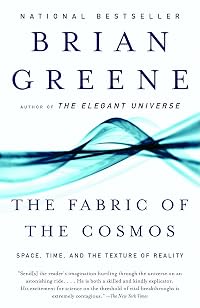
The Fabric of the Cosmos: Space, Time, and the Texture of Reality
by Brian Greene
On This Page
Description
From Brian Greene, one of the world's leading physicists, comes a grand tour of the universe that makes us look at reality in a completely different way. Space and time form the very fabric of the cosmos. Yet they remain among the most mysterious of concepts. Is space an entity? Why does time have a direction? Could the universe exist without space and time? Can we travel to the past? Greene uses these questions to guide us toward modern science's new and deeper understanding of the show more universe. From Newton's unchanging realm in which space and time are absolute, to Einstein's fluid conception of spacetime, to quantum mechanics' entangled arena where vastly distant objects can bridge their spatial separation to instantaneously coordinate their behavior or even undergo teleportation, Greene reveals our world to be very different from what common experience leads us to believe. Focusing on the enigma of time, Greene establishes that nothing in the laws of physics insists that it run in any particular direction and that "time's arrow" is a relic of the universe's condition at the moment of the big bang. And in explaining the big bang itself, Greene shows how recent cutting-edge developments in superstring and M-theory may reconcile the behavior of everything from the smallest particle to the largest black hole. This startling vision culminates in a vibrant eleven-dimensional "multiverse," pulsating with ever-changing textures, where space and time themselves may dissolve into subtler, more fundamental entities. Sparked by the trademark wit, humor, and brilliant use of analogy that have made The Elegant Universe a modern classic, Brian Greene takes us all, regardless of ourscientific backgrounds, on an irresistible and revelatory journey to the new layers of reality that modern physics has discovered lying just beneath the surface of our everyday world. With 146 illustrations Jacket photograp show lessTags
Recommendations

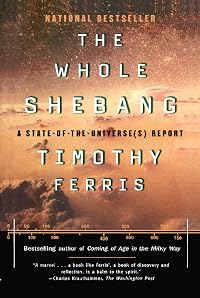
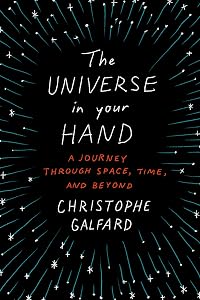
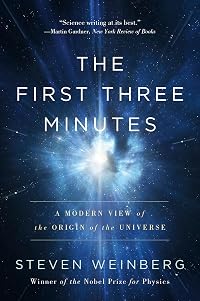
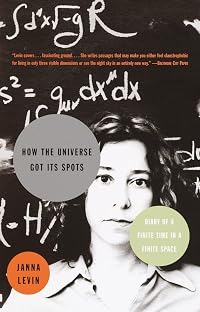

Member Recommendations
Member Reviews
Mind-Bending Journey Through the Nature of Reality - 5-Stars by Rebecca Raffle
⭐️⭐️⭐️⭐️⭐️
Brian Greene’s The Fabric of the Cosmos is one of those rare books that fundamentally changes the way you think about space, time, and reality itself. As someone who loves exploring the deep mysteries of physics, this book was both exhilarating and humbling. It pulled me in with its elegant explanations, engaging storytelling, and sheer intellectual ambition.
Greene has a remarkable ability to make mind-bending physics concepts, like relativity, quantum mechanics, and string theory, accessible without watering them down. He doesn’t just explain equations; he paints a picture of the universe in ways that make you rethink show more everything you take for granted.
What Makes This Book Stand Out? 🔥
✔️ Greene’s Clarity & Enthusiasm – He’s not just a physicist; he’s a storyteller. His analogies make abstract theories feel almost tangible.
✔️ Awe-Inspiring Concepts – From wormholes and time dilation to the multiverse and quantum entanglement, every chapter is a deep dive into the strangeness of our universe.
✔️ Bridges the Gap Between Science & Philosophy – This book doesn’t just describe physics, it forces you to question the very nature of existence.
One of the most striking passages in the book reads:
“Space and time form the very fabric of the cosmos, yet in ways we are only beginning to understand, they themselves seem to emerge from something even more fundamental.”
That line stuck with me because it encapsulates just how much we still don’t know. The deeper we dig into physics, the more reality itself starts to feel like a puzzle we’ve only begun to assemble.
Who Should Read This? 🧐
✅ Anyone Fascinated by the Universe – You don’t need a physics degree to appreciate this book. Greene guides you step by step, making the concepts digestible for non-experts.
✅ Fans of Thought-Provoking Science Books – If you enjoyed A Brief History of Time or Cosmos, this book will be right up your alley.
✅ Readers Who Love Big Questions – If you’ve ever wondered about the true nature of time, space, or why reality exists at all, this book will challenge and expand your thinking.
Things to Keep in Mind 😎
🔸 It Can Be Dense – While Greene is a gifted communicator, some sections still require a bit of effort to fully grasp. This isn’t a light read, but it’s worth the effort.
🔸 Speculative But Grounded – Greene explores theories that aren’t fully proven yet (like string theory), but he’s transparent about what’s scientifically accepted vs. where the cutting edge of physics is headed.
Final Thoughts: A Must-Read for Curious Minds 😍
I’m giving The Fabric of the Cosmos 5 stars because it pushed my understanding of physics in ways few books ever have. Greene has a gift for making the invisible forces that shape our reality feel not just understandable, but thrilling. Whether you’re new to modern physics or have been fascinated by it for years, this book is an unforgettable journey through the deepest mysteries of existence.
🚀 If you’ve ever wanted to peek behind the curtain of the universe, this book is a must-read.
📚 Enjoy my reviews? Let’s connect!
📖 Read more in-depth reviews & essays on Medium: medium.com/@RebeccaRaffle
📷 Follow my Instagram @RebeccaRaffle for book updates & foodie adventures: https://www.instagram.com/rebeccaraffle
🌍 Explore more on my website: https://www.rebeccaraffle.com show less
⭐️⭐️⭐️⭐️⭐️
Brian Greene’s The Fabric of the Cosmos is one of those rare books that fundamentally changes the way you think about space, time, and reality itself. As someone who loves exploring the deep mysteries of physics, this book was both exhilarating and humbling. It pulled me in with its elegant explanations, engaging storytelling, and sheer intellectual ambition.
Greene has a remarkable ability to make mind-bending physics concepts, like relativity, quantum mechanics, and string theory, accessible without watering them down. He doesn’t just explain equations; he paints a picture of the universe in ways that make you rethink show more everything you take for granted.
What Makes This Book Stand Out? 🔥
✔️ Greene’s Clarity & Enthusiasm – He’s not just a physicist; he’s a storyteller. His analogies make abstract theories feel almost tangible.
✔️ Awe-Inspiring Concepts – From wormholes and time dilation to the multiverse and quantum entanglement, every chapter is a deep dive into the strangeness of our universe.
✔️ Bridges the Gap Between Science & Philosophy – This book doesn’t just describe physics, it forces you to question the very nature of existence.
One of the most striking passages in the book reads:
“Space and time form the very fabric of the cosmos, yet in ways we are only beginning to understand, they themselves seem to emerge from something even more fundamental.”
That line stuck with me because it encapsulates just how much we still don’t know. The deeper we dig into physics, the more reality itself starts to feel like a puzzle we’ve only begun to assemble.
Who Should Read This? 🧐
✅ Anyone Fascinated by the Universe – You don’t need a physics degree to appreciate this book. Greene guides you step by step, making the concepts digestible for non-experts.
✅ Fans of Thought-Provoking Science Books – If you enjoyed A Brief History of Time or Cosmos, this book will be right up your alley.
✅ Readers Who Love Big Questions – If you’ve ever wondered about the true nature of time, space, or why reality exists at all, this book will challenge and expand your thinking.
Things to Keep in Mind 😎
🔸 It Can Be Dense – While Greene is a gifted communicator, some sections still require a bit of effort to fully grasp. This isn’t a light read, but it’s worth the effort.
🔸 Speculative But Grounded – Greene explores theories that aren’t fully proven yet (like string theory), but he’s transparent about what’s scientifically accepted vs. where the cutting edge of physics is headed.
Final Thoughts: A Must-Read for Curious Minds 😍
I’m giving The Fabric of the Cosmos 5 stars because it pushed my understanding of physics in ways few books ever have. Greene has a gift for making the invisible forces that shape our reality feel not just understandable, but thrilling. Whether you’re new to modern physics or have been fascinated by it for years, this book is an unforgettable journey through the deepest mysteries of existence.
🚀 If you’ve ever wanted to peek behind the curtain of the universe, this book is a must-read.
📚 Enjoy my reviews? Let’s connect!
📖 Read more in-depth reviews & essays on Medium: medium.com/@RebeccaRaffle
📷 Follow my Instagram @RebeccaRaffle for book updates & foodie adventures: https://www.instagram.com/rebeccaraffle
🌍 Explore more on my website: https://www.rebeccaraffle.com show less
For months, I avoided writing something about Brian Greene's The Fabric of the Cosmos. It was complex and only suited to summary in the most superficial way. Or so I tell myself. More likely, I am not up to the task. The book is an introduction to the current scientific understanding of the nature of space and time, emphasis on the former. While I wouldn't describe it as technical per se -- lacking the mathematics that would further illuminate but also complicate the material -- it is nonetheless challenging. The material requires the motivated nonphysicist to persist and focus, and the effort is well rewarded.
Greene offers a substantive review of quantum mechanics and general relativity, both necessary to examine current conceptions of show more space and time. The punchline, at the risk of imprecision, is that we cannot look at space in a common sense way at all. There are important ways in which space does not involve a conventional notion of locality; quantum phenomena resist explanations that rely on the familiar behavior of quotidian reality; at the smallest dimensions space and time themselves seem to lose meaning; ultimately there is no such thing as “empty” space, as what appears empty is actually roiling with the energy of quantum fluctuations.
Having established this basis, Greene uses these concepts to paint a picture of cosmic inflation and loop quantum gravity theories, aiming to show how these prominent approaches account for space itself and the vastness of the universe.
Where is the controversy, one might ask? Ultimately, the trajectory of the book leads to Green's great personal interest in physics, string theory. We see how this theory, if true, might address some of the current mysteries in our understanding of space and time. But there are those for whom them’s fightin’ words. Some argue that string theory lacks the quality of falsifiability, and as such cannot be taken seriously. If you are a staunch adherent of this position, you no doubt do not need to be reading this review.
The book was excellent and I highly recommend it. I found it all rather thrilling. show less
Greene offers a substantive review of quantum mechanics and general relativity, both necessary to examine current conceptions of show more space and time. The punchline, at the risk of imprecision, is that we cannot look at space in a common sense way at all. There are important ways in which space does not involve a conventional notion of locality; quantum phenomena resist explanations that rely on the familiar behavior of quotidian reality; at the smallest dimensions space and time themselves seem to lose meaning; ultimately there is no such thing as “empty” space, as what appears empty is actually roiling with the energy of quantum fluctuations.
Having established this basis, Greene uses these concepts to paint a picture of cosmic inflation and loop quantum gravity theories, aiming to show how these prominent approaches account for space itself and the vastness of the universe.
Where is the controversy, one might ask? Ultimately, the trajectory of the book leads to Green's great personal interest in physics, string theory. We see how this theory, if true, might address some of the current mysteries in our understanding of space and time. But there are those for whom them’s fightin’ words. Some argue that string theory lacks the quality of falsifiability, and as such cannot be taken seriously. If you are a staunch adherent of this position, you no doubt do not need to be reading this review.
The book was excellent and I highly recommend it. I found it all rather thrilling. show less
Finally finished this book! It's taken me six months to read this on and off.
Brian Greene writes very clearly, using imagery that is easy to understand for the armchair reader. The book does require concentration and the assimilation of one part before moving on to the next, which is why I only read it in small doses. However it is well worth the effort, providing a clear overview of 'the fabric of the cosmos' from Newtonian physics to superstring theory and beyond.
It is, quite simply, a riveting read.
Brian Greene writes very clearly, using imagery that is easy to understand for the armchair reader. The book does require concentration and the assimilation of one part before moving on to the next, which is why I only read it in small doses. However it is well worth the effort, providing a clear overview of 'the fabric of the cosmos' from Newtonian physics to superstring theory and beyond.
It is, quite simply, a riveting read.
Glancing at the reviews for Brian Greene's overview of how we view the stuff of which our universe is made, it seems that some people base their rating and opinion on how much they agree with the science, or how credible they find it. While I have read a fair few popular science books – especially in the areas of physics and cosmology, areas I find utterly fascinating and about which I am perplexed that anyone can not be astounded and beguiled – I have to assume that I am reading a fair explanation of facts and theories. That is not to say that I assume the author is more knowledgeable than me simply because he has more letters after his name, but because he grounds his claims with background and the weight of evidence that is show more needed for a scientific hypothesis to become a generally accepted theory. Also, I have taken the effort to educate myself in these areas so have enough grounding myself to be able to appreciate the arguments.
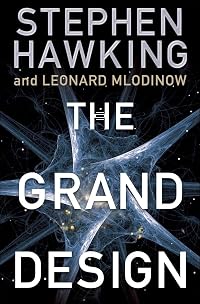
That said, for much of this book I'm unsure how much background would be needed to understand the explanations. Greene writes with a clarity and readability which is all too rare in any field, and is particularly welcome in discussing such big ideas. As in Stephen Hawking's The Grand Design, Greene completely dispenses with calculations but, unlike Hawking, he also tries to keep the use of metaphor to a minimum. It cannot, of course, be dispensed with completely – metaphors are an extraordinarily powerful descriptive tool, especially in a field that can only properly be explained and understood using specialist mathematics – but for the most part Greene simply gives an overview of each field in historical context, and explains WHY it is important, what it explains and why it works.
He starts – as modern physics in so many fields must – with Isaac Newton, and particularly Newton's Bucket. If you hang a bucket of water on a rope and twist the rope, as the rope unwinds, spinning the bucket, at first the water remains stationary until the friction of the bucket's movement makes the water begin to spin. When it does, the surface becomes increasingly concave, moved outward by what why now call centripetal (or centrifugal) force. But what, asked Newton, is the water moving away from, or toward? What is it moving in relation to? He decided that it moved in relation to the fixed fabric of the cosmos, the stuff in which the matter (that he recognised as being the thing on which gravity works) sits. Recognising that he had no way of testing this medium by experiment, Newton took this is an immutable absolute and left it at that. Greene keeps returning to the bucket and its implications throughout the book, to superb explanatory effect.
I won't go further into the details (read the book!), but simply say that thanks to Professor Greene I now understand areas of cosmology and physics where I had previously had to simply give in to brain cramp and accept as being true. I understand why the speed of light (actually, the speed of any electromagnetic radiation) is approx 300, 000 km/sec faster than you, no matter how fast you are travelling. I understand a whole lot more about General Relativity and Quantum Mechanics, and why they make sense and are such powerful tools in describing our universe. I understand that Inflationary Theory is not merely a tweak of Big Bang theory to enable it to fit observed facts, but a whole new way of looking at the growth of the universe that actually explains much more about the fundamental physics.
I'm not claiming a thorough understanding of these subjects (and in some, like Brane Theory, I still found myself rather lost; a re-read may be in order), but I feel that The Fabric of the Cosmos has deepened my comprehension of and appreciation for the wonders of our universe. And for the wonders of the human mind to work out these things. In around three hundred years we have developed this system, science, as a means of examining the world around us in a way which is comprehensible to anyone who is willing to put in the work. All books on science now seem to feel the need to restate this about science; it is NOT knowledge passed down from on high by men in white coats using deliberately obfuscatory language for reasons of either professional pride or conspiracy. Science is a method that enables us to understand more and more about the world, to revel in the joy of knowing how the rainbow is formed as well as in its simple beauty. No idea in science is sacrosanct, no theory is holy. To achieve the status of acceptance of say, General Relativity or Evolution by Natural Selection, a theory has to be tested – that is, it has to survive again and again and again the onslaught of people systematically trying to prove it wrong. When a weakness is found the theory must be re-examined. Sometimes the fault will cause the foundations of the theory to crumble, and it will be discarded; it has still served a purpose, to show how promising such an approach is. Sometimes finding the errors will strengthen a theory and teach us more – Edwin Hubble's original calculations of distant galaxies seemed to show the universe to be about 1.5 billion years old, despite lots of other evidence at the time insisting it was at least 3 billion years old (as we now know, this was still almost five times too conservative). Everything else about Hubble's observation and theory made sense, there was simply an error in calculating the distance of the super novae he was using to get the figures, a correction which itself taught us much about the universe.
And this is incredibly important to realise because, while many theories, however much work they take, partly make sense on an intuitive level you get to Quantum and Brane theory and they simply cannot – in fact they seem, by intuition and everyday experience, utterly ridiculous (the great physicist Nils Bor said something along the lines of “if you think you understand Quantum Theory, you don't understand Quantum Theory”) but they are undoubtedly right. One important way a theory is tested is to use it to make predictions in the physical world and Quantum Theory has been called far and away the most successful predictive theory in science. It is, like every successful theory, one that accurately describes the way our universe works, with the limits of perception and understanding we have, which is why theories are modified or discarded when new information comes along. Which is why General Relativity replaced Newton's Laws of Gravitation as the best description we have for how gravity works – although NASA still use Newton's calculations most of the time, for the same reason you don't need to understand Gaussian Quadratic Maths to balance your chequebook.
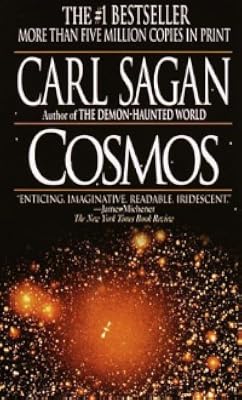
Greene's book, the first I've read by him, shows why it is worth reading a range of books on the same (or closely connected) areas of science. While in The Grand Design, Hawking and Mlodinov managed to convey a sense of wonder and discovery on a par with Carl Sagan's writings (a plaudit I don't throw around lightly!), Greene has given us a book that manages a clarity and depth of explanation while being a thoroughly entertaining read. At schools, perhaps instead of training our children into narrowly defined roles, science classes should just be introducing them to the works of Greene and Hawking, Sagan and Tyson (Neil deGrasse, not Mike) and Krauss to show them how huge and wonderful and beautiful the universe is, and how much joy and fulfilment can be achieved through our efforts to understand it. show less
That said, for much of this book I'm unsure how much background would be needed to understand the explanations. Greene writes with a clarity and readability which is all too rare in any field, and is particularly welcome in discussing such big ideas. As in Stephen Hawking's The Grand Design, Greene completely dispenses with calculations but, unlike Hawking, he also tries to keep the use of metaphor to a minimum. It cannot, of course, be dispensed with completely – metaphors are an extraordinarily powerful descriptive tool, especially in a field that can only properly be explained and understood using specialist mathematics – but for the most part Greene simply gives an overview of each field in historical context, and explains WHY it is important, what it explains and why it works.
He starts – as modern physics in so many fields must – with Isaac Newton, and particularly Newton's Bucket. If you hang a bucket of water on a rope and twist the rope, as the rope unwinds, spinning the bucket, at first the water remains stationary until the friction of the bucket's movement makes the water begin to spin. When it does, the surface becomes increasingly concave, moved outward by what why now call centripetal (or centrifugal) force. But what, asked Newton, is the water moving away from, or toward? What is it moving in relation to? He decided that it moved in relation to the fixed fabric of the cosmos, the stuff in which the matter (that he recognised as being the thing on which gravity works) sits. Recognising that he had no way of testing this medium by experiment, Newton took this is an immutable absolute and left it at that. Greene keeps returning to the bucket and its implications throughout the book, to superb explanatory effect.
I won't go further into the details (read the book!), but simply say that thanks to Professor Greene I now understand areas of cosmology and physics where I had previously had to simply give in to brain cramp and accept as being true. I understand why the speed of light (actually, the speed of any electromagnetic radiation) is approx 300, 000 km/sec faster than you, no matter how fast you are travelling. I understand a whole lot more about General Relativity and Quantum Mechanics, and why they make sense and are such powerful tools in describing our universe. I understand that Inflationary Theory is not merely a tweak of Big Bang theory to enable it to fit observed facts, but a whole new way of looking at the growth of the universe that actually explains much more about the fundamental physics.
I'm not claiming a thorough understanding of these subjects (and in some, like Brane Theory, I still found myself rather lost; a re-read may be in order), but I feel that The Fabric of the Cosmos has deepened my comprehension of and appreciation for the wonders of our universe. And for the wonders of the human mind to work out these things. In around three hundred years we have developed this system, science, as a means of examining the world around us in a way which is comprehensible to anyone who is willing to put in the work. All books on science now seem to feel the need to restate this about science; it is NOT knowledge passed down from on high by men in white coats using deliberately obfuscatory language for reasons of either professional pride or conspiracy. Science is a method that enables us to understand more and more about the world, to revel in the joy of knowing how the rainbow is formed as well as in its simple beauty. No idea in science is sacrosanct, no theory is holy. To achieve the status of acceptance of say, General Relativity or Evolution by Natural Selection, a theory has to be tested – that is, it has to survive again and again and again the onslaught of people systematically trying to prove it wrong. When a weakness is found the theory must be re-examined. Sometimes the fault will cause the foundations of the theory to crumble, and it will be discarded; it has still served a purpose, to show how promising such an approach is. Sometimes finding the errors will strengthen a theory and teach us more – Edwin Hubble's original calculations of distant galaxies seemed to show the universe to be about 1.5 billion years old, despite lots of other evidence at the time insisting it was at least 3 billion years old (as we now know, this was still almost five times too conservative). Everything else about Hubble's observation and theory made sense, there was simply an error in calculating the distance of the super novae he was using to get the figures, a correction which itself taught us much about the universe.
And this is incredibly important to realise because, while many theories, however much work they take, partly make sense on an intuitive level you get to Quantum and Brane theory and they simply cannot – in fact they seem, by intuition and everyday experience, utterly ridiculous (the great physicist Nils Bor said something along the lines of “if you think you understand Quantum Theory, you don't understand Quantum Theory”) but they are undoubtedly right. One important way a theory is tested is to use it to make predictions in the physical world and Quantum Theory has been called far and away the most successful predictive theory in science. It is, like every successful theory, one that accurately describes the way our universe works, with the limits of perception and understanding we have, which is why theories are modified or discarded when new information comes along. Which is why General Relativity replaced Newton's Laws of Gravitation as the best description we have for how gravity works – although NASA still use Newton's calculations most of the time, for the same reason you don't need to understand Gaussian Quadratic Maths to balance your chequebook.
Greene's book, the first I've read by him, shows why it is worth reading a range of books on the same (or closely connected) areas of science. While in The Grand Design, Hawking and Mlodinov managed to convey a sense of wonder and discovery on a par with Carl Sagan's writings (a plaudit I don't throw around lightly!), Greene has given us a book that manages a clarity and depth of explanation while being a thoroughly entertaining read. At schools, perhaps instead of training our children into narrowly defined roles, science classes should just be introducing them to the works of Greene and Hawking, Sagan and Tyson (Neil deGrasse, not Mike) and Krauss to show them how huge and wonderful and beautiful the universe is, and how much joy and fulfilment can be achieved through our efforts to understand it. show less
The Fabric of the Cosmos is a long, comprehensive overview of the nature of space and time. It begins with a short history of our view of time and space, moving quickly to Newton and then the precursors to relativity, before covering special and general relativity in detail, before carrying out the same treatment for quantum mechanics. The middle sections cover how relativity and quantum mechanics can start to explain what space and time actually are. Topics such as the big bang, inflation, are described and brought in to further illuminate the latest scientific views of space and time. The final sections of the book are more speculative, first covering string theory, including branes, and then moving on to a very speculative final show more part, looking at whether time travel or teleportations are consistent with the current view of reality, and then about where physics might be going next in the coming decades. As is apparent from the above, the structure of the book is strong, and very well judged. I preferred it to The Elegant Universe for its broader remit, and because not so much of the book was describing ideas no one as yet has any evidence for.
At the end, I was left with an unsettling sense that the universe is utterly alien, compared with our everyday notions - that the real action is happening at scales so small even our most powerful particle accelerators don't have access to them. Even if they did, it could be that our entire sense of reality, of time and space, and the fabric of it all, might be a holographic illusion. It's as if we see a smooth 3D world in a holographic picture, when what we're really receiving is just different pixels on a 2D surface.
There were just a couple of niggling issues: first sometimes the explanations weren't precise or clear enough (for instance, special relativity was explained far better by Isaacson (not a physicist!) in his Einstein biography). This extended to the endnotes, which were meant to clarify, but the mathematical explanations seemed rushed to me - sometimes there more as a demonstration of his knowledge, rather than for pedagogical reasons. Second, this book is now a decade old, and it is calling out for either a second edition, or at least an update to the endnotes - when he speculates about what the LHC will discover and so on, this just seems so dated, and we really need a way for him to rewrite or add sections in the light of the latest developments.
But overall this was an incredibly fascinating, astonishing, thrilling, beguiling ride - and a fantastic achievement. I felt privileged to have read it. show less
At the end, I was left with an unsettling sense that the universe is utterly alien, compared with our everyday notions - that the real action is happening at scales so small even our most powerful particle accelerators don't have access to them. Even if they did, it could be that our entire sense of reality, of time and space, and the fabric of it all, might be a holographic illusion. It's as if we see a smooth 3D world in a holographic picture, when what we're really receiving is just different pixels on a 2D surface.
There were just a couple of niggling issues: first sometimes the explanations weren't precise or clear enough (for instance, special relativity was explained far better by Isaacson (not a physicist!) in his Einstein biography). This extended to the endnotes, which were meant to clarify, but the mathematical explanations seemed rushed to me - sometimes there more as a demonstration of his knowledge, rather than for pedagogical reasons. Second, this book is now a decade old, and it is calling out for either a second edition, or at least an update to the endnotes - when he speculates about what the LHC will discover and so on, this just seems so dated, and we really need a way for him to rewrite or add sections in the light of the latest developments.
But overall this was an incredibly fascinating, astonishing, thrilling, beguiling ride - and a fantastic achievement. I felt privileged to have read it. show less
This is his second book. I finished this book around the same time I was watching the new Cosmos series on Fox. (It's hard to believe that Seth McFarlane, the man behind Family Guy, is one of the producers of the new Cosmos. I'm still waiting for Stewie to show up, or for a Cosmos parody on Family Guy. But I digress.) Like Carl Sagan and Neil Degrasse Tyson on Cosmos, Brian Greene is attempting to make science understandable to those of us who don't have advanced science degrees. Dr Greene uses a lot of pop culture references to illustrate his points. He seems to have a special fondness for the Simpsons. It's a little more complex, though. He's trying to explain the basics of string theory, with its theories of 10-dimensional space and show more quantum lengths. It can be a little slow going at times. He saves most of the mathematical equations for the footnotes. I'm not sure it's fully understandable to everyone. I had trouble with it myself. Some updates from the text. The large Hadron collider was finished, and the Higgs particle was discovered. Also, scientists recently discovered ripples from the original big bang. Dr Greene knows about pop culture. (He's appeared on the TV show The Big Bang Theory making fun of himself.) He does well in this book. It's just the subject matter that can be daunting. show less
Greene è un ottimo divulgatore, riesce a spiegare concetti molto complicati. Senza convincere, però: sarà anche matematicamente consistente, ma senza prove scientifiche non si può considerare la teoria delle stringhe come la descrizione fisica dell'universo. Per fortuna, lo ammette anche l'autore: se le nostre teorie non riescono a confrontarsi con fenomeni misurabili e controllabili, rimangono nel limbo delle idee brillanti che possono anche non avere nulla a che fare con la realtÃ
Members
- Recently Added By
Lists

Non-Fiction Worth Reading
1,016 works; 263 members

For Science!
39 works; 5 members

Recommend the 20 best books you've read in the last five years
2,168 works; 607 members

Top Five Books of 2016
795 works; 229 members

Unread books
1,063 works; 87 members

Falling for Science
56 works; 3 members

Big History
72 works; 1 member

Books Read in 2016
4,666 works; 199 members

The r/AskScience Reading List
159 works; 3 members

In Our Time books
4,934 works; 2 members
Talk Discussions
Past Discussions
Fabric of the Cosmos by Brian Greene - drneutron tutoring LizzieD in 75 Books Challenge for 2012 (August 2012)
Author Information

24+ Works 19,100 Members
Brian Greene was born on February 9, 1963 in New York City. After attending Stuyvesant High School, where he was a classmate of fellow physicist Lisa Randall. Brian Greene entered Harvard in 1980 to major in physics. He graduated with a bachelor's degree, and went on to earn his doctorate from Oxford University as a Rhodes Scholar, graduating in show more 1987. Greene joined the physics faculty of Cornell University in 1990, and was appointed to a full professorship in 1995. The following year, he joined the staff of Columbia University as a full professor; this remains his current position. At Columbia, Greene is co-director of the University's Institute for Strings, Cosmology, and Astroparticle Physics (ISCAP), and is leading a research program applying superstring theory to cosmological questions. He has become known to a wider audience through his books for the general public, The Elegant Universe, Icarus at the Edge of Time, The Fabric of the Cosmos, The Hidden Reality, and a related PBS television special. (Bowker Author Biography) show less
All Editions
Some Editions
Awards and Honors
Distinctions
Notable Lists
Series
Belongs to Publisher Series
Work Relationships
Is contained in
Has as a commentary on the text
Common Knowledge
- Canonical title
- The Fabric of the Cosmos: Space, Time, and the Texture of Reality
- Original title
- The Fabric of the Cosmos: Space, Time, and the Texture of Reality
- Original publication date
- 2004 (1st edition, New York, Knopf) (1st edition, New York, Knopf)
- Important places
- Universe
- Important events
- Big Bang
- Related movies
- Nova: The Fabric of the Cosmos (2011 | IMDb)
- Epigraph*
- To Tracy
- Dedication
- To Tracy
- First words
- Space and time capture the imagination like no other scientific subject. (Preface)
None of the books in my father's dusty old bookcase were forbidden. - Last words
- (Click to show. Warning: May contain spoilers.)But for me, there would be nothing more poetic, no outcome more graceful, no unification more complete, than for us to confirm our theories of the ultra-small—our theories about the ultramicroscopic makeup of space, time, and matter—by turning our most powerful telescopes skyward and gazing silently at the stars.
- Blurbers
- Maslin, Janet; Dyson, Freeman; Johnson, George
- Original language
- English
*Some information comes from Common Knowledge in other languages. Click "Edit" for more information.
Classifications
Statistics
- Members
- 5,975
- Popularity
- 2,161
- Reviews
- 46
- Rating
- (4.07)
- Languages
- 15 — Czech, Dutch, English, Finnish, French, German, Hungarian, Italian, Japanese, Polish, Portuguese, Russian, Slovenian, Spanish, Swedish
- Media
- Paper, Audiobook, Ebook
- ISBNs
- 51
- ASINs
- 17