On This Page
Description
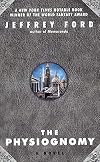
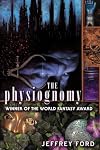
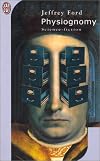
Winner of the World Fantasy Award for Best Novel: Cley has mastered the art of physiognomy--and now he is about to learn its ultimate truth In the Well-Built City, Master Drachton Below's power is absolute, and he will not hesitate to use it. His primary method of control is through his physiognomists, who are trained to read a person's face and body, perceiving that person's past and secrets--and even events yet to come. These seers are the judges and jury. Now Drachton has found show more something that could extend his reign for eternity: a fruit that bestows immortality. To investigate its whereabouts, Below sends cold, collected physiognomist Cley to the remote mining town of Anamasobia. One at a time Cley interrogates the townspeople, performing his usual fact finding without issue. That is, until he meets the beautiful and bright Arla, who harbors a secret that could potentially turn Cley's world upside down--and topple the Well-Built City itself. A Kafkaesque journey into the unknown, The Physiognomy is an award-winning trip through a land where the line between reality and imagination is constantly blurred. show lessTags
Recommendations






Member Reviews
Comparisons to *1984* and Kafka are inevitable for this dystopian novel, and though they are warranted both for style and content there is an underlying hopefulness in *The Physiognomy* that those others lack. Ford's landscape is also less familiar, set somewhere that is neither a projected future nor a distorted past, but simply *other*. Bureaucratic claustrophobia is brilliantly evoked, but rebellion and redemption (both personal and civilization-wide) are seeded within.
There is something of the fable in Ford's style, yet there is also a feeling of immediacy and intimacy in his exploration of his character's psyches. Eventually false science and true fable press together too tightly and combust.
ETA: On second reading, I enjoyed this show more book even more. show less
There is something of the fable in Ford's style, yet there is also a feeling of immediacy and intimacy in his exploration of his character's psyches. Eventually false science and true fable press together too tightly and combust.
ETA: On second reading, I enjoyed this show more book even more. show less
ORIGINALLY POSTED AT Fantasy Literature.
Physiognomist Cley has been sent by Master Drachton Below, the evil genius who constructed the Well-Built City, to the faraway mining district of Anamasobia to investigate the theft of a fruit that’s rumored to have grown in the Earthly Paradise and to have supernatural powers. Upon arriving, the skeptical and arrogant physiognomist finds a whole town of morons whose physical features clearly indicate that they are all backward and generally pathetic. Except for Arla, whose beautiful features suggest that she is intelligent and competent, and who seems to understand the science of physiognomy (even though that’s impossible because she’s a woman). But Cley likes looking at Arla (women do have show more their place), so he invites her to be his assistant as each of the dimwits in the town comes one-by-one to disrobe, pose, and present their bodies for physiognomical inspection, measurement, and analysis.
But Cley’s investigation starts to go badly when he attempts to read the physiognomy of “The Traveler,” the dark man who was holding the supernatural fruit when it was originally found in the mines. Knowing that “dark pigmentation of the flesh is a sure sign of diminished intelligence and moral fiber,” Cley is surprised to find that his scientific measurements don’t add up. He’s also shocked to find other strange impossibilities happening in Anamasobia. Soon, his knowledge and skills begin to fail him and, eventually, things spiral out of his control after he performs an experimental surgery on Arla while under the influence of his favorite hallucinogenic drug. Master Drachton Below is not pleased with Cley’s work… and Master Below is not a man to disappoint.
The Physiognomy, with its original ideas, setting, characters, and symbolism, is sometimes brilliant, and always bizarre (which is probably why it won the 1998 World Fantasy Award). The focus on the debunked science of physiognomy is especially appealing and the characters, though they are not likable, are fascinating, too. Physiognomist Cley — who computes personalities with calipers, wears formaldehyde as cologne, is addicted to drugs, and is afraid of the dark — is one of the most narcissistic, sarcastic, and generally nasty characters you’ll ever meet. Master Drachton Below, who developed the Well-Built City as a perfect representation of his elaborate version of the mnemonic device called The Method of Loci, and who enjoys reviving dead human bodies by fitting them with mechanical devices and neural implants, makes a great villain. I listened to Audible Frontier’s version of The Physiognomy which was read by Christian Rummel. All of the characters were expertly and entertainingly rendered by Mr. Rummell, who perfectly captured the arrogance of Cley and the malevolence of The Master.
The plot of The Physiognomy starts confidently and with purpose, but when Cley’s troubles begin to accumulate, the story dissolves into a series of bizarre, vaguely-related occurrences which feel more like one of Cley’s time-distorted hallucinations than a plot. Like the hallucinations, the imagery is excellent (e.g., the hellish symbolism of the sulfur mine), and the prose never falters, but the things that happen to Cley, and his subsequent changes in personality, feel vague, arbitrary, and unbelievable.
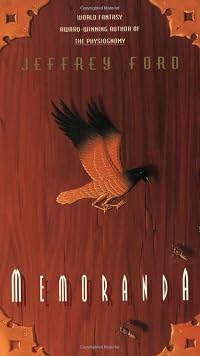
It’s disappointing when a book which starts so well fails to completely satisfy, but I’m not giving up on Jeffrey Ford or his Well-Built City trilogy. I loved the idea of the city based on The Method of Loci and I am hoping to learn more about it in the next book which is propitiously titled Memoranda. show less
Physiognomist Cley has been sent by Master Drachton Below, the evil genius who constructed the Well-Built City, to the faraway mining district of Anamasobia to investigate the theft of a fruit that’s rumored to have grown in the Earthly Paradise and to have supernatural powers. Upon arriving, the skeptical and arrogant physiognomist finds a whole town of morons whose physical features clearly indicate that they are all backward and generally pathetic. Except for Arla, whose beautiful features suggest that she is intelligent and competent, and who seems to understand the science of physiognomy (even though that’s impossible because she’s a woman). But Cley likes looking at Arla (women do have show more their place), so he invites her to be his assistant as each of the dimwits in the town comes one-by-one to disrobe, pose, and present their bodies for physiognomical inspection, measurement, and analysis.
But Cley’s investigation starts to go badly when he attempts to read the physiognomy of “The Traveler,” the dark man who was holding the supernatural fruit when it was originally found in the mines. Knowing that “dark pigmentation of the flesh is a sure sign of diminished intelligence and moral fiber,” Cley is surprised to find that his scientific measurements don’t add up. He’s also shocked to find other strange impossibilities happening in Anamasobia. Soon, his knowledge and skills begin to fail him and, eventually, things spiral out of his control after he performs an experimental surgery on Arla while under the influence of his favorite hallucinogenic drug. Master Drachton Below is not pleased with Cley’s work… and Master Below is not a man to disappoint.
The Physiognomy, with its original ideas, setting, characters, and symbolism, is sometimes brilliant, and always bizarre (which is probably why it won the 1998 World Fantasy Award). The focus on the debunked science of physiognomy is especially appealing and the characters, though they are not likable, are fascinating, too. Physiognomist Cley — who computes personalities with calipers, wears formaldehyde as cologne, is addicted to drugs, and is afraid of the dark — is one of the most narcissistic, sarcastic, and generally nasty characters you’ll ever meet. Master Drachton Below, who developed the Well-Built City as a perfect representation of his elaborate version of the mnemonic device called The Method of Loci, and who enjoys reviving dead human bodies by fitting them with mechanical devices and neural implants, makes a great villain. I listened to Audible Frontier’s version of The Physiognomy which was read by Christian Rummel. All of the characters were expertly and entertainingly rendered by Mr. Rummell, who perfectly captured the arrogance of Cley and the malevolence of The Master.
The plot of The Physiognomy starts confidently and with purpose, but when Cley’s troubles begin to accumulate, the story dissolves into a series of bizarre, vaguely-related occurrences which feel more like one of Cley’s time-distorted hallucinations than a plot. Like the hallucinations, the imagery is excellent (e.g., the hellish symbolism of the sulfur mine), and the prose never falters, but the things that happen to Cley, and his subsequent changes in personality, feel vague, arbitrary, and unbelievable.
It’s disappointing when a book which starts so well fails to completely satisfy, but I’m not giving up on Jeffrey Ford or his Well-Built City trilogy. I loved the idea of the city based on The Method of Loci and I am hoping to learn more about it in the next book which is propitiously titled Memoranda. show less
The Physiognomy is a book about terrible violence: physical, emotional, and social; and yet the whole mood is dreamy and vaporous, with many moments of real cheer. The protagonist Cley is a Physiognomist First Class -- a ranking agent of the totalitarian Well-Built City -- and the novel is the story of his gradual redemption from his own vicious participation in a society of exploitation and control.
The closest comparison I could make to characterize the setting of this book would be to the Terry Gilliam movie Brazil. It is a fantasy, in a world that differs from ours cosmetically, but includes 19th- and 20th-century levels of gadgetry as well as decidedly modern forms of social organization. Features include clockwork zombies, exotic show more drugs, and the oppressive canon of stigmatization that is the physiognomy itself. Cley serves as the narrator, and he is often uncertain about the boundaries between his dreams, his drug-addled hallucinations, and the possibly supernatural events that overtake him. And yet for all that, and the anguish involved in the story, the prose style is remarkably limpid.
The NYT review characterized this book as an allegory, and it could easily be read as one. The names are all numinous and provocative: Cley himself is mortal and malleable "clay," as well as the "key" (clef) to the story. Still, the story holds up as a fantasy adventure in its own right, and it doesn't stagger under any didactic burden. In this case (contrast Lewis' Narnia, for example) the allegorical dimension enriches the narrative rather than deflating it.
Although The Physiognomy is the first volume of a trilogy, it definitely stands as a complete work on its own. I would caution readers against the "Introduction to the New Edition" set at the beginning of the Golden Gryphon reissue: it is mostly the author's retrospective on his writing process, and would be better read after the novel, rather than before. show less
The closest comparison I could make to characterize the setting of this book would be to the Terry Gilliam movie Brazil. It is a fantasy, in a world that differs from ours cosmetically, but includes 19th- and 20th-century levels of gadgetry as well as decidedly modern forms of social organization. Features include clockwork zombies, exotic show more drugs, and the oppressive canon of stigmatization that is the physiognomy itself. Cley serves as the narrator, and he is often uncertain about the boundaries between his dreams, his drug-addled hallucinations, and the possibly supernatural events that overtake him. And yet for all that, and the anguish involved in the story, the prose style is remarkably limpid.
The NYT review characterized this book as an allegory, and it could easily be read as one. The names are all numinous and provocative: Cley himself is mortal and malleable "clay," as well as the "key" (clef) to the story. Still, the story holds up as a fantasy adventure in its own right, and it doesn't stagger under any didactic burden. In this case (contrast Lewis' Narnia, for example) the allegorical dimension enriches the narrative rather than deflating it.
Although The Physiognomy is the first volume of a trilogy, it definitely stands as a complete work on its own. I would caution readers against the "Introduction to the New Edition" set at the beginning of the Golden Gryphon reissue: it is mostly the author's retrospective on his writing process, and would be better read after the novel, rather than before. show less
Sometimes a book will spoil you and sometimes a book will amaze you and sometimes it will blow your mind.
This one comes close to doing all three.
Think phrenology taken to a full sociological extreme, with abuses of power included, throw it into a land that could be hell, but all it’s inhabitants are so used to the strangeness that they take everything, including architectural explosions created by headaches, in stride.
And the follow a wildly abusive character filled with outright funny insults, watch him self-destruct, bring innocents along with him, and then have him go through a transformative arc.
A lot of these aspects may seem usual in the fantasy realm, but what I’m neglecting in my description is the sheer imaginative force show more of this world, the people within it, and the amazing richness of every line.
I can easily recommend this for anyone tired of the same old fantasy. This is really rich fare. show less
This one comes close to doing all three.
Think phrenology taken to a full sociological extreme, with abuses of power included, throw it into a land that could be hell, but all it’s inhabitants are so used to the strangeness that they take everything, including architectural explosions created by headaches, in stride.
And the follow a wildly abusive character filled with outright funny insults, watch him self-destruct, bring innocents along with him, and then have him go through a transformative arc.
A lot of these aspects may seem usual in the fantasy realm, but what I’m neglecting in my description is the sheer imaginative force show more of this world, the people within it, and the amazing richness of every line.
I can easily recommend this for anyone tired of the same old fantasy. This is really rich fare. show less
Since this book won the World Fantasy Award, I'd wanted to read it for a while. Thanks to NetGalley and Open Road Media for giving me the opportunity.
I see why the book won the award - it gives us a strikingly original and interesting scenario: a fantasy world ruled by an oppressive dictator, who utilizes civil servants to maintain his cruel regime. One of the tools in his arsenal is the faux-'science' of physiognomy, where an 'expert' uses phrenology and other physical measurements to determine if one is (or will be) guilty of a crime.
Physiognomist Cley is one of these experts. He's also a thoroughly unsympathetic person - one of the most repulsive protagonists you're likely to encounter in fiction. He's willing to lie and be used, show more has no moral or ethical compass at all, and allows his drug addiction to take him to escalating acts of cruelty and depravity.
Some reviewers have described the story as a tale of Cley's redemption - but I don't see it that way at all. Yes, over the course of the story Clay's position changes - but only because his position literally changes in relation of the locus of power. He's motivated by resentment, not ethics.
Overall, I can't say the book was a 'pleasant' experience, although it was 'well-built.' In feel, it reminded me a bit of Mervyn Peake's 'Titus Groan.' It had that same sort of oppressive, hallucinatory atmosphere.
I'm glad I read the book, but can't say I'm eager to go and seek out the sequels. show less
I see why the book won the award - it gives us a strikingly original and interesting scenario: a fantasy world ruled by an oppressive dictator, who utilizes civil servants to maintain his cruel regime. One of the tools in his arsenal is the faux-'science' of physiognomy, where an 'expert' uses phrenology and other physical measurements to determine if one is (or will be) guilty of a crime.
Physiognomist Cley is one of these experts. He's also a thoroughly unsympathetic person - one of the most repulsive protagonists you're likely to encounter in fiction. He's willing to lie and be used, show more has no moral or ethical compass at all, and allows his drug addiction to take him to escalating acts of cruelty and depravity.
Some reviewers have described the story as a tale of Cley's redemption - but I don't see it that way at all. Yes, over the course of the story Clay's position changes - but only because his position literally changes in relation of the locus of power. He's motivated by resentment, not ethics.
Overall, I can't say the book was a 'pleasant' experience, although it was 'well-built.' In feel, it reminded me a bit of Mervyn Peake's 'Titus Groan.' It had that same sort of oppressive, hallucinatory atmosphere.
I'm glad I read the book, but can't say I'm eager to go and seek out the sequels. show less
3.5 stars
ORIGINALLY POSTED AT Fantasy Literature.
Physiognomist Cley has been sent by Master Drachton Below, the evil genius who constructed the Well-Built City, to the faraway mining district of Anamasobia to investigate the theft of a fruit that’s rumored to have grown in the Earthly Paradise and to have supernatural powers. Upon arriving, the skeptical and arrogant physiognomist finds a whole town of morons whose physical features clearly indicate that they are all backward and generally pathetic. Except for Arla, whose beautiful features suggest that she is intelligent and competent, and who seems to understand the science of physiognomy (even though that’s impossible because she’s a woman). But Cley likes looking at Arla show more (women do have their place), so he invites her to be his assistant as each of the dimwits in the town comes one-by-one to disrobe, pose, and present their bodies for physiognomical inspection, measurement, and analysis.
But Cley’s investigation starts to go badly when he attempts to read the physiognomy of “The Traveler,” the dark man who was holding the supernatural fruit when it was originally found in the mines. Knowing that “dark pigmentation of the flesh is a sure sign of diminished intelligence and moral fiber,” Cley is surprised to find that his scientific measurements don’t add up. He’s also shocked to find other strange impossibilities happening in Anamasobia. Soon, his knowledge and skills begin to fail him and, eventually, things spiral out of his control after he performs an experimental surgery on Arla while under the influence of his favorite hallucinogenic drug. Master Drachton Below is not pleased with Cley’s work… and Master Below is not a man to disappoint.
The Physiognomy, with its original ideas, setting, characters, and symbolism, is sometimes brilliant, and always bizarre (which is probably why it won the 1998 World Fantasy Award). The focus on the debunked science of physiognomy is especially appealing and the characters, though they are not likable, are fascinating, too. Physiognomist Cley — who computes personalities with calipers, wears formaldehyde as cologne, is addicted to drugs, and is afraid of the dark — is one of the most narcissistic, sarcastic, and generally nasty characters you’ll ever meet. Master Drachton Below, who developed the Well-Built City as a perfect representation of his elaborate version of the mnemonic device called The Method of Loci, and who enjoys reviving dead human bodies by fitting them with mechanical devices and neural implants, makes a great villain. I listened to Audible Frontier’s version of The Physiognomy which was read by Christian Rummel. All of the characters were expertly and entertainingly rendered by Mr. Rummell, who perfectly captured the arrogance of Cley and the malevolence of The Master.
The plot of The Physiognomy starts confidently and with purpose, but when Cley’s troubles begin to accumulate, the story dissolves into a series of bizarre, vaguely-related occurrences which feel more like one of Cley’s time-distorted hallucinations than a plot. Like the hallucinations, the imagery is excellent (e.g., the hellish symbolism of the sulfur mine), and the prose never falters, but the things that happen to Cley, and his subsequent changes in personality, feel vague, arbitrary, and unbelievable.
It’s disappointing when a book which starts so well fails to completely satisfy, but I’m not giving up on Jeffrey Ford or his Well-Built City trilogy. I loved the idea of the city based on The Method of Loci and I am hoping to learn more about it in the next book which is propitiously titled Memoranda. show less
ORIGINALLY POSTED AT Fantasy Literature.
Physiognomist Cley has been sent by Master Drachton Below, the evil genius who constructed the Well-Built City, to the faraway mining district of Anamasobia to investigate the theft of a fruit that’s rumored to have grown in the Earthly Paradise and to have supernatural powers. Upon arriving, the skeptical and arrogant physiognomist finds a whole town of morons whose physical features clearly indicate that they are all backward and generally pathetic. Except for Arla, whose beautiful features suggest that she is intelligent and competent, and who seems to understand the science of physiognomy (even though that’s impossible because she’s a woman). But Cley likes looking at Arla show more (women do have their place), so he invites her to be his assistant as each of the dimwits in the town comes one-by-one to disrobe, pose, and present their bodies for physiognomical inspection, measurement, and analysis.
But Cley’s investigation starts to go badly when he attempts to read the physiognomy of “The Traveler,” the dark man who was holding the supernatural fruit when it was originally found in the mines. Knowing that “dark pigmentation of the flesh is a sure sign of diminished intelligence and moral fiber,” Cley is surprised to find that his scientific measurements don’t add up. He’s also shocked to find other strange impossibilities happening in Anamasobia. Soon, his knowledge and skills begin to fail him and, eventually, things spiral out of his control after he performs an experimental surgery on Arla while under the influence of his favorite hallucinogenic drug. Master Drachton Below is not pleased with Cley’s work… and Master Below is not a man to disappoint.
The Physiognomy, with its original ideas, setting, characters, and symbolism, is sometimes brilliant, and always bizarre (which is probably why it won the 1998 World Fantasy Award). The focus on the debunked science of physiognomy is especially appealing and the characters, though they are not likable, are fascinating, too. Physiognomist Cley — who computes personalities with calipers, wears formaldehyde as cologne, is addicted to drugs, and is afraid of the dark — is one of the most narcissistic, sarcastic, and generally nasty characters you’ll ever meet. Master Drachton Below, who developed the Well-Built City as a perfect representation of his elaborate version of the mnemonic device called The Method of Loci, and who enjoys reviving dead human bodies by fitting them with mechanical devices and neural implants, makes a great villain. I listened to Audible Frontier’s version of The Physiognomy which was read by Christian Rummel. All of the characters were expertly and entertainingly rendered by Mr. Rummell, who perfectly captured the arrogance of Cley and the malevolence of The Master.
The plot of The Physiognomy starts confidently and with purpose, but when Cley’s troubles begin to accumulate, the story dissolves into a series of bizarre, vaguely-related occurrences which feel more like one of Cley’s time-distorted hallucinations than a plot. Like the hallucinations, the imagery is excellent (e.g., the hellish symbolism of the sulfur mine), and the prose never falters, but the things that happen to Cley, and his subsequent changes in personality, feel vague, arbitrary, and unbelievable.
It’s disappointing when a book which starts so well fails to completely satisfy, but I’m not giving up on Jeffrey Ford or his Well-Built City trilogy. I loved the idea of the city based on The Method of Loci and I am hoping to learn more about it in the next book which is propitiously titled Memoranda. show less
I'm having a great time discovering all the facets of this loose "New Weird"-movement! Here is something that, again, has a flavour that's distinctly it's own. I really like Ford's way of building a world with quite few penstrokes that still evokes imagination and feels like a solid place. I like his very fast pace of telling the story (there's a LOT going on in just over 200 pages here, a format you're not always spoiled with in fantastic literature) and the way he uses the weird and fantastic as a springboard for discussing moral issues. Not a lot of the simple black/white, good/evil thing going on here. More than anything else, this is a sort of journey of self discovery, that brings books like Voltaire's Candide or Kafka's The Trial show more to mind, rather than tedious quest books packed with magical swords. And Cley is a quite interesting main character indeed. I'm looking forward to reading the rest of the trilogy. show less
Members
- Recently Added By
Published Reviews
The Physiognomy is a slim volume, but accomplishes much in less than 250 pages. It takes us to a world where insanity seems the most common condition and where faith is placed in the most tenuous of beliefs. It displays the evil that men do and the chances they have for redemption. Too bad so few take the opportunity.
added by g33kgrrl
Lists

Best Dystopias
280 works; 276 members

New Weird Fiction
69 works; 12 members

Books Read in 2025
4,091 works; 97 members
Author Information

95+ Works 3,689 Members
Jeffrey Ford is the author of nine novels and five short story collections. He has received the World Fantasy, Shirley Jackson, Nebula, and Edgar awards among others. A college English teacher of writing and literature for thirty years, he lives with his wife Lynn in a century-old farm house in a land of slow clouds and endless fields.
Awards and Honors
Awards
Series

Work Relationships
Is contained in
Common Knowledge
- Original publication date
- 1997
- People/Characters
- Cley
- Dedication
- For Lynn, Jackson and Derek:
my guides to the earthly paradise - First words
- I left the Well-Built City at precisely 4:00 on the afternoon of an autumn day.
- Last words
- (Click to show. Warning: May contain spoilers.)The nightmare had been so intense, it took great concentration to pry open my fingers, but when I did, I found within, the green veil, gathered up like a dream seed on my palm.
Classifications
Statistics
- Members
- 459
- Popularity
- 66,479
- Reviews
- 16
- Rating
- (3.74)
- Languages
- 5 — English, French, Greek, Polish, Spanish
- Media
- Paper, Audiobook, Ebook
- ISBNs
- 11
- ASINs
- 2