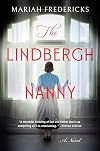
The Lindbergh Nanny
by Mariah Fredericks
On This Page
Description
"When the most famous toddler in America, Charles Lindbergh, Jr., is kidnapped from his family home in New Jersey in 1932, the case makes international headlines. Already celebrated for his flight across the Atlantic, his father, Charles, Sr., is the country's golden boy, with his wealthy, lovely wife, Anne Morrow Lindbergh, by his side. But there's someone else in their household-Betty Gow, a formerly obscure young woman, now known around the world by another name: the Lindbergh Nanny. A show more Scottish immigrant deciphering the rules of her new homeland and its East Coast elite, Betty finds Colonel Lindbergh eccentric and often odd, Mrs. Lindbergh kind yet nervous, and Charlie simply a darling. Far from home and bruised from a love affair gone horribly wrong, Betty finds comfort in caring for the child, and warms to the attentions of handsome sailor Henrik, sometimes known as Red. Then, Charlie disappears. Suddenly a suspect in the eyes of both the media and the public, Betty must find the truth about what really happened that night, in order to clear her own name-and to find justice for the child she loves. "Gripping and elegant, The Lindbergh Nanny brings readers into the interior of the twentieth century's most infamous crime."-Nina de Gramont, New York Times bestselling author of The Christie Affair"-- show lessTags
Recommendations










Member Recommendations

dara85 If you want the real story of the kidnapping of Charles Lindbergh Jr.
Member Reviews
The Publisher Says: Mariah Fredericks's The Lindbergh Nanny is powerful, propulsive novel about America’s most notorious kidnapping through the eyes of the woman who found herself at the heart of this deadly crime.
When the most famous toddler in America, Charles Lindbergh, Jr., is kidnapped from his family home in New Jersey in 1932, the case makes international headlines. Already celebrated for his flight across the Atlantic, his father, Charles, Sr., is the country’s golden boy, with his wealthy, lovely wife, Anne Morrow Lindbergh, by his side. But there’s someone else in their household—Betty Gow, a formerly obscure young woman, now known around the world by another name: the Lindbergh Nanny.
A Scottish immigrant deciphering show more the rules of her new homeland and its East Coast elite, Betty finds Colonel Lindbergh eccentric and often odd, Mrs. Lindbergh kind yet nervous, and Charlie simply a darling. Far from home and bruised from a love affair gone horribly wrong, Betty finds comfort in caring for the child, and warms to the attentions of handsome sailor Henrik, sometimes known as Red. Then, Charlie disappears.
Suddenly a suspect in the eyes of both the media and the public, Betty must find the truth about what really happened that night, in order to clear her own name—and to find justice for the child she loves.
I RECEIVED A DRC FROM THE PUBLISHER VIA NETGALLEY. THANK YOU.
My Review: A lot of ink is still spilled about this dreadful criminal act, ninety years on; it has everything we love in a public spectacle: a pretty woman, a handsome hero, a quiet young girl with big dreams. That these won't survive contact with the ever-increasing celebrity culture that mass media, only recently including newsreels and radio broadcasts, with its invasive tentacles shoving into each and every cranny of the principals' lives, thoughts, actions before, during, and after the events described, is the darkest tinge of tragedy.
As part of this non-fiction novel coming this November, Author Fredericks presents her research in epitome..."this is true, this bit's been changed but is mostly true"...which to my mind is the proper way to handle a researched work of fiction that is based on fact. I do not care for the research-paper lists of sources, citations, and so forth, that some authors provide so as to spike the many, many guns aimed at creators in internet culture. "Appropriation! Inaccuracies and falsehoods!" ::eyeroll:: It's called FICTION, people, CTFD.
My personal axe now ground to my own satisfaction, let me tell you what I enjoyed most about the read:
That's Betty's voice from the beginning of chapter three. She's direct. She's concise. She does not shilly-shally, not ever and not once. I like that in a person, I appreciate that in a character, and I am glad to say that Betty was (despite the media circus that she endured without much in the way of role models to guide her) a delightful companion in her own life as well. (The author speaks of her meeting with A. Scott Berg when he was writing his Lindbergh biography, what transpired during that meeting, and this informed her awareness of how she wants Betty's voice to sound. She nailed it.)
This being a factual story, and the author giving no hint that she intended to pull a fast one at the end, I was deeply pleased to feel invested in the unfolding tale. It's really easy, with a story not exactly underreported, and about which there is quite an extensive trove of writing already. (Ye gawds some of what's been said...!) No, the ending hasn't changed; yes, the guilty party's guilt is evident; but there are so many cockroaches scuttling for cover in any person's existence if an arc-lamp like the one aimed at the Lindberghs is trained on it that there's room for a lot of juicy speculation.
How can you not be impressed when someone takes ninety-year-old facts and makes a solid, well-made story out of them?
But...I hear the Gotcha! Gang clearing their throats...this is a four-star review and you're describing a five-star experience. Well, no thing made by human hands is perfect, is it. I rankle mightily at the author's choice to ascribe a certain suspect's furtive, secretive, and frankly unpleasant suspiciousness as down to that suspect's gayness. Yes indeed, the suspect's actual sexuality was not ever even hinted to be "deviant" in the parlance of the day. In the endnotes, the author says she made this deliberate choice to give the character a "need for privacy that would be instantly understandable to the modern reader."
Uh-huh.
That star-losing choice aside...Yes, I'm impressed. Yes, I'd say go pre-order one. I'm so glad I was able to read it as a DRC because the wait for the library's inevitable copy will be long. Get on it soon. show less
When the most famous toddler in America, Charles Lindbergh, Jr., is kidnapped from his family home in New Jersey in 1932, the case makes international headlines. Already celebrated for his flight across the Atlantic, his father, Charles, Sr., is the country’s golden boy, with his wealthy, lovely wife, Anne Morrow Lindbergh, by his side. But there’s someone else in their household—Betty Gow, a formerly obscure young woman, now known around the world by another name: the Lindbergh Nanny.
A Scottish immigrant deciphering show more the rules of her new homeland and its East Coast elite, Betty finds Colonel Lindbergh eccentric and often odd, Mrs. Lindbergh kind yet nervous, and Charlie simply a darling. Far from home and bruised from a love affair gone horribly wrong, Betty finds comfort in caring for the child, and warms to the attentions of handsome sailor Henrik, sometimes known as Red. Then, Charlie disappears.
Suddenly a suspect in the eyes of both the media and the public, Betty must find the truth about what really happened that night, in order to clear her own name—and to find justice for the child she loves.
I RECEIVED A DRC FROM THE PUBLISHER VIA NETGALLEY. THANK YOU.
My Review: A lot of ink is still spilled about this dreadful criminal act, ninety years on; it has everything we love in a public spectacle: a pretty woman, a handsome hero, a quiet young girl with big dreams. That these won't survive contact with the ever-increasing celebrity culture that mass media, only recently including newsreels and radio broadcasts, with its invasive tentacles shoving into each and every cranny of the principals' lives, thoughts, actions before, during, and after the events described, is the darkest tinge of tragedy.
As part of this non-fiction novel coming this November, Author Fredericks presents her research in epitome..."this is true, this bit's been changed but is mostly true"...which to my mind is the proper way to handle a researched work of fiction that is based on fact. I do not care for the research-paper lists of sources, citations, and so forth, that some authors provide so as to spike the many, many guns aimed at creators in internet culture. "Appropriation! Inaccuracies and falsehoods!" ::eyeroll:: It's called FICTION, people, CTFD.
My personal axe now ground to my own satisfaction, let me tell you what I enjoyed most about the read:
It's not clear where I'll be living. I'm part of the Lindbergh household, but they have no house of their own yet, which is why they're living with her parents. They've not even been married two years and seem to have spent most of that time in the air.
That's Betty's voice from the beginning of chapter three. She's direct. She's concise. She does not shilly-shally, not ever and not once. I like that in a person, I appreciate that in a character, and I am glad to say that Betty was (despite the media circus that she endured without much in the way of role models to guide her) a delightful companion in her own life as well. (The author speaks of her meeting with A. Scott Berg when he was writing his Lindbergh biography, what transpired during that meeting, and this informed her awareness of how she wants Betty's voice to sound. She nailed it.)
This being a factual story, and the author giving no hint that she intended to pull a fast one at the end, I was deeply pleased to feel invested in the unfolding tale. It's really easy, with a story not exactly underreported, and about which there is quite an extensive trove of writing already. (Ye gawds some of what's been said...!) No, the ending hasn't changed; yes, the guilty party's guilt is evident; but there are so many cockroaches scuttling for cover in any person's existence if an arc-lamp like the one aimed at the Lindberghs is trained on it that there's room for a lot of juicy speculation.
How can you not be impressed when someone takes ninety-year-old facts and makes a solid, well-made story out of them?
But...I hear the Gotcha! Gang clearing their throats...this is a four-star review and you're describing a five-star experience. Well, no thing made by human hands is perfect, is it. I rankle mightily at the author's choice to ascribe a certain suspect's furtive, secretive, and frankly unpleasant suspiciousness as down to that suspect's gayness. Yes indeed, the suspect's actual sexuality was not ever even hinted to be "deviant" in the parlance of the day. In the endnotes, the author says she made this deliberate choice to give the character a "need for privacy that would be instantly understandable to the modern reader."
Uh-huh.
That star-losing choice aside...Yes, I'm impressed. Yes, I'd say go pre-order one. I'm so glad I was able to read it as a DRC because the wait for the library's inevitable copy will be long. Get on it soon. show less
The novel begins when young Betty Gow applies for the position of a nanny to the Lindbergh family, the most celebrated and illustrious family of the day. Contrary to her expectations, she is hired. The job is demanding and there are many pitfalls, but she grows fond of Charlie, the baby. While Betty is the narrator, the reader still only learns about her past step by step - she has secrets of her own and there are reasons why this position, where she has to give up her own life completely, is welcome to her.
Through Betty's eyes, we get to know the glamorous Lindberghs, but also other family members as well as the staff. And we feel the disaster coming nearer.
The first part of the novel, before the kidnapping, felt a bit drawn out at show more times, but apart from that I enjoyed it. The novel almost feels like a different book after the kidnapping, though. The tension, the confusion, the blame that could be lain on almost anyone. The consequences for Betty's life, her mourning for the little boy she had grown to love, the scrutiny of the press. I could not stop reading and the story gripped me for days, even after I had finished. show less
Through Betty's eyes, we get to know the glamorous Lindberghs, but also other family members as well as the staff. And we feel the disaster coming nearer.
The first part of the novel, before the kidnapping, felt a bit drawn out at show more times, but apart from that I enjoyed it. The novel almost feels like a different book after the kidnapping, though. The tension, the confusion, the blame that could be lain on almost anyone. The consequences for Betty's life, her mourning for the little boy she had grown to love, the scrutiny of the press. I could not stop reading and the story gripped me for days, even after I had finished. show less
Thanks to NetGalley and St Martins Press for this review copy!
It’s always satisfying to read a well-written historical fiction book, especially when it’s about an event that is integral to American history (the Federal Kidnapping Act was created as a result of this heinous crime). I didn’t know that much about the Lindbergh kidnapping, only that the famous aviator lost his 1-year-old child Charlie, and the baby was never seen alive again. I also was reminded that this took place in central NJ, close to where I live. Learning as I read makes a book more appealing, and this novel did not disappoint.
This story is told in the first person of the nanny herself, Betty Gow. Her love for Lindbergh Jr. is greatly professed and makes the show more story all the more poignant. Lindbergh Sr. is described as a gruff, sometimes joyless man while his wife seems content to live in his shadow. Gow feels guilty because she thinks Charlie is bonded with her, stronger than with either of his parents. She takes her job seriously and blames herself for not being there for Charlie, preventing the kidnapping.
Gow is written as a sympathetic character, while the others in the Lindbergh’s circle of servants are all potentially unreliable narrators. Gow does her best to try to find the guilty party while being questioned by the police multiple times. She never gives up hope until she finally identifies his body at the morgue. Her emotions are what makes her character stand out; ironically enough, Lindbergh Sr. is written as a man who despises emotions. Gow sees him as somewhat of an automaton, more interested in engines and science rather than his human wife and child. Despite her misgivings, she tries to win his favor, both before and after Charlie is kidnapped.
All the Lindbergh servants start turning on each other, laying blame back and forth until I wasn’t sure who was telling the truth or not. I definitely think I enjoyed the book more by not knowing who, if any, of the servants were to blame. Each character is described well and their motivations for orchestrating the kidnapping seem accurate. The author creates suspense as she advances the plot and I was completely enthralled with how I developed emotions towards the characters, especially Violet. I thoroughly disliked her and was frustrated when Gow tried to sympathize with her. I believe she must have been suffering with depression or some other affliction, considering her actions towards the end of the book.
The author also did an excellent job of describing the inside of the houses as well as the surrounding landscape. I found it interesting that Hopewell NJ was noted as being far away from the beaten path, while now it’s quite populated.
As the story came to an end, I found chapter 31 to be one of my favorites. As Gow takes a final visit to the house in Hopewell, the desolation is apparent:
She uses her old keys to unlock the door. Inside the air is stale with dust and emptiness. Much of the furniture has been left behind. It’s been covered in cloth. The sofa, the coffee table, the grandfather clock – all bodies dressed for burial and eternal silence. Elsie and I part to explore the rooms we can bear. I step into the kitchen, which is empty, the cabinet doors all open for some reason. Peek into the servants’ sitting room, where there is only a chair and the card table. One lamp with its plug pulled out. There are memories to be conjured if I want to. I find I don’t want to. Better to leave these as blank, meaningless spaces. Like the sofa and the clock, cover the feelings in anesthetizing white cloth. And leave them behind.
This paragraph sums up Gow’s emptiness, a hole that cannot ever be filled, a chapter in her life best left alone lest the utter insanity of it take her over.
THE LINDBERGH NANNY examines this tragedy from another point of view, and Fredericks does an excellent job. Even if you are familiar with aspects of this story, you will enjoy this book. show less
It’s always satisfying to read a well-written historical fiction book, especially when it’s about an event that is integral to American history (the Federal Kidnapping Act was created as a result of this heinous crime). I didn’t know that much about the Lindbergh kidnapping, only that the famous aviator lost his 1-year-old child Charlie, and the baby was never seen alive again. I also was reminded that this took place in central NJ, close to where I live. Learning as I read makes a book more appealing, and this novel did not disappoint.
This story is told in the first person of the nanny herself, Betty Gow. Her love for Lindbergh Jr. is greatly professed and makes the show more story all the more poignant. Lindbergh Sr. is described as a gruff, sometimes joyless man while his wife seems content to live in his shadow. Gow feels guilty because she thinks Charlie is bonded with her, stronger than with either of his parents. She takes her job seriously and blames herself for not being there for Charlie, preventing the kidnapping.
Gow is written as a sympathetic character, while the others in the Lindbergh’s circle of servants are all potentially unreliable narrators. Gow does her best to try to find the guilty party while being questioned by the police multiple times. She never gives up hope until she finally identifies his body at the morgue. Her emotions are what makes her character stand out; ironically enough, Lindbergh Sr. is written as a man who despises emotions. Gow sees him as somewhat of an automaton, more interested in engines and science rather than his human wife and child. Despite her misgivings, she tries to win his favor, both before and after Charlie is kidnapped.
All the Lindbergh servants start turning on each other, laying blame back and forth until I wasn’t sure who was telling the truth or not. I definitely think I enjoyed the book more by not knowing who, if any, of the servants were to blame. Each character is described well and their motivations for orchestrating the kidnapping seem accurate. The author creates suspense as she advances the plot and I was completely enthralled with how I developed emotions towards the characters, especially Violet. I thoroughly disliked her and was frustrated when Gow tried to sympathize with her. I believe she must have been suffering with depression or some other affliction, considering her actions towards the end of the book.
The author also did an excellent job of describing the inside of the houses as well as the surrounding landscape. I found it interesting that Hopewell NJ was noted as being far away from the beaten path, while now it’s quite populated.
As the story came to an end, I found chapter 31 to be one of my favorites. As Gow takes a final visit to the house in Hopewell, the desolation is apparent:
She uses her old keys to unlock the door. Inside the air is stale with dust and emptiness. Much of the furniture has been left behind. It’s been covered in cloth. The sofa, the coffee table, the grandfather clock – all bodies dressed for burial and eternal silence. Elsie and I part to explore the rooms we can bear. I step into the kitchen, which is empty, the cabinet doors all open for some reason. Peek into the servants’ sitting room, where there is only a chair and the card table. One lamp with its plug pulled out. There are memories to be conjured if I want to. I find I don’t want to. Better to leave these as blank, meaningless spaces. Like the sofa and the clock, cover the feelings in anesthetizing white cloth. And leave them behind.
This paragraph sums up Gow’s emptiness, a hole that cannot ever be filled, a chapter in her life best left alone lest the utter insanity of it take her over.
THE LINDBERGH NANNY examines this tragedy from another point of view, and Fredericks does an excellent job. Even if you are familiar with aspects of this story, you will enjoy this book. show less
In a Nutshell: Liked it enough. It’s not bad but it didn’t dazzle me as much as I had expected. Didn’t enjoy the first person pov.
Note: This review contains spoilers about the actual case this story is based on.
Story Synopsis:
Not being from the US, I had first heard of the Lindbergh case only when I had read Agatha Christie’s ‘Murder on the Orient Express’, which takes inspiration from this show more kidnapping. As such, I couldn’t resist the chance of trying out this novel, though I am not a great fan of fictionalisations of true stories.
You don’t need to be aware of the actual case. (In fact, I think you will enjoy the book better that way.) But as I already knew some of the details, I chose to read about the complete case before venturing ahead with the book just to see how far the story sticks to the facts. While my online research revealed to me in advance what was to come, it also helped me appreciate the author’s creative decisions better.
Where the book worked for me:
✔ The author has done her research and it shows. Wherever she has stuck to the facts, she has done so with aplomb.
✔ Betty Gow makes for an intriguing main character. Unlike what you would expect, she has not been idealised into a ‘perfect nanny’ but is written as a real person with flaws. She made for a good narrative point of view, though the writing faltered somewhat in this aspect. The Lindberghs too seem to be accurately depicted. I was initially surprised at the negative portrayal of Charles Lindbergh (the aviator, not the baby), but an online search revealed that he had shades of grey in his character. Betty’s connection with little Charlie comes out beautifully.
✔ This book is the perfect mix of fact and fiction. I admired how the author took the bare details of the facts and gave it her own twist. While this does end up vilifying some real people, it doesn’t do so without apparent justification.
✔ The police investigation is well-detailed and reveals a lot about the people who were under their eye of suspicion.
✔ There is a ‘Fact vs. Fiction’ section at the end of the book, which clearly demarcates the elements in the book. I wish all historical fiction writers who write stories based on facts would include such a well-written clarification of the plot points and their writing choices.
✔ For a change, the author’s note about the real Betty Gow and the aforementioned section of ‘Facts vs. Fiction’ were included in my advance audio copy. These two sections bring a new understanding to the story, and I was grateful to have access to these, for once.
Where the book could have worked better for me:
❌ Even without my research into the case, I already knew what was to happen to the baby. This is somewhat of a downer in a novel where the kidnapping doesn’t even happen until about the 40% mark. There was no surprise of discovery. The only positive of this is that there's an added sense of poignancy to Betty's wait for the baby’s safe return since you already know that he won’t be coming home again.
❌ I am never a fan of crime books where the amateur characters discover more information than the police do. I also found it tough to accept how one policeman shared inside details of the case under investigation with Betty.
❌ Barring the scenes where Betty discovers that the child is missing and where she has to identify the body, the rest of the book feels somewhat flat in terms of emotions.
❌ There’s a lot of info-dumping in the final chapters.
❌ Betty’s first person narration includes a lot of inner monologues. This becomes even more grating in the audio version as you listen to her voicing her extended thoughts on everything, even when she has to respond to a question.
❌ The story does wonderfully while depicting the discovery of the kidnapping, the information about the investigation and the finding of the child’s body, and later, the trial. The rest of the book doesn’t match up. It digresses a lot with extended scenes that have no bearing on the main case. This also reduces the pacing of the story. Having the audiobook was a blessing at such times.
The audiobook experience:
The audiobook, clocking at 12 hours 18 minutes, is narrated by Penelope Rawlins. Absolutely no complaints in this section. Loved her narration, loved the way she enunciated the dialogues, loved the accents/voices she used for every character. The audiobook would be a great way to experience this story.
In one way, the story is almost like yet another conspiracy theory about the Lindbergh case. On the other hand, it is more of Betty Gow’s story than that of Charles Lindbergh Jr. Whatever way you look at it, the book is a good one-time read. I might have enjoyed it more had I not kept waiting for the kidnapping to happen. Knowing the fact behind the fiction is detrimental at times.
Recommended to true crime enthusiasts who want to read a different take on the Lindbergh kidnapping.
3.5 stars.
My thanks to Dreamscape Media and NetGalley for the ALC of “The Lindbergh Nanny”. This review is voluntary and contains my honest opinion about the audiobook.
———————————————
Connect with me through:
My Blog | The StoryGraph | Facebook | Twitter show less
Note: This review contains spoilers about the actual case this story is based on.
Story Synopsis:
You might have heard of the famous kidnapping case of aviator Charles Lindbergh's eldest son, twenty-month-old Charles Jr., in the early 1930s. This is a partially fictionalised narration of the events leading up to and beyond the kidnapping & murder, recollected from the point of view of Betty Gow, the child’s Scottish nanny.
Not being from the US, I had first heard of the Lindbergh case only when I had read Agatha Christie’s ‘Murder on the Orient Express’, which takes inspiration from this show more kidnapping. As such, I couldn’t resist the chance of trying out this novel, though I am not a great fan of fictionalisations of true stories.
You don’t need to be aware of the actual case. (In fact, I think you will enjoy the book better that way.) But as I already knew some of the details, I chose to read about the complete case before venturing ahead with the book just to see how far the story sticks to the facts. While my online research revealed to me in advance what was to come, it also helped me appreciate the author’s creative decisions better.
Where the book worked for me:
✔ The author has done her research and it shows. Wherever she has stuck to the facts, she has done so with aplomb.
✔ Betty Gow makes for an intriguing main character. Unlike what you would expect, she has not been idealised into a ‘perfect nanny’ but is written as a real person with flaws. She made for a good narrative point of view, though the writing faltered somewhat in this aspect. The Lindberghs too seem to be accurately depicted. I was initially surprised at the negative portrayal of Charles Lindbergh (the aviator, not the baby), but an online search revealed that he had shades of grey in his character. Betty’s connection with little Charlie comes out beautifully.
✔ This book is the perfect mix of fact and fiction. I admired how the author took the bare details of the facts and gave it her own twist. While this does end up vilifying some real people, it doesn’t do so without apparent justification.
✔ The police investigation is well-detailed and reveals a lot about the people who were under their eye of suspicion.
✔ There is a ‘Fact vs. Fiction’ section at the end of the book, which clearly demarcates the elements in the book. I wish all historical fiction writers who write stories based on facts would include such a well-written clarification of the plot points and their writing choices.
✔ For a change, the author’s note about the real Betty Gow and the aforementioned section of ‘Facts vs. Fiction’ were included in my advance audio copy. These two sections bring a new understanding to the story, and I was grateful to have access to these, for once.
Where the book could have worked better for me:
❌ Even without my research into the case, I already knew what was to happen to the baby. This is somewhat of a downer in a novel where the kidnapping doesn’t even happen until about the 40% mark. There was no surprise of discovery. The only positive of this is that there's an added sense of poignancy to Betty's wait for the baby’s safe return since you already know that he won’t be coming home again.
❌ I am never a fan of crime books where the amateur characters discover more information than the police do. I also found it tough to accept how one policeman shared inside details of the case under investigation with Betty.
❌ Barring the scenes where Betty discovers that the child is missing and where she has to identify the body, the rest of the book feels somewhat flat in terms of emotions.
❌ There’s a lot of info-dumping in the final chapters.
❌ Betty’s first person narration includes a lot of inner monologues. This becomes even more grating in the audio version as you listen to her voicing her extended thoughts on everything, even when she has to respond to a question.
❌ The story does wonderfully while depicting the discovery of the kidnapping, the information about the investigation and the finding of the child’s body, and later, the trial. The rest of the book doesn’t match up. It digresses a lot with extended scenes that have no bearing on the main case. This also reduces the pacing of the story. Having the audiobook was a blessing at such times.
The audiobook experience:
The audiobook, clocking at 12 hours 18 minutes, is narrated by Penelope Rawlins. Absolutely no complaints in this section. Loved her narration, loved the way she enunciated the dialogues, loved the accents/voices she used for every character. The audiobook would be a great way to experience this story.
In one way, the story is almost like yet another conspiracy theory about the Lindbergh case. On the other hand, it is more of Betty Gow’s story than that of Charles Lindbergh Jr. Whatever way you look at it, the book is a good one-time read. I might have enjoyed it more had I not kept waiting for the kidnapping to happen. Knowing the fact behind the fiction is detrimental at times.
Recommended to true crime enthusiasts who want to read a different take on the Lindbergh kidnapping.
3.5 stars.
My thanks to Dreamscape Media and NetGalley for the ALC of “The Lindbergh Nanny”. This review is voluntary and contains my honest opinion about the audiobook.
———————————————
Connect with me through:
My Blog | The StoryGraph | Facebook | Twitter show less
In a Nutshell: Liked it enough. It’s not bad but it didn’t dazzle me as much as I had expected. Didn’t enjoy the first person pov.
Note: This review contains spoilers about the actual case this story is based on.
Story Synopsis:
Not being from the US, I had first heard of the Lindbergh case only when I had read Agatha Christie’s ‘Murder on the Orient Express’, which takes inspiration from this show more kidnapping. As such, I couldn’t resist the chance of trying out this novel, though I am not a great fan of fictionalisations of true stories.
You don’t need to be aware of the actual case. (In fact, I think you will enjoy the book better that way.) But as I already knew some of the details, I chose to read about the complete case before venturing ahead with the book just to see how far the story sticks to the facts. While my online research revealed to me in advance what was to come, it also helped me appreciate the author’s creative decisions better.
Where the book worked for me:
✔ The author has done her research and it shows. Wherever she has stuck to the facts, she has done so with aplomb.
✔ Betty Gow makes for an intriguing main character. Unlike what you would expect, she has not been idealised into a ‘perfect nanny’ but is written as a real person with flaws. She made for a good narrative point of view, though the writing faltered somewhat in this aspect. The Lindberghs too seem to be accurately depicted. I was initially surprised at the negative portrayal of Charles Lindbergh (the aviator, not the baby), but an online search revealed that he had shades of grey in his character. Betty’s connection with little Charlie comes out beautifully.
✔ This book is the perfect mix of fact and fiction. I admired how the author took the bare details of the facts and gave it her own twist. While this does end up vilifying some real people, it doesn’t do so without apparent justification.
✔ The police investigation is well-detailed and reveals a lot about the people who were under their eye of suspicion.
✔ There is a ‘Fact vs. Fiction’ section at the end of the book, which clearly demarcates the elements in the book. I wish all historical fiction writers who write stories based on facts would include such a well-written clarification of the plot points and their writing choices.
✔ For a change, the author’s note about the real Betty Gow and the aforementioned section of ‘Facts vs. Fiction’ were included in my advance audio copy. These two sections bring a new understanding to the story, and I was grateful to have access to these, for once.
Where the book could have worked better for me:
❌ Even without my research into the case, I already knew what was to happen to the baby. This is somewhat of a downer in a novel where the kidnapping doesn’t even happen until about the 40% mark. There was no surprise of discovery. The only positive of this is that there's an added sense of poignancy to Betty's wait for the baby’s safe return since you already know that he won’t be coming home again.
❌ I am never a fan of crime books where the amateur characters discover more information than the police do. I also found it tough to accept how one policeman shared inside details of the case under investigation with Betty.
❌ Barring the scenes where Betty discovers that the child is missing and where she has to identify the body, the rest of the book feels somewhat flat in terms of emotions.
❌ There’s a lot of info-dumping in the final chapters.
❌ Betty’s first person narration includes a lot of inner monologues. This becomes even more grating in the audio version as you listen to her voicing her extended thoughts on everything, even when she has to respond to a question.
❌ The story does wonderfully while depicting the discovery of the kidnapping, the information about the investigation and the finding of the child’s body, and later, the trial. The rest of the book doesn’t match up. It digresses a lot with extended scenes that have no bearing on the main case. This also reduces the pacing of the story. Having the audiobook was a blessing at such times.
The audiobook experience:
The audiobook, clocking at 12 hours 18 minutes, is narrated by Penelope Rawlins. Absolutely no complaints in this section. Loved her narration, loved the way she enunciated the dialogues, loved the accents/voices she used for every character. The audiobook would be a great way to experience this story.
In one way, the story is almost like yet another conspiracy theory about the Lindbergh case. On the other hand, it is more of Betty Gow’s story than that of Charles Lindbergh Jr. Whatever way you look at it, the book is a good one-time read. I might have enjoyed it more had I not kept waiting for the kidnapping to happen. Knowing the fact behind the fiction is detrimental at times.
Recommended to true crime enthusiasts who want to read a different take on the Lindbergh kidnapping.
3.5 stars.
My thanks to Dreamscape Media and NetGalley for the ALC of “The Lindbergh Nanny”. This review is voluntary and contains my honest opinion about the audiobook.
———————————————
Connect with me through:
My Blog | The StoryGraph | Facebook | Twitter show less
Note: This review contains spoilers about the actual case this story is based on.
Story Synopsis:
You might have heard of the famous kidnapping case of aviator Charles Lindbergh's eldest son, twenty-month-old Charles Jr., in the early 1930s. This is a partially fictionalised narration of the events leading up to and beyond the kidnapping & murder, recollected from the point of view of Betty Gow, the child’s Scottish nanny.
Not being from the US, I had first heard of the Lindbergh case only when I had read Agatha Christie’s ‘Murder on the Orient Express’, which takes inspiration from this show more kidnapping. As such, I couldn’t resist the chance of trying out this novel, though I am not a great fan of fictionalisations of true stories.
You don’t need to be aware of the actual case. (In fact, I think you will enjoy the book better that way.) But as I already knew some of the details, I chose to read about the complete case before venturing ahead with the book just to see how far the story sticks to the facts. While my online research revealed to me in advance what was to come, it also helped me appreciate the author’s creative decisions better.
Where the book worked for me:
✔ The author has done her research and it shows. Wherever she has stuck to the facts, she has done so with aplomb.
✔ Betty Gow makes for an intriguing main character. Unlike what you would expect, she has not been idealised into a ‘perfect nanny’ but is written as a real person with flaws. She made for a good narrative point of view, though the writing faltered somewhat in this aspect. The Lindberghs too seem to be accurately depicted. I was initially surprised at the negative portrayal of Charles Lindbergh (the aviator, not the baby), but an online search revealed that he had shades of grey in his character. Betty’s connection with little Charlie comes out beautifully.
✔ This book is the perfect mix of fact and fiction. I admired how the author took the bare details of the facts and gave it her own twist. While this does end up vilifying some real people, it doesn’t do so without apparent justification.
✔ The police investigation is well-detailed and reveals a lot about the people who were under their eye of suspicion.
✔ There is a ‘Fact vs. Fiction’ section at the end of the book, which clearly demarcates the elements in the book. I wish all historical fiction writers who write stories based on facts would include such a well-written clarification of the plot points and their writing choices.
✔ For a change, the author’s note about the real Betty Gow and the aforementioned section of ‘Facts vs. Fiction’ were included in my advance audio copy. These two sections bring a new understanding to the story, and I was grateful to have access to these, for once.
Where the book could have worked better for me:
❌ Even without my research into the case, I already knew what was to happen to the baby. This is somewhat of a downer in a novel where the kidnapping doesn’t even happen until about the 40% mark. There was no surprise of discovery. The only positive of this is that there's an added sense of poignancy to Betty's wait for the baby’s safe return since you already know that he won’t be coming home again.
❌ I am never a fan of crime books where the amateur characters discover more information than the police do. I also found it tough to accept how one policeman shared inside details of the case under investigation with Betty.
❌ Barring the scenes where Betty discovers that the child is missing and where she has to identify the body, the rest of the book feels somewhat flat in terms of emotions.
❌ There’s a lot of info-dumping in the final chapters.
❌ Betty’s first person narration includes a lot of inner monologues. This becomes even more grating in the audio version as you listen to her voicing her extended thoughts on everything, even when she has to respond to a question.
❌ The story does wonderfully while depicting the discovery of the kidnapping, the information about the investigation and the finding of the child’s body, and later, the trial. The rest of the book doesn’t match up. It digresses a lot with extended scenes that have no bearing on the main case. This also reduces the pacing of the story. Having the audiobook was a blessing at such times.
The audiobook experience:
The audiobook, clocking at 12 hours 18 minutes, is narrated by Penelope Rawlins. Absolutely no complaints in this section. Loved her narration, loved the way she enunciated the dialogues, loved the accents/voices she used for every character. The audiobook would be a great way to experience this story.
In one way, the story is almost like yet another conspiracy theory about the Lindbergh case. On the other hand, it is more of Betty Gow’s story than that of Charles Lindbergh Jr. Whatever way you look at it, the book is a good one-time read. I might have enjoyed it more had I not kept waiting for the kidnapping to happen. Knowing the fact behind the fiction is detrimental at times.
Recommended to true crime enthusiasts who want to read a different take on the Lindbergh kidnapping.
3.5 stars.
My thanks to Dreamscape Media and NetGalley for the ALC of “The Lindbergh Nanny”. This review is voluntary and contains my honest opinion about the audiobook.
———————————————
Connect with me through:
My Blog | The StoryGraph | Facebook | Twitter show less
I really liked this novel’s take on such a tragic event. I personally found the general public's behavior towards the family, both before and after, absolutely disgusting.
I did enjoy seeing an "inside" perspective as well. I often found myself seething with rage at how people treated Betty.
I did enjoy seeing an "inside" perspective as well. I often found myself seething with rage at how people treated Betty.
A novel about America�s most notorious kidnapping through the eyes of the woman who found herself at the heart of this deadly crime.
Betty Gow is the real-life nanny and this is a fictionalized story from Betty Gow’s perspective. Betty is young, feisty sometimes and likeable. The story is heart-wrenching at times. Between Betty talking to the various people she knew from working at the Lindbergh’s and the police, it was interesting to find out who was suspicious and why. The author included many of the actual facts of the case in the story that I didn’t know about. I enjoyed it.
Betty Gow is the real-life nanny and this is a fictionalized story from Betty Gow’s perspective. Betty is young, feisty sometimes and likeable. The story is heart-wrenching at times. Between Betty talking to the various people she knew from working at the Lindbergh’s and the police, it was interesting to find out who was suspicious and why. The author included many of the actual facts of the case in the story that I didn’t know about. I enjoyed it.
Members
- Recently Added By
Lists

Literature About Social Class
134 works; 19 members

Books Read in 2023
5,547 works; 145 members

Books I have Recommended
207 works; 1 member
Author Information

17 Works 1,742 Members
Awards and Honors
Common Knowledge
- Canonical title
- The Lindbergh Nanny
- Original publication date
- 2022
- People/Characters
- Charles Lindbergh Jr.; Charles A. Lindbergh; Anne Morrow Lindbergh; Betty Gow; Henrik "Henry" Johnson; Keaton (show all 17); Charles Henry Ellerson; Violet Sharpe; Marguerite; Johannes Junge; Elsie Whateley; Trooper Joe McCann; Edna Sharpe; Olly Whateley; Kathleen Sullivan; Septimus Banks; Herbert Norman Schwarzkopf
- Important places
- North Haven, Maine, USA; Princeton, New Jersey, USA; Englewood, New Jersey, USA; Hopewell, New Jersey, USA; Glasgow, Scotland, UK
- Important events
- Kidnapping of Charles Lindbergh Jr. (1932)
- Epigraph
- You've made an image of me, that's quite clear, a complete and final image and there's an end of it. You just won't see me any other way...Every image is a sin. ~Max Frisch, I am Not Stiller, a favorite book of Anne Morrow L... (show all)indbergh
Only in the sky is there hope, only in that which man has never touched. ~Charles A. Lindbergh, The Wartime Journals of Charles A. Lindbergh - Dedication
- For Fredric Larry Weiss with love and respect. Thank you for having the conversation.
- First words
- I can see the house. But not all of it and certainly not how you get there from here.
- Last words
- (Click to show. Warning: May contain spoilers.)And when she gets there, there will be people. Waiting for her.
- Blurbers
- Nelson DeMille
- Original language
- English
Classifications
Statistics
- Members
- 225
- Popularity
- 144,994
- Reviews
- 22
- Rating
- (3.69)
- Languages
- English
- Media
- Paper, Audiobook, Ebook
- ISBNs
- 9
- ASINs
- 4