The Crane Husband
by Kelly Barnhill
On This Page
Description
A fifteen-year-old teenager is the backbone of her small Midwestern family, budgeting the household finances and raising her younger brother while her mom, a talented artist, weaves beautiful tapestries. For six years, it's been just the three of them - her mom has brought home guests at times, but none have ever stayed. Yet when her mom brings home a six-foot tall crane with a menacing air, the girl is powerless to prevent her mom letting the intruder into her heart, and her children's show more lives. Utterly enchanted and numb to his sharp edges, her mom abandons the world around her to weave the masterpiece the crane demands. In this stunning contemporary retelling of The Crane Wife by the Newbery Medal-winning author of The Girl Who Drank the Moon, one fiercely pragmatic teen forced to grow up faster than was fair will do whatever it takes to protect her family - and change the story. show lessTags
Recommendations







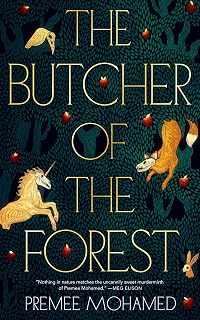
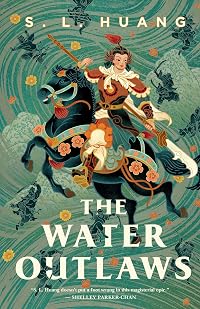
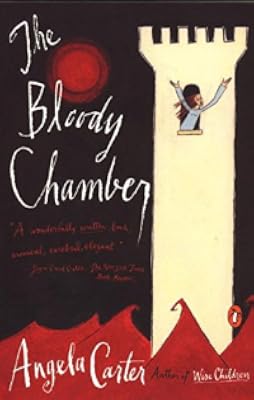
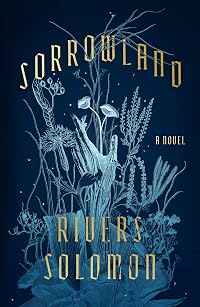

Member Recommendations
by anonymous user
Member Reviews
I enjoyed--although that is too light a term--this when I read it, but it has also stuck with me. I appreciated the minimalist approach here, which befits a contemporary revision of a traditional (there are actually several versions) fairy tale. Barnhill really understands how fairy tales work and has resisted the temptation of many of her contemporaries to over-elaborate on them in their own retellings. The narrative feels claustrophobic, but at the same time leaves a lot of gaps and spaces for us to think our way into the story and its implications. Traditional fairy tales are often more deeply ambiguous than many believe, particularly if we are familiar only with the sanitized versions of the much darker originals collected by the show more Grimms, etc. In this case much of the ambiguity comes from a single question: why is such an old, familiar story--a woman whom submits to abuse and abandons herself and those around her--one that too many people inhabit anew, and as if for the first time, everyday? Her teenage protagonist provides one set of answers: we inhabit a world where people see and don't see what is right in front of them.
Much of the attention this book has garnered--and you can see it in many of the other reviews here so far on LT--focuses on gender issue. However Barnhill's interest in the gender dynamics is wrapped up in a broader examination of cultural shifts in technology, farming, commerce, and the art market. Many of those elements nag at the edges of consciousness while reading the book (the creepy agribusiness next door, the fawning online collectors for the mother's art); this is, fundamentally, a smart story about how private abuse is fostered by a broader culture that turns a blind eye to all kinds of abuse. show less
Much of the attention this book has garnered--and you can see it in many of the other reviews here so far on LT--focuses on gender issue. However Barnhill's interest in the gender dynamics is wrapped up in a broader examination of cultural shifts in technology, farming, commerce, and the art market. Many of those elements nag at the edges of consciousness while reading the book (the creepy agribusiness next door, the fawning online collectors for the mother's art); this is, fundamentally, a smart story about how private abuse is fostered by a broader culture that turns a blind eye to all kinds of abuse. show less
Their mother had always been a little distant, a little scatterbrained. She is an artist, a talented weaver who creates stories and emotions out of thread. But they got on all right until the day she brought home the crane and told them to call him "Father." Their own father had died some years ago of a wasting disease, and though their mother had brought home boyfriends since then, they'd never lasted long. The crane is different, though. He takes up all of her attention, and leaves cuts and bruises on their mother's skin. He's cruel, and the family's sheep fear him. Michael is only 6, and he's also afraid of the crane. But it's his 15-year-old sister who is going to have to do something to protect herself and her brother at any show more cost...
Though the setting is the near future, this story has a timeless, fairy-tale feel. Told from the perspective of the unnamed 15-year-old daughter, this story is dark and complex, but also deeply magical. Recommended to fans of dark fairy tale retellings. show less
Though the setting is the near future, this story has a timeless, fairy-tale feel. Told from the perspective of the unnamed 15-year-old daughter, this story is dark and complex, but also deeply magical. Recommended to fans of dark fairy tale retellings. show less
Thank you NetGalley and Tordotcom for the chance to read and review the extraordinary piece, The Crane Husband by Kelly Barnhill!
At around 128 pages, The Crane Husband can no longer be called a novella. And yet this short novel weaves together a tale that other authors fail to do in 10 times that number of pages.
"Cranes are mean. Cruel, you know? Just ask any frog or fish in the pond. A crane is a predator just like any other predator—sneaky, and opportunistic. Not one of them would have the patience for weaving, or for beauty for its own sake. A crane would make someone else do it for him. A mouse maybe. Or a beautiful spider. He’d work it nearly to death, and then he’d eat it.”
One day, our unnamed narrators mother brings home show more a crane. Not a pet crane, but a crane the size of a man. While she imagines that the crane will leave soon, her mother adopts plenty of human and animal strays for short periods, it’s still odd to see it kiss her mothers neck and draw blood that her mother doesn’t notice. And things only get more intense from there on.
“It’s a sad fact about true love,” my mother told me once. “The sheep love me without ceasing, and that is why I am able to cause them pain—love is the path of least resistance, you see? It’s a lot more work to cause harm to someone who mistrusts you, or fears you. Or hates you. Love opens the city gates wide, and allows all manner of horrors right inside. This is why they don’t flinch when I come at them with something unpleasant.”
The family has always believed that mothers on the farm run away when their child turns 5 years old. The town has always believed that they are mad and run away with different men. Now that the farm is gone and our narrators father dead, the mother has remained; an artist with the practicality of a farmers daughter, when needed.
“Your mother doesn’t know these things,” he said, a note of pleading in his voice. “She has always been that way. She is an artist. Her feet barely touch the ground. I’ve been the one to keep her tethered to the earth. And now it’s your job. And you’re too young, and it’s not fair, but there it is.”
With that in mind it’s also important to remember that while this falls under magical realism, this is a story of abuse and neglect. There is a parentified 15 year old, and a 6 year old without much food. There is also the horrifying practicality at the end, the neglect of the school system, the way things play out. I honestly don’t know how to write about all of this in a way that does it justice.
To the mothers who flew away. And to those they left behind.
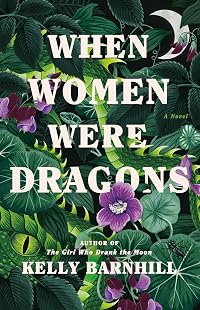
I also feel like The Crane Husband is a good way to sample things before diving right into When Women Were Dragons by the author as well. You’ll know what I mean when you’ve finished this book! show less
At around 128 pages, The Crane Husband can no longer be called a novella. And yet this short novel weaves together a tale that other authors fail to do in 10 times that number of pages.
"Cranes are mean. Cruel, you know? Just ask any frog or fish in the pond. A crane is a predator just like any other predator—sneaky, and opportunistic. Not one of them would have the patience for weaving, or for beauty for its own sake. A crane would make someone else do it for him. A mouse maybe. Or a beautiful spider. He’d work it nearly to death, and then he’d eat it.”
One day, our unnamed narrators mother brings home show more a crane. Not a pet crane, but a crane the size of a man. While she imagines that the crane will leave soon, her mother adopts plenty of human and animal strays for short periods, it’s still odd to see it kiss her mothers neck and draw blood that her mother doesn’t notice. And things only get more intense from there on.
“It’s a sad fact about true love,” my mother told me once. “The sheep love me without ceasing, and that is why I am able to cause them pain—love is the path of least resistance, you see? It’s a lot more work to cause harm to someone who mistrusts you, or fears you. Or hates you. Love opens the city gates wide, and allows all manner of horrors right inside. This is why they don’t flinch when I come at them with something unpleasant.”
The family has always believed that mothers on the farm run away when their child turns 5 years old. The town has always believed that they are mad and run away with different men. Now that the farm is gone and our narrators father dead, the mother has remained; an artist with the practicality of a farmers daughter, when needed.
“Your mother doesn’t know these things,” he said, a note of pleading in his voice. “She has always been that way. She is an artist. Her feet barely touch the ground. I’ve been the one to keep her tethered to the earth. And now it’s your job. And you’re too young, and it’s not fair, but there it is.”
With that in mind it’s also important to remember that while this falls under magical realism, this is a story of abuse and neglect. There is a parentified 15 year old, and a 6 year old without much food. There is also the horrifying practicality at the end, the neglect of the school system, the way things play out. I honestly don’t know how to write about all of this in a way that does it justice.
To the mothers who flew away. And to those they left behind.
I also feel like The Crane Husband is a good way to sample things before diving right into When Women Were Dragons by the author as well. You’ll know what I mean when you’ve finished this book! show less
*E-ARC made available by the publisher through Edelweiss Plus - thank you!*
The narrator recounts what happened when she was fifteen and her brother six, when her artist mother brought home a crane and told them to call him "Father." The girl has always had to be her brother's protector and essentially parent him, but now there's even more challenges. The crane is mean, leaving scratching and bruises on her mother; and her mother, never a great parent at the best of times becomes ever more distant and is not selling art to provide for the family any longer.
This was not pleasant reading by any means. Ostensibly, it's a retelling of "The Crane Wife," but I couldn't for the life of me figure out why the author decided to make the crane the show more husband instead. It doesn't really shift the meaning of the original, as far as I could tell, and maybe even makes it worse because the woman not only gives of herself, she's abused. The daughter is hard-pressed to change their circumstances, and the ending was as dark as any original fairy tale. Barnhill does, however, have writing chops and she's able to convey a story and atmosphere in a novella. show less
The narrator recounts what happened when she was fifteen and her brother six, when her artist mother brought home a crane and told them to call him "Father." The girl has always had to be her brother's protector and essentially parent him, but now there's even more challenges. The crane is mean, leaving scratching and bruises on her mother; and her mother, never a great parent at the best of times becomes ever more distant and is not selling art to provide for the family any longer.
This was not pleasant reading by any means. Ostensibly, it's a retelling of "The Crane Wife," but I couldn't for the life of me figure out why the author decided to make the crane the show more husband instead. It doesn't really shift the meaning of the original, as far as I could tell, and maybe even makes it worse because the woman not only gives of herself, she's abused. The daughter is hard-pressed to change their circumstances, and the ending was as dark as any original fairy tale. Barnhill does, however, have writing chops and she's able to convey a story and atmosphere in a novella. show less
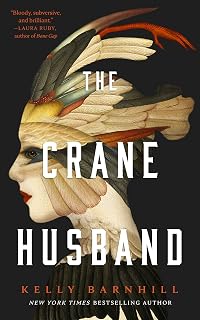
A marvelous retelling of the Japanese crane folktale set in modern day. I loved the 15-year old protagonist daughter who has been forced to grow up much quicker than she should. Some of her comments made me laugh out loud, however the sad state of her home life with her mother's relationship with this nasty crane and having to care for her much younger brother made her humor even more cutting in the circumstances. Overall, it was an intense tale of neglect, delusion and generational trauma that her mother wasn't able to shake. There was a moment that made me quite vividly think of the movie Birdman, which I also loved. Lastly, the cover art is breathtaking.
Her mother is an artist; her father dead. Her brother is barely school age. Before he died her father trained her in every competence he could, but at 15 even running a website for her mother's art and finances, isn't enough to keep social services at bay when her mother brings home a crane husband and devotes all her time to him. This is a tale of witnessed obsession and the abandonment. The details are fantastic, but the bones are all too real. The book has a strong, almost overwhelming mood to it and is best enjoyed when that mood is sought after.
I read this novella as part of the Nebula finalist packet. The Crane Husband is a disturbing, gothic-tinged meditation on how women succumb to abuse. Though mythology forms a major undercurrent, it feels incredibly contemporary and relevant (which is a tragedy unto itself).
Members
- Recently Added By
Lists

Books Read in 2023
5,638 works; 147 members

2024 Hugo Awards -- Eligible Works -- Novellas
23 works; 6 members

Dublin Literary Award 2024 Longlist
66 works; 4 members

SFF standalone novellas with female protagonists
101 works; 4 members
Author Information

35+ Works 10,537 Members
Kelly Barnhill is a children's book author. Her novels include The Mostly True Story of Jack, Iron Hearted Violet, The Witch's Boy, and The Girl Who Drank the Moon, which received the 2017 John Newbery Medal. She has also received the World Fantasy Award, the Parents Choice Gold Award, the Texas Library Association Bluebonnet award, and a show more Charlotte Huck Honor. (Bowker Author Biography) show less
Some Editions
Awards and Honors
Awards
Distinctions
Notable Lists
Common Knowledge
- Canonical title*
- The Crane Husband
- Original title
- The Crane Husband
- Original publication date
- 2023
- People/Characters*
- Michael; Horace
- Dedication*
- To the mothers who flew away
And to those they left behind - First words*
- The crane came in through the front door like he owned the place.
- Last words*
- (Click to show. Warning: May contain spoilers.)I knot the thread and pull it tight.
- Original language
- English
*Some information comes from Common Knowledge in other languages. Click "Edit" for more information.
Classifications
Statistics
- Members
- 447
- Popularity
- 68,638
- Reviews
- 15
- Rating
- (3.94)
- Languages
- Dutch, English
- Media
- Paper, Audiobook, Ebook
- ISBNs
- 6
- ASINs
- 2