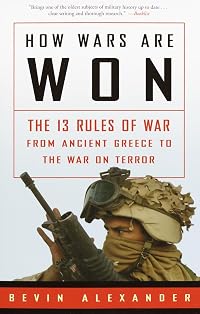
How Wars Are Won: The 13 Rules of War from Ancient Greece to the War on Terror
by Bevin Alexander
On This Page
Description
Both timely and timeless, "How Wars Are Won" is a fascinating look at the history of warfare and the essential principles for achieving victory--factors as relevant to the antiterrorist challenge as they have been to wars for thousands of years.Tags
Recommendations
















Member Reviews
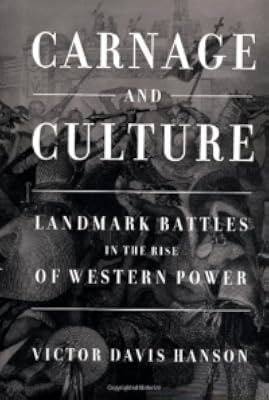
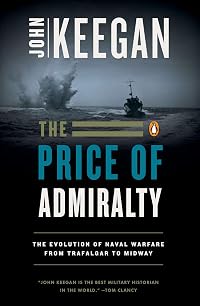
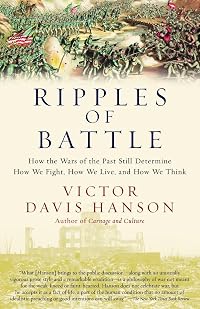
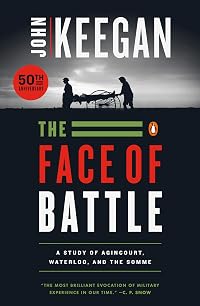
This is a book whose argument would be more effective had the author not apparently refocused his manuscript after September 11. Alexander, a journalist and writer of general audience works on military subjects, challenges the relevance and effectiveness of the "Western way of war" as articulated by, among others, Victor Davis Hanson and John Keegan. That model emphasizes intense, direct conflict focused on decisive battles whose outcomes are determined by relative loss rates. Alexander's "13 rules," in contrast, emphasize indirection: striking at weak spots, employing deception, paralyzing systems as opposed to killing men. Though the research bases of Alexander's case studies are uniformly thin, he does not seriously abuse his show more evidence. Most of the battles he cites in demonstration of a particular "rule" more or less support the argument. Cannae, for example, is an appropriate example of a battle of encirclement. Yet Alexander (How Hitler Could Have Won World War II) also seeks to connect his "rules of war" directly to the contemporary "war on terror." In this case, the drastic asymmetries between the adversaries make the relationships to historic battles fought by more similar forces difficult to establish. Alexander usually winds up postulating a connection rather than demonstrating it. The link, for example, between operational-level "cauldron battles" like those fought in Russia in 1941, and the tactics employed by the U.S. in Afghanistan against the Taliban, is at best tenuous, if not entirely inferential. Alexander's case should not be dismissed, but is best approached with intellectual caution. As the U.S. prepares for war, look for interest in this title to be high. (Review 2002 - https://www.publishersweekly.com/9780609610398)
EXAMPLES: Feign retreat: Pretend defeat, fake a retreat, then ambush the enemy while being pursued. Used to devastating effect by the North Vietnamese against U.S. forces during the Vietnam War.
• Strike at enemy weakness: Avoid the enemy’s strength entirely by refusing to fight pitched battles, a method that has run alongside conventional war from the earliest days of human conflict. Brilliantly applied by Mao Zedong to defeat the Chinese Nationalists.
• Defend, then attack: Gain possession of a superior weapon or tactical system, induce the enemy to launch a fruitless attack, then go on the offensive. Employed repeatedly against the Goths by the Eastern Roman general Belisarius to reclaim vast stretches of the Roman Empire. show less
EXAMPLES: Feign retreat: Pretend defeat, fake a retreat, then ambush the enemy while being pursued. Used to devastating effect by the North Vietnamese against U.S. forces during the Vietnam War.
• Strike at enemy weakness: Avoid the enemy’s strength entirely by refusing to fight pitched battles, a method that has run alongside conventional war from the earliest days of human conflict. Brilliantly applied by Mao Zedong to defeat the Chinese Nationalists.
• Defend, then attack: Gain possession of a superior weapon or tactical system, induce the enemy to launch a fruitless attack, then go on the offensive. Employed repeatedly against the Goths by the Eastern Roman general Belisarius to reclaim vast stretches of the Roman Empire. show less
very good read; covers historical battles in a context of how they 1) fit into general principals of war and 2) how it might apply to modern conflicts; specifically asymmetrical battles.
Ratings
Members
- Recently Added By
Author Information

18 Works 1,516 Members
Bevin Alexander is the author of five books on military history, & his battle studies of the Korean War, written during his decorated service as a combat historian, are stored in the National Archives. He lives in Bremo Bluff, Virginia. (Bowker Author Biography)
Classifications
Statistics
- Members
- 157
- Popularity
- 209,503
- Reviews
- 2
- Rating
- (3.82)
- Languages
- English
- Media
- Paper, Ebook
- ISBNs
- 4
- ASINs
- 1