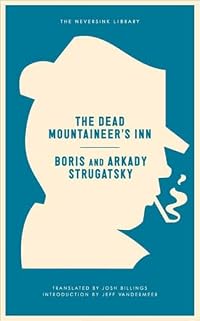
The Dead Mountaineer's Inn
by Boris Strugatsky (Author), Arkady Strugatsky
On This Page
Description
From the Russian masters of sci-fi comes The Dead Mountaineer's Inn, a hilarious spoof on the classic country-house murder mystery. When Inspector Peter Glebsky arrives at a remote ski chalet on vacation, the last thing he intends to do is get involved in any police work. He's there to ski, drink brandy, and loaf around in blissful solitude. But he hadn't counted on the other vacationers, an eccentric bunch, including a famous hypnotist, a physicist with a penchant for gymnastic feats, a show more sulky teenager of indeterminate gender, and the mysterious Mr. and Mrs. Moses. And as the chalet fills up, strange things start happening-things that seem to indicate the presence of another, unseen guest. Is there a ghost on the premises? A prankster? Something more sinister? When an avalanche blocks the mountain pass and traps everyone in the chalet, the corpse is finally discovered. Glebsky's vacation is over, and he's embarked on the most unusual investigation he's ever been involved with. In fact, the further he looks into it, the more Glebsky realizes that the victim may not even be human.In this late novel from the legendary Russian sci-fi duo-here in its first-ever English translation-the Strugatskys gleefully upend the plot of many an Hercule Poirot mystery-and the result is much funnier and much stranger than anything Agatha Christie ever wrote. show lessTags
Recommendations























Member Recommendations

Member Reviews
“Shut up,” I said wearily. “Stop jabbering and think for just a minute. Let’s put aside for a minute the fact that Moses is simply a criminal. You, I see, have no understanding whatsoever about the law. You, it seems, imagine that there is one law that exists for people, and another one that exists for ghouls. But let’s forget all that for a second. Let’s say they’re aliens. Let’s say they’re victims of blackmail. The great first contact . . .” I waved the Luger freely. “A friendship between worlds, and so on . . . Here’s a question: what are they doing here on Earth? Moses himself admitted that he was an observer. But what, actually, is he observing? What do they want here? . . . Don’t grin, don’t grin . . . show more We’re talking science fiction now, and in science fiction novels, so far as I remember it, aliens on Earth are usually spying in preparation for an invasion. In your opinion, how should I—a bureaucrat and stuffed shirt—behave in this situation? Should I do my duty, or not? And you, Simone, as an earthling, what do you think is your duty?”
What a beautiful spin into a deranged twist into the harsh snapping spine of a novel. These Soviet-era progenitors of science fiction turned their brains and pens toward the mystery novel and gifted humanity with: a detective who’s not really 𝘵𝘩𝘢𝘵 kind of detective; a locked-room that doesn’t end up being the crux of the work; a cast of bizarre characters trapped by an avalanche and forced to show, or put up a strong counter in not showing, who they really were; aliens, maybe?; ghouls, possibly?; a fight that doesn’t turn out the way one would expect from a hard-boiled piece; and a denouement that isn’t a denouement after all. The mystery is the mystery, not the genre—the adjective to the genre being the only real focus to this masterwork. Oh, and it’s funny as hell.
“Well, then,” I said. “Before anything else I would like to know who you are and what your name is.”
“Luarvik,” he said quickly.
“Luarvik . . . And your first name?”
“First name? Luarvik.”
“Mr. Luarvik Luarvik?”
He was quiet again. I struggled with the feeling of discomfort that one always gets when dealing with the very cross-eyed people.
“More or less, yes,” he said finally.
“What do you mean ‘more or less’?”
“Luarvik Luarvik.”
“Very well. If you say so. Who are you?”
“Luarvik,” he said. “I am Luarvik.” He was quiet. “Luarvik Luarvik. Luarvik L. Luarvik.”
He looked healthy enough, and, what was more surprising, completely serious. But I’m not a doctor.
“I would like to know your occupation.”
“I’m mechanic,” he said. “Mechanic and driver.”
“A driver of what?” I asked.
Here he stared at me with both his eyes. He clearly did not understand the question.
This wondrous chapter runs on for eleven pages, mostly taken up with this clipped, nonsensical, and (for me) feverishly funny dialogue. I hear mocking echoes of the batty passages involving Major Major Major Major in 𝘊𝘢𝘵𝘤𝘩-22. Or the best absurdity of Gogol and Kharms. And, quite honestly, I can’t help but feel glee that there were likeminded compatriots (brothers, nonetheless) back in the Soviet 70s who wrote silliness that resonated with my own forays into absurdism in the common era of the shared political farce from our singular times. Maybe it takes these bureaucratic impingements to create worthwhile absurdity.
I loved 𝘙𝘰𝘢𝘥𝘴𝘪𝘥𝘦 𝘗𝘪𝘤𝘯𝘪𝘤 by these authors. I loved Tarkovsky’s film adaption: 𝘚𝘵𝘢𝘭𝘬𝘦𝘳. But this book, this crazy apparent mess that isn’t a mess at all, that is every bit as sublime as it is bubbly, I’ll probably pore over for years to come (at least Chapter 12—with the glorious, confounding, and hilarious Luarvik). show less
What a beautiful spin into a deranged twist into the harsh snapping spine of a novel. These Soviet-era progenitors of science fiction turned their brains and pens toward the mystery novel and gifted humanity with: a detective who’s not really 𝘵𝘩𝘢𝘵 kind of detective; a locked-room that doesn’t end up being the crux of the work; a cast of bizarre characters trapped by an avalanche and forced to show, or put up a strong counter in not showing, who they really were; aliens, maybe?; ghouls, possibly?; a fight that doesn’t turn out the way one would expect from a hard-boiled piece; and a denouement that isn’t a denouement after all. The mystery is the mystery, not the genre—the adjective to the genre being the only real focus to this masterwork. Oh, and it’s funny as hell.
“Well, then,” I said. “Before anything else I would like to know who you are and what your name is.”
“Luarvik,” he said quickly.
“Luarvik . . . And your first name?”
“First name? Luarvik.”
“Mr. Luarvik Luarvik?”
He was quiet again. I struggled with the feeling of discomfort that one always gets when dealing with the very cross-eyed people.
“More or less, yes,” he said finally.
“What do you mean ‘more or less’?”
“Luarvik Luarvik.”
“Very well. If you say so. Who are you?”
“Luarvik,” he said. “I am Luarvik.” He was quiet. “Luarvik Luarvik. Luarvik L. Luarvik.”
He looked healthy enough, and, what was more surprising, completely serious. But I’m not a doctor.
“I would like to know your occupation.”
“I’m mechanic,” he said. “Mechanic and driver.”
“A driver of what?” I asked.
Here he stared at me with both his eyes. He clearly did not understand the question.
This wondrous chapter runs on for eleven pages, mostly taken up with this clipped, nonsensical, and (for me) feverishly funny dialogue. I hear mocking echoes of the batty passages involving Major Major Major Major in 𝘊𝘢𝘵𝘤𝘩-22. Or the best absurdity of Gogol and Kharms. And, quite honestly, I can’t help but feel glee that there were likeminded compatriots (brothers, nonetheless) back in the Soviet 70s who wrote silliness that resonated with my own forays into absurdism in the common era of the shared political farce from our singular times. Maybe it takes these bureaucratic impingements to create worthwhile absurdity.
I loved 𝘙𝘰𝘢𝘥𝘴𝘪𝘥𝘦 𝘗𝘪𝘤𝘯𝘪𝘤 by these authors. I loved Tarkovsky’s film adaption: 𝘚𝘵𝘢𝘭𝘬𝘦𝘳. But this book, this crazy apparent mess that isn’t a mess at all, that is every bit as sublime as it is bubbly, I’ll probably pore over for years to come (at least Chapter 12—with the glorious, confounding, and hilarious Luarvik). show less
A police inspector, Peter Glebsky, specialty fraud and white collar crime, goes on a ski holiday for a needed rest in the mountains. Only. . . the Inn, recommended by a friend is haunted by practical jokers. Instead of finding rest he finds a peculiar assortment of guests, a financier with a beautiful wife, a magician with a gender opaque nephew/niece, a mountain climbing physicist, a giant Swede, etc. Someone is playing practical jokes, moving things around, making the floor damp here or there. Peter is enjoying observing them but then, inevitably, there is a dead body. He is not a murder detective, but he jumps into gear. There is also an avalanche that has made leaving impossible, phone lines down. Only . . . the clues just gets more show more and more impossible, more and more absurd. The Strugatskys pull apart the genre and put in all the classic elements and "roadblocks" (literally in this case) and then toss in the kitchen sink. Thi isn't your usual murder mystery and is more absurd than serious, more humorous than not but it pivots on an aspect of human nature that is neither absurd nor humorous: the human need to make a story that 'works' which, in this case, involves overriding the more improbable (but true) explanation. It's fun and I totally enjoyed it, but not for everyone. **** show less
The brothers Strugatsky are best known as the Soviet Union's most famed science fiction writers, and unbeknownst to me, when I bought this book because it looked intriguing, science fiction creeps into what is otherwise a really fun spoof of a mystery story. (In fact, its subtitle is "One More Last Rite for the Detective Genre.")
All is emphatically not what it seems when the narrator, Peter Glebsky, a police inspector (who specializes in "bureaucratic" crimes, such as forgery and embezzlement), arrives for a two-week vacation at the Dead Mountaineer's Inn, so named because of a mountaineer who fell to his death while rock climbing, setting off an avalanche; his room has been preserved at the inn as a museum. Soon, after Glebsky meets show more the very hospitable owner of the inn, the very "friendly" maid Kaisia, and the very smart St. Bernard, Lel, he meets some of the other guests, and a very mixed and weird lot they are. The guests include a very rich man and his wife (somewhat unpleasantly called Moses), a physicist named Simone, a hypnotist with the unlikely name of Du Barnstoker and his his gender-ambiguous nephew or niece, a so-called youth counselor, Hinkus, who appears ill, and a man who says he is Swedish named Olaf Andvarafors. Many strange things occur at the inn, like smoke coming from the dead mountaineer's pipe, wet footprints on the floor, showers running with nobody in them, and petty thefts, and the guests occupy their time skiing, playing pool, trying to seduce each other, and eating and drinking.
Soon things take a more ominous turn, with mysterious notes, all in block letters, that claim, among other things, that Hinkus is a "dangerous gangster, sadist, and masochist." There is a blizzard, and then an avalanche that blocks off the inn from the nearest town; nevertheless, a one-armed man, who they eventually find out is named Luarvik L. Luarvik shows up half-dead. And then, Olaf turns up dead, with his neck twisted and his door locked from the inside and no footprints in the snow near the open window; Glebsky removes his suitcase which contains a mysterious machine and has the owner lock it up in the safe.
Then all is in turmoil at the inn, as Glebsky tries to investigate, but is way way way out of his depth. The physicist and the owner try to help him, but he has a hard time grasping what they are explaining --competing gangsters, a full-size doll exactly like the seductive Mrs. Moses, and visitors from other planets. I am intentionally not revealing the ending!
The brothers clearly had fun writing this book, and introducing weirder and weirder occurrences, and I had a lot of fun reading it. I am almost tempted to read some of their science fiction. show less
All is emphatically not what it seems when the narrator, Peter Glebsky, a police inspector (who specializes in "bureaucratic" crimes, such as forgery and embezzlement), arrives for a two-week vacation at the Dead Mountaineer's Inn, so named because of a mountaineer who fell to his death while rock climbing, setting off an avalanche; his room has been preserved at the inn as a museum. Soon, after Glebsky meets show more the very hospitable owner of the inn, the very "friendly" maid Kaisia, and the very smart St. Bernard, Lel, he meets some of the other guests, and a very mixed and weird lot they are. The guests include a very rich man and his wife (somewhat unpleasantly called Moses), a physicist named Simone, a hypnotist with the unlikely name of Du Barnstoker and his his gender-ambiguous nephew or niece, a so-called youth counselor, Hinkus, who appears ill, and a man who says he is Swedish named Olaf Andvarafors. Many strange things occur at the inn, like smoke coming from the dead mountaineer's pipe, wet footprints on the floor, showers running with nobody in them, and petty thefts, and the guests occupy their time skiing, playing pool, trying to seduce each other, and eating and drinking.
Soon things take a more ominous turn, with mysterious notes, all in block letters, that claim, among other things, that Hinkus is a "dangerous gangster, sadist, and masochist." There is a blizzard, and then an avalanche that blocks off the inn from the nearest town; nevertheless, a one-armed man, who they eventually find out is named Luarvik L. Luarvik shows up half-dead. And then, Olaf turns up dead, with his neck twisted and his door locked from the inside and no footprints in the snow near the open window; Glebsky removes his suitcase which contains a mysterious machine and has the owner lock it up in the safe.
Then all is in turmoil at the inn, as Glebsky tries to investigate, but is way way way out of his depth. The physicist and the owner try to help him, but he has a hard time grasping what they are explaining --
The brothers clearly had fun writing this book, and introducing weirder and weirder occurrences, and I had a lot of fun reading it. I am almost tempted to read some of their science fiction. show less
This is a classic closed-room mystery. An odd assortment of guests are trapped in the Dead Mountaineer's Inn by an avalanche, and one of them is found murdered. One of the guests is a policeman, so he investigates the death. Of course, he's not really a detective, and one drunken ramble makes the reader wonder if he's even a policeman...
This is the Soviet equivalent of the movie Clue. All of the guests are utterly ridiculous caricatures, the circumstances of the murder are very strange, and the whole story is quite absurd. It keeps getting more and more absurd, until the end just explodes in nonsensical absurdity and the reader never really knows for sure what happened, but it doesn't matter anyway because that's not the point.
I show more generally enjoyed reading it, but it was missing something, perhaps because it is a translation. Perhaps I wish there had been more laugh-out-loud moments, or a little more coherence... some of the problem was that it required an inconsistent suspension of disbelief. show less
This is the Soviet equivalent of the movie Clue. All of the guests are utterly ridiculous caricatures, the circumstances of the murder are very strange, and the whole story is quite absurd. It keeps getting more and more absurd, until the end just explodes in nonsensical absurdity and the reader never really knows for sure what happened, but it doesn't matter anyway because that's not the point.
I show more generally enjoyed reading it, but it was missing something, perhaps because it is a translation. Perhaps I wish there had been more laugh-out-loud moments, or a little more coherence... some of the problem was that it required an inconsistent suspension of disbelief. show less
(audio) After reading Roadside Picnic and this one, I find that I am now a fan of quirky Russian scifi, or maybe just of the work of these quirky Russian brothers (Boris and Arkady).
Written in 1970, this is a "locked room" mystery story with a twist. Set in an isolated resort in the Alps, one that is further isolated by an avalanche that shuts down all access. (Perhaps a homage to Agatha Christie).
from Wikipedia : The novel begins with Peter Glebsky, a policeman by profession, going on a holiday to the Dead Mountaineer's Hotel, a small resort located in a secluded valley in the Alps.
He meets the other guests: Mr. Moses, a rich old man with highly eccenteric manners, and his stunningly beautiful wife; Mr. du Barnstocre, an illusionist show more who is accompanied by Brun, his niece (portrayed throughout the novel as an adolescent of unidentifiable sex); Mr. Simonet, the obsessed physicist; Mr. Hinckus, a custodial attorney; and Olaf Andvarafors.
Not long after Mr. Glebsky's arrival, an avalanche blocks the entrance to the valley, thus cutting the protagonists off from outside world. At the same time, Olaf Andvarafors is found dead in his room, his door locked and his neck impossibly twisted.
Glebsky is forced to start an investigation, but the more he searches for a logical explanation for the murder, the more he realises that the guests are not who they appear to be.
At the critical climax, the book makes a left turn that takes it from an intriguing mystery novel, to a bizarre scifi thriller. Enjoyable read, or in this case listen.
Read by : Keith Szarabajka
8/10
S: 2/1/18 - 2/13/18 (13 Days) show less
Written in 1970, this is a "locked room" mystery story with a twist. Set in an isolated resort in the Alps, one that is further isolated by an avalanche that shuts down all access. (Perhaps a homage to Agatha Christie).
from Wikipedia : The novel begins with Peter Glebsky, a policeman by profession, going on a holiday to the Dead Mountaineer's Hotel, a small resort located in a secluded valley in the Alps.
He meets the other guests: Mr. Moses, a rich old man with highly eccenteric manners, and his stunningly beautiful wife; Mr. du Barnstocre, an illusionist show more who is accompanied by Brun, his niece (portrayed throughout the novel as an adolescent of unidentifiable sex); Mr. Simonet, the obsessed physicist; Mr. Hinckus, a custodial attorney; and Olaf Andvarafors.
Not long after Mr. Glebsky's arrival, an avalanche blocks the entrance to the valley, thus cutting the protagonists off from outside world. At the same time, Olaf Andvarafors is found dead in his room, his door locked and his neck impossibly twisted.
Glebsky is forced to start an investigation, but the more he searches for a logical explanation for the murder, the more he realises that the guests are not who they appear to be.
At the critical climax, the book makes a left turn that takes it from an intriguing mystery novel, to a bizarre scifi thriller. Enjoyable read, or in this case listen.
Read by : Keith Szarabajka
8/10
S: 2/1/18 - 2/13/18 (13 Days) show less
The premise and setting of the book interested me as did the initial setup of the story, but the “investigation” was mind numbing, going in circles. Maybe that was the point, maybe the something amazing was lost in translation. I can only pick up and put down a book so many times. This ended up being one of those books that I finally decided to retire it prematurely as I have so many others books that I would rather enjoy giving a go at. Win some/lose some.
For awhile I thought this book was doing something quite clever. It turned out, it wasn't. Still, for fans of the Strugatsky brothers' other works, The Dead Mountaineer's Inn ("TDMI") will likely be a fun genre-bending read.
Having read the Strugatsky brothers' Roadside Picnic and Hard to be a God, I was interested to see them tackle a genre other than science fiction- even if those other works don't necessarily fit so neatly into the sci-fi genre themselves. TDMI works with one of the usual setups for a detective novel, a detective on vacation in an isolated location (in this case a mountain inn) that becomes cut off from the rest of the world (via avalanche) and that likewise becomes the scene of a crime. The Strugatsky brothers do a show more solid job of using the first third of the book to establish the strange cast of the inn, and set up many mysterious goings on in the inn, but still maintain a tone of nonchalance thanks to the narrator, Inspector Glebsky, being unenthusiastic about dealing with these minor mysteries during his vacation. He just wants to relax, ski, and get drunk for a couple weeks, but events have conspired to frustrate his modest ambitions; when a murder occurs Glebsky uses all of his skills as an investigator to solve the case.
The mystery quickly becomes a bizarre one, with mysterious devices, silver bullets, repeated mentions of zombies and werewolves, accounts of human dolls, assertions of superhuman strength, and more. As the case gets stranger and stranger I thought that TDMI was setting up to do something very cool, namely to use the reader's expectations about books by the Strugatsky brothers against them. Having become famous for their science fiction novels, a reader would expect TDMI to evolve into a work of science fiction as well, thus being convinced alongside Glebsky that something extraterrestrial or superhuman was afoot. I expected the twist to be that, no, in fact the mystery had a rational explanation, and that by being so easily convinced of the absurd science fiction explanation, Glebsky (and, by proxy, the reader) had allowed the bad guys to escape with the McGuffin. I was, it turns out, giving the brothers too much credit. Instead of playing on our expectations like that, TDMI instead took the opportunity to merge pulp mystery with pulp sci-fi. There's nothing wrong with bending genres, but to mix two genres doesn't usually make a work interesting or impressive (like how mixing two very different foods doesn't usually make an inherently delicious combo, though of course exceptions like chicken and waffles abound). Science fiction and mystery can be combined to great effect, like in Bester's The Demolished Man, but what makes that work so impressive is that it not only uses both genres, but also tells the story through an interesting perspective, with the elements of each genre playing off each other and making the work more interesting than it would have been otherwise. TDMI does not have this synergy of elements, though the combo still makes for a fast-paced read. Overall, however, I considered the route taken by TDMI to be an opportunity missed.
The Strugatsky brothers aren't great writers, and as such their books live or die by the ideas that they explore. Other people might like what this book turns out to be, and find it to be a lot of fun, but personally I thought that with this book the brothers passed up a very clever idea for one that was just okay. Ultimately it delivers a conclusion I didn't find particularly satisfying, engaging in the eleventh hour as it does with questions of procedure versus morality, and wrapping up with a convenient deus ex machina. I expect that most people who have liked other Strugatsky brothers works, though, will like this book more than I did, and if you're looking for a follow-up to Roadside Picnic and are in the mood for a mystery novel then you should probably pick this one up. show less
Having read the Strugatsky brothers' Roadside Picnic and Hard to be a God, I was interested to see them tackle a genre other than science fiction- even if those other works don't necessarily fit so neatly into the sci-fi genre themselves. TDMI works with one of the usual setups for a detective novel, a detective on vacation in an isolated location (in this case a mountain inn) that becomes cut off from the rest of the world (via avalanche) and that likewise becomes the scene of a crime. The Strugatsky brothers do a show more solid job of using the first third of the book to establish the strange cast of the inn, and set up many mysterious goings on in the inn, but still maintain a tone of nonchalance thanks to the narrator, Inspector Glebsky, being unenthusiastic about dealing with these minor mysteries during his vacation. He just wants to relax, ski, and get drunk for a couple weeks, but events have conspired to frustrate his modest ambitions; when a murder occurs Glebsky uses all of his skills as an investigator to solve the case.
The Strugatsky brothers aren't great writers, and as such their books live or die by the ideas that they explore. Other people might like what this book turns out to be, and find it to be a lot of fun, but personally I thought that with this book the brothers passed up a very clever idea for one that was just okay. Ultimately it delivers a conclusion I didn't find particularly satisfying, engaging in the eleventh hour as it does with questions of procedure versus morality, and wrapping up with a convenient deus ex machina. I expect that most people who have liked other Strugatsky brothers works, though, will like this book more than I did, and if you're looking for a follow-up to Roadside Picnic and are in the mood for a mystery novel then you should probably pick this one up. show less
Members
- Recently Added By
Published Reviews
ThingScore 50
The The Dead Mountaineer's Inn is a novel by Arkady Strugatsky & Boris Strugatsky, published in 1970. The version I've read is the Hungarian edition, published by Kozmosz Könyvek in 1981. This is a story of an investigation, set somewhere in Scandinavia of the 1960s, where strange things happen to guests trapped in a hotel. The characters are varied, the events are interesting. I liked the show more The Dead Mountaineer's Inn book from the Strugatsky brothers, it was fun from start to finish. show less
added by Kadmon06
Lists

Recommend the 20 best books you've read in the last five years
2,168 works; 606 members

Books Read in 2021
5,361 works; 113 members
Author Information

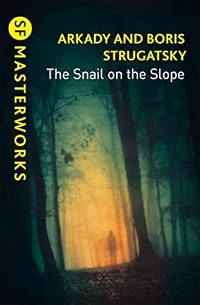
Popular science-fiction writers, the Strugatsky brothers have used the genre since the 1960s to comment on contemporary society, at times provoking major controversy. It's Hard to Be a God (1964) is a dysutopia with commentary on historical theories. The Snail on the Slope (1966--68) features a KGB-like organization and an extraordinarily show more oppressive atmosphere. Pre-glasnost, glasnost, some of the Strugatskys' major works had to be circulated in samizdat, but the brothers' situation is now dramatically better. (Bowker Author Biography) show less

287+ Works 11,980 Members
Popular science-fiction writers, the Strugatsky brothers have used the genre since the 1960s to comment on contemporary society, at times provoking major controversy. It's Hard to Be a God (1964) is a dysutopia with commentary on historical theories. The Snail on the Slope (1966--68) features a KGB-like organization and an extraordinarily show more oppressive atmosphere. Pre-glasnost, glasnost, some of the Strugatskys' major works had to be circulated in samizdat, but the brothers' situation is now dramatically better. (Bowker Author Biography) show less
Some Editions
Awards and Honors
Series
Belongs to Publisher Series
Work Relationships
Is contained in
Has the adaptation
Common Knowledge
- Canonical title
- The Dead Mountaineer's Inn
- Original title
- Отель «У погибшего альпиниста»
- Alternate titles
- Inspector Glebsky's Puzzle; The Dead Mountaineer's Inn
- Original publication date
- 1970
- Original language
- Russian
- Canonical DDC/MDS
- 891.7344
Classifications
- Genres
- Fiction and Literature, Science Fiction, Mystery
- DDC/MDS
- 891.7344 — Literature & rhetoric Asian Literature East Indo-European and Celtic literatures Russian and East Slavic languages Russian fiction USSR 1917–1991 Late 20th century 1917–1991
- LCC
- PG3476 .S78835 .O8413 — Language and Literature Slavic languages and literatures. Baltic languages. Albanian language Slavic. Baltic. Albanian Russian literature Individual authors and works 1917-1960
- BISAC
Statistics
- Members
- 486
- Popularity
- 62,060
- Reviews
- 16
- Rating
- (3.63)
- Languages
- 12 — Czech, English, Estonian, Finnish, German, Hungarian, Polish, Portuguese, Romanian, Russian, Serbian, Slovak
- Media
- Paper, Audiobook, Ebook
- ISBNs
- 26
- ASINs
- 8