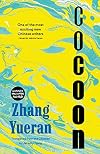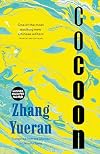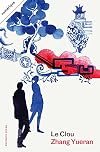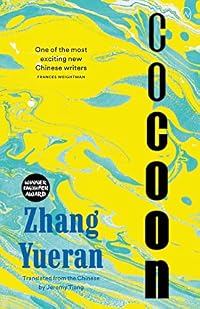
Cocoon
by Zhang Yueran
On This Page
Description
Cheng Gong and Li Jiaqi go way back. Both hailing from dysfunctional families, they grew up together in a Chinese provincial capital in the 1980s. Now, many years later, the childhood friends reunite and discover how much they still have in common. Both have always been determined to follow the tracks of their grandparents' generation to the heart of a mystery that perhaps should have stayed buried. What exactly happened during that rainy night in 1967, in the abandoned water tower? Zhang show more Yueran's layered and hypnotic prose reveals much about the unshakable power of friendship and the existence of hope. Hers is a unique fresh voice representing a new generation of important young writers from China, shedding a different light on the country's recent past. show lessTags
Recommendations






Member Reviews
Cocoon was first published in 2016 in Chinese, and sold over 120,000 copies: a massive success. Jeremy Tiang’s English translation was published by World Editions in 2022. I picked it up because the English translation was nominated for the Singapore Literature Prize in 2024 (Tiang is Singaporean) and I'm working my way through the list. Zhang had already made a name for herself with two prior books, but this is the one that established her reputation as a writer.
Zhang is part of a literary generation that grappled with the impact of the Cultural Revolution (1966-76) in their writing, or as it is called, ‘scar literature’. In Cocoon, this is through the lens of people born in the 1980s, looking back at their parents and show more grandparents who lived through the events of that time. The two protagonists, Jiaqi and Gong, were childhood friends over one year spent in Jinan, before Jiaqi moved away. They had a falling out at the time, but as adults in their 30s, unemployed and purposelessly drifting, they meet again. In chapters alternating their points of view, they slowly narrate to each other the secrets that they uncovered over the decades in between.
Jiaqi and Gong’s grandfathers used to work in the same hospital during the cultural revolution: one, a surgeon and the other, an administrator. Both were involved in some kind of incident at the ‘Dead Man’s Tower’ – a local dumping ground for corpses, resulting in Gong’s grandfather entering a coma from which he never recovered. Their parents’ generation, living with the memory of what their parents went through, failed Jiaqi and Gong. Both had fathers who abandoned them, mothers who were disinterested, disaffected relatives who raised them. Jiaqi as an adult is obsessed with tracking down every one her father knew, in a bid to understand why he left them. Her boyfriend leaves her over this, telling her, “You feed on that generation's scars. Like a vulture.” Gong is equally obsessed with uncovering who it was that put his grandfather in a coma. As they go along, they unpick longstanding grievances and pain: Jiaqi finds a rival who wrote an anonymous letter that cost her father his nascent literary career; Gong finds out his grandfather’s assailant is somewhat closer to home that he suspected.
Cocoon is intimately told, making the great political significance of these years very personal. Yueran Zhang captures the deep trauma that individuals experienced, told over three generations, and how it was passed down through families. It’s filled with global literary references that I caught – and probably many that I didn’t, because I’m not familiar with Chinese literature. Tiang’s translation is well done, reading naturally and easily. Recommended. show less
Zhang is part of a literary generation that grappled with the impact of the Cultural Revolution (1966-76) in their writing, or as it is called, ‘scar literature’. In Cocoon, this is through the lens of people born in the 1980s, looking back at their parents and show more grandparents who lived through the events of that time. The two protagonists, Jiaqi and Gong, were childhood friends over one year spent in Jinan, before Jiaqi moved away. They had a falling out at the time, but as adults in their 30s, unemployed and purposelessly drifting, they meet again. In chapters alternating their points of view, they slowly narrate to each other the secrets that they uncovered over the decades in between.
Jiaqi and Gong’s grandfathers used to work in the same hospital during the cultural revolution: one, a surgeon and the other, an administrator. Both were involved in some kind of incident at the ‘Dead Man’s Tower’ – a local dumping ground for corpses, resulting in Gong’s grandfather entering a coma from which he never recovered. Their parents’ generation, living with the memory of what their parents went through, failed Jiaqi and Gong. Both had fathers who abandoned them, mothers who were disinterested, disaffected relatives who raised them. Jiaqi as an adult is obsessed with tracking down every one her father knew, in a bid to understand why he left them. Her boyfriend leaves her over this, telling her, “You feed on that generation's scars. Like a vulture.” Gong is equally obsessed with uncovering who it was that put his grandfather in a coma. As they go along, they unpick longstanding grievances and pain: Jiaqi finds a rival who wrote an anonymous letter that cost her father his nascent literary career; Gong finds out his grandfather’s assailant is somewhat closer to home that he suspected.
Cocoon is intimately told, making the great political significance of these years very personal. Yueran Zhang captures the deep trauma that individuals experienced, told over three generations, and how it was passed down through families. It’s filled with global literary references that I caught – and probably many that I didn’t, because I’m not familiar with Chinese literature. Tiang’s translation is well done, reading naturally and easily. Recommended. show less
“Cocoon” by Zhang Yueran is a complex, lyrical and thoughtful novel – an exploration of the theme of memory and time, set against the backdrop of the recent history of China, particularly the Cultural Revolution.
The novel’s narrative is bookended by a frame story set in the present. Li Jiaqi returns to the town where she was brought up. Her ailing grandfather Li Jisheng is dying, and although he is uncommunicative, she spends his last days with him. Li Jisheng is a mysterious figure – a widely-respected doctor and part of the “establishment”, his past harbours unsavoury mysteries which led to a long-running rift between him and his son Li Muyuan, Li Jiaqi’s father. Jiaqi is obsessed with her family history, and show more particularly that of her professor father, who abandoned his wife and calling to reinvent himself as a businessman in Beijing. Jiaqi’s return to her roots is, in many respects, the final station on a long journey of (self) discovery. To conclude her investigation, she seeks out Cheng Gong, a childhood friend. These two characters – and their respective families – are connected by a dark thread involving a macabre crime which happened way back in 1967. The main part of the book is divided in segments alternating between the respective narratives of Li Jiaqi and Cheng Gong, both recounted in the first person.
This novel has a strange aura to it, a beguiling mixture of bleakness and nostalgia rendered in poetic prose. It presents an array of broken characters, a panorama of generations marked by cultural upheavals. Yet, it never feels cynical or nihilistic, and, against all odds, it conveys a sturdy belief in the redeeming aspects of friendship and love.
A word of warning though – “Cocoon” is touted as a “literary thriller”, but is more “literary” than “thriller”. This is one of those works which puts you immediately in the middle of things, and expects you to make the effort to piece together the clues and information provided. Indeed, it was only after the half-way mark that the parts of the puzzle started falling into place. Also, I felt that the storylines of the different families were (presumably purposely) so similar, that at times I had some difficulty distinguishing between the various strands of the plot. The final credits section says that Jeremy Tiang’s masterful translation has been “slightly abridged from the original, in agreement with the author”. I wonder whether the longer version would have made it any easier to follow. In any case, this was an intriguing and poignant novel.
https://endsoftheword.blogspot.com/2022/05/Cocoon-Zhang-Yueran-Jeremy-Tiang.html show less
The novel’s narrative is bookended by a frame story set in the present. Li Jiaqi returns to the town where she was brought up. Her ailing grandfather Li Jisheng is dying, and although he is uncommunicative, she spends his last days with him. Li Jisheng is a mysterious figure – a widely-respected doctor and part of the “establishment”, his past harbours unsavoury mysteries which led to a long-running rift between him and his son Li Muyuan, Li Jiaqi’s father. Jiaqi is obsessed with her family history, and show more particularly that of her professor father, who abandoned his wife and calling to reinvent himself as a businessman in Beijing. Jiaqi’s return to her roots is, in many respects, the final station on a long journey of (self) discovery. To conclude her investigation, she seeks out Cheng Gong, a childhood friend. These two characters – and their respective families – are connected by a dark thread involving a macabre crime which happened way back in 1967. The main part of the book is divided in segments alternating between the respective narratives of Li Jiaqi and Cheng Gong, both recounted in the first person.
This novel has a strange aura to it, a beguiling mixture of bleakness and nostalgia rendered in poetic prose. It presents an array of broken characters, a panorama of generations marked by cultural upheavals. Yet, it never feels cynical or nihilistic, and, against all odds, it conveys a sturdy belief in the redeeming aspects of friendship and love.
A word of warning though – “Cocoon” is touted as a “literary thriller”, but is more “literary” than “thriller”. This is one of those works which puts you immediately in the middle of things, and expects you to make the effort to piece together the clues and information provided. Indeed, it was only after the half-way mark that the parts of the puzzle started falling into place. Also, I felt that the storylines of the different families were (presumably purposely) so similar, that at times I had some difficulty distinguishing between the various strands of the plot. The final credits section says that Jeremy Tiang’s masterful translation has been “slightly abridged from the original, in agreement with the author”. I wonder whether the longer version would have made it any easier to follow. In any case, this was an intriguing and poignant novel.
https://endsoftheword.blogspot.com/2022/05/Cocoon-Zhang-Yueran-Jeremy-Tiang.html show less
“Cocoon” by Zhang Yueran is a complex, lyrical and thoughtful novel – an exploration of the theme of memory and time, set against the backdrop of the recent history of China, particularly the Cultural Revolution.
The novel’s narrative is bookended by a frame story set in the present. Li Jiaqi returns to the town where she was brought up. Her ailing grandfather Li Jisheng is dying, and although he is uncommunicative, she spends his last days with him. Li Jisheng is a mysterious figure – a widely-respected doctor and part of the “establishment”, his past harbours unsavoury mysteries which led to a long-running rift between him and his son Li Muyuan, Li Jiaqi’s father. Jiaqi is obsessed with her family history, and show more particularly that of her professor father, who abandoned his wife and calling to reinvent himself as a businessman in Beijing. Jiaqi’s return to her roots is, in many respects, the final station on a long journey of (self) discovery. To conclude her investigation, she seeks out Cheng Gong, a childhood friend. These two characters – and their respective families – are connected by a dark thread involving a macabre crime which happened way back in 1967. The main part of the book is divided in segments alternating between the respective narratives of Li Jiaqi and Cheng Gong, both recounted in the first person.
This novel has a strange aura to it, a beguiling mixture of bleakness and nostalgia rendered in poetic prose. It presents an array of broken characters, a panorama of generations marked by cultural upheavals. Yet, it never feels cynical or nihilistic, and, against all odds, it conveys a sturdy belief in the redeeming aspects of friendship and love.
A word of warning though – “Cocoon” is touted as a “literary thriller”, but is more “literary” than “thriller”. This is one of those works which puts you immediately in the middle of things, and expects you to make the effort to piece together the clues and information provided. Indeed, it was only after the half-way mark that the parts of the puzzle started falling into place. Also, I felt that the storylines of the different families were (presumably purposely) so similar, that at times I had some difficulty distinguishing between the various strands of the plot. The final credits section says that Jeremy Tiang’s masterful translation has been “slightly abridged from the original, in agreement with the author”. I wonder whether the longer version would have made it any easier to follow. In any case, this was an intriguing and poignant novel.
https://endsoftheword.blogspot.com/2022/05/Cocoon-Zhang-Yueran-Jeremy-Tiang.html show less
The novel’s narrative is bookended by a frame story set in the present. Li Jiaqi returns to the town where she was brought up. Her ailing grandfather Li Jisheng is dying, and although he is uncommunicative, she spends his last days with him. Li Jisheng is a mysterious figure – a widely-respected doctor and part of the “establishment”, his past harbours unsavoury mysteries which led to a long-running rift between him and his son Li Muyuan, Li Jiaqi’s father. Jiaqi is obsessed with her family history, and show more particularly that of her professor father, who abandoned his wife and calling to reinvent himself as a businessman in Beijing. Jiaqi’s return to her roots is, in many respects, the final station on a long journey of (self) discovery. To conclude her investigation, she seeks out Cheng Gong, a childhood friend. These two characters – and their respective families – are connected by a dark thread involving a macabre crime which happened way back in 1967. The main part of the book is divided in segments alternating between the respective narratives of Li Jiaqi and Cheng Gong, both recounted in the first person.
This novel has a strange aura to it, a beguiling mixture of bleakness and nostalgia rendered in poetic prose. It presents an array of broken characters, a panorama of generations marked by cultural upheavals. Yet, it never feels cynical or nihilistic, and, against all odds, it conveys a sturdy belief in the redeeming aspects of friendship and love.
A word of warning though – “Cocoon” is touted as a “literary thriller”, but is more “literary” than “thriller”. This is one of those works which puts you immediately in the middle of things, and expects you to make the effort to piece together the clues and information provided. Indeed, it was only after the half-way mark that the parts of the puzzle started falling into place. Also, I felt that the storylines of the different families were (presumably purposely) so similar, that at times I had some difficulty distinguishing between the various strands of the plot. The final credits section says that Jeremy Tiang’s masterful translation has been “slightly abridged from the original, in agreement with the author”. I wonder whether the longer version would have made it any easier to follow. In any case, this was an intriguing and poignant novel.
https://endsoftheword.blogspot.com/2022/05/Cocoon-Zhang-Yueran-Jeremy-Tiang.html show less
I liked the writing a lot, but the structure didn’t really work - the two voices weren’t differentiated, and the characters weren’t well enough defined to keep track of who was who.
Chat with Jeremy was fun, but the bookclub group is very stiff and formal. Not my tribe at all!
Chat with Jeremy was fun, but the bookclub group is very stiff and formal. Not my tribe at all!
Ratings
Members
- Recently Added By
Published Reviews
That Cocoon is a thriller—albeit a literary one—at all isn’t even immediately evident. Told mostly in flashback as a series of interlocking monologues from Jiaqi and Gong, the novel is much a story of the ongoing collision of three dysfunctional multi-generational families, riven by guilt, disappointment, drunkenness, violence, pride and unrequited love between generations and across them.
added by rasdhar
It is a magnificent, resonant book, both a detective story and a philosophical investigation, told through two narratives that merge in unconventional ways: time slips back and forth as three generations seem to meld into one another. At the novel’s heart are questions of justice, retribution, class rupture and historical reckoning. But Cocoon’s emotional power arises from a very show more particular phenomenon: the intimacy, and vast gulf, between fathers and their children. show less
added by rasdhar
Lists

Books featuring grandfathers
24 works; 3 members

Books Read in 2019
4,052 works; 110 members
Author Information

13+ Works 166 Members
Some Editions
Awards and Honors
Awards
Common Knowledge
- Canonical title
- Cocoon
- People/Characters
- Li Jiaqi; Cheng Gong
- Important places
- Nanyuan, China
- Original language
- Chinese
Classifications
- Genres
- Fiction and Literature, General Fiction, Historical Fiction
- DDC/MDS
- 895.136 — Literature & rhetoric Asian Literature Literatures of East and Southeast Asia Chinese Chinese fiction 2010–
- LCC
- PL2976 .Y84 .J5313 — Language and Literature Languages and literatures of Eastern Asia, Africa, Oceania Languages of Eastern Asia, Africa, Oceania Chinese language and literature Chinese literature Individual authors and works
- BISAC
Statistics
- Members
- 71
- Popularity
- 435,153
- Reviews
- 4
- Rating
- (3.83)
- Languages
- English, French, Russian
- Media
- Paper, Ebook
- ISBNs
- 4
- ASINs
- 3