On This Page
Description
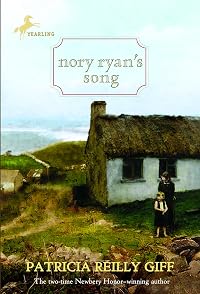
When a terrible blight attacks Ireland's potato crop in 1845, twelve-year-old Nory Ryan's courage and ingenuity help her family and neighbors survive.Tags
Recommendations





Member Recommendations
Member Reviews
Nory Ryan's Song is the first in a trilogy about an Irish family leaving Ireland for Brooklyn, New York amid the catastrophe of the potato famine. Nory Ryan and her family live in an Irish glen by the sea. There they are oppressed by an English landlord who is always seaching for the simplest excuse to evict his tenants to make way for grazing sheep, a far more profitable venture than collecting rent from struggling Irish families who are barely scraping by on the income from their potato fields.
When, in 1845, the potato crop succombs to a blight that rots the potatoes before they can be harvested, it doesn't take long for the landlord to come collecting the rent and finding money wanting, to begin evicting families who have nowhere to show more go. As food becomes scarcer and their neighbors begin to starve, Nory and her friend Sean Red Mallon know that there is one hope for them: to follow their older siblings to Brooklyn in America and a better life.
Nory Ryan's Song is great historical fiction for younger readers that will introduce them to a crushing time in Irish history and opens a window into the Irish immigrant experience. Even as an adult, I really appreciated this tale of strength in suffering at a time when the only way to save yourself was to plunge into the unknown with only hope to sustain you. The quickness with which Nory and her family as well as her neighbors go from ekeing out a living to starving to death was a revelation even to me. The cruelty of English landlords and their reasons for it was unbelievably despicable.
Nory is a great narrator and perfect glimpse into this time when, even as a child, you had to be strong and self-sacrificing to survive. Her love for her home and her neighbors are evident, but so are her hopes and dreams for an almost mythical better future in an America where, people say, the streets are paved with diamonds. Nory's life and the difficult choices she must make are a heartrending and convincing, as well as accurate, picture of the immigrant experience.
Nory Ryan's Song is a sad but also so hopeful story. I'm totally in love with Nory, and I know, despite my determination to stop buying books with such reckless abandon, that its sequel, Maggie's Door, is in my future. I can't wait to see what the journey to America has in store for the captivating Irish characters Giff has created to fill in the gaps in the story of her own family's origins. show less
When, in 1845, the potato crop succombs to a blight that rots the potatoes before they can be harvested, it doesn't take long for the landlord to come collecting the rent and finding money wanting, to begin evicting families who have nowhere to show more go. As food becomes scarcer and their neighbors begin to starve, Nory and her friend Sean Red Mallon know that there is one hope for them: to follow their older siblings to Brooklyn in America and a better life.
Nory Ryan's Song is great historical fiction for younger readers that will introduce them to a crushing time in Irish history and opens a window into the Irish immigrant experience. Even as an adult, I really appreciated this tale of strength in suffering at a time when the only way to save yourself was to plunge into the unknown with only hope to sustain you. The quickness with which Nory and her family as well as her neighbors go from ekeing out a living to starving to death was a revelation even to me. The cruelty of English landlords and their reasons for it was unbelievably despicable.
Nory is a great narrator and perfect glimpse into this time when, even as a child, you had to be strong and self-sacrificing to survive. Her love for her home and her neighbors are evident, but so are her hopes and dreams for an almost mythical better future in an America where, people say, the streets are paved with diamonds. Nory's life and the difficult choices she must make are a heartrending and convincing, as well as accurate, picture of the immigrant experience.
Nory Ryan's Song is a sad but also so hopeful story. I'm totally in love with Nory, and I know, despite my determination to stop buying books with such reckless abandon, that its sequel, Maggie's Door, is in my future. I can't wait to see what the journey to America has in store for the captivating Irish characters Giff has created to fill in the gaps in the story of her own family's origins. show less
Overall, I feel this book was quite the amazing read. It had its moments like most books where the story became slow and uninteresting. However, I still enjoyed reading this book and I would recommend it for anyone who has not yet read it.
I feel the author choose an amazing topic to write about. People hear about wars and conflicts all of the time, but it is rare to hear of such tragic events. Events like plagues or famines are rarely discussed in history classes. I know many people had read this book as a student, but I never had. Honestly, we hardly discussed the potato famine at all in any of my classes. Reading this book brought good insight and emotion about a topic that I had very little knowledge about. In the author’s note, show more Patricia Giff discusses more about the potato famine. “The Great Hunger of 1845 to 1852 was a tragic time for the Irish. Enough food to feed double the population was sent out across the sea, while an indifferent government ignored the starving masses.”
Another thing I really enjoyed about this book was the development of the characters, especially Nory Ryan. Although Nory was only 12 years old, it was very easy to relate to her. Many people have gone through situations (including me) where things are going good and you make ends meet, when suddenly a difficult situation arises. Although she is only 12 years old, she takes on the role of supporting her family and providing food to save them from starvation. Her father is taking longer than normal to return from fishing with money, so her family is also under the threat of being evicted from their home. With little money and food, Nory has to summon the courage, resilience, and resourcefulness to help her family survive. Through all of her hardships, the author has a great skill in developing deep emotion through her words. To develop a scene in my head to see Nory climbing trees to find bird eggs, it gives the reader a great sense of the desperation that everyone was feeling during that time.
In my eyes, the overall message was about family and resilience. How important it is to stay true to yourself and help your loved ones, especially during times of hardship. Hard times always bring people closer together, and I think this book is proof of it. Also, I feel this book gives a great sense to a unfamiliar reader of what life was like in Ireland during these hard times. show less
I feel the author choose an amazing topic to write about. People hear about wars and conflicts all of the time, but it is rare to hear of such tragic events. Events like plagues or famines are rarely discussed in history classes. I know many people had read this book as a student, but I never had. Honestly, we hardly discussed the potato famine at all in any of my classes. Reading this book brought good insight and emotion about a topic that I had very little knowledge about. In the author’s note, show more Patricia Giff discusses more about the potato famine. “The Great Hunger of 1845 to 1852 was a tragic time for the Irish. Enough food to feed double the population was sent out across the sea, while an indifferent government ignored the starving masses.”
Another thing I really enjoyed about this book was the development of the characters, especially Nory Ryan. Although Nory was only 12 years old, it was very easy to relate to her. Many people have gone through situations (including me) where things are going good and you make ends meet, when suddenly a difficult situation arises. Although she is only 12 years old, she takes on the role of supporting her family and providing food to save them from starvation. Her father is taking longer than normal to return from fishing with money, so her family is also under the threat of being evicted from their home. With little money and food, Nory has to summon the courage, resilience, and resourcefulness to help her family survive. Through all of her hardships, the author has a great skill in developing deep emotion through her words. To develop a scene in my head to see Nory climbing trees to find bird eggs, it gives the reader a great sense of the desperation that everyone was feeling during that time.
In my eyes, the overall message was about family and resilience. How important it is to stay true to yourself and help your loved ones, especially during times of hardship. Hard times always bring people closer together, and I think this book is proof of it. Also, I feel this book gives a great sense to a unfamiliar reader of what life was like in Ireland during these hard times. show less
I really enjoyed this book! This is because I went to Ireland this summer and this story was a non-fictional view of the potato famine, and I wanted to learn more about it. I think the plot portrayed a realistic version of what happened to families in Ireland in the 1840’s and 1850’s. The plot was well organized and suspenseful. The story is in the point of view of a young girl ,Nory and her families, struggle to stay alive during the potato famine. Her dad is away fishing to make meets end for the families house and farm, her siblings all pitch in to keep everything up and running, along with their grandfather who is slowly deteriorating. Her older sister ends up leaving for America, leaving the rest of her family behind to show more struggle. With the help of Nory’s neighbor, friends, and family they eventually make it through the story alive. This plot keeps you on your toes because the author throws a different struggle at the reader at least in almost ever chapter. For example, “Which was worse? Being alone in the dark house with Patch, or having nothing to eat but warm water with a few leaves floating around on top? No mussels were left, no limpets, no dulse. Stranger had come to the seas and taken everything, and now even then they were gone” (102). This leaves the reader wondering if the characters are going to survive without food, or even where will they find food now that it is all gone. I also enjoyed that this book contained the Gallic language within the English language, so the reader could learn some new vocabulary. For example, “Egg white for…I couldn’t remember what. Even warm cow dung for burns. Fuafar.” The big idea of this book was to never give up. show less
Nory Ryan's family has lived on Maidin Bay on the west coast of Ireland for generations, raising a pig and a few chickens, planting potatoes, getting by. Every year Nory's father goes away on a fishing boat and returns with the rent money for the English lord who owns their cottage and fields, the English lord bent upon forcing the Irish from their land so he can tumble the cottages and clear the fields for grazing. Times are never easy on Maidin Bay, but this year, a terrible blight attacks the potatoes. No crop means starvation. Twelve-year-old Nory must summon the courage and ingenuity to find food, to find hope, to find a way to help her family survive.
I had mixed feelings about the book Nory Ryan’s Song by Patricia Reilly Griff. This historical fiction divulges what really happened during the potato famine in Ireland. I liked this book for its point of view, language and the characters. However, I did not like the plot of the story. I liked the language of this story because the language was very engaging and descriptive. I felt as though I watched a movie instead of reading a book, because I could picture everything the book described, like Patrick’s Well, Patcheen and Anna. I could picture the houses they all lived in, and the fields when they were healthy and when they were dying. I also liked the point of view the story was told in. I liked seeing everything from Nory’s show more point of view. Even when she was depressed, she was still strong; she dug deep to find her inner strength that her family knew she had all along. She rarely put herself first, and when she did, she couldn’t be blamed because of the situations she was put in. Such as when she had to decide whether to buy more food or pay for a package, and she chose the package over food, because her big sister, Maggie had sent it to her, and she had been thinking about the package for weeks. I was pleasantly surprised how the book unfolded the truth: when we were told information, it was not a foreshadowing for a different outcome, or only Nory’s thoughts and opinions, instead it was always the truth. When she described a patterned horse’s footsteps, she knew it was Devlin, and she was always right! It wasn’t just what she was thinking, it was her thoughts that always ended up being facts. I thought that was an interesting way to reveal information. And I also liked this book for its characters. I liked how each of the characters unfolded in the book. How we were first introduced to Anna as an old witch, and turns out she was waiting to be the mother figure Nory needed. I liked the simple, innocent, almost flirtatious romance between Sean Red and Nory. They always had been each other’s rock and were never going to leave each other’s side. Even when Sean had to leave, he promised Nory that they would be together again someday in Brooklyn NY, on Smith Street. However, I did not enjoy the plot of the story, not because of the subject matter, but more from a reader’s satisfaction viewpoint. I wish it gave more closure. I wanted her to reach her family, there was always a sense of hopelessness around the corner, someone with the power to pull all their plans and hopes right out from under them, and how am I supposed to believe that Nory wasn’t given any trouble getting to her family in the end? I wished Anna had gone with her and Maeve, the dog. I wished we got to see all of them together in Brooklyn. Brooklyn was never discussed from the characters in Brooklyn’s point of view, only from the people of Ireland’s point of view, making it hard to believe that Brooklyn was truly a better place to be than Ireland. What if it was the same? I wanted to learn so much more of what happens next. I also wished we knew what was in her package, I wish we found out what had happened to Nory’s mother, like how she died. I wish Cat Neely had a better ending, or at least we would find out where they ended up. I had a love-hate relationship with this book. It was great in so many ways, but in other ways, I was left to guess in points at which I would have been better off knowing from the author what had happened. The big message of this story was quite pertinent. Patricia Reilly Griff’s big message to her readers is to never take anything you have for granted. History is trying to teach us a lesson, and today, we have the luxury to simply learn from it, so no one has to live through a famine like that again. Her goal was to learn everything she could during her recent trips to Ireland and pray that she could take what she had learned and tell it like it really happened so her children and grandchildren and everyone would know. She wanted everyone to know how valuable life is, and how never to take it for granted. show less
Nory Ryan’s Song is a very good book. It grasped me because it started off with action showing the real hardships that people in Ireland went through with losing their homes and all of their money. The characters were also very well developed and the reader immediately wants to know more about Anna and whether she really is a “witch woman”, Nory and her home life, and what will happen to all of those who owe rent to the British. The descriptions make the reader feel as if they are there with Nory, Patcheen, and Anna as they come across the black goo spreading across the potato fields and the smell it brings. I like the messages the book shows: you don’t really know someone until you see what they have gone through, and that if show more you are strong you can get through almost anything. Nory judged Anna as mean before working for her and finding out about her son, and she believed she wouldn’t survive until she realized she had to stay strong and help Patcheen until they were able to get on a boat and go to America. Another theme of the book is well-stated by Anna when she says “I never cared about that coin, I wanted to pass that healing on to you”, showing that helping others pays off far more than material things. That is something I have always believed in. show less
Interest/Reading Level: Grades 5-10
Synopsis:
Nory Ryan is teenager living in Ireland during the great potato famine mid-19th century. Her mother (Mam) is deceased; her father (Da) is a sailor working away from home, and her grandfather (Granda) takes care of the family. The Ryan’s rent their house and land from an English nobleman. He is in the process of taking back his properties as people cannot pay their rent. Times are very tough as the famine has taken food off of everyone’s table resulting in people fleeing the country. Nory’s oldest sister, Maggie, is one who leaves for Brooklyn, NY, USA in search of a better life. Maggie promises to get settled and send for the rest of the family. Celia, Nory’s next oldest sister, show more leaves the homestead to find Da. Nory takes care of her younger brother, Patch, and is a good neighbor to those in need. Granda takes a job away from home in hopes of earning some money to keep things together until Da returns. Nory is resourceful and trades what she can for food to keep Patch and herself alive. An old woman healer, Anna, teaches Nory her ways of using herbs and plants to heal the ills of neighbors. It is up to Nory to be resourceful to survive. Will Nory and Patch find Da and Celia? Will Granda return with money? Will the family ever be together again under one roof. The ending is a surprise.
Reflection:
Have an interest in Irish history this was interesting to see from the viewpoint and perspective a 12-year old girl. The west coast of Ireland can be brutal with the inclement weather and the potato famine only made a tough life harder. The beginning of the book provides a glossary with Gaelic/Irish words which helps the reader to feel the characters language. For years, I’ve used the word fuafar (means disgusting) and found it amusing as it is used as a descriptor for many situations. Anna, the old healer, finishes Nory’s fuafar shawl so she can take it with her to American. This is a very sweet scene giving Nory something very Irish and reflective of Anna so Nory does not forget her roots. Nory is a strong, female character that is inspirational and a testament to the will to live at all costs. She is fiercely protective of her family and those she loves. Not a bad theme for today’s middle school student. I did like the book although a tad sad. show less
Synopsis:
Nory Ryan is teenager living in Ireland during the great potato famine mid-19th century. Her mother (Mam) is deceased; her father (Da) is a sailor working away from home, and her grandfather (Granda) takes care of the family. The Ryan’s rent their house and land from an English nobleman. He is in the process of taking back his properties as people cannot pay their rent. Times are very tough as the famine has taken food off of everyone’s table resulting in people fleeing the country. Nory’s oldest sister, Maggie, is one who leaves for Brooklyn, NY, USA in search of a better life. Maggie promises to get settled and send for the rest of the family. Celia, Nory’s next oldest sister, show more leaves the homestead to find Da. Nory takes care of her younger brother, Patch, and is a good neighbor to those in need. Granda takes a job away from home in hopes of earning some money to keep things together until Da returns. Nory is resourceful and trades what she can for food to keep Patch and herself alive. An old woman healer, Anna, teaches Nory her ways of using herbs and plants to heal the ills of neighbors. It is up to Nory to be resourceful to survive. Will Nory and Patch find Da and Celia? Will Granda return with money? Will the family ever be together again under one roof. The ending is a surprise.
Reflection:
Have an interest in Irish history this was interesting to see from the viewpoint and perspective a 12-year old girl. The west coast of Ireland can be brutal with the inclement weather and the potato famine only made a tough life harder. The beginning of the book provides a glossary with Gaelic/Irish words which helps the reader to feel the characters language. For years, I’ve used the word fuafar (means disgusting) and found it amusing as it is used as a descriptor for many situations. Anna, the old healer, finishes Nory’s fuafar shawl so she can take it with her to American. This is a very sweet scene giving Nory something very Irish and reflective of Anna so Nory does not forget her roots. Nory is a strong, female character that is inspirational and a testament to the will to live at all costs. She is fiercely protective of her family and those she loves. Not a bad theme for today’s middle school student. I did like the book although a tad sad. show less
Members
- Recently Added By
Lists

Sonlight Books
1,487 works; 25 members

A Child's Book Tour of Ireland
62 works; 3 members

Childhood: Books for or about children in different cultures around the wor
345 works; 17 members

The Story of the World: Activity Book Four: The Modern Age
333 works; 2 members

Build Your Library Level 4
23 works; 1 member
Author Information

162+ Works 34,520 Members
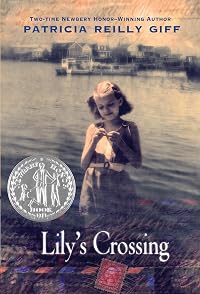
Patricia Reilly Giff was born in Brooklyn, New York on April 26, 1935. She knew she wanted to be a writer, even as a little girl. She received a Bachelor's of Arts in Education from Marymount College, a Master's of Arts from St. John's University, and a Professional Diploma in Reading and a Doctorate of Humane Letters from Hofstra University. show more After she graduated from college, she taught in the public schools in New York City until 1960 and then in the public schools in Elmont, New York from 1964 until 1971. She then became a reading consultant before finally, at the age of 40, deciding to write a book. She also worked as an educational consultant for Dell Yearling and Young Yearling Books and as an advisor and instructor to aspiring writers. She is the author of more than 60 children's books, as well as a member of the Society of Children's Book Writers. Together with her husband, Giff opened "The Dinosaur's Paw," a children's bookstore named after one of her own stories. She is the author of the Polk Street School books. Lily's Crossing, about the homefront during World War II, was named a Newberry Honor Book by the American Library Association as well as an ALA Notable Book for Children. The novel also won the Boston Globe-Horn Book Award Honor. Pictures of Hollis Woods was also named a Newberry Honor Book and Nory Ryan's Song was named an ALA Best Book for Young Adults. (Bowker Author Biography) show less
Awards and Honors
Awards
Distinctions
Series

Common Knowledge
- Canonical title
- Nory Ryan's Song
- Original publication date
- 2000
- People/Characters
- Nory Ryan; Sean Red Mallon; Celia Ryan; Anna Donnelly; Lord Cunningham; Maggie Ryan (show all 10); Patrick (Patch) Ryan (Patch); Devlin; Granda; Da
- Important places
- Maidin Bay, County Galway, Ireland (fictional); Ballylee, County Galway, Ireland (as Ballilee); 416 Smith Street, Brooklyn, New York, New York, USA; Galway, County Galway, Ireland
- Important events
- Irish Potato Famine (1845 | 1852)
- First words
- Someone was calling.
"Nor-ry. Nor-ry Ryan." - Quotations
- I cupped his cheeks in my hands, kissed his tiny nose. "You will remember something, when you are an old man like Granda." I said it slowly, each word above the noise of his crying. "You will say that your own Nory sent you... (show all) because she loved you. You will say that no one ever loved you more."
- Last words
- (Click to show. Warning: May contain spoilers.)416 Smith Street, Brooklyn.
Milk in cans, no one hungry.
A song.
All of us together. Free.
America.
Classifications
Statistics
- Members
- 2,160
- Popularity
- 9,426
- Reviews
- 37
- Rating
- (3.78)
- Languages
- Dutch, English
- Media
- Paper, Audiobook, Ebook
- ISBNs
- 21
- UPCs
- 1
- ASINs
- 7