On This Page
Description
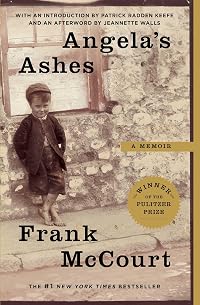
A Pulitzer Prize–winning, #1 New York Times bestseller, Angela's Ashes is Frank McCourt's masterful memoir of his childhood in Ireland."When I look back on my childhood I wonder how I managed to survive at all. It was, of course, a miserable childhood: the happy childhood is hardly worth your while. Worse than the ordinary miserable childhood is the miserable Irish childhood, and worse yet is the miserable Irish Catholic childhood."
So begins the luminous memoir of Frank McCourt, born in show more Depression-era Brooklyn to recent Irish immigrants and raised in the slums of Limerick, Ireland. Frank's mother, Angela, has no money to feed the children since Frank's father, Malachy, rarely works, and when he does he drinks his wages. Yet Malachy—exasperating, irresponsible, and beguiling—does nurture in Frank an appetite for the one thing he can provide: a story. Frank lives for his father's tales of Cuchulain, who saved Ireland, and of the Angel on the Seventh Step, who brings his mother babies.
Perhaps it is story that accounts for Frank's survival. Wearing rags for diapers, begging a pig's head for Christmas dinner and gathering coal from the roadside to light a fire, Frank endures poverty, near-starvation and the casual cruelty of relatives and neighbors—yet lives to tell his tale with eloquence, exuberance, and remarkable forgiveness.
Angela's Ashes, imbued on every page with Frank McCourt's astounding humor and compassion, is a glorious book that bears all the marks of a classic. show less
Tags
Recommendations
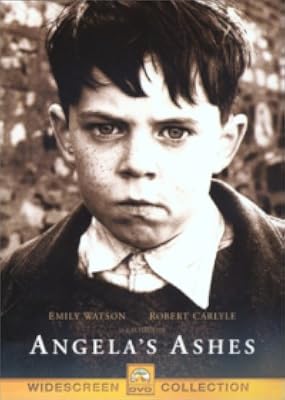
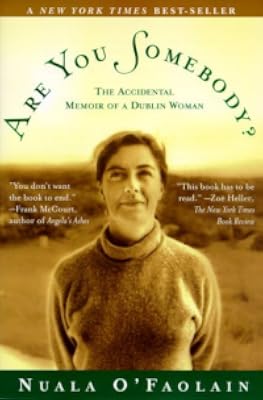
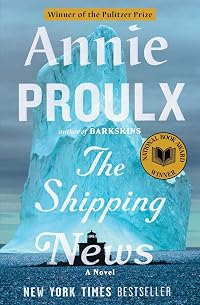
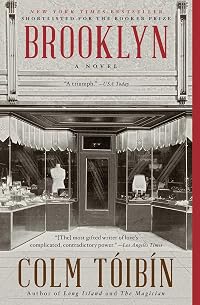
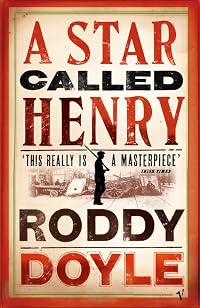



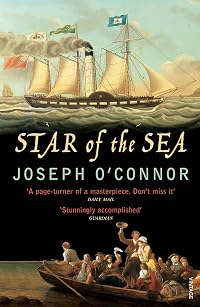

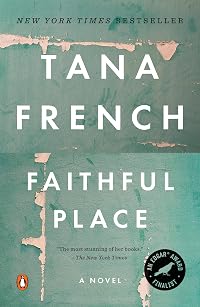
Member Recommendations
Joles Written in the same style as Angela's Ashes, this deals with Frank's teaching in New York.
52

olyvia Un reel bijoux de tendresse et d'emotion , a ne pas rater pour ceux qui ont aimé les cendres d'angela .
20
Nickelini The Hiding Place is often compared to Angela's Ashes. The settings and subject matter are indeed very similar; however, McCourt's book has a lot of humour written between the depressing bits. And the Hiding Place is more creative and literary. Two very different approaches to poverty in the British Isles.
20
raton-liseur L’Etoile des mers est un roman, il décrit l’Irlande rurale, les luttes politiques du XIXème siècle. Mais ce ne sont pas ses seules différences avec les Cendres d’Angela. C’est aussi et surtout un régal de lecture, tant par sa trame que son écriture et par son intérêt historique.
20
dpf2102 Similar stories of childhood loss.
Nickelini Both stories are about young men growing up in poverty in Ireland.
11


Member Reviews
I wanted to love this book--so many whose opinions I respect adored it beyond words. I actually saw the film and remember liking it a lot. At first I thought I would love it. The book is McCourt's memoir of his miserable childhood in Ireland. With an emphasis on misery. The first pages really pulled me in. It had the kind of prose that makes you think, "this is a great book." It reads likes a novel, is crafted like a novel. But the book has lots of modernist touches such as long passages reporting the speech of people--without quotation marks and sometimes without even paragraphing--minimalist punctuation, use of the present tense, parts that could be called stream of consciousness... I admit this is a style I find off-putting, in spite show more of it being rather appropriate for a book set in the land of James Joyce.
But I think it was the sheer numbing misery, combined with the creative non-fiction embellishments that eventually really got to me. McCourt began by writing, “When I look back on my childhood I wonder how I managed to survive at all.” Given what he related, I did too. And it's not very credible as non-fiction given McCourt purported to remember in detail events in his early childhood fifty years later--which along with the consciously literary style undercut for me a lot of his credibility, making me wonder how much of the account was exaggerated. (Those who knew the McCourts in Limerick also fiercly dispute a lot of his stories.)
I know for a lot of people it was precisely the style they loved. I know for a lot of people, despite the dire poverty related, they found this book uplifting rather than depressing. They found lots of humor in it rather than finding it relentlessly grim with people (characters?) impossible to like. I detested Frank's father--and his mother wasn't a prize either. And I found Frank more bitter and whiny than charming. I've long given up trying to give objective ratings. Maybe the book deserves its acclaim, but if anything, my rating is generous. I didn't find it "OK" as befits a Goodreads two stars. I disliked it. I started it thinking it a joy to read but I quickly found it a chore to read. show less
But I think it was the sheer numbing misery, combined with the creative non-fiction embellishments that eventually really got to me. McCourt began by writing, “When I look back on my childhood I wonder how I managed to survive at all.” Given what he related, I did too. And it's not very credible as non-fiction given McCourt purported to remember in detail events in his early childhood fifty years later--which along with the consciously literary style undercut for me a lot of his credibility, making me wonder how much of the account was exaggerated. (Those who knew the McCourts in Limerick also fiercly dispute a lot of his stories.)
I know for a lot of people it was precisely the style they loved. I know for a lot of people, despite the dire poverty related, they found this book uplifting rather than depressing. They found lots of humor in it rather than finding it relentlessly grim with people (characters?) impossible to like. I detested Frank's father--and his mother wasn't a prize either. And I found Frank more bitter and whiny than charming. I've long given up trying to give objective ratings. Maybe the book deserves its acclaim, but if anything, my rating is generous. I didn't find it "OK" as befits a Goodreads two stars. I disliked it. I started it thinking it a joy to read but I quickly found it a chore to read. show less
Non-fiction memoir about Frank McCourt’s family from his birth in 1930 to 1949. After being born in Brooklyn in 1930, Frank’s father, Malachy, has troubles with alcohol and with finding work, and, during the Great Depression, decides to return to Ireland. The alcohol and work issues continue in Ireland, and the growing family lives in poverty.
The titular Angela is Frank’s long-suffering mother. She endures a seemingly never-ending series of hardships, including her husband’s alcoholism, abandonment, and the deaths of multiple children. McCourt gives us an idea of her character: “You never know when you might come home and find Mam sitting by the fire chatting with a woman and a child, strangers. Always a woman and child. Mam show more finds them wandering the streets and if they ask, Could you spare a few pennies, miss? her heart breaks. She never has money so she invites them home for tea and a bit of fried bread and if it’s a bad night she’ll let them sleep by the fire on a pile of rags in the corner. The bread she gives them always means less for us and if we complain she says there are always people worse off and we can surely spare a little from what we have.”
While the misery is vividly portrayed, McCourt offsets it with subtle humor. For example, his father would drunkenly awaken his children during the night, singing patriotic songs and making them pledge to die for Ireland, leading Frank to observe: “The master says it’s a glorious thing to die for the Faith and Dad says it’s a glorious thing to die for Ireland and I wonder if there’s anyone in the world who would like us to live.” At one point, his mother wants him to learn to dance, leading to: how I can die for Ireland if I have to sing and dance for Ireland, too. I wonder why they never say, You can eat sweets and stay home from school and go swimming for Ireland.”
It is written from a child’s perspective in present tense. Much of the narrative is extremely detailed, and it may be too much description of misery for some people. I found it poignant, filled with both tragedy and humor. I particularly enjoyed all references to books and storytelling McCourt encountered in his youth, as it would be very easy for people living under dire conditions to never be exposed to literature. show less
The titular Angela is Frank’s long-suffering mother. She endures a seemingly never-ending series of hardships, including her husband’s alcoholism, abandonment, and the deaths of multiple children. McCourt gives us an idea of her character: “You never know when you might come home and find Mam sitting by the fire chatting with a woman and a child, strangers. Always a woman and child. Mam show more finds them wandering the streets and if they ask, Could you spare a few pennies, miss? her heart breaks. She never has money so she invites them home for tea and a bit of fried bread and if it’s a bad night she’ll let them sleep by the fire on a pile of rags in the corner. The bread she gives them always means less for us and if we complain she says there are always people worse off and we can surely spare a little from what we have.”
While the misery is vividly portrayed, McCourt offsets it with subtle humor. For example, his father would drunkenly awaken his children during the night, singing patriotic songs and making them pledge to die for Ireland, leading Frank to observe: “The master says it’s a glorious thing to die for the Faith and Dad says it’s a glorious thing to die for Ireland and I wonder if there’s anyone in the world who would like us to live.” At one point, his mother wants him to learn to dance, leading to: how I can die for Ireland if I have to sing and dance for Ireland, too. I wonder why they never say, You can eat sweets and stay home from school and go swimming for Ireland.”
It is written from a child’s perspective in present tense. Much of the narrative is extremely detailed, and it may be too much description of misery for some people. I found it poignant, filled with both tragedy and humor. I particularly enjoyed all references to books and storytelling McCourt encountered in his youth, as it would be very easy for people living under dire conditions to never be exposed to literature. show less
My father and mother should have stayed in New York where they met and married and where I was born. Instead, they returned to Ireland when I was four, my brother, Malachy three, the twins, Oliver and Eugene, barely one, and my sister, Margaret, dead and gone.
When I look back on my childhood I wonder how I survived at all. It was, of course, a miserable childhood: the happy childhood is hardly worth your while. Worse than the ordinary miserable childhood is the miserable Irish childhood, and worse yet is the miserable Irish Catholic childhood.
After 30 years teaching in New York City's public schools, Frank McCourt turned to writing. [Angela's Ashes], his first book, published as a memoir, was an enormous success, selling more than 3 show more million copies, earning the 1997 Pulitzer Prize for biography and a 1996 National Book Critics Circle Award, and making him a millionaire.The opening paragraphs (quoted above) set the tone.
Malachy McCourt Sr. was born in Northern Ireland, his wife Angela (Sheehan) in Limerick. Malachy couldn't find work anywhere in Ireland because of his Northern Irish accent and heritage, so the family settled in Limerick near Angela's mother and sister.They sheltered in wretched slum dwellings, a room with one bed for two adults and four children. Ostensibly, they lived on welfare and on charity, both only grudgingly awarded. An alcoholic, Malachy would drink up whatever money came into his hands.Ultimately, the twins perished, but sons Michael and Alphonso were born.
The book abounds with tales of squalid living conditions, absence of sanitation, meager and nutrition-free meals, cheating merchants, cold and judgmental neighbors, charity with strings, cold and judgmental priests.
Education is a central theme in Angela's Ashes. Marooned in Limerick, McCourt's mam enrolls him in Leamy's National School.
There are seven masters…and they all have leather straps, canes, blackthorn sticks. They hit you with the sticks on the shoulders, the back, the legs, and, especially, the hands. If they hit you on the hands it's called a slap. They hit you if you're late, if you have a leaky nib on your pen, if you laugh, if you talk, and if you don't know things.
They hit you if you don't know why God made the world, if you don't know the patron saint of Limerick, if you can't recite the Apostles' Creed, if you can't add nineteen to forty-seven, if you can't subtract nineteen from forty-seven, if you don't know the chief towns and products of the thirty-two counties of Ireland, if you can't find Bulgaria on the wall map of the world that's blotted with spit, snot, and blobs of ink thrown by angry pupils expelled forever.
They hit you if you can't say your name in Irish, if you can't say the Hail Mary in Irish, if you can't ask for the lavatory pass in Irish.
McCourt's memories of Leamy's School brought to my mind the same sorts of goads to learning in Joyce's [Portrait of the Artist as a Young Man] and Dickens's [David Copperfield]. Spare the rod and spoil the child, indeed. From the schoolmasters of Dickens in the 1850s to those of McCourt in the 1940s, the "incentives" didn't change. Educators are very slow learners.
It's no wonder, then, that young Frankie wanted to leave school and simply get a job. Any money that got into his father's hands was spent at a pub. Money Frankie earned would go straight to his mam. So he did work while still in school: tough, physical labor. On Saturdays, he helped a nearly lame Mr.Hannon to deliver sacks of coal and peat, and Hannon delivered him some heart-felt advice: "School, Frankie, school. The books, the books, the books. Get out of Limerick before your legs rot and your mind collapses entirely."
Later on, Frank was beguiled by boys he saw delivering telegrams, bicycling around Limerick, earning money, occasionally getting tips from message recipients. Leamy's head master. Mr. O'Halloran, tries to keep him in school:
[Mrs. McCourt] comes to see him [O'Halloran] and he talks to her in the hallway. He tells her that her son Frank must continue school. He must not fall into the messenger boy trap. That leads nowhere. Take him up to the Christian Brothers, tell them I sent you, tell them he is a bright boy and ought to be going to secondary school and beyond that, university.
…She knocks on the door at the Christian Brothers and says she wants to see the superior, Brother Murray. He comes to the door, looks at my mother and me and says, What?
Mam says, This is my son, Frank. Mr. O'Halloran at Leamy's says he's bright and would there be any chance of getting him in here for secondary school?
We don't have room for him, says Brother Murray and closes the door in our faces.
So much for an Irish education.
The success of the book spawned harsh criticism. McCourt's recollections were questioned and disputed. The McCourts were never all that poor, the conditions were never that squalid, the neighbors never that cruel. McCourt's response? "I told my own story. I wrote about my situation, my family, my parents, that's what I experienced and what I felt."
This an excellent book, well-written, involving, ultimately rewarding. show less
"Don't make me keep reading this!" I told my mother. If one more kid in the family dies of hunger and malnutrition, I'm putting the book in the incinerator." She insisted that I keep on, and I'm glad she did. Altough McCourt's description of his "miserable Irish Catholic childhood" was indeed as miserable as can be imagined, his personal journey, final redemption and triumph were inspiring.
the abject poverty in this book is pretty stunning. i'm not even really sure how he manages to write about something so stark and hard in a way that makes it readable and even fast-paced, although nothing actually of note happens. it's year after year of their father drinking the welfare money and the family suffering through starvation and illness and mostly unable to do more or get more help. and yet it isn't "just" a poverty story, at all. it was particularly tough to read about the structure of their society and how much harder that makes it to get help. the way they talk to you and make you talk to them, in the aide office and in the catholic school. the way they make you feel bad (and like you're going to hell, which for them was show more a scary thing to imagine) for doing anything that children being children do; it's a terrible way to control people...it's abuse, frankly. this seemed worse to me than other stories i've heard about growing up catholic. maybe it was because they were in limerick, ireland, or maybe i'm older, or maybe the story is actually worse. either way, this was a church and its representatives abusing an entire town of people. (verbally, emotionally, probably physically. )
but really it's his story of poverty that hits so hard and that i expect stays with people. he's describing the struggles of his family as he saw them as a child, not looking back as an adult on how he managed to survive it. it's all happening to a child as he explains the situation to us. he talks about the births and deaths of his young siblings as a child would, not in the language but in the ideas. seeing his father through his eyes initially helped me to have compassion for him, but eventually i couldn't bring myself to feel for a man who - even through the lens of addiction as a disease - could drink away every bit of help given to his family, while they literally starved to death or nearly froze, or were constantly ill.
there are two things that i keep coming back to, though. the first is the part where frankie is older and working his job as a telegraph boy, and he goes to lanes that are even worse off than where he lived. instead of one hole for the street to use as a lavatory (right outside his window - so that for parts of the year that room overflowed with waste) this street has no lavatory and the people just dump their waste in a river in the street, so the street runs with waste all the time. it seems there is no shortage of examples of the poverty these people lived through. it also felt like a blow to read a couple of times, in case the first time or two didn't really penetrate, how the people were so grateful for hitler and the german front, because the war provided an opportunity to make some wages, and actually eat food for a change. they felt hitler was their only chance to live, and they wanted the war to go on forever because how would they eat again without him?
it's not lyrically or beautifully written, and yet the writing is something special. a book this full of desperation and misery shouldn't be this easy to read. but it is also one of hope, as we know he makes it out and survives, and we want to know how, and if his family follows him to america or if he takes care of his brothers after his mother presumably (from the title) dies. we don't get all the answers - i guess i'll have to read the following memoirs to find out - but we are compelled to keep reading. it's really not as hard as it should be with a story this bleak and grim, which says something about the author and his writing. show less
but really it's his story of poverty that hits so hard and that i expect stays with people. he's describing the struggles of his family as he saw them as a child, not looking back as an adult on how he managed to survive it. it's all happening to a child as he explains the situation to us. he talks about the births and deaths of his young siblings as a child would, not in the language but in the ideas. seeing his father through his eyes initially helped me to have compassion for him, but eventually i couldn't bring myself to feel for a man who - even through the lens of addiction as a disease - could drink away every bit of help given to his family, while they literally starved to death or nearly froze, or were constantly ill.
there are two things that i keep coming back to, though. the first is the part where frankie is older and working his job as a telegraph boy, and he goes to lanes that are even worse off than where he lived. instead of one hole for the street to use as a lavatory (right outside his window - so that for parts of the year that room overflowed with waste) this street has no lavatory and the people just dump their waste in a river in the street, so the street runs with waste all the time. it seems there is no shortage of examples of the poverty these people lived through. it also felt like a blow to read a couple of times, in case the first time or two didn't really penetrate, how the people were so grateful for hitler and the german front, because the war provided an opportunity to make some wages, and actually eat food for a change. they felt hitler was their only chance to live, and they wanted the war to go on forever because how would they eat again without him?
it's not lyrically or beautifully written, and yet the writing is something special. a book this full of desperation and misery shouldn't be this easy to read. but it is also one of hope, as we know he makes it out and survives, and we want to know how, and if his family follows him to america or if he takes care of his brothers after his mother presumably (from the title) dies. we don't get all the answers - i guess i'll have to read the following memoirs to find out - but we are compelled to keep reading. it's really not as hard as it should be with a story this bleak and grim, which says something about the author and his writing. show less
Frank McCourt relives his early life in this memoir, covering from when he was a very young boy until his teenage years. The book opens with his family living in squalor in 1930s New York, dealing with poverty so deep that he and his younger brothers are near starvation. Things come to a head when his infant sister dies. His immigrant parents opt to return home to Ireland, in hopes of things being better there. Instead, they meet with more poverty, illness, and death as his mother struggles to feed the family while his father repeatedly spends his wages on alcohol and loses jobs as a result of drunken nights. As Frank ages, he endeavors to find ways to earn money on his own, eventually deciding that his best option is to return to show more America someday.
Despite the seemingly depressing nature of this book, I found it riveting. It was one of those books that once I started it, I didn't want to put it down. McCourt writes in such a lovely way -- the text flows easily; he captures the young child's voice so well and slowly changes the tone as his young self ages; he subtly connects the book to the wide world of literature with references to legends, poetry, and more; and he infuses so much humor throughout the book that the horrible situations seem at least slightly less awful.
There are many interesting people that we meet throughout the book from McCourt's Uncle Pa Keating who doesn't "give a fiddler's fart" about anything, to his Uncle Ab Sheehan who was dropped on his head as a baby and is a little off as a result, to his neighbor Nora Molloy who periodically checks herself into the lunatic asylum for a rest from her woes of dealing with raising her family in abject conditions. There are also numerous other neighbors, classmates, teachers, priests, and so forth who young Frankie meets and associates with, each with their own unique personality traits.
This title was one from my book club, and it made for a lively discussion on all types of topics. I highly recommend it as an interesting read that puts a lot into perspective. My only reservation is for those who are squeamish, as there is quite a bit of talk about bodily functions, death, and other tragedies. show less
Despite the seemingly depressing nature of this book, I found it riveting. It was one of those books that once I started it, I didn't want to put it down. McCourt writes in such a lovely way -- the text flows easily; he captures the young child's voice so well and slowly changes the tone as his young self ages; he subtly connects the book to the wide world of literature with references to legends, poetry, and more; and he infuses so much humor throughout the book that the horrible situations seem at least slightly less awful.
There are many interesting people that we meet throughout the book from McCourt's Uncle Pa Keating who doesn't "give a fiddler's fart" about anything, to his Uncle Ab Sheehan who was dropped on his head as a baby and is a little off as a result, to his neighbor Nora Molloy who periodically checks herself into the lunatic asylum for a rest from her woes of dealing with raising her family in abject conditions. There are also numerous other neighbors, classmates, teachers, priests, and so forth who young Frankie meets and associates with, each with their own unique personality traits.
This title was one from my book club, and it made for a lively discussion on all types of topics. I highly recommend it as an interesting read that puts a lot into perspective. My only reservation is for those who are squeamish, as there is quite a bit of talk about bodily functions, death, and other tragedies. show less
A beautifully written memoir of childhood poverty in 1920s/30s Ireland (Limerick). It is well summarised in its opening:
"When I look back on my childhood I wonder how I managed to survive at all. It was, of course, a miserable childhood: the happy childhood is hardly worth your while. Worse than the ordinary miserable childhood is the miserable Irish childhood, and worse yet is the miserable Irish Catholic childhood."
Frank McCourt's account of his deprived childhood manages to maintain humour, whilst not losing the pathos in the more tragic events in his childhood (including the loss of siblings and the absence of a feckless father).
Although there has been some controversy regarding the veracity of these memoirs, I feel sure it is an show more accurate reflexion of the sort of conditions many experienced in Ireland in the early part of the 20th century. The brutality of the Catholic church (as well as some more compassionate moments), also rings true.
Frank McCourt is very much a story-teller, and the book is very readable. show less
"When I look back on my childhood I wonder how I managed to survive at all. It was, of course, a miserable childhood: the happy childhood is hardly worth your while. Worse than the ordinary miserable childhood is the miserable Irish childhood, and worse yet is the miserable Irish Catholic childhood."
Frank McCourt's account of his deprived childhood manages to maintain humour, whilst not losing the pathos in the more tragic events in his childhood (including the loss of siblings and the absence of a feckless father).
Although there has been some controversy regarding the veracity of these memoirs, I feel sure it is an show more accurate reflexion of the sort of conditions many experienced in Ireland in the early part of the 20th century. The brutality of the Catholic church (as well as some more compassionate moments), also rings true.
Frank McCourt is very much a story-teller, and the book is very readable. show less
Members
- Recently Added By
Published Reviews
ThingScore 94
A spunky, bittersweet memoir.
added by Shortride
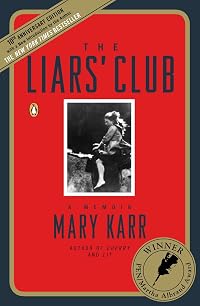
Frank McCourt waited more than four decades to tell the story of his childhood, and it's been well worth the wait. With ''Angela's Ashes,'' he has [written] a book that redeems the pain of his early years with wit and compassion and grace. He has written a book that stands with ''The Liars Club'' by Mary Karr and Andre Aciman's ''Out of Egypt'' as a classic modern memoir.
added by Shortride
For the most part, [McCourt's] style is that of an Irish-American raconteur, honorably voluble and engaging. He is aware of his charm but doesn't disgracefully linger upon it. Induced by potent circumstances, he has told his story, and memorable it is.
added by Shortride
Lists

Best Autobiographies and Memoirs
370 works; 67 members

Best Biographies, Autobiographies and Memoirs
465 works; 160 members

100 Biographies & Memoirs to Read in a Lifetime
42 works; 18 members

100 books to read in a lifetime
102 works; 37 members

100 New Classics
101 works; 13 members

Dysfunctional Families
133 works; 7 members

Boeken.
10 works; 1 member

Memoirs Heal the Soul
22 works; 1 member

Rory Gilmore Challenge 1-100
27 works; 1 member

Mustich's 1000 Books to Read Before You Die: A Life Changing List
1,001 works; 20 members
Rory Gilmore Reading Challenge
34 works; 2 members

BitLife
212 works; 4 members

BBC World Book Club
267 works; 5 members

Books Set in New York City
127 works; 22 members

Stephen King's 'On Writing' reading list
95 works; 4 members

Recommended Reading : 600 Classics Reviewed, Editors of Salem Press, 2015
634 works; 6 members
Physical TBR List
68 works; 1 member

Rory Gilmore Book Club
193 works; 5 members

Non-Fiction
68 works; 1 member

Read in 2001–2002
29 works; 1 member
The Complete Rory Gilmore Reading List
506 works; 5 members

Five star books
1,767 works; 110 members

20th Century Literature
1,161 works; 55 members

Read the book and saw the movie
1,170 works; 195 members

Se till mig som liten är...
26 works; 2 members

Books featuring alcoholics
103 works; 18 members

The Immigrant's Stories
74 works; 19 members

Tour of Ireland
40 works; 11 members

Carole's List
445 works; 13 members
Best Family Stories
241 works; 22 members

BBC Radio 4 Bookclub
341 works; 13 members

Blue Pyramid 1,276 Best Books of All Time
1,248 works; 32 members

1990s
309 works; 17 members

Books Featured on Readers' Review of the Diane Rehm Show
161 works; 8 members

Writers at Risk
106 works; 17 members

Fiction about the Working Class
74 works; 10 members

Adult Books for YA Readers
194 works; 6 members

Books Featured on Gilmore Girls
307 works; 21 members

Unread books
1,063 works; 83 members

A Good Read (Radio 4)
287 works; 1 member

World Book Club (BBC World Service)
212 works; 1 member
Author Information

23+ Works 39,583 Members
Frank McCourt was born in Brooklyn, New York on August 13, 1930 to Irish immigrant parents. When he was four, his family moved back to Ireland. His father abandoned the family to a life of poverty. He attended school until the age of 14, at which point he was forced to drop out to help support the family. In 1949, he returned to the United States, show more where he worked odd jobs until being drafted into the U. S. Army during the Korean War. Using the GI Bill, he received a degree in English and education from New York University. He worked at several high schools throughout New York City including McKee Vocational and Technical High School, Seward Park High School, and Stuyvesant High School. During this time, he would occasionally write articles for newspapers and magazines. He retired from teaching in 1994. His first memoir, Angela's Ashes, was published in 1996. It won the National Book Critics Circle award in 1996 and the Pulitzer Prize in 1997. His other memoirs included 'Tis and Teacherman. He died on July 19, 2009 at the age of 78. (Bowker Author Biography) show less
Some Editions
Awards and Honors
Awards
Distinctions
Notable Lists
Whitcoulls Top 100 Books (41 – 2008)
Whitcoulls Top 100 Books (56 – 2010)
Series

Belongs to Publisher Series
Work Relationships
Is contained in
Has the adaptation
Is abridged in
Common Knowledge
- Canonical title
- Angela's Ashes
- Original title
- Angela's Ashes
- Original publication date
- 1996
- People/Characters
- Frank McCourt; Angela McCourt; Malachy McCourt
- Important places
- Brooklyn, New York, New York, USA; County Limerick, Ireland
- Related movies
- Angela's Ashes (1999 | IMDb)
- Dedication
- This book is dedicated to my brothers,
Malachy, Michael, Alphonsus.
I learn from you, I admire you and I love you. - First words
- My father and mother should have stayed in New York where they met and married and where I was born.
- Quotations
- Shakespeare is like mashed potatoes, you can never get enough of him.
When I look back on my childhood I wonder how I survived it all. It was, of course, a miserable childhood: the happy childhood is hardly worth your while. Worse than the ordinary miserable childhood is the miserable Irish chi... (show all)ldhood, and worse yet is the miserable Irish Catholic childhood. - Last words
- (Click to show. Warning: May contain spoilers.)- Lo es.
- Blurbers
- King, Nia; Karr, Mary; Cahill, Thomas; Hamill, Pete; Friedman, Vanessa V.; Gordon, Mary (show all 23); Jones, Malcolm, Jr.; Sullivan, Robert; Freedman, Samuel; O'Haire, Patricia; Matthias, Heddy-Dale; Harrison, Kathyrn; Morrissey, May; Madrigal, Alix; Donahue, Deirdre; Breasted, Mary; Caldwell, Gail; Lannon, Linnea; Fichtner, Margaria; Finn, Peter; Kennedy, William; Keneally, Thomas; Flanagan, Thomas
- Original language
- English
- Canonical DDC/MDS
- 929.20899162073; 941.940822092; 813.54
- Canonical LCC
- E184.I6
Classifications
Statistics
- Members
- 23,623
- Popularity
- 211
- Reviews
- 352
- Rating
- (4.00)
- Languages
- 21 — Catalan, Czech, Danish, Dutch, English, Estonian, Finnish, French, German, Greek, Hungarian, Italian, Japanese, Lithuanian, Norwegian (Bokmål), Norwegian, Polish, Portuguese, Spanish, Swedish, Turkish
- Media
- Paper, Audiobook, Ebook
- ISBNs
- 171
- UPCs
- 7
- ASINs
- 73