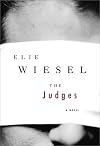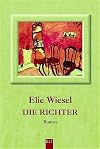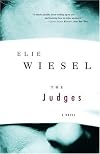
The Judges
by Elie Wiesel
On This Page
Description
A plane en route from New York to Tel Aviv is forced down by bad weather. A nearby house provides refuge for five of its passengers: Claudia, who has left her husband and found new love; Razziel, a religious teacher who was once a political prisoner; Yoav, a terminally ill Israeli commando; George, an archivist who is hiding a Holocaust secret that could bring down a certain politician; and Bruce, a would-be priest turned philanderer. Their host - an enigmatic and disquieting man who calls show more himself simply the Judge - begins to interrogate them, forcing them to face the truth and meaning of their lives. Soon he announces that one of them-the least worthy - will die. show lessTags
Recommendations



























Member Reviews
'No Exit' meets Kafka in allegory of memory and loss
- Reviewed by Jason Roberts
Sunday, September 29, 2002
The Judges
By Elie Wiesel
ALFRED A. KNOPF; 210 PAGES; $24
Calling Elie Wiesel a writer is like calling Martin Luther King Jr. a pastor -- it's technically true, but it misses entirely the purpose that overrides the profession. Wiesel, like King a Nobel Peace Prize winner, uses words to craft literary monuments, works that stand as acts of remembrance and as meditations on the nature of remembrance itself.
This stately style is understandable, given that the meta-topic of his life's work is the Holocaust.
The obscenity of "the final solution" lies in how it systematized not just death but deletion, its ultimate goal being the obliteration show more of Jewish history.
Wiesel, a survivor of Auschwitz, has responded to that attempted erasure with a profusion of acts of willful memory: memoirs, plays, autobiographical fiction, retellings of legends, even a cantata.
That's why it's necessary to read Wiesel's latest work, "The Judges," as both more and less than a novel. Trying to relate to it strictly as a work of fiction is difficult. Much of it is stagy and forced, the plot is vestigial and the characters are far from realistic. But that's like condemning Mount Rushmore for being out of scale; it's simply the wrong set of expectations.
"The Judges" begins on a stormy night, when foul weather forces a Tel Aviv- bound jetliner to make an emergency landing in a "little village hidden away somewhere in the mountains between New York and Boston," perhaps the Adirondacks but more likely the territory of Allegory. The passengers are bundled off to the care of the local townspeople, and five of them become the unfortunate guests of a man given to fur-lined capes and cryptic statements who calls himself simply the Judge.
The Judge lives, incongruously enough, in a log cabin, attended by a devoted servant, who is (warning: metaphor) a hunchback, known only as the Hunchback. The cabin turns out to be -- surprise! -- a prison from which there is no escape. The five travelers find themselves players in their host's cruel game, a game "to be played out at the very frontiers of reality." They must spend the night contemplating their lives, and by morning decree a death sentence on the least worthy among them, with the Hunchback to serve as executioner. They immediately oblige, drifting off into the long fugues of self-examination that make up most of the book.
Since you're asking: No, it's not intentionally campy. Wiesel seems to be striving for the archetypical/eternal milieus of Sartre's "No Exit" (one character even notes the similarity), but the piling of cliches upon contrivances places it more in the realm of a less-than-classic "Twilight Zone" episode.
The thin premise is matched by the cardboard nature of the characters. Claudia is a 30-ish standard-issue femme fatale, interrupted in the act of trading in her marriage for a new romance. Bruce is a foppish playboy who does little more than twitch his mustache appreciatively at Claudia. George is a worried government archivist, in possession of a document that could prove to be a political bombshell. And Yoav is a stoic Israeli soldier, struggling with an inoperable brain tumor.
The only character drawn with any real depth is the remaining detainee, Razziel, who's familiar with captivity but a stranger even to himself. His memory reaches back only as far as young adulthood, when he awoke in a nameless prison with no notion of his identity or his transgressions. He owes his sanity to his cellmate, a mysterious older man named Razziel Paritus, who lent him his name and tutored him in mystical philosophy, the better to withstand the torments of
their anonymous torturers. After their release, the younger Razziel pieces together the shards of a life while seeking an elusive reunion with Paritus, his spiritual father.
This quest, told in flashback, is mythical in its aspects: Paritus is an ageless figure who may or may not be supernatural; the name itself may be a corruption of the Latin phrase for "we are the same." But it's also achingly human, especially contrasted with the young Razziel's attempts to reconcile his absence of memory with being a Talmudic scholar.
It's enough to make you wish Wiesel had done without the Kafka-meets-dinner- theater trappings of the central story, which even he seems to tire of quickly.
The moralizing monologues of the Judge ("What is life? A tiny wretched island amid the infinite and majestic ocean of death") are soon dismissed: "He completely lost the thread of his harangue as it became increasingly delirious. " Only in the Razziel-Paritus story does Wiesel's true theme emerge, that of memory and loss, of piecing together the past to find the future.
Jason Roberts is a Bay Area writer.
Page RV - 1
URL: http://sfgate.com/cgi-bin/article.cgi?file=/chronicle/archive/2002/09/29/RV14619... show less
- Reviewed by Jason Roberts
Sunday, September 29, 2002
The Judges
By Elie Wiesel
ALFRED A. KNOPF; 210 PAGES; $24
Calling Elie Wiesel a writer is like calling Martin Luther King Jr. a pastor -- it's technically true, but it misses entirely the purpose that overrides the profession. Wiesel, like King a Nobel Peace Prize winner, uses words to craft literary monuments, works that stand as acts of remembrance and as meditations on the nature of remembrance itself.
This stately style is understandable, given that the meta-topic of his life's work is the Holocaust.
The obscenity of "the final solution" lies in how it systematized not just death but deletion, its ultimate goal being the obliteration show more of Jewish history.
Wiesel, a survivor of Auschwitz, has responded to that attempted erasure with a profusion of acts of willful memory: memoirs, plays, autobiographical fiction, retellings of legends, even a cantata.
That's why it's necessary to read Wiesel's latest work, "The Judges," as both more and less than a novel. Trying to relate to it strictly as a work of fiction is difficult. Much of it is stagy and forced, the plot is vestigial and the characters are far from realistic. But that's like condemning Mount Rushmore for being out of scale; it's simply the wrong set of expectations.
"The Judges" begins on a stormy night, when foul weather forces a Tel Aviv- bound jetliner to make an emergency landing in a "little village hidden away somewhere in the mountains between New York and Boston," perhaps the Adirondacks but more likely the territory of Allegory. The passengers are bundled off to the care of the local townspeople, and five of them become the unfortunate guests of a man given to fur-lined capes and cryptic statements who calls himself simply the Judge.
The Judge lives, incongruously enough, in a log cabin, attended by a devoted servant, who is (warning: metaphor) a hunchback, known only as the Hunchback. The cabin turns out to be -- surprise! -- a prison from which there is no escape. The five travelers find themselves players in their host's cruel game, a game "to be played out at the very frontiers of reality." They must spend the night contemplating their lives, and by morning decree a death sentence on the least worthy among them, with the Hunchback to serve as executioner. They immediately oblige, drifting off into the long fugues of self-examination that make up most of the book.
Since you're asking: No, it's not intentionally campy. Wiesel seems to be striving for the archetypical/eternal milieus of Sartre's "No Exit" (one character even notes the similarity), but the piling of cliches upon contrivances places it more in the realm of a less-than-classic "Twilight Zone" episode.
The thin premise is matched by the cardboard nature of the characters. Claudia is a 30-ish standard-issue femme fatale, interrupted in the act of trading in her marriage for a new romance. Bruce is a foppish playboy who does little more than twitch his mustache appreciatively at Claudia. George is a worried government archivist, in possession of a document that could prove to be a political bombshell. And Yoav is a stoic Israeli soldier, struggling with an inoperable brain tumor.
The only character drawn with any real depth is the remaining detainee, Razziel, who's familiar with captivity but a stranger even to himself. His memory reaches back only as far as young adulthood, when he awoke in a nameless prison with no notion of his identity or his transgressions. He owes his sanity to his cellmate, a mysterious older man named Razziel Paritus, who lent him his name and tutored him in mystical philosophy, the better to withstand the torments of
their anonymous torturers. After their release, the younger Razziel pieces together the shards of a life while seeking an elusive reunion with Paritus, his spiritual father.
This quest, told in flashback, is mythical in its aspects: Paritus is an ageless figure who may or may not be supernatural; the name itself may be a corruption of the Latin phrase for "we are the same." But it's also achingly human, especially contrasted with the young Razziel's attempts to reconcile his absence of memory with being a Talmudic scholar.
It's enough to make you wish Wiesel had done without the Kafka-meets-dinner- theater trappings of the central story, which even he seems to tire of quickly.
The moralizing monologues of the Judge ("What is life? A tiny wretched island amid the infinite and majestic ocean of death") are soon dismissed: "He completely lost the thread of his harangue as it became increasingly delirious. " Only in the Razziel-Paritus story does Wiesel's true theme emerge, that of memory and loss, of piecing together the past to find the future.
Jason Roberts is a Bay Area writer.
Page RV - 1
URL: http://sfgate.com/cgi-bin/article.cgi?file=/chronicle/archive/2002/09/29/RV14619... show less
Ratings
Members
- Recently Added By
Published Reviews
ThingScore 75
Was Elie Wiesels Roman neben seiner philosophischen Brillanz so lesenswert und wertvoll macht, ist die Dichte seiner Prosa: In wohltuend klarer, unprätentiöser Sprache entwirft er eindringliche Szenerien, schafft mit wenigen Worten atmosphärisch stimmige Bilder. Ebenso bemerkenswert ist, dass Wiesel die Balance zwischen philosophischer Tiefe und Spannungsbogen hält: die Handlung ist nicht show more nur Transporteur des Philosophischen, sondern ihm durchaus gleichberechtigt.
Ein eindrücklicher, nachdenklicher Roman in bester Dürrenmatt-Tradition, mit dem der Friedensnobelpreisträger seine zahlreichen Auszeichnungen erneut rechtfertigt. Den Sinn des Vergangenen zu ergründen - ein Wunsch, der vor dem Hintergrund, dass Elie Wiesel 1944 selbst nach Auschwitz deportiert wurde, beklemmend vergeblich ist. show less
Ein eindrücklicher, nachdenklicher Roman in bester Dürrenmatt-Tradition, mit dem der Friedensnobelpreisträger seine zahlreichen Auszeichnungen erneut rechtfertigt. Den Sinn des Vergangenen zu ergründen - ein Wunsch, der vor dem Hintergrund, dass Elie Wiesel 1944 selbst nach Auschwitz deportiert wurde, beklemmend vergeblich ist. show less
added by Indy133
Author Information

131+ Works 50,114 Members
Eliezer "Elie" Wiesel was born in Sighet, Romania on September 30, 1928. In 1944, he and his family were deported along with other Jews to the Nazi death camp Auschwitz. His mother and his younger sister died there. He loaded stones onto railway cars in a labor camp called Buna before being sent to Buchenwald, where his father died. He was show more liberated by the United States Third Army on April 11, 1945. After the war ended, he learned that his two older sisters had also survived. He was placed on a train of 400 orphans that was headed to France, where he was assigned to a home in Normandy under the care of a Jewish organization. He was educated at the Sorbonne and supported himself as a tutor, a Hebrew teacher and a translator. He started writing for the French newspaper L'Arche. In 1948, L'Arche sent him to Israel to report on that newly founded state. He also became the Paris correspondent for the daily Yediot Ahronot. In this capacity, he interviewed the novelist Francois Mauriac, who urged him to write about his war experiences. The result was La Nuit (Night). After the publication of Night, Wiesel became a writer, literary critic, and journalist. His other books include Dawn, The Accident, The Gates of the Forest, The Jews of Silence: A Personal Report on Soviet Jewry, and Twilight. He received a numerous awards and honors for his literary work including the William and Janice Epstein Fiction Award in 1965, the Jewish Heritage Award in 1966, the Prix Medicis in 1969, and the Prix Livre-International in 1980. He received the Nobel Peace Prize in 1986 for his work in combating human cruelty and in advocating justice. He had a leading role in the creation of the United States Holocaust Memorial Museum in Washington, D. C. He died on July 2, 2016 at the age of 87. (Bowker Author Biography) show less
Common Knowledge
- Canonical title
- The Judges
- Original title
- Les juges
- Original publication date
- 1999
- Epigraph
- And in those days the judges themselves were judged.
THE MIDRASH
If the judge were just, perhaps the criminal would not be guilty.
DOSTOYEVSKY - First words
- Outside, the wolves, if there were any, must have been jubilant; they reigned supreme over a doomed world.
- Quotations
- Wjat people who are alternately attracted by language and by silence don't understand is that there can be silence in talk and talk in silence.
Classifications
Statistics
- Members
- 273
- Popularity
- 118,151
- Reviews
- 2
- Rating
- (3.14)
- Languages
- Dutch, English, French, German
- Media
- Paper, Audiobook, Ebook
- ISBNs
- 14
- ASINs
- 5