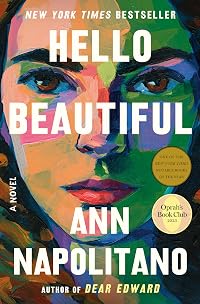
Hello Beautiful
by Ann Napolitano
On This Page
Description
William Waters grew up in a house silenced by tragedy, where his parents could hardly bear to look at him, much less love him. So it's a relief when his skill on the basketball court earns him a scholarship to college, far away from his childhood home. He soon meets Julia Padavano, a spirited and ambitious young woman who surprises William with her appreciation of his quiet steadiness. With Julia comes her family; she is inseparable from her three younger sisters: Sylvie, the dreamer, is show more happiest with her nose in a book and imagines a future different from the expected path of wife and mother; Cecelia, the family's artist; and Emeline, who patiently takes care of all of them. Happily, the Padavanos fold Julia's new boyfriend into their loving, chaotic household. But then darkness from William's past surfaces, jeopardizing not only Julia's carefully orchestrated plans for their future, but the sisters' unshakeable loyalty to one another. The result is a catastrophic family rift that changes their lives for generations. Will the loyalty that once rooted them be strong enough to draw them back together when it matters most? show lessTags
Recommendations
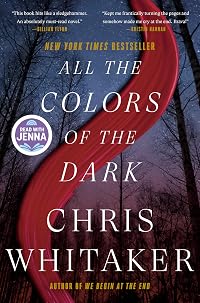
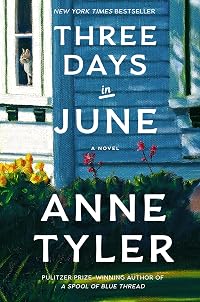
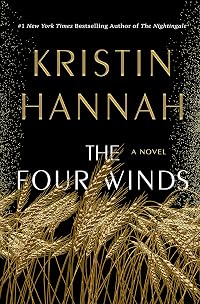
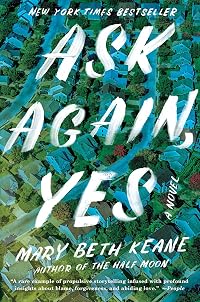
Member Recommendations
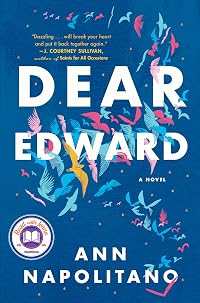
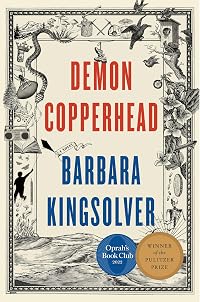
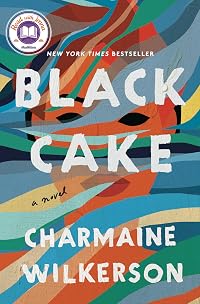
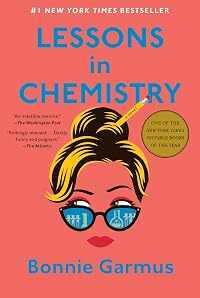
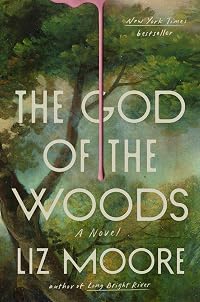
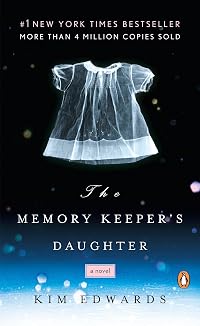
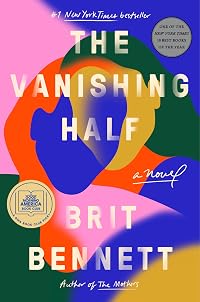
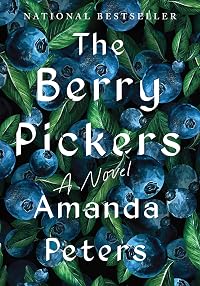
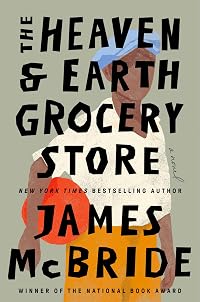
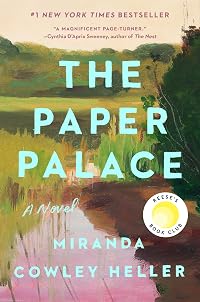
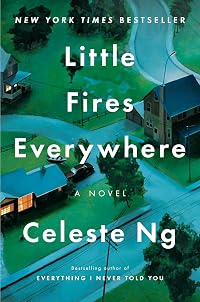
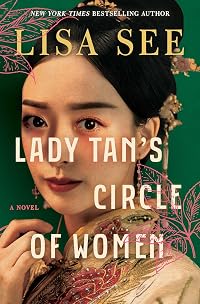
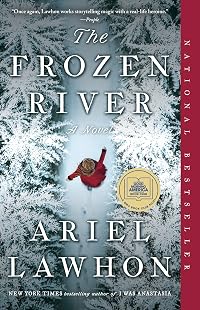
RidgewayGirl Books that center an emotionally troubled character and insist they are worthy of love.
20
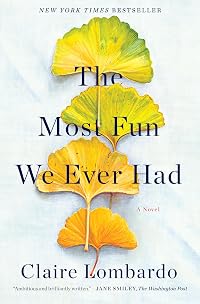
DetailMuse Both are contemporary family sagas set in Chicago and told via alternating points of view.
Member Reviews
HELLO BEAUTIFUL by Ann Napolitano
While honoring Little Women (in a more grownup, grittier way), Hello Beautiful paints a—well, beautiful—portrait of the “one-two punches” of life: With goodbyes come hellos, with losses come gains, with death comes life. And while this is a story about a family, it’s really more so about relationships and kindness and looking out for each other and how we’re shaped by the conflict of living in both the shadowed brokenness and lighted beauty of the world—something that can only be tempered with the broad, colorful strokes of love.
This story begins in the black and white and gray scale of William’s world where he grows up unloved and unacknowledged—a silent, frozen tundra of an isolated show more childhood, full of fissures and cracks. It’s not until he discovers his first love, basketball, as a kid, and then his second love, Julia, as a college basketball player that he begins to live in the warmth of color. But, really, it’s his entanglement with Julia’s family that begins to open his world to the palette of possibilities he never imagined, answering the question: is love enough? Is love enough to cover the losses we experience from acts of bravery and cowardice and selfishness? Is love enough to bring us out of the dark shadows, making us feel worthy and whole?
If you pick up this book (and you definitely should), be sure of a few things: have time (because you’ll ignore all other responsibilities until you finish it) and have tissues (you’ll cry—a lot—like from beginning to end). Honestly, this will pull you in, making you utterly besotted by these characters who feel both uniquely original and nostalgically familiar. And if you’re lucky enough to have a sister, this will make you want to reminisce about late-night childhood talks in your shared bedroom (or just reach out to say I love you) show less
While honoring Little Women (in a more grownup, grittier way), Hello Beautiful paints a—well, beautiful—portrait of the “one-two punches” of life: With goodbyes come hellos, with losses come gains, with death comes life. And while this is a story about a family, it’s really more so about relationships and kindness and looking out for each other and how we’re shaped by the conflict of living in both the shadowed brokenness and lighted beauty of the world—something that can only be tempered with the broad, colorful strokes of love.
This story begins in the black and white and gray scale of William’s world where he grows up unloved and unacknowledged—a silent, frozen tundra of an isolated show more childhood, full of fissures and cracks. It’s not until he discovers his first love, basketball, as a kid, and then his second love, Julia, as a college basketball player that he begins to live in the warmth of color. But, really, it’s his entanglement with Julia’s family that begins to open his world to the palette of possibilities he never imagined, answering the question: is love enough? Is love enough to cover the losses we experience from acts of bravery and cowardice and selfishness? Is love enough to bring us out of the dark shadows, making us feel worthy and whole?
If you pick up this book (and you definitely should), be sure of a few things: have time (because you’ll ignore all other responsibilities until you finish it) and have tissues (you’ll cry—a lot—like from beginning to end). Honestly, this will pull you in, making you utterly besotted by these characters who feel both uniquely original and nostalgically familiar. And if you’re lucky enough to have a sister, this will make you want to reminisce about late-night childhood talks in your shared bedroom (or just reach out to say I love you) show less
4.5 Have Kleenex handy for the end! Ann Napolitano can write about sad things so beautifully, she transforms them into meaning and hope. I loved the Chicago area setting of this story (Northwestern University, Pilsen), but the time period (80s) doesn't totally ring true - people are so formal and so civil, it had more of a 50s vibe. Or it could be that's how far removed civility feels these days....Regardless, it is a fantastic family story about infrastructure - what kind of foundation people start with, and the scaffolding created as they go through life. William Waters started with no foundation - a family tragedy when he was a baby left his grieving parents with nothing to give him - and they don't even feel badly about it. That's show more the bigger tragedy. "Kids and adults had always looked past him, as if he were invisible. His parents hardly looked at him at all. William had accepted all of this and thought it was understandable; he was, after all, boring and forgettable. His primary characteristic was pallor" But William discovers basketball - and this becomes his world and his support system, taking him from his Boston area home to Northwestern to play ball. There he meets Julia Padavano, a young woman with a rock solid support system and the can-do attitude that results. Her family, staunchly middle-class, living in Pilsen, fold William in and refuse to give up on him. Julia's sisters, Sylvie, the dreamy one, Cecilia, the artistic one, and Emeline, the carer all find ways to welcome in William. The parents, Rose and Charlie, though unhappy in their own marriage, recognize that Julia and William have potential for happiness and they are married right after graduating college in 1982. But stuff happens in families and the Padavanos are no exception, so when a series of events impact the parents and sisters, the fallout drifts north to Evanston and has an impact on Julia and William and their baby Alice. Though Julia has carefully constructed their future (William will teach and get a PhD, though his real love and talent is basketball), she can't account for everything and doesn't account for William's past, or his current unhappiness. "William's parents' grief had shaped him, like a glacier moving silently through a valley." (209) Highlights of the story are unexpected twists (more like meanderings, because they are gentle) that would give too much away to mention here, but reveal the hearts of each character and make the reader care deeply about their outcomes. Also, the sisters' relationship is a joy - the book jacket calls it an homage to Little Women, and they often played the different roles in childhood, using it as a touchstone for their feelings for and connections with each other. Ultimately, the author creates healing from deep grief, and promotes hope in a way that doesn't feel like a Hallmark card (or movie!). There is a vein of 'girl power' here too that becomes the framework from which all the characters emerge stronger, ready to start fresh again (and again.) Good read for Spring and its promise of new beginnings. show less
I don't get the hype for this book. It's a novel about the relations among four sisters, and has been described as an "homage" to "Little Women". Indeed, the sisters continually compare themselves to the March sisters (not the only repetitiveness in the book), but there really is no resemblance. It's an easy read, but the writing is pedestrian. Napolitano does a lot of "telling", rather than "showing". She doesn't sufficiently develop her characters, so that their behavior seems absurd and their motivations for their actions aren't clear or seem nonsensical.
On top of that, she obviously didn't do her research. The book is set primarily in Chicago and Evanston at very specific times (each chapter is headed with the dates in which it show more occurs). You can't just hop a bus from Pilsen to Northwestern University, and nobody in their right mind would walk from Northwestern to Pilsen, as she has one character do. There is no part of Chicago that is called "midtown". If you're going to set a book in a specific place and time, be accurate.
But her most egregious offense was to have one sister, Sylvie, work at the Lozano Branch of the Chicago Public Library, beginning in 1974. The Lozano Branch did not open until 1989. Napolitano says in her acknowledgements that she deliberately had it exist "a few years" before then (sorry, FIFTEEN years is not "a few"). This is absolutely infuriating. Rudy Lozano was a labor activist and community organizer who, in 1983, at the age of 31, was murdered because of his activism. The library is named in his honor and has a permanent exhibit celebrating his life. Napolitano erases that history, insulting his memory. I don't like it when authors play games with history, but I don't think I've ever been so angry about it as I am with Napolitano. She owes his family and the community an apology. show less
On top of that, she obviously didn't do her research. The book is set primarily in Chicago and Evanston at very specific times (each chapter is headed with the dates in which it show more occurs). You can't just hop a bus from Pilsen to Northwestern University, and nobody in their right mind would walk from Northwestern to Pilsen, as she has one character do. There is no part of Chicago that is called "midtown". If you're going to set a book in a specific place and time, be accurate.
But her most egregious offense was to have one sister, Sylvie, work at the Lozano Branch of the Chicago Public Library, beginning in 1974. The Lozano Branch did not open until 1989. Napolitano says in her acknowledgements that she deliberately had it exist "a few years" before then (sorry, FIFTEEN years is not "a few"). This is absolutely infuriating. Rudy Lozano was a labor activist and community organizer who, in 1983, at the age of 31, was murdered because of his activism. The library is named in his honor and has a permanent exhibit celebrating his life. Napolitano erases that history, insulting his memory. I don't like it when authors play games with history, but I don't think I've ever been so angry about it as I am with Napolitano. She owes his family and the community an apology. show less
I just loved this one. Loosely inspired by Little Women, the Padavano sisters grow up in Chicago in a tight-knit household. The story follows them through the decades as love and loss create barriers in their lives. The author explores the idea that we are shaped by our family, both their presence and absence. The rotating POV (William, Julia, and Sylvie) gives us a chance to glimpse the same events through different eyes. It's hard to explain how deeply this one hit me. I missed the characters when I finished it. I can't wait to read Napolitano next work. Her gorgeous prose made me feel like I was wandering the aisles of Sylvie's library, glancing up at Cecelia's murals that dotted their Chicago neighborhood, and that I could pop into show more Emeline's home to say hello.
SPOILERS
With Charlie’s death, the Padavana women realize all of the intangible depth and understanding he added to their lives. It made me think about how our society struggles to value certain gifts that people have. We appreciate the tangible, but don’t always recognize other skills that are less concrete, like empathy and kindness.
“Charlie’s and Silvie’s deaths were now part of Julia’s topography; the losses ran like a river inside her.“
SPOILERS OVER
“When an old person dies,” Kent said, “even if that person is wonderful, he or she is still somewhat ready, and so are the people who loved them. They’re like old trees, whose roots have loosened in the ground. They fall gently. But when someone like your aunt Sylvie dies—before her time—her roots get pulled out and the ground is ripped up. Everyone nearby is in danger of being knocked over.”
“The fact that he had failed meant he had to continue to walk forward with his life history—his mistakes—slung over his shoulders like a heavy backpack. This fact exhausted him, but he was too tired to reject it.” show less
SPOILERS
With Charlie’s death, the Padavana women realize all of the intangible depth and understanding he added to their lives. It made me think about how our society struggles to value certain gifts that people have. We appreciate the tangible, but don’t always recognize other skills that are less concrete, like empathy and kindness.
“Charlie’s and Silvie’s deaths were now part of Julia’s topography; the losses ran like a river inside her.“
SPOILERS OVER
“When an old person dies,” Kent said, “even if that person is wonderful, he or she is still somewhat ready, and so are the people who loved them. They’re like old trees, whose roots have loosened in the ground. They fall gently. But when someone like your aunt Sylvie dies—before her time—her roots get pulled out and the ground is ripped up. Everyone nearby is in danger of being knocked over.”
“The fact that he had failed meant he had to continue to walk forward with his life history—his mistakes—slung over his shoulders like a heavy backpack. This fact exhausted him, but he was too tired to reject it.” show less
I saw a lot of reviews about this book mentioning that it wasn't worth the hype, and picked it up out of curiosity. Perhaps because this is the sort of genre that I enjoy (generational stories, historical fiction-esque), I ate it up. What I especially liked was how distinct William and each of the four Padavano sisters were. They had such unique personalities, and it felt like I really grew up with them until the end of the book.
I have to say, I hated Julie so much! She was selfish and bitchy, up until the end. That woman really lacked empathy and just wanted to control everyone, which is probably why she missed out on experiencing real love and couldn't bond with Alice (her daughter) after she started growing up and developed a show more conscience of her own. She clearly could only bond with the baby version of her child, as it's easier to control them. Jus' sayin'! show less
I have to say, I hated Julie so much! She was selfish and bitchy, up until the end. That woman really lacked empathy and just wanted to control everyone, which is probably why she missed out on experiencing real love and couldn't bond with Alice (her daughter) after she started growing up and developed a show more conscience of her own. She clearly could only bond with the baby version of her child, as it's easier to control them. Jus' sayin'! show less
I will be honest: I would not have picked up this book had the publisher not pre-approved me for it on NetGalley. I will be honest: some publishers know me better than I know myself. I couldn’t put this book down, and I even shed a few tears.
Hello Beautiful is the story of four sisters, from their idyllic childhood when they argue over which is Jo and which is Beth, to the messy lives they make that split them apart, to the tragedy that reunites them.
Caught in the middle is a man, Willian; the eldest sister determined to mold him into the perfect husband, and when she learns he his weaknesses, she rejects him. They divorce, she moves across country, and tells their child that her father is dead. The next oldest sister feels seen by show more him, and he knows she sees him for who he really is–confused and lost. Theirs is a true love. That leaves the twin sisters with a choice that will alienated from one sister or another.
To confuse things even more, one of the twins is a teenage mother and the other comes out as gay. And their father, a loving but flawed man, has died, and their mother casts off all the daughters and moves away. The perfect family that William first encountered has splintered. His own family was shut against him after the loss of his older sister, eager to disassociate from him.
The chapters are divided by character and time. The book is deeply internal, revelatory, showing the characters pain and their growth.
This is Little Woman gone awry. Marmee become judgmental and controlling, Jo trying to will Laurie to fill her expectations, Meg split into two who are never apart, Amy happily married to her sister’s cast-off, but also Beth with her tragedy.
The trauma is intergenerational; their mother Rose was pregnant before marriage and rejected by her parents. She determined that her girls would not make her mistakes, they would go to college and would be strong and in control and independent. She could not accept that their lives veered from her plans. Rose’s ideal of independence, and disappointment that her husband didn’t achieve the great things she had wanted, shaped Julia’s drive for control and success, and led to her rejection of William. Whereas, the younger sister, rejected by Rose for her pregnancy out of wedlock, didn’t want to be resentful like her mother, and forgives her mother for her harshness.
No one had loved him unconditionally, William realizes. Julia had been strong enough for both of them, leading the way, and he gratefully went along, happy someone cared. When he failed to become the man she wanted him to be, he believed that his daughter and wife were better off without him.
I felt that the arc of the characters’ inner life was probable. The complicated family drama had me hooked. There is so much wisdom to be found in this novel. The mistakes of our youth, embracing our truth and showing it to the world, love and forgiveness, its all here.
I received a free egalley from the publisher through NetGalley. My review is fair and unbiased. show less
Hello Beautiful is the story of four sisters, from their idyllic childhood when they argue over which is Jo and which is Beth, to the messy lives they make that split them apart, to the tragedy that reunites them.
Caught in the middle is a man, Willian; the eldest sister determined to mold him into the perfect husband, and when she learns he his weaknesses, she rejects him. They divorce, she moves across country, and tells their child that her father is dead. The next oldest sister feels seen by show more him, and he knows she sees him for who he really is–confused and lost. Theirs is a true love. That leaves the twin sisters with a choice that will alienated from one sister or another.
To confuse things even more, one of the twins is a teenage mother and the other comes out as gay. And their father, a loving but flawed man, has died, and their mother casts off all the daughters and moves away. The perfect family that William first encountered has splintered. His own family was shut against him after the loss of his older sister, eager to disassociate from him.
The chapters are divided by character and time. The book is deeply internal, revelatory, showing the characters pain and their growth.
This is Little Woman gone awry. Marmee become judgmental and controlling, Jo trying to will Laurie to fill her expectations, Meg split into two who are never apart, Amy happily married to her sister’s cast-off, but also Beth with her tragedy.
The trauma is intergenerational; their mother Rose was pregnant before marriage and rejected by her parents. She determined that her girls would not make her mistakes, they would go to college and would be strong and in control and independent. She could not accept that their lives veered from her plans. Rose’s ideal of independence, and disappointment that her husband didn’t achieve the great things she had wanted, shaped Julia’s drive for control and success, and led to her rejection of William. Whereas, the younger sister, rejected by Rose for her pregnancy out of wedlock, didn’t want to be resentful like her mother, and forgives her mother for her harshness.
No one had loved him unconditionally, William realizes. Julia had been strong enough for both of them, leading the way, and he gratefully went along, happy someone cared. When he failed to become the man she wanted him to be, he believed that his daughter and wife were better off without him.
I felt that the arc of the characters’ inner life was probable. The complicated family drama had me hooked. There is so much wisdom to be found in this novel. The mistakes of our youth, embracing our truth and showing it to the world, love and forgiveness, its all here.
I received a free egalley from the publisher through NetGalley. My review is fair and unbiased. show less
strangely flat.
very competently written and very competently plotted and the characterization is very competent, and every single thing should work, but none of it DOES work, and it's like eating a meal where every ingredient clashes slightly. it's pizza with cheddar instead of mozzarella, it's guac with basil rather than cilantro. the recipe itself is solid but i don't want to keep eating out of politeness and optimism, you know? no thanks. i'm full.
DNF at 115 pages, which seemed enough to guess it wasn't going to change (a flipthrough verified this) and that the foreshadowing would turn out to be what i expected (it was) and that Napolitano would take the easy way out re Beth (she did).
very competently written and very competently plotted and the characterization is very competent, and every single thing should work, but none of it DOES work, and it's like eating a meal where every ingredient clashes slightly. it's pizza with cheddar instead of mozzarella, it's guac with basil rather than cilantro. the recipe itself is solid but i don't want to keep eating out of politeness and optimism, you know? no thanks. i'm full.
DNF at 115 pages, which seemed enough to guess it wasn't going to change (a flipthrough verified this) and that the foreshadowing would turn out to be what i expected (it was) and that Napolitano would take the easy way out re Beth (she did).
Members
- Recently Added By
Lists

Books recommended by Barack Obama
295 works; 28 members

Top Five Books of 2023
767 works; 317 members

Books Read in 2024
4,727 works; 128 members

Books That Made Us Cry
278 works; 145 members

Barack Obama's Summer Reading List 2023
9 works; 1 member

Books Read in 2026
2,042 works; 68 members

Summer 2026
18 works; 1 member
Author Information

5 Works 6,005 Members
Some Editions
Awards and Honors
Awards
Distinctions
Notable Lists
Common Knowledge
- Canonical title
- Hello Beautiful
- Original title
- Hello Beautiful
- Original publication date
- 2023
- People/Characters
- William Waters; Julia Padavano; Emeline Padavano; Sylvie Padavano; Cecelia Padavano; Charlie Padavano (show all 8); Rose Padavano; Kent
- Important places*
- Boston, Massachusetts, USA; Chicago, Illinois, USA; Florida, USA
- Epigraph
- Has any one supposed it lucky to be born?
I hasten to inform him or her it is just as lucky to die, and I know it.
I pass death with the dying and birth with the new-wash'd babe, and am not contain'd between my hat ... (show all)and boots.
And peruse manifold objects, no two alike and every one good,
The earth good and the stars good, and their adjuncts all good.
-Walt Whitman, "Song of Myself," Verse 7 - Dedication
- For Julie & Whit
- First words
- For the first six days of William Waters's life, he was not an only child. He had a three-year-old sister, a redhead named Caroline. There were silent home movies of Carline in which William's father looked like he was laughi... (show all)ng, a sight William never saw again. His father's face looked open, and the tiny redhead who pulled her dress over her face and ran in giggling circles in one of the movies, was apparently the reason. Caroline developed a fever and a cough while William and his mother were in the hospital after his birth. When they came home, the little girl seemed to be on the mend, but the cough was still bad, and when her parents went into her room to get her one morning, the found her dead in her crib. -William, February 1960-December 1978
- Last words
- (Click to show. Warning: May contain spoilers.)"But, if you'll allow me, I'd like to help."
- Blurbers
- Stradal, J. Ryan; Cowley Heller, Miranda; Kim, Angie
- Original language
- English
- Canonical DDC/MDS
- 813.6
- Canonical LCC
- PS3614 .A66
*Some information comes from Common Knowledge in other languages. Click "Edit" for more information.
Classifications
Statistics
- Members
- 2,965
- Popularity
- 6,040
- Reviews
- 114
- Rating
- (3.95)
- Languages
- 10 — Catalan, Czech, Dutch, English, Finnish, French, German, Italian, Polish, Spanish
- Media
- Paper, Audiobook, Ebook
- ISBNs
- 29
- ASINs
- 11