Toward a Psychology of Being
by Abraham H. Maslow
On This Page
Description
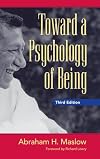
This book is a continuation of my Motivation and Personality, published in 1954. It was constructed in about the same way, that is, by doing one piece at a time of the larger theoretical structure. It is a predecessor to work yet to be done toward the construction of a comprehensive, systematic and empirically based general psychology and philosophy which includes both the depths and the heights of human nature. The last chapter is to some extent a program for this future work, and serves as show more a bridge to it. It is a first attempt to integrate the "health-and-growth psychology" with psychopathology and psychoanalytic dynamics, the dynamic with the holistic, Becoming with Being, good with evil, positive with negative. Phrased in another way, it is an effort to build on the general psychoanalytic base and on the scientific-positivistic base of experimental psychology, the Eupsychian, B-psychological and metamotivational superstructure which these two systems lack, going beyond their limits. It is very difficult, I have found, to communicate to others my simultaneous respect for and impatience with these two comprehensive psychologies. So many people insist on being either pro-Freudian or anti-Freudian, pro-scientific-psychology or anti-scientific-psychology, etc. In my opinion all such loyalty-positions are silly. Our job is to integrate these various truths into the whole truth, which should be our only loyalty. show lessTags
Recommendations
























Member Reviews
Difficult to get through because of the density of information and involved concepts it dealt with, but extremely rewarding and insightful. I came away with a better understanding of humanistic psychology, myself, and humanity in general. It's a shame that Maslow's often reduced to "the hierarchy of needs guy," because even though that little pyramid is symbolic of his theories, he had a lot more really amazing things to say.
Il testo di Maslow e' uno di quelli che ha contribuito a fare la storia della psicologia. E' un capace narratore e piacevole da leggere: le cadute nel linguaggio meramente tecnico sono rare e il tutto e' assai comprensibile. Le implicazioni di quanto esposto hanno portato alla nascita di una nuova corrente di pensiero ed è molto utile - piu' che leggere riassunti su Wikipedia o altrove su quanto esposto in questo testo - risalire alla fonte e bearsi delle intuizioni dell'autore.
Saltata la parte sulle peak experience, questa davvero utile per chi si occupa di ricerca, ma ridondante al lettore medio.
Saltata la parte sulle peak experience, questa davvero utile per chi si occupa di ricerca, ma ridondante al lettore medio.
Maslow was an important figure in psychology when I read this book. I don't exactly recall what I learned from this book, but it did seem to stress fixed categories, sort a ladder of personality rather than being more holistic in approach.
A classic!
Got Peak Experience?
> Babelio : https://www.babelio.com/livres/Maslow-Vers-une-psychologie-de-ltre/113920
> RÉSUMÉ. — Abraham Maslow, VERS UNE PSYCHOLOGIE DE L’ÊTRE — Un grand psychologue américain propose ici les conclusions de ses recherches. Face à la psychologie négative de Freud fondée sur les états morbides, Maslow édifie une psychologie complémentaire et positive qui s’appuie sur les plus hautes expériences de la vie psychique, y compris l’extase.
> RÉSUMÉ. — Abraham Maslow, VERS UNE PSYCHOLOGIE DE L’ÊTRE — Un grand psychologue américain propose ici les conclusions de ses recherches. Face à la psychologie négative de Freud fondée sur les états morbides, Maslow édifie une psychologie complémentaire et positive qui s’appuie sur les plus hautes expériences de la vie psychique, y compris l’extase.
May 18, 2021 (Edited)French
Members
- Recently Added By
Lists

Psicología - Clásicos
165 works; 2 members

Books Read in 2009
464 works; 11 members

My List
302 works; 1 member
Author Information

27+ Works 2,786 Members
In its first edition, Abraham Maslow's "Toward a Psychology of Being" (1962) sold more than 100,000 copies. Like R. D. Laing, Maslow questioned the old psychoanalytic notions of being well or ill "adjusted" to the world and spoke from a broadly human base. Human nature---the inner nature of every individual which is uniquely his or her show more own---"seems not to be . . . necessarily evil; . . . the basic human capacities are on their face either neutral, premoral or positively good." What we call evil behavior appears most often to be a secondary reaction to frustration of this intrinsic nature." On this foundation, Maslow built an affirmation of people and people's potentialities for self-fulfillment and psychological health. He considered his "humanistic" or "Eupsychian" approach to be part of the revolution then taking place in psychology, as in other fields, toward a new view of people. He saw people as sociable, creative, and loving beings whose welfare is not in the cure of "neurosis" or other ills, but on the development of their most socially and personally constructive potentials. Maslow was born in New York City and received his B.A., M.A., and Ph.D. from the University of Wisconsin. He was chairman of the psychology department at Brandeis University in Waltham, Massachusetts. He taught for 14 years at Brooklyn College, and was the president of the American Psychological Association from 1967 to 1968. His wife Bertha helped edit his journals and last papers after his death and assisted with a memorial volume about him. (Bowker Author Biography) show less
Common Knowledge
- Canonical title
- Toward a Psychology of Being
- Original publication date
- 1962
- First words
- There is now emerging over the horizon a new conception of human sickness and of human health, a psychology that I find so thrilling and so full of wonderful possibilities that I yield to the temptation to present it publicly... (show all) even before it is checked and confirmed, and before it can be called reliable scientific knowledge.
- Last words
- (Click to show. Warning: May contain spoilers.)Then Becoming ceases for the moment and its promissory notes are cashed in in the form of the ultimate rewards, i.e., the peak-experiences, in which time disappears and hopes are fulfilled.
- Original language
- English
Classifications
Statistics
- Members
- 882
- Popularity
- 30,523
- Reviews
- 7
- Rating
- (4.19)
- Languages
- 11 — Czech, Danish, Dutch, English, French, German, Italian, Japanese, Polish, Spanish, Turkish
- Media
- Paper, Audiobook, Ebook
- ISBNs
- 33
- ASINs
- 12