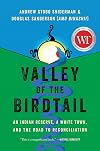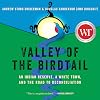
Valley of the Birdtail: An Indian Reserve, a White Town, and the Road to Reconciliation
by Andrew Stobo Sniderman, Douglas Sanderson
On This Page
Description
"A heartrending true story about racial injustice, residential schools and a path forward Divided by a beautiful valley and 150 years of racism, the Waywayseecappo reserve and the town of Rossburn have been neighbours nearly as long as Canada has been a country. Their story reflects much of what has gone wrong in relations between Indigenous and non-Indigenous Canadians. It also offers, in the end, an uncommon measure of hope. In the town of Rossburn, once settled by Ukrainian immigrants, show more the average family income is near the national average and more than a third of adults have graduated from university. By contrast, the average family on the Waywayseecappo reserve lives below the national poverty line and less than a third of adults have graduated from high school, with many living in the shadow of the residential school system. Valley of the Birdtail is about how these two communities became separate and unequal--and what it means for the rest of us. The book follows multiple generations of two families and weaves their experiences within the larger story of Canada. It is a story with villains and heroes, irony and idealism, racism and reconciliation. A story with the ambition to change the way people think about Canada's past, present, and future."-- show lessTags
Recommendations








Member Reviews
In recognition of Truth and Reconciliation Day, I started reading Valley of the Birdtail by Andrew Stobo Sniderman and Douglas Sanderson a few days ago and finished it up this morning. This book has the subtitle "An Indian reserve, a white town, and the road to reconciliation", hence my choosing it for this day. The authors examine the interactions between Waywayseecapo Reserve and the town of Rossburn in Manitoba. Like many other places in Canada, for many years there were bad relationships between Indigenous and white neighbours. Many of the elders on Waywayseecapo were "educated" in residential schools and the younger generations continue to feel the effects. In 2010, the federal government agreed to increase funding for the show more Indigenous students to equal the amount the students in the surrounding public schools received. The Waywayseecapo Elementary School became part of the school division, more services were available, class sizes were reduced and teachers were paid the same as their counterparts in the public schools. This has resulted in a considerable increase in Indigenous students passing grades and completing high school. It has also meant that the white and Indigenous children have exposure to the history of the other's culture. The book won a number of awards when it came out and, I have to say, the writing is terrific. In addition to telling the story of this one location, the authors expand to suggest that there needs to be a rewriting of the treaties so Indigenous peoples have access to revenue from the resources from the land of their traditional territories. I have my doubts as to whether this will ever come to pass but it's worth thinking about on this day if we hope to have true reconciliation. show less
This book provided a unique perspective on reconciliation by focusing on an Indian reserve and a small Manitoba town situated literally next door to each other. By examining difference in education funding and outcomes, in attitudes, in services available, the authors painted a very clear picture of what life is like for Indigenous vs. non-indigenous Canadians, and to some extant, why.
But the book is much more that a case study of two locations. It provides historical background to help the reader understand how Canada's history and political decisions affected Aboriginal peoples.
Highly readable, ultimately hopeful, and worth reading, whether to gain or to deepen your knowledge of how to achieve reconciliation.
But the book is much more that a case study of two locations. It provides historical background to help the reader understand how Canada's history and political decisions affected Aboriginal peoples.
Highly readable, ultimately hopeful, and worth reading, whether to gain or to deepen your knowledge of how to achieve reconciliation.
This is a good book that is very readable and interesting, but it left me with more questions than answers. I thought there was a lot that was not said. Even so, it's a good read and I would recommend it for anyone interested in the subject matter.
Ratings
Members
- Recently Added By
Lists

Globe and Mail | Canadian Non-Fiction: September 10, 2022
10 works; 1 member

Globe and Mail | Canadian Non-Fiction: April 6, 2024
10 works; 1 member

Evergreen Award™ Winners and Nominees 2005–2024
200 works; 3 members

Canadian Historical Fiction 🇨🇦
157 works; 8 members

Best Books set in Manitoba
85 works; 2 members
Author Information
1 Work 77 Members

1 Work 73 Members
Awards and Honors
Awards
Common Knowledge
- People/Characters
- Maureen Twovoice; Troy Luhowy
- Important places
- Canada; Rossburn, Manitoba; Waywayseecappo Indian Reserve, Manitoba
- Dedication
- For Mom and Dad, best of parents, and Mariella, mon tesoro. A.S.
For my grandmothers and grandfathers, and for all of us still wrestling with the legacy of the Indian residential school system. D.S. (Amo Binashii) - First words
- People say Manitoba is so flat that you can watch a dog run away for days.
- Last words
- (Click to show. Warning: May contain spoilers.)Zaagaate Giizis, Teagan's name in Ojibway, means "Shining Sun."
- Blurbers
- Ignatieff, Michael; Robertson, David A.; Porter, Jody; Rae, Bob; Harris, Kate; Gray, Charlotte
Classifications
- Genres
- Sociology, Nonfiction, Anthropology, General Nonfiction, History, Biography & Memoir
- DDC/MDS
- 301.097127 — Society, government, & culture Social sciences, sociology & anthropology Sociology and anthropology standard subdivisions of sociology and/or anthropology History, geographic treatment, biography
- LCC
- HN110 .M35 .S65 — Social sciences Social history and conditions. Social problems. Social reform Social history and conditions. Social problems. By region or country
- BISAC
Statistics
- Members
- 77
- Popularity
- 411,827
- Reviews
- 3
- Rating
- (4.32)
- Languages
- English
- Media
- Paper, Audiobook, Ebook
- ISBNs
- 4
- ASINs
- 3