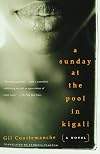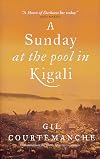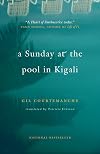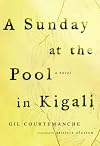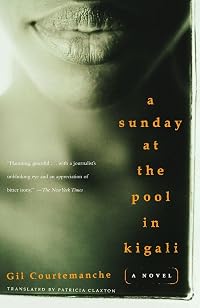
A Sunday at the Pool in Kigali
by Gil Courtemanche
On This Page
Description
A Sunday at the Pool in Kigali is a moving, passionate love story set amid the turmoil and terror of Rwanda’s genocide. All manner of Kigali residents pass their time by the pool of the Mille-Collines hotel: aid workers, Rwandan bourgeoisie, expatriates, UN peacekeepers, prostitutes. Keeping a watchful eye is Bernard Valcourt, a jaded foreign journalist, but his closest attention is devoted to Gentille, a hotel waitress with the slender, elegant build of a Tutsi. As they slip into an show more intense, improbable affair, the delicately balanced world around them–already devastated by AIDS–erupts in a Hutu-led genocide against the Tutsi people. Valcourt’s efforts to spirit Gentille to safety end in their separation. It will be months before he learns of his lover’s shocking fate. show lessTags
Recommendations

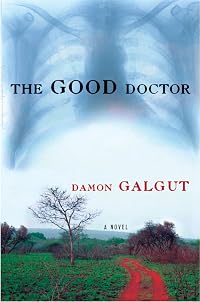



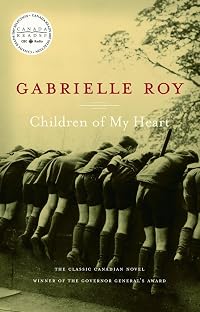


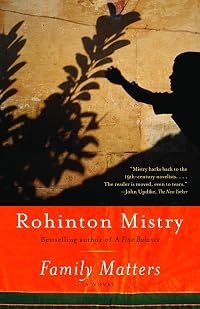
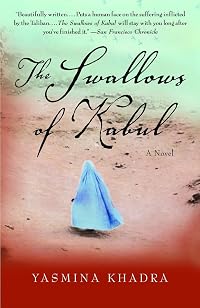


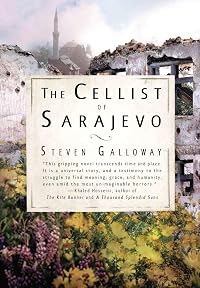


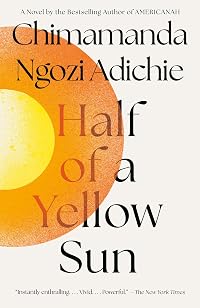

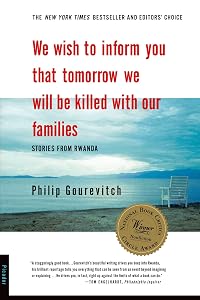
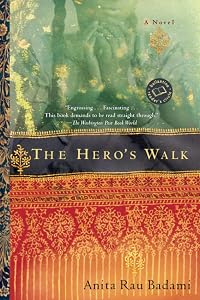


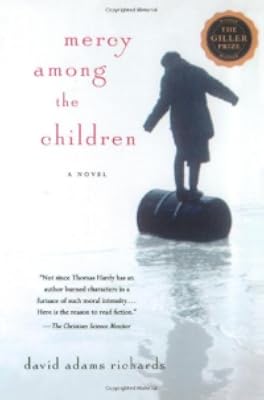


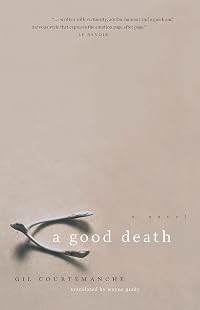

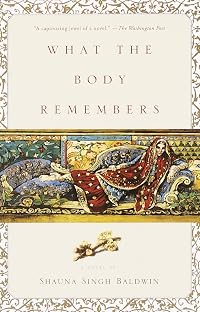
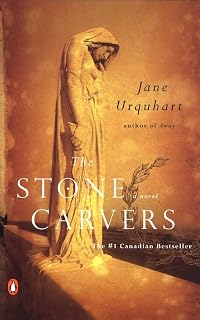














Member Recommendations
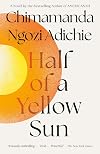
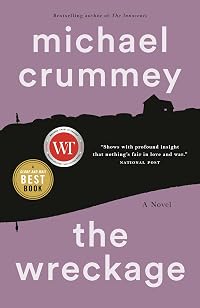
imyril Another difficult novel of modern Africa, focusing on the Nigeria civil war and the Biafra famine rather than Rwanda.
Member Reviews
"The only thing necessary for the triumph of evil is that good men do nothing." (John F Kennedy)
The pool in the title is at a hotel in Kigali, Rwanda,where Western ex-pats,aid workers,diplomats and UN soldiers congregate to get drunk and fornicate with hookers and is set at the time of one of the human races darkest moments. The story is told in a novel/documentary way and centres around Bernhard Valcourt, a somewhat jaded Canadian film journalist who lives in the hotel supposedly to make a film about AIDS, and a beautiful young waitress Gentille, a Hutu who looks like a Tutsi. Valcourt is in love with Gentille and as she begins to reciprocate his love and their affair flourishes so the country descends into the bitter,feudal chaos of show more genocide.
For whatever reason Valcourt is in love with Rwanda as much as Gentille and has made many friends both Hutu and Tutsi but it is a country already decimated by AIDS where up to a third of the population is either dead or dying. However,there are also nightly sectarian murders and rapes taking place until the Hutus decide to enact their own 'final solution'.
There are certainly some fairly gratuitous sex and some brutal murders but overall it is not sensationalist but rather matter of fact as the author prefers to let the facts to speak for themselves. This book reveals a myriad of human emotions including love,kindness,friendship, ignorance,anger,hatred,corruption and apathy but most of all a joy of life,a desire to live life to the full whatever the circumstances. They know they are going to die so why not enjoy yourself along the way?
As the country descends into anarchy the reader certainly feels like screaming at the Western agencies who missed so many opportunities to stop the madness before it could really get started but for whatever were unwilling to do so. Thus the book is pretty scathing (deservedly so IMHO)of them and of post-colonial attitudes where black lives are seen as being cheap and of little importance. Perhaps this is just the author's own bias but I fear not.
Now initially I will admit that I struggled with all the names fearing that I would lose track of who is who but I need not have worried as once the action begins in earnest this becomes less important.The writing is succinct rather than flowery.If this book had purely been one of fiction then it would probably be laughable but given that the main premis was rooted in fact makes it all the more harrowing.
This is one of the best books that I've read in a while and deserves a greater audience. show less
The pool in the title is at a hotel in Kigali, Rwanda,where Western ex-pats,aid workers,diplomats and UN soldiers congregate to get drunk and fornicate with hookers and is set at the time of one of the human races darkest moments. The story is told in a novel/documentary way and centres around Bernhard Valcourt, a somewhat jaded Canadian film journalist who lives in the hotel supposedly to make a film about AIDS, and a beautiful young waitress Gentille, a Hutu who looks like a Tutsi. Valcourt is in love with Gentille and as she begins to reciprocate his love and their affair flourishes so the country descends into the bitter,feudal chaos of show more genocide.
For whatever reason Valcourt is in love with Rwanda as much as Gentille and has made many friends both Hutu and Tutsi but it is a country already decimated by AIDS where up to a third of the population is either dead or dying. However,there are also nightly sectarian murders and rapes taking place until the Hutus decide to enact their own 'final solution'.
There are certainly some fairly gratuitous sex and some brutal murders but overall it is not sensationalist but rather matter of fact as the author prefers to let the facts to speak for themselves. This book reveals a myriad of human emotions including love,kindness,friendship, ignorance,anger,hatred,corruption and apathy but most of all a joy of life,a desire to live life to the full whatever the circumstances. They know they are going to die so why not enjoy yourself along the way?
As the country descends into anarchy the reader certainly feels like screaming at the Western agencies who missed so many opportunities to stop the madness before it could really get started but for whatever were unwilling to do so. Thus the book is pretty scathing (deservedly so IMHO)of them and of post-colonial attitudes where black lives are seen as being cheap and of little importance. Perhaps this is just the author's own bias but I fear not.
Now initially I will admit that I struggled with all the names fearing that I would lose track of who is who but I need not have worried as once the action begins in earnest this becomes less important.The writing is succinct rather than flowery.If this book had purely been one of fiction then it would probably be laughable but given that the main premis was rooted in fact makes it all the more harrowing.
This is one of the best books that I've read in a while and deserves a greater audience. show less
I heard the author of this book being interviewed on Radio National not so long ago. He had a a crusty. gravelly voice, roughened by too many cigarettes and chastened by life and the things he’d seen as a reporter. He was in Rwanda when the genocidal war between the Hutu and the Tutsis broke out, and this book is his homage to the people he knew.
What does it do to a man when he is the sole survivor of a catastrophe, and he survives because he is White? The sharpness of his pain cries out above his elegiac tone, and not just when he writes of his beloved Gentille, but also of his friends: little people — stall-keepers, prostitutes, waiters.
Wisely, he doesn’t try to explain what happened. It’s both too big and too small for that. show more He does, however, cast blame, especially on the Belgian missionaries who sowed the seed of ethnic hatred between the tall, fair-skinned Hutu, originating from Ethiopia, and the darker, more squat Tutsi. When the enmity spilled over into what the 20th century calls ‘ethnic cleansing’ the brutality shocked the world, its horror exacerbated by the fact that the UN was already there as a peace-keeping force, and did nothing. Courtemanche is blunt about this: he says that well-trained and equipped UN soldiers could have controlled the situation. It could have been prevented.
He is sardonic about the barbarity. The Hutu butchered the Tutsi with machetes. They lopped off the feet of the boys so that they couldn’t become soldiers. They raped the women, hacked off their breasts, and left them to die slowly. Sometimes very slowly, of AIDS. They hated the women especially, because they bred the Tutsi children. Courtemanche doesn’t spare Western sensibilities—he points out that Africans don’t have the luxury of a nice, clean war with smart bombs and quick clean deaths achieved with pin-point accuracy guns.
The sense of menace pervades a novel that closely follows what actually happened. Everyone knows what’s coming, and the drunken, pot-smoking militias swagger about boasting about how they will kill the ‘cockroaches’. Yet Bernard Valcourt stays on, making his film about AIDS, because he is passionately in love with the beautiful Gentille. This love he has for her is so beautifully drawn, so eloquently wrought, that it lifts the story onto a new plane.
In the midst of the horror, this love is a purpose for living.
To read the rest of my review please visit https://anzlitlovers.com/2021/01/31/a-sunday-at-the-pool-in-kigali-by-gil-courte... show less
What does it do to a man when he is the sole survivor of a catastrophe, and he survives because he is White? The sharpness of his pain cries out above his elegiac tone, and not just when he writes of his beloved Gentille, but also of his friends: little people — stall-keepers, prostitutes, waiters.
Wisely, he doesn’t try to explain what happened. It’s both too big and too small for that. show more He does, however, cast blame, especially on the Belgian missionaries who sowed the seed of ethnic hatred between the tall, fair-skinned Hutu, originating from Ethiopia, and the darker, more squat Tutsi. When the enmity spilled over into what the 20th century calls ‘ethnic cleansing’ the brutality shocked the world, its horror exacerbated by the fact that the UN was already there as a peace-keeping force, and did nothing. Courtemanche is blunt about this: he says that well-trained and equipped UN soldiers could have controlled the situation. It could have been prevented.
He is sardonic about the barbarity. The Hutu butchered the Tutsi with machetes. They lopped off the feet of the boys so that they couldn’t become soldiers. They raped the women, hacked off their breasts, and left them to die slowly. Sometimes very slowly, of AIDS. They hated the women especially, because they bred the Tutsi children. Courtemanche doesn’t spare Western sensibilities—he points out that Africans don’t have the luxury of a nice, clean war with smart bombs and quick clean deaths achieved with pin-point accuracy guns.
The sense of menace pervades a novel that closely follows what actually happened. Everyone knows what’s coming, and the drunken, pot-smoking militias swagger about boasting about how they will kill the ‘cockroaches’. Yet Bernard Valcourt stays on, making his film about AIDS, because he is passionately in love with the beautiful Gentille. This love he has for her is so beautifully drawn, so eloquently wrought, that it lifts the story onto a new plane.
In the midst of the horror, this love is a purpose for living.
To read the rest of my review please visit https://anzlitlovers.com/2021/01/31/a-sunday-at-the-pool-in-kigali-by-gil-courte... show less
A very difficult novel to read but I am glad I did. Gil Courtemanche takes us to the days leading up to the genocide in Rwanda and introduces us to people who lived in Kigali at this time. These are real people and through them I am better able to understand what it meant at that time to be a Tutsi or a Hutu which, really, wasn't very different except for some physical attributes. The two tribes had intermarried for a long time and for the ordinary people they were all just Rwandans.I got to know a whole group of people who were good people at a very bad time. People with a passion for life "Each moment stolen from fear is a paradise." Some ordinary people became heroes and those with power and influence turned away. The novel is not show more just a testamount to the human spirit but it is also a love story to a people pure of heart in Rwanda, in Africa. Half novel and half personal account. show less
When I was in university, I took a few classes on Third World Politics and attended a conference on African nations by the Mennonite Central committee. I also watched films like Hotel Rwanda, Shake Hands With the Devil, and Journey into Darkness. I thought I had a pretty good handle on what happened in Rwanda. I thought I could fathom the violence, and understand the victims.
And then I read A Sunday at the Pool in Kigali.
Gil Courtemanche’s novel is horrifying in its honesty, and a terrifyingly memorable read. It is a story of humanity, violence, brutality, betrayal, and love. Not only love between human beings, but also the love that one can have for one’s homeland.
The central plot revolves around Bernard Valcourt, a Quebecois show more journalist, and his Hutu lover, Gentille. Their relationship develops as Rwanda sinks into violence. The more serious their relationship becomes, the greater the horror in Rwanda. Their relationship is doomed as soon as these two meet, but, as a reader, one can’t help but hoping everything will be alright for them.
This book is infused with sex, is much like Leonard Cohen’s Beautiful Losers. Despite the horror of AIDS and death, the characters still want to make love, and still want to, for the most part, worship the human body. The characters live in the present, and don’t allow the fear of illness or death to interfere with procreation. Some critics might denounce the sexual content as drawing attention away from genocide, but I feel that the sexual nature of this novel only enriches it.
Essentially, A Sunday at the Pool in Kigali is a tragedy based off of a real-life tragedy. I think the novel does an excellent job of humanizing the events, and at recreating the tension before the genocide occurred. If you have any interest in modern Africa, then read this novel. I promise, you won’t regret having done so.
4.5/5 show less
And then I read A Sunday at the Pool in Kigali.
Gil Courtemanche’s novel is horrifying in its honesty, and a terrifyingly memorable read. It is a story of humanity, violence, brutality, betrayal, and love. Not only love between human beings, but also the love that one can have for one’s homeland.
The central plot revolves around Bernard Valcourt, a Quebecois show more journalist, and his Hutu lover, Gentille. Their relationship develops as Rwanda sinks into violence. The more serious their relationship becomes, the greater the horror in Rwanda. Their relationship is doomed as soon as these two meet, but, as a reader, one can’t help but hoping everything will be alright for them.
This book is infused with sex, is much like Leonard Cohen’s Beautiful Losers. Despite the horror of AIDS and death, the characters still want to make love, and still want to, for the most part, worship the human body. The characters live in the present, and don’t allow the fear of illness or death to interfere with procreation. Some critics might denounce the sexual content as drawing attention away from genocide, but I feel that the sexual nature of this novel only enriches it.
Essentially, A Sunday at the Pool in Kigali is a tragedy based off of a real-life tragedy. I think the novel does an excellent job of humanizing the events, and at recreating the tension before the genocide occurred. If you have any interest in modern Africa, then read this novel. I promise, you won’t regret having done so.
4.5/5 show less
A Sunday at the Pool in Kigali, by Gil Courtemanche, is a searing story of love and redemption set against the backdrop of the 1994 Rwandan genocide. It is also both a love song to the people and country of Rwanda, and an indictment against the international community’s indifference in the face of the impending massacre. The author, a prominent Canadian journalist, did not start out to write a novel. His first draft was written in a drunken rage as a testimonial to the friends he lost in the Rwandan Holocaust. Eventually, that first draft morphed into a novel.
Virtually all of what is told within its pages is horrifyingly true. The stories of how Courtemanche’s friends died is unbearably gut-wrenching. The author knew that few show more people would have the courage and desire to read what he had to tell. What he needed was some fictional glue that would bind these stories together and make the whole compelling enough so people would want to read it. That’s when he remembered Gentille, a young strikingly beautiful and innocent Rwandan woman who worked as a waitress at the Hôtel des Mille-Collines in Kigali, Rwanda during the period he was there filming an AIDS documentary. He imagined a love story between her and an alter-ego film journalist character much like himself. That is how these two characters and their tender love story came to form the singular fiction at the core of this astonishingly powerful and incendiary novel.
The book’s dedication reads: “To my Rwandan friends swept away in the maelstrom / Émérita, André, Cyrien, Raphaël, Landouald, Hélène, and Méthode / To a few unsung heroes still living / Lousie, Marie, Stratton, Victor / Finally, to Gentille, who served me eggs and beer and could be dead or alive, if only I knew / I have tried to speak for you / I hope I have not failed you.”
I’ve seen two major motion pictures and countless T.V. documentaries about the Rwandan genocide, but A Sunday at the Pool in Kigali delivers a punch that goes far beyond all of these. It goes directly to the soul. If I were to weigh the emotional impact and lasting force of the various films, T.V. documentaries, and now this one novel about the Rwanda genocide, I would have to say that Courtemanche’s book is by far the one that will resonate in my memory forever. Once you read this book, you will never forget Gentille. You will never forget Émérita, André, Cyrien, Raphaël, Landouald, Hélène, and Méthode and how each of them died…and you will never forget the Rwandan Holocaust.
I’d say that Courtemanche has not failed his friends—he’s immortalized them. Readers come away from this book with a better understanding of Rwanda, its people, the nature of genocide, and ultimately, of course, of ourselves and our place in the human condition. This book has my highest recommendation. show less
Virtually all of what is told within its pages is horrifyingly true. The stories of how Courtemanche’s friends died is unbearably gut-wrenching. The author knew that few show more people would have the courage and desire to read what he had to tell. What he needed was some fictional glue that would bind these stories together and make the whole compelling enough so people would want to read it. That’s when he remembered Gentille, a young strikingly beautiful and innocent Rwandan woman who worked as a waitress at the Hôtel des Mille-Collines in Kigali, Rwanda during the period he was there filming an AIDS documentary. He imagined a love story between her and an alter-ego film journalist character much like himself. That is how these two characters and their tender love story came to form the singular fiction at the core of this astonishingly powerful and incendiary novel.
The book’s dedication reads: “To my Rwandan friends swept away in the maelstrom / Émérita, André, Cyrien, Raphaël, Landouald, Hélène, and Méthode / To a few unsung heroes still living / Lousie, Marie, Stratton, Victor / Finally, to Gentille, who served me eggs and beer and could be dead or alive, if only I knew / I have tried to speak for you / I hope I have not failed you.”
I’ve seen two major motion pictures and countless T.V. documentaries about the Rwandan genocide, but A Sunday at the Pool in Kigali delivers a punch that goes far beyond all of these. It goes directly to the soul. If I were to weigh the emotional impact and lasting force of the various films, T.V. documentaries, and now this one novel about the Rwanda genocide, I would have to say that Courtemanche’s book is by far the one that will resonate in my memory forever. Once you read this book, you will never forget Gentille. You will never forget Émérita, André, Cyrien, Raphaël, Landouald, Hélène, and Méthode and how each of them died…and you will never forget the Rwandan Holocaust.
I’d say that Courtemanche has not failed his friends—he’s immortalized them. Readers come away from this book with a better understanding of Rwanda, its people, the nature of genocide, and ultimately, of course, of ourselves and our place in the human condition. This book has my highest recommendation. show less
Rwanda 1994:Genocide: every Tutsi man, woman and child targeted for murder. In the collective imagination, Rwanda's Hutu-Tutsi conflict conjures up images of cruel barbarity: the crunch of machete into bone; the smash of hammer and club through human skull; the putrefying bodies piled along the roadsides; bloated corpses floating down rivers; jam-packed churches set on fire; victims tossed alive onto piles of burning tires lining mass open pits. The mass of Rwandan Hutus were incited to the genocide to come by the Hutu Power radio station, the Hutu Power leaders using the broadcasts to coerce every Hutu into complicity in the genocide, the object being that every pair of Hutu hands be steeped in Tutsi blood. Spurred on by Hutu Power show more broadcasts and led by examples of Hutu militia massacres at countless roadblocks, the Hutu people of Rwanda - with machetes, knives, hammers, spears, clubs studded with nails and any other murderous weapon that came to hand - rose to the call to kill the "cockroaches", their friends, neighbours and workmates. Churches, where thousands of Tutsis fled for sanctuary, became the largest slaughterhouses.
Set in Kigali, the capital of Rwanda, in the days preceding the genocide, A Sunday at the Pool in Kigali is a searing indictment of the inaction of the international community - the finger of accusation pointing at the Belgians and French - turning a blind eye to the appalling massacre of the helpless Tutsi minority population who were abandoned to certain annihilation. The novel is a stylishly written blend of fact and fiction, a combination of love story and powerful political reportage giving a terrifying and convincing portrayal of Rwanda in turmoil. Gil Courtmanche confronts the tragic spread of Aids and the genocide that ravaged Rwanda in a bloodbath that snuffed out 800,000 Tutsi lives - and those moderate Hutus who refused to participate - over a period of a hundred hellish days as the West stood around twiddling its thumbs. The scathing moral voice of Courtemanche denounces the hatred, sexual culture, powerlust and global apathy that brought Rwanda to its knees.
Based in the upmarket Hotel Des Milles Collines in Kigali, a house of refuge for many wealthy-connected Tutsi's targeted for murder by Hutu death squads, Bernard Valcourt, a Canadian journalist on assignment in Rwanda to produce a film documenting the Aids epidemic, falls for Gentille, a Hutu waitress at the hotel, often taken for a Tutsi. There is a sense of impending disaster in the air, pressure building, as Valcourt and the hotel's clientele of international officials, aid workers, expatriates, prostitutes, UN soldiers and a group of upscale Rwandan residents play out the days prior to the genocide around the hotel swimming-pool in a Kigali on the brink of becoming a mass Tutsi killing ground. Valcourt is aware that doom is fast approaching and his sword of truth exposes government corruption, police cover-ups, UN officialdom that blocked the seizure of massive arms cachements (that would later be used in the slaughter), inaction by impotent UN forces, and a heedless media. Recommended! For deeper insight, try Philip Gourevitch's classic account of the genocide, We Wish To Inform You That Tomorrow We Will Be Killed With Our Families show less
Set in Kigali, the capital of Rwanda, in the days preceding the genocide, A Sunday at the Pool in Kigali is a searing indictment of the inaction of the international community - the finger of accusation pointing at the Belgians and French - turning a blind eye to the appalling massacre of the helpless Tutsi minority population who were abandoned to certain annihilation. The novel is a stylishly written blend of fact and fiction, a combination of love story and powerful political reportage giving a terrifying and convincing portrayal of Rwanda in turmoil. Gil Courtmanche confronts the tragic spread of Aids and the genocide that ravaged Rwanda in a bloodbath that snuffed out 800,000 Tutsi lives - and those moderate Hutus who refused to participate - over a period of a hundred hellish days as the West stood around twiddling its thumbs. The scathing moral voice of Courtemanche denounces the hatred, sexual culture, powerlust and global apathy that brought Rwanda to its knees.
Based in the upmarket Hotel Des Milles Collines in Kigali, a house of refuge for many wealthy-connected Tutsi's targeted for murder by Hutu death squads, Bernard Valcourt, a Canadian journalist on assignment in Rwanda to produce a film documenting the Aids epidemic, falls for Gentille, a Hutu waitress at the hotel, often taken for a Tutsi. There is a sense of impending disaster in the air, pressure building, as Valcourt and the hotel's clientele of international officials, aid workers, expatriates, prostitutes, UN soldiers and a group of upscale Rwandan residents play out the days prior to the genocide around the hotel swimming-pool in a Kigali on the brink of becoming a mass Tutsi killing ground. Valcourt is aware that doom is fast approaching and his sword of truth exposes government corruption, police cover-ups, UN officialdom that blocked the seizure of massive arms cachements (that would later be used in the slaughter), inaction by impotent UN forces, and a heedless media. Recommended! For deeper insight, try Philip Gourevitch's classic account of the genocide, We Wish To Inform You That Tomorrow We Will Be Killed With Our Families show less
This is a love story set amid a genocide, or, perhaps, two genocides: the African AIDS epidemic and the Hutu massacre of Tutsis in Rwanda in 1994.
Valcourt, a Canadian journalist in Rwanda, falls in love with Gentille, a Hutu who looks like a Tutsi. They live at the Mille-Collines Hotel, a gathering place for aid workers, UN peacekeepers, government officials, prostitutes, diplomats and various expats. The story of the AIDS devastation is very much in the forefront as we hear, feel and observe and the developing storm of the Hutu-led massacre of the Tutsis and wait with bated breath its final outburst.
The dedication to this novel reads:
"To my Rwandan friends swept away in the maelstrom
Emerita, Andre, Cyprien, Raphael, Landouald, Helene, show more and Methode
To a few unsung heroes still living
Louise, Marie, Stratton, Victoire
Finally to Gentille, who served me eggs and beer and could be dead or alive, if only I knew
I tried to speak for you
And I hope I have not failed you
These are all also the names of characters in the novel, and the author states in the prologue that all the characters are real, that he has used their real names, and that the events he describes really happened.
I think that the book does a very good job of explaining the origins and basis for the antagonism between the Hutu and Tutsi tribes, and goes a long way to showing how the genocide could have happened (800,000+ Tutsis were massacred) while the world watched and did nothing. One issue I had with the book, as a novel, is why Valcourt did not leave with Gentille, who was his wife at that point, when he had the opportunity to do so.
This is a gruesome read, but necessary. I personally have not read its nonfiction counterpart We Wish to Inform You that Tomorrow We Will Be Killed with Our Families and must remedy that. Another relevant book I haven't read is Shake Hands with the Devil, written by the head of the UN peacekeeping forces in Rwanda at the time.
3 1/2 stars show less
Valcourt, a Canadian journalist in Rwanda, falls in love with Gentille, a Hutu who looks like a Tutsi. They live at the Mille-Collines Hotel, a gathering place for aid workers, UN peacekeepers, government officials, prostitutes, diplomats and various expats. The story of the AIDS devastation is very much in the forefront as we hear, feel and observe and the developing storm of the Hutu-led massacre of the Tutsis and wait with bated breath its final outburst.
The dedication to this novel reads:
"To my Rwandan friends swept away in the maelstrom
Emerita, Andre, Cyprien, Raphael, Landouald, Helene, show more and Methode
To a few unsung heroes still living
Louise, Marie, Stratton, Victoire
Finally to Gentille, who served me eggs and beer and could be dead or alive, if only I knew
I tried to speak for you
And I hope I have not failed you
These are all also the names of characters in the novel, and the author states in the prologue that all the characters are real, that he has used their real names, and that the events he describes really happened.
I think that the book does a very good job of explaining the origins and basis for the antagonism between the Hutu and Tutsi tribes, and goes a long way to showing how the genocide could have happened (800,000+ Tutsis were massacred) while the world watched and did nothing. One issue I had with the book, as a novel, is why Valcourt did not leave with Gentille, who was his wife at that point, when he had the opportunity to do so.
This is a gruesome read, but necessary. I personally have not read its nonfiction counterpart We Wish to Inform You that Tomorrow We Will Be Killed with Our Families and must remedy that. Another relevant book I haven't read is Shake Hands with the Devil, written by the head of the UN peacekeeping forces in Rwanda at the time.
3 1/2 stars show less
Members
- Recently Added By
Lists

Books That Changed Me
158 works; 46 members

Best African Books
126 works; 46 members

CBC Books - Canada's 100 (+ bonus 10): Which have you read?
110 works; 23 members

Ten Books That Have Stayed With Me
160 works; 30 members
Author Information

15 Works 911 Members
Some Editions
Awards and Honors
Series
Belongs to Publisher Series
Common Knowledge
- Canonical title
- A Sunday at the Pool in Kigali
- Original title
- Un dimanche à la piscine à Kigali
- Original publication date
- 2000
- People/Characters*
- Bernard Valcourt; Gentille
- Important places
- Kigali, Rwanda
- Related movies
- Un dimanche à Kigali (2006 | IMDb)
- First words
- Kigalin keskustassa on uima-allas, jonka ympärillä on parikymmentä muovista pöytää ja aurinkotuolia.
(In the middle of Kigali, there is a swimming pool surrounded by deckchairs and a score of tables all made of white... (show all) plastic. And forming a huge L overhanging this parch of blue stands tha Hotel des Miles-Colin's, with its habitual clientele of international experts and aid workers, middle-class Rwandans, screwed up or melancholy exp
striates of various origins, and prostitutes.) - Last words*
- (Click to show. Warning: May contain spoilers.)Valcourt on onnellinen.
*Some information comes from Common Knowledge in other languages. Click "Edit" for more information.
Classifications
Statistics
- Members
- 788
- Popularity
- 35,321
- Reviews
- 22
- Rating
- (3.92)
- Languages
- 10 — Catalan, Dutch, English, Finnish, French, German, Italian, Norwegian (Bokmål), Norwegian, Portuguese
- Media
- Paper, Ebook
- ISBNs
- 35
- ASINs
- 7