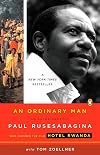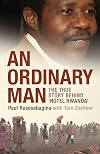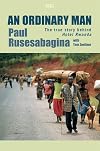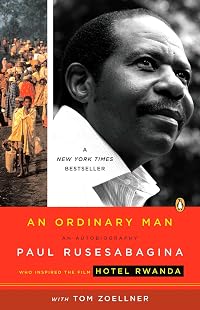
An Ordinary Man: An Autobiography
by Paul Rusesabagina, Tom Zoellner
On This Page
Description
The life story of Paul Rusesabagina, the man whose heroism inspired the film Hotel Rwanda. As his country was torn apart by violence during the Rwandan genocide of 1994, hotel manager Rusesabagina--the "Oskar Schindler of Africa"--refused to bow to the madness that surrounded him. Confronting killers with a combination of diplomacy, flattery, and deception, he offered shelter to more than 12,000 members of the Tutsi clan and Hutu moderates, while homicidal mobs raged outside. This book show more explores what the film could not: the inner life of the man who became the most prominent public face of that terrible conflict. Rusesabagina tells his full story--the son of a rural farmer, the child of a mixed marriage, the career path which led him to become the first Rwandan manager of the Belgian-owned hotel--all of which contributed to his heroic actions in the face of horror.--From publisher description. show lessTags
Recommendations


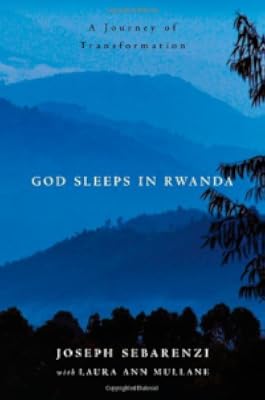
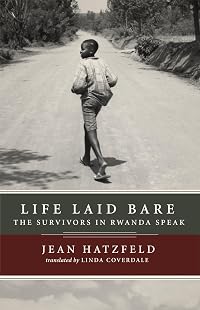
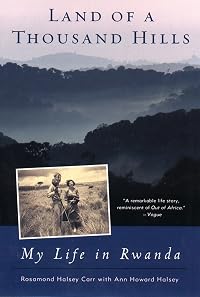











Member Recommendations
Member Reviews
In 1994, the African country of Rwanda saw a brutal, bloody genocide as the majority Hutu population incited fear and violence all across the country, resulting in the murder of a staggering 800,000 of the Tutsi minority. Paul Rusesabagina, a Hutu hotel manager in the capital city of Kigali aghast at what he was witnessing around him and risking his own life, sheltered more than 1,000 of the persecuted inside his hotel.
I'm always curious, when reading an autobiography that is co-written, about just how much of the writing is genuinely that of the individual in question, and how much has been "tidied up" by the more experienced author. In this case the prose and turns of phrase were distinct enough that I feel optimistic that the show more integrity of Rusesabagina's true voice has been preserved. How awe-inspiringly brave Paul Rusesabagina was amid such horrifying circumstances, and yet how fortunate he was to be in the unique position to assist in the manner he did. There is a lot of food for thought in this slim volume, not least the embarrassing level of inaction and seeming indifference by the UN and United States in response. show less
I'm always curious, when reading an autobiography that is co-written, about just how much of the writing is genuinely that of the individual in question, and how much has been "tidied up" by the more experienced author. In this case the prose and turns of phrase were distinct enough that I feel optimistic that the show more integrity of Rusesabagina's true voice has been preserved. How awe-inspiringly brave Paul Rusesabagina was amid such horrifying circumstances, and yet how fortunate he was to be in the unique position to assist in the manner he did. There is a lot of food for thought in this slim volume, not least the embarrassing level of inaction and seeming indifference by the UN and United States in response. show less
The title was, to me, offputting initially. It seemed like false modesty. "Oh, but I'm just an ordinary man...". But I changed my mind after listening.
Rusesabagina saved over a twelve hundred people from death during the short massacre in Rwanda in 1994. He calculated that he saved a matter of a few hours' worth of deaths, based on the rate of killing in those few months, a rate unsurpassed by any other genocide in recorded history.
How did he do it? And why?
He gives us quite a clue when he tells us about his childhood. His father was a leader in his village, and he was not afraid of death. He hid people during an earlier attempt at genocide, in the 1950s. He also provided Paul with an example of a person untainted by the absurd show more prejudices of the time.
Through this volume we become familiar with the history of Rwanda. Simply put, it was white conquerers, particularly Belgian, who set the hutus against the tutsis by defining the different groups prejudicially: the tutsis were the refined, intelligent leaders, while the hutus were only suitable for slave labor, essentially. This distinction served the Belgians well but in no way reflected reality. In fact, the two groups had been mixed for many years, to the point where almost everyone was really neither one or the other, and the two were never that different in the first place.
Paul had a Tutsi mother and a Hutu father. In Rwanda, this meant he was Tutsi. Yet one of his close friends from childhood, with a Tutsi father and Hutu mother, was defined as Hutu and was forced to leave school.
In the early 1990s a civilian radio station came on the air. At first it was all fun and provided a pleasant contrast to the government-run stations. But gradually it used its power to reach people to spread a message of hatred against the Tutsis. Paul placed the blame for the genocide primarily at the feet of this station, which, it turns out, actually was government-run after all.
But back to Paul and how he was able to be effective in his role as hotel manager. He was detail-oriented and fit the job of hotel manager very well. The French owners of the Hotel Mille Collines recognized his talent and sent him to hotel school and later placed him as manager. This was quite a coup for a black man working in a luxury hotel in Rwanda. Paul did not let the owners down. He was meticulous and careful and used his position to get to know the regulars, including many in the military and government. He was later able to use these connections to good effect.
It is hard to imagine a world where you wake up one morning and find that one of your neighbors is attacking another with a machete. Yet this is the world Paul did wake to, and strived to understand. In this memoir he does an excellent job of explaining the basis for the race hatred, the not-so-subtle propaganda, and the genocide. It is difficult to understand a situation where friends suddenly become enemies, where children are slaughtered along with their parents. Paul provides an explanation that we should pay attention to. show less
Rusesabagina saved over a twelve hundred people from death during the short massacre in Rwanda in 1994. He calculated that he saved a matter of a few hours' worth of deaths, based on the rate of killing in those few months, a rate unsurpassed by any other genocide in recorded history.
How did he do it? And why?
He gives us quite a clue when he tells us about his childhood. His father was a leader in his village, and he was not afraid of death. He hid people during an earlier attempt at genocide, in the 1950s. He also provided Paul with an example of a person untainted by the absurd show more prejudices of the time.
Through this volume we become familiar with the history of Rwanda. Simply put, it was white conquerers, particularly Belgian, who set the hutus against the tutsis by defining the different groups prejudicially: the tutsis were the refined, intelligent leaders, while the hutus were only suitable for slave labor, essentially. This distinction served the Belgians well but in no way reflected reality. In fact, the two groups had been mixed for many years, to the point where almost everyone was really neither one or the other, and the two were never that different in the first place.
Paul had a Tutsi mother and a Hutu father. In Rwanda, this meant he was Tutsi. Yet one of his close friends from childhood, with a Tutsi father and Hutu mother, was defined as Hutu and was forced to leave school.
In the early 1990s a civilian radio station came on the air. At first it was all fun and provided a pleasant contrast to the government-run stations. But gradually it used its power to reach people to spread a message of hatred against the Tutsis. Paul placed the blame for the genocide primarily at the feet of this station, which, it turns out, actually was government-run after all.
But back to Paul and how he was able to be effective in his role as hotel manager. He was detail-oriented and fit the job of hotel manager very well. The French owners of the Hotel Mille Collines recognized his talent and sent him to hotel school and later placed him as manager. This was quite a coup for a black man working in a luxury hotel in Rwanda. Paul did not let the owners down. He was meticulous and careful and used his position to get to know the regulars, including many in the military and government. He was later able to use these connections to good effect.
It is hard to imagine a world where you wake up one morning and find that one of your neighbors is attacking another with a machete. Yet this is the world Paul did wake to, and strived to understand. In this memoir he does an excellent job of explaining the basis for the race hatred, the not-so-subtle propaganda, and the genocide. It is difficult to understand a situation where friends suddenly become enemies, where children are slaughtered along with their parents. Paul provides an explanation that we should pay attention to. show less
This is the memoir of Paul Ruseabagina, a hotel manager in Rwanda during the 1994 genocide. With "a cooler of beer, a leather binder, and a hidden phone" he saved 1,268 people. This is the story of how he used those tools to schmooze and persuade and bribe and conjole to keep the killers from murdering those under his protection. He dealt with some odious people, but as he put it in his concluding chapter, "[e]xcept in extreme circumstances it very rarely pays to show hostility to the people in your orbit." He was able to save those people because he was willing and able to sit down with killers, ply them with cognac and not flinch. That leather binder was filled with high-level contacts he had made in years of treating VIP hotel guests show more graciously. He wrote that no one is completely good or evil, and what he looked for was not the good or evil side but rather the "soft" versus the "hard" side. Sometimes that meant appealing to self-interest, greed or vanity--not just moral qualms. His approach and outlook on people reminded me of a quote from Aleksandr Solzhenitsyn that "the line separating good and evil passes... right through every human heart." Ruseabagina calls this memoir "an ordinary man" and in the introduction insists he's no hero.
I beg to differ.
Along the way the book examines the nature of genocide and what caused it to break out in Rwanda, what different infamous 20th century genocides share, and what could have prevented it. A lot went into the toxic cocktail. A legacy of European "divide and conquer" colonialism in Rwanda that ingrained and further stratified what were only (somewhat fluid) class divisions into racial divisions between the Tutsi and the Hutus. Preferential racial policies requiring racial registration and identification and which group was in favor swung back and forth between them depending on who was in power. One big contributor that surprised me was the poisonous role of talk radio that whipped up and organized the murderous hatred, calling Tutsi "cockroaches" and even giving out names and locations of people to murder.
Those were some of the internal factors. Ruseabagina also points outward to world indifference--particularly blaming the United Nations and the United States. I have to admit to feeling ambivalent about that as an American. I don't believe we should be the world's 911--and we get in trouble when we try. But I can't imagine saying that to Rusabagina's face without flinching--800,000 Rwandans were slaughtered right in front of the eyes of the world in around three months. It's hard not to respond to his plea that we mean it when we say "never again" and do better in the future in preventing genocide than the ineffectual UN efforts that stood by as so many were slaughtered. And actually maybe that's part of why Ruseabagina called this book An Ordinary Man--because he wants to emphasize what he did was nothing extraordinary, nothing beyond the reach of an ordinary person--in other words, no we do not get off the hook. At the very least, the book makes you think--it's a gripping quick read and very informative. show less
I beg to differ.
Along the way the book examines the nature of genocide and what caused it to break out in Rwanda, what different infamous 20th century genocides share, and what could have prevented it. A lot went into the toxic cocktail. A legacy of European "divide and conquer" colonialism in Rwanda that ingrained and further stratified what were only (somewhat fluid) class divisions into racial divisions between the Tutsi and the Hutus. Preferential racial policies requiring racial registration and identification and which group was in favor swung back and forth between them depending on who was in power. One big contributor that surprised me was the poisonous role of talk radio that whipped up and organized the murderous hatred, calling Tutsi "cockroaches" and even giving out names and locations of people to murder.
Those were some of the internal factors. Ruseabagina also points outward to world indifference--particularly blaming the United Nations and the United States. I have to admit to feeling ambivalent about that as an American. I don't believe we should be the world's 911--and we get in trouble when we try. But I can't imagine saying that to Rusabagina's face without flinching--800,000 Rwandans were slaughtered right in front of the eyes of the world in around three months. It's hard not to respond to his plea that we mean it when we say "never again" and do better in the future in preventing genocide than the ineffectual UN efforts that stood by as so many were slaughtered. And actually maybe that's part of why Ruseabagina called this book An Ordinary Man--because he wants to emphasize what he did was nothing extraordinary, nothing beyond the reach of an ordinary person--in other words, no we do not get off the hook. At the very least, the book makes you think--it's a gripping quick read and very informative. show less
I have to admit to being an American who knew very little about how the Rwandan genocide had come about, and in fact about the real scope of it. I am considerably more educated after having read this book.
If you've seen the movie Hotel Rwanda, you know the basic outline of how Paul Rusesabagina sheltered approximately 1,200 people in a hotel in Kigali. In the book, he tells how he did it - by calling in favors from people whose acquaintance he'd made as a hotel manager. That doesn't begin to describe how much he had to use his wits. He had to sit down and talk with people who were commanding others to hack their fellow citizens to death with machetes, and often doing it themselves as well. He had to face these men and find a way to show more whatever small measure of humanity might be inside them. Failing that, he had to figure out what sort of bribe might allow them to make a deal with him.
It's inspiring what can be accomplished by simply doing what seems to need doing. Luck was involved, and perhaps some naivete on Rusesabagina's part, but it was a combination that worked miracles for his family and the refugees he housed in the Milles Collines Hotel. show less
If you've seen the movie Hotel Rwanda, you know the basic outline of how Paul Rusesabagina sheltered approximately 1,200 people in a hotel in Kigali. In the book, he tells how he did it - by calling in favors from people whose acquaintance he'd made as a hotel manager. That doesn't begin to describe how much he had to use his wits. He had to sit down and talk with people who were commanding others to hack their fellow citizens to death with machetes, and often doing it themselves as well. He had to face these men and find a way to show more whatever small measure of humanity might be inside them. Failing that, he had to figure out what sort of bribe might allow them to make a deal with him.
It's inspiring what can be accomplished by simply doing what seems to need doing. Luck was involved, and perhaps some naivete on Rusesabagina's part, but it was a combination that worked miracles for his family and the refugees he housed in the Milles Collines Hotel. show less
I was only 12 years old when the genocide in Rwanda took place. I heard about it on the news my dad watched every night, but admittedly I was not exactly politically observant back then, and the news was nothing more than background noise to me, so I knew next to nothing when I saw "Hotel Rwanda". The movie was eye-opening, to say the least, and I was incredibly moved by it. But I hadn't known that Paul Rusesabagina had written a book until very recently when I happened to stumble on it here on Goodreads. I'm very glad that I discovered it here, and I'm even more glad to have read it.
For some strange reason, I tend to gravitate towards emotionally difficult subject matter when it comes to my reading material. I've only recently show more realized this about myself, but I've always been drawn to books about devastating subjects - death, loss, abuse, the holocaust etc. I don't really know why I read these, but I know that they affect me immensely, and that I love the raw feeling that I have when I have read something emotionally horrifying, when I just feel incredibly lucky to be who and where I am. Maybe that makes me a little callous, but if so, then so be it. I think that the gut-wrenching stories help us to understand ourselves and each other and the world better, and there is just something wonderful about books that take us out of ourselves to walk a mile in someone else's shoes - even when there is a rock in one.
So, with that being said, when I saw that Rusesabagina had written his story down, I needed to read it. I had been moved, and awakened, by the movie, and I was thrilled that there was an autobiography that would allow me to learn more about the man himself, and the country that had caused so much devastation for itself and its people.
The book was not nearly as emotionally moving as it could have been. It was written very simply, and directly. No suspense, no drama, just his story in everyday language. A better author could have wrung every tear and every heartache out of these 207 pages, and Rusesabagina did not do that. This is not a criticism though. The lack of artistry lends it a truth and a weight that would have felt fake and forced had it been more showy. Rusesabagina simply told his and his country's story as he understood it.
I enjoyed reading it immensely. It felt intimate, like Rusesabagina and I were having a conversation. This was not the best written book, and I counted quite a few incongruent details and typos and grammatical errors, but aside from that, this was an incredibly compelling story. It did not move me in the same way that I'm used to with talented authors who excel at shaping their words carefully to evoke a desired response out of the reader. This isn't that kind of story. Rusesabagina simply and honestly introduced us to his Rwanda, the Rwanda he grew up in and loved and would always love, and also the sinister Rwanda lurking just under the surface, which would rise in 1994 to kill 800,000 people in a little over 3 months. He gave us the the Cliff's Notes edition of Rwandan history, which showed how something like this could happen, in this day and age, when we've supposedly learned this lesson before. He tells us how the world's most powerful nations failed to act to prevent the massacre, and how he used his wits and his courage and his words and connections alone to save over 1,200 people from a certain and gruesome death.
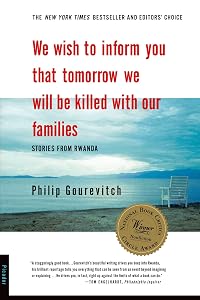
I don't know how true his story is, but there is a bibliography at the end with other books on the subject, which has given me a place to start, if I decide to read more, specifically "Leave None To Tell The Story: Genocide in Rwanda" by Alison Des Forges and "We Wish To Inform You That Tomorrow We Will Be Killed With Our Families: Stories From Rwanda" by Philip Gourevitch. Even if it is not 100% true, and he's allowed time and memory and perception to rewrite some of the specifics, it doesn't really matter to me. I just know that Rusesabagina's is a heroic and brave story that inspires me. He saved people when his entire country had gone mad. If even half of the thoughts and wisdom imparted actually went through Rusesabagina's head in the moment, then he is nothing less than awe-inspiring and amazingly wise. He shows how a person can rise above the mob mentality and be a hero just by showing common decency and refusing to falter. He shows how a situation like this can happen,and predicted it will happen again, but most importantly, he shows that there is good and evil in all of us, and it is our choice which one we will let rule us.
Rusesabagina's version of "ordinary" is one that we should all aspire to be, I think. show less
For some strange reason, I tend to gravitate towards emotionally difficult subject matter when it comes to my reading material. I've only recently show more realized this about myself, but I've always been drawn to books about devastating subjects - death, loss, abuse, the holocaust etc. I don't really know why I read these, but I know that they affect me immensely, and that I love the raw feeling that I have when I have read something emotionally horrifying, when I just feel incredibly lucky to be who and where I am. Maybe that makes me a little callous, but if so, then so be it. I think that the gut-wrenching stories help us to understand ourselves and each other and the world better, and there is just something wonderful about books that take us out of ourselves to walk a mile in someone else's shoes - even when there is a rock in one.
So, with that being said, when I saw that Rusesabagina had written his story down, I needed to read it. I had been moved, and awakened, by the movie, and I was thrilled that there was an autobiography that would allow me to learn more about the man himself, and the country that had caused so much devastation for itself and its people.
The book was not nearly as emotionally moving as it could have been. It was written very simply, and directly. No suspense, no drama, just his story in everyday language. A better author could have wrung every tear and every heartache out of these 207 pages, and Rusesabagina did not do that. This is not a criticism though. The lack of artistry lends it a truth and a weight that would have felt fake and forced had it been more showy. Rusesabagina simply told his and his country's story as he understood it.
I enjoyed reading it immensely. It felt intimate, like Rusesabagina and I were having a conversation. This was not the best written book, and I counted quite a few incongruent details and typos and grammatical errors, but aside from that, this was an incredibly compelling story. It did not move me in the same way that I'm used to with talented authors who excel at shaping their words carefully to evoke a desired response out of the reader. This isn't that kind of story. Rusesabagina simply and honestly introduced us to his Rwanda, the Rwanda he grew up in and loved and would always love, and also the sinister Rwanda lurking just under the surface, which would rise in 1994 to kill 800,000 people in a little over 3 months. He gave us the the Cliff's Notes edition of Rwandan history, which showed how something like this could happen, in this day and age, when we've supposedly learned this lesson before. He tells us how the world's most powerful nations failed to act to prevent the massacre, and how he used his wits and his courage and his words and connections alone to save over 1,200 people from a certain and gruesome death.
I don't know how true his story is, but there is a bibliography at the end with other books on the subject, which has given me a place to start, if I decide to read more, specifically "Leave None To Tell The Story: Genocide in Rwanda" by Alison Des Forges and "We Wish To Inform You That Tomorrow We Will Be Killed With Our Families: Stories From Rwanda" by Philip Gourevitch. Even if it is not 100% true, and he's allowed time and memory and perception to rewrite some of the specifics, it doesn't really matter to me. I just know that Rusesabagina's is a heroic and brave story that inspires me. He saved people when his entire country had gone mad. If even half of the thoughts and wisdom imparted actually went through Rusesabagina's head in the moment, then he is nothing less than awe-inspiring and amazingly wise. He shows how a person can rise above the mob mentality and be a hero just by showing common decency and refusing to falter. He shows how a situation like this can happen,and predicted it will happen again, but most importantly, he shows that there is good and evil in all of us, and it is our choice which one we will let rule us.
Rusesabagina's version of "ordinary" is one that we should all aspire to be, I think. show less
An incredible Autobiography written by the man who inspired the movie 'Hotel Rwanda'. Often sad, incredibly tragic, but also full of hope that even in the darkest of times, there are people that hold on to the basic human decency that tells them to protect their fellow human beings, not harm them. I found this book to be engrossing while simultaneously being horrifying. The author describes events during the genocide with an almost casual air at times, as though watching your neighbors hack your other neighbors apart with a machete is something you just become used to. But, there's also a undercurrent of terror there, as though even after almost becoming numb to it, it's still so terrible to remember that he tries not to. All of this is show more perfectly understandable. After all, it's the most basic of all human survival skills. You adjust to your situation in order to cope, and simply block out things that are too painful to remember or live with.
The wisdom present in this book is profound. You can definitely take lessons about life from someone who survived one of the worst situations imaginable. Such as when he talks about his decision to stay behind during the partial evacuation of the hotel, even though he could have gotten out, because he knew there'd be nobody left to try to protect those staying behind, and he couldn't live with himself if they were harmed or killed because he cared more about himself. Or, when they come for a man that wasn't much liked because he had just recently been released from prison for beating someone to death, and who is high on the kill list for having three sons fighting with the Tutsi rebel army, and he basically says to him "Let me go out there. Let them kill me so all of you can live." Then the author writes 'There is no crime a man can commit that makes him deserving of death.' It is a type of everyday wisdom that I suppose can only really come when you live through the kind of horror that he did, which puts everything in perspective.
Whether writing about the heroic or the horrible, the everyday or the extraordinary, perhaps the greatest thing about this book is that it's written with a great sense of humility. Paul Rusesabagina would tell you (and does, repeatedly) that he didn't do anything extraordinary. That all he and others like him did was remain human in an inhuman time, but the fact is that he doesn't truly realize how extraordinary that is. To go against the storm, to whisper 'no' when everyone else is screaming 'yes', takes a strength that is to be envied and respected. He is a hotel manager. He did his job, and he did it well. But, more than that, he's a hero, whether he realizes it or not. I don't know whether I'd have the strength to do what he did, but I can only hope that whenever a storm comes, there will always be people like him to help make sure that at least some survive it. show less
The wisdom present in this book is profound. You can definitely take lessons about life from someone who survived one of the worst situations imaginable. Such as when he talks about his decision to stay behind during the partial evacuation of the hotel, even though he could have gotten out, because he knew there'd be nobody left to try to protect those staying behind, and he couldn't live with himself if they were harmed or killed because he cared more about himself. Or, when they come for a man that wasn't much liked because he had just recently been released from prison for beating someone to death, and who is high on the kill list for having three sons fighting with the Tutsi rebel army, and he basically says to him "Let me go out there. Let them kill me so all of you can live." Then the author writes 'There is no crime a man can commit that makes him deserving of death.' It is a type of everyday wisdom that I suppose can only really come when you live through the kind of horror that he did, which puts everything in perspective.
Whether writing about the heroic or the horrible, the everyday or the extraordinary, perhaps the greatest thing about this book is that it's written with a great sense of humility. Paul Rusesabagina would tell you (and does, repeatedly) that he didn't do anything extraordinary. That all he and others like him did was remain human in an inhuman time, but the fact is that he doesn't truly realize how extraordinary that is. To go against the storm, to whisper 'no' when everyone else is screaming 'yes', takes a strength that is to be envied and respected. He is a hotel manager. He did his job, and he did it well. But, more than that, he's a hero, whether he realizes it or not. I don't know whether I'd have the strength to do what he did, but I can only hope that whenever a storm comes, there will always be people like him to help make sure that at least some survive it. show less
First, listening to this book on audio was extremely powerful. So much so that I actually had to stop the CD, stop the car, then turn it back on to listen to because it was so moving and was making it hard for me to concentrate on driving. The author manages to use direct language to tell his amazing story of being the manager of a hotel in Rwanda during the genocide. He managed to turn the hotel into a refugee base and, amazingly, held off the militia and other killers for 76 days, saving the lives of more than 1000 people.
The book provides an extremely harsh view of the world's failure, and particularly the failure of the United States and the United Nations, to intervene in the early days of the genocide to prevent the killing of show more hundreds of thousands of innocent people. The author also tells the story of both his negotiations with specific individuals and the story of what happened to others that he knew.
I cannot recommend this book highly enough. Though the subject matter is disturbing, it's an important piece of world history. show less
The book provides an extremely harsh view of the world's failure, and particularly the failure of the United States and the United Nations, to intervene in the early days of the genocide to prevent the killing of show more hundreds of thousands of innocent people. The author also tells the story of both his negotiations with specific individuals and the story of what happened to others that he knew.
I cannot recommend this book highly enough. Though the subject matter is disturbing, it's an important piece of world history. show less
Members
- Recently Added By
Lists

Best Autobiographies and Memoirs
370 works; 67 members

Best African Books
126 works; 46 members

Books To Get From The Library
115 works; 5 members

Rwanda
27 works; 1 member
Author Information

1+ Work 804 Members

15 Works 1,755 Members
Tom Zoellner is the author of The National Road, Uranium, and Train and the coauthor of the New York Times bestselling An Ordinary Man. He teaches at Chapman University and Dartmouth College and is the politics editor for the Los Angeles Review of Books.
Some Editions
Work Relationships
Common Knowledge
- Original title
- An Ordinary Man: An Autobiography
- Alternate titles
- An Ordinary Man: The True Story Behind Hotel Rwanda
- Original publication date
- 2006
- People/Characters
- Paul Rusesabagina
- Important places
- Kigali, Rwanda; Hotel Milles Collines
- Important events
- Rwandan Genocide (1994)
- Related movies
- Hotel Rwanda (2004 | IMDb)
Classifications
- Genres
- Biography & Memoir, Nonfiction, General Nonfiction, History
- DDC/MDS
- 967.5710431092 — History & geography History of Africa Central Africa: Congo, Angola, Chad Democratic Republic of the Congo (Congo-Kinshasa); Rwanda & Burundi Rwanda and Burundi Rwanda 1962- Civil War Rwanda 1994
- LCC
- DT450.443 .R87 .A3 — History of Europe, Asia, Africa and Oceania Africa History of Africa Eastern Africa Burundi History
- BISAC
Statistics
- Members
- 804
- Popularity
- 34,614
- Reviews
- 27
- Rating
- (4.25)
- Languages
- 8 — Czech, Danish, English, Finnish, German, Japanese, Norwegian (Bokmål), Spanish
- Media
- Paper, Audiobook, Ebook
- ISBNs
- 24
- ASINs
- 13