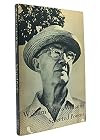
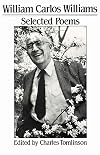
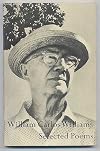
William Carlos Williams: Selected Poems
by William Carlos Williams
On This Page
Description
Before William Carlos Williams was recognized as one of the most important innovators in American poetry, he commissioned a printer to publish 100 copies of "Poems" (1909), a small collection largely imitating the styles of the Romantics and the Victorians. This volume collects the self-published edition of "Poems", Williams' foray into the world of letters, with previously unpublished notes he made after spending nearly a year in Europe rethinking poetry and how to write it. As "Poems" show more shows his first tentative steps into poetry, the notes show him as he prepares to make a giant transformation in his art. Shortly after "Poems" appeared, Williams went through a series of experiences that changed his life - a trip to Europe, a marriage to the sister of the woman he genuinely loved, and the establishment of his medical practice. In Europe he was introduced to a consideration of an unlikely trio: Heinrich Heine, Martin Luther, and Richard Wagner, resulting in an exposure that subsequently influenced his developing style. Williams looked back on Poems as apprentice work, calling them, "bad Keats, nothing else - oh well, bad Whitman too. But I sure loved them...There is not one thing of the slightest value in the whole thin booklet - except the intent", and never republished the collection. Now that Williams' work is widely read and appreciated, his reputation secure, his development as a poet is a matter worth serious study, "Poems" can be seen as a point of departure, a clear record of where Williams began before his life and ideas about poetry made seismic shifts. Virginia M. Wright-Peterson's succinct introduction puts "Poems" in the context of his life and times, discusses the reception of the volume, his reconsideration of the poems, and what they reveal about his poetic ambitions. show lessTags
Recommendations

















Member Reviews
the faces are raised
as toward the light
there is no detail extraneous
You know, I credit Mike Puma with this turn, oh and Robert Zimmerman and maybe Ezra Pound. All these loose associations led a curious thrust into verse these last days of 2015. It might prove habit forming. There is something remarkable to wake from a deep slumber and find traction into verse. My initial encounters were ill defined. Form was found as I progressed.
Without other cost than breath
and the poor soul,
carried in the cage of the ribs,
chirping shrilly
The world of Williams appear to exist as a collection of things. There's stuff and some of it is alive. We are enriched by this awareness, if not the distinction. There doesn't appear to be any greater point. show more There is a melody then of thing-ness. I am quite tempted to now approach his long-form verse. show less
as toward the light
there is no detail extraneous
You know, I credit Mike Puma with this turn, oh and Robert Zimmerman and maybe Ezra Pound. All these loose associations led a curious thrust into verse these last days of 2015. It might prove habit forming. There is something remarkable to wake from a deep slumber and find traction into verse. My initial encounters were ill defined. Form was found as I progressed.
Without other cost than breath
and the poor soul,
carried in the cage of the ribs,
chirping shrilly
The world of Williams appear to exist as a collection of things. There's stuff and some of it is alive. We are enriched by this awareness, if not the distinction. There doesn't appear to be any greater point. show more There is a melody then of thing-ness. I am quite tempted to now approach his long-form verse. show less
I love the concept that Williams tried to invent a poetic form centered on everyday circumstances and “images” in America, and I also love that he tutored young poets including Allen Ginsberg, but sadly I’m not a fan of his poetry.
The “Red Wheelbarrow” is oft-quoted but I include it here; it’s what attracted me to give him a try:
so much depends
upon
a red wheel
barrow
glazed with rain
water
besides the white
chickens.
The “Red Wheelbarrow” is oft-quoted but I include it here; it’s what attracted me to give him a try:
so much depends
upon
a red wheel
barrow
glazed with rain
water
besides the white
chickens.
Ratings
Members
- Recently Added By
Lists

Poetry Corner
187 works; 15 members

Modernism
140 works; 8 members

The Well-Educated Mind, Susan Wise Bauer, 2016
179 works; 3 members

School Made Us Read It
380 works; 196 members
Author Information

187+ Works 9,289 Members
Poet, artist, and practicing physician of Rutherford, New Jersey, William Carlos Williams wrote poetry that was experimental in form, ranging from imagism to objectivism, with great originality of idiom and human vitality. Credited with changing and directing American poetry toward a new metric and language, he also wrote a large number of short show more stories and novels. Paterson (1946--58), about the New Jersey city of that name, was his epic and places him with Ezra Pound of the Cantos as one of the great shapers of the long poem in this century. National recognition did not come early, but eventually Williams received many honors, including a vice-presidency of the National Institute of Arts and Letters (1952); the Bollingen Prize (1953); the $5,000 fellowship of the Academy of American Poets; the Loines Award for poetry of the National Institute of Arts and Letters (1948); and the Brandeis Award (1957). Book II of Paterson received the first National Book Award for poetry in 1949. Williams was named consultant in poetry in English to the Library of Congress for 1952--53. Williams's continuously inventive style anchored not only objectivism, the school to which he most properly belongs, but also a long line of subsequent poets as various as Robert Lowell, Frank O'Hara, and Allen Ginsberg. With Stevens, he forms one of the most important sources of a specifically American tradition of modernism. In addition to his earlier honors, Williams received two important awards posthumously, the Pulitzer Prize for Poetry (1963) and the Gold Medal for Poetry from the National Institute of Arts and Letters (1963). (Bowker Author Biography) show less
All Editions
Awards and Honors
Awards
Series
Belongs to Publisher Series
Common Knowledge
- Canonical title
- William Carlos Williams: Selected Poems
- Original publication date
- 1968
- Epigraph
- It is this eye for this thing that most distinguishes Charles Sheeler - and along with it to know that every hair on every body, now or then, in its minute distinctiveness is the same hair, on every body anywhere, at any time... (show all), changed as it may be to feather, quill, or scale.
- Disambiguation notice
- This is a selection edited and imtroduced by Randall Jarrell. Do not combine with selections by other editors.
Classifications
Statistics
- Members
- 568
- Popularity
- 51,892
- Reviews
- 2
- Rating
- (4.23)
- Languages
- English, German
- Media
- Paper, Ebook
- ISBNs
- 4
- ASINs
- 15