
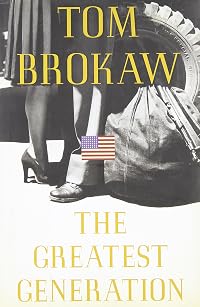
The Greatest Generation
by Tom Brokaw
On This Page
Description
The instant classic that changed the way we saw World War II and an entire generation of Americans, from the beloved journalist whose own iconic career has lasted more than fifty years.In this magnificent testament to a nation and her people, Tom Brokaw brings to life the extraordinary stories of a generation that gave new meaning to courage, sacrifice, and honor.
From military heroes to community leaders to ordinary citizens, he profiles men and women who served their country with valor, show more then came home and transformed it: Senator Daniel Inouye, decorated at the front, fighting prejudice at home; Martha Settle Putney, one of the first black women to serve in the newly formed WACs; Charles Van Gorder, a doctor who set up a MASH-like medical facility in the middle of battle, then opened a small clinic in his hometown; Navy pilot and future president George H. W. Bush, assigned to read the mail of the enlisted men under him, who says that in doing so he “learned about life”; and many other laudable Americans.
To this generation that gave so much and asked so little, Brokaw offers eloquent tribute in true stories of everyday heroes in extraordinary times.
Praise for The Greatest Generation
“Moving . . . a tribute to the members of the World War II generation to whom we Americans and the world owe so much.”—The New York Times Book Review
“Full of wonderful, wrenching tales of a generation of heroes. Tom Brokaw reminds us what we are capable of as a people. An inspiring read for those who wish their spirits lifted.”—Colin L. Powell
“Offers welcome inspiration . . . It is impossible to read even a few of these accounts and not be touched by the book’s overarching message: We who followed this generation have lived in the midst of greatness.”—The Washington Times
“Entirely compelling.”—The Wall Street Journal. show less
Tags
Recommendations









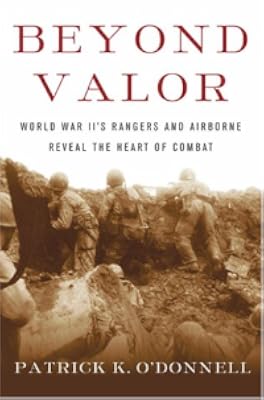
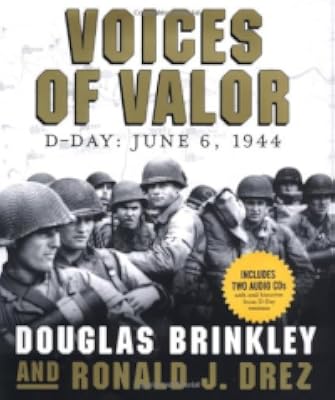
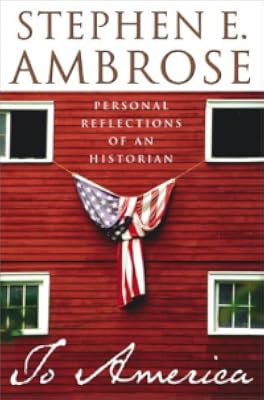
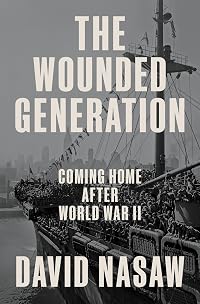

Member Reviews
"'I think this is the greatest generation any society has ever produced.' I know that this was a bold statement and a sweeping judgment, but since than I have restated it on many occasions. While I am periodically challenged on this premise, I believe I have the facts on my side."
So writes Tom Brokaw in the introduction to this book about the World War II generation, and he proceeds to make his case by telling individual stories of survival, courage, leadership, and trail-blazing.
I pretty much loved this book. I have always liked reading books centered around WWII, but I haven't actually read much non-fiction, and especially not exactly like this. I got what I expected and more.
I expected stories about the heroes, both celebrated and show more unsung, and their exploits in the war. I may have even expected stories about the women on the home front.
I did not expect Brokaw to tackle some of the issues this generation had to overcome. He did not shy away from segregation, both in civilian life and the military. He confronted the issue of the Japanese internment camps. He took a close look at the women in uniform during the war and the paths they had to forge to get anything that even resembled equality. I was impressed that he included those topics, and I learned a lot from the personal stories he used to make his points about these issues.
I also didn't really expect the personal stories to dwell so much on life after the war. I was a little disappointed at first; after all, the war was what drew me to the book. But I quickly got over it and realized that this generation didn't let one major event define their lives completely. They moved on and shaped the world in the ways they thought best. And that is part of what makes them great.
I'm struggling to find a way to say what I mean with this next thought. Here goes. The people who told these stories all came home to live successful lives, in big ways and small. There had to be people who came home and just couldn't adapt to civilian life. It felt like, in order for the picture to be truly complete, some of that should have been included. Of course, who wants to be interviewed about why they started drinking too much and wound up homeless, right? Or maybe those guys mostly passed away before this book was written. The point could be made that including that kind of thing would weaken the book's central argument, I know. But ignoring the facts doesn't make them go away, and addressing all the facts makes your case stronger. It's a small thing, but I noticed it because of the thoroughness of the rest of the book.
This was also an interesting study in how times have changed. This generation was very much about patriotism, duty, honor, and personal sacrifice. They had widely experienced crushing poverty during the Depression, and they never forgot the lessons they learned in those times. In comparison to our current society, where we just have to have the newest phone/video game/book, or whatever, it made me feel shallow and small. I don't think that's bad at all. Sometimes we need to be reminded about how blessed we truly are.
There are surprising tales of heroism on all fronts, both during the war and in the years following. Tom Brokaw makes a strong argument that the WWII generation was truly the greatest generation. show less
So writes Tom Brokaw in the introduction to this book about the World War II generation, and he proceeds to make his case by telling individual stories of survival, courage, leadership, and trail-blazing.
I pretty much loved this book. I have always liked reading books centered around WWII, but I haven't actually read much non-fiction, and especially not exactly like this. I got what I expected and more.
I expected stories about the heroes, both celebrated and show more unsung, and their exploits in the war. I may have even expected stories about the women on the home front.
I did not expect Brokaw to tackle some of the issues this generation had to overcome. He did not shy away from segregation, both in civilian life and the military. He confronted the issue of the Japanese internment camps. He took a close look at the women in uniform during the war and the paths they had to forge to get anything that even resembled equality. I was impressed that he included those topics, and I learned a lot from the personal stories he used to make his points about these issues.
I also didn't really expect the personal stories to dwell so much on life after the war. I was a little disappointed at first; after all, the war was what drew me to the book. But I quickly got over it and realized that this generation didn't let one major event define their lives completely. They moved on and shaped the world in the ways they thought best. And that is part of what makes them great.
I'm struggling to find a way to say what I mean with this next thought. Here goes. The people who told these stories all came home to live successful lives, in big ways and small. There had to be people who came home and just couldn't adapt to civilian life. It felt like, in order for the picture to be truly complete, some of that should have been included. Of course, who wants to be interviewed about why they started drinking too much and wound up homeless, right? Or maybe those guys mostly passed away before this book was written. The point could be made that including that kind of thing would weaken the book's central argument, I know. But ignoring the facts doesn't make them go away, and addressing all the facts makes your case stronger. It's a small thing, but I noticed it because of the thoroughness of the rest of the book.
This was also an interesting study in how times have changed. This generation was very much about patriotism, duty, honor, and personal sacrifice. They had widely experienced crushing poverty during the Depression, and they never forgot the lessons they learned in those times. In comparison to our current society, where we just have to have the newest phone/video game/book, or whatever, it made me feel shallow and small. I don't think that's bad at all. Sometimes we need to be reminded about how blessed we truly are.
There are surprising tales of heroism on all fronts, both during the war and in the years following. Tom Brokaw makes a strong argument that the WWII generation was truly the greatest generation. show less
My father, who was a member of the "greatest generation" loved this book, so I felt I owed it to him to read it. It is a fine book well written and conceived. Somewhat ordinary people are profiled. They are removed from ordinary lives and put in harm's way and respond with simplicity, courage and fellow-feeling. It is a good lesson about our parents and true patriotism.
I have always enjoyed Tom Brokaw's broadcasts and expected a great read.. I was disappointed in the lack of depth and the lack of story-telling skill. My father was a member of this generation and we grew up with stories of his experiences on a Navy ship in the Pacific fleet. I was looking forward to learning more from those who were interviewed. I am intrigued by the subject but not by the delivery. I want to read Boom, but I will go into it with lower expectations.
Tom Brokaw recounts the stories of a number of people, both ordinary and famous, who served in the military during World War II, or who served in some capacity on the home front. The stories tell of what they did during the war and also go on to tell of their accomplishments after the war and how their war experience played a role in those accomplishments. Many of them learned discipline and leadership skills that were instrumental in their success. While celebrating the bravery and heroism of Americans during the war, Brokaw does not overlook America's flaws. He includes a chapter on the (mis)treatment of minorities including African-Americans and Latinos and the forcible relocation of Japanese Americans to internment camps. The book show more provides a good insight into that generation of Americans. I thought it was an interesting book. show less
I expected a bit more from this book - I think Brokaw did a good job interviewing his subjects and finding interesting people to talk to (and I would hope so, given his background and experience!) but I thought his analysis and writing was rather weak. At times I felt like I was reading a hagiography of WWII veterans, rather than a biography. I also felt that Brokaw belabored his ideas and had a hard time occasionally with the transition between his interview and his overall points. Still, I'm glad I read it, as the book had an excellent premise and raw material, it just could have used a better implementation.
Great stories, remind me of my grandparents and the stories they tell about this time in their lives. I think we can learn a lot from this generation, and I am truly grateful for the opportunities I have because of these folks.
I was troubled, though, by the unexamined implications of statements like "I'm dismayed by how women today focus on their careers." (Both of my grandmothers worked full-time to support their families -- heresy according to this book.) Also wish there was some examination of the ramifications of the choices of this generation - suburban lifestyle, dependance on cars, increased consumption, etc. Those things all have serious implications for our generation. Not a critique of the folks profiled here, but a comment show more that all of these issues are more complex than are reflected in this book. show less
I was troubled, though, by the unexamined implications of statements like "I'm dismayed by how women today focus on their careers." (Both of my grandmothers worked full-time to support their families -- heresy according to this book.) Also wish there was some examination of the ramifications of the choices of this generation - suburban lifestyle, dependance on cars, increased consumption, etc. Those things all have serious implications for our generation. Not a critique of the folks profiled here, but a comment show more that all of these issues are more complex than are reflected in this book. show less
Pretty good set of mini-biographes, which seek to show by example the range of virtues and lives that members of "The Greatest Generation" lived. They all had very impressive lives, of course. The writing style is a bit uneven and doesn't do them all justice, but still a very informative read.
Members
- Recently Added By
Lists

al.vick-parents books
301 works; 1 member

Ambleside Books
459 works; 18 members
Author Information

27+ Works 9,855 Members
Tom Brokaw, a native of South Dakota, graduated from the University of South Dakota with a degree in political science. He began his journalism career in Omaha & Atlanta before joining NBC News in 1966. Brokaw was the White House correspondent for NBC News during Watergate, and from 1976 to 1981 he anchored Today on NBC. He's been the sole anchor show more and managing editor of NBC Nightly News with Tom Brokaw since 1983. Brokaw has won every major award in broadcast journalism, including two DuPonts, a Peabody Award, and several Emmys. He is the author of the bestselling books "The Greatest Generation" and "The Greatest Generation Speaks". He lives in New York and Montana. (Publisher Provided) Tom Brokaw, born February 6, 1940, is a television journalist and author best known as the anchor of NBC Nightly News from 1982 to 2004. He received a B.A. in Political Science from the University of South Dakota in Vermillion. Brokaw is the author of The Greatest Generation (1998), The Greatest Generation Speaks(1999), An Album of Memories(2001), A Long Way from Home: Growing Up in the American Heartland (2002), Boom!: Voices of the Sixties Personal Reflections on the '60s and Today (2007), and The Time of Our Lives: A Conversation about America - Who We Are, Where We've Been, and Where We Need to Go Now, to Recapture the American Dream (2011). He is the recipient of numerous awards and honors. Brokaw is the only person to host all three major NBC News programs: The Today Show, NBC Nightly News, and, briefly, Meet the Press. He now serves as a Special Correspondent for NBC News and works on documentaries for other outlets. (Bowker Author Biography) show less
Awards and Honors
Distinctions
Work Relationships
Is contained in
Is abridged in
Common Knowledge
- Canonical title
- The Greatest Generation
- Original publication date
- 1998
- People/Characters
- Thomas Broderick; Eileen Broderick; Charles O. Van Gorder, MD; Wesley Ko; Rev. James Harry Reginald "Reg" Hammond; Lloyd Kilmer (show all 49); Gordon Larson; John "Lefty" Caufield; Charles Briscoe; Dorothy Haener; Bob Bush; Joe Foss; Leonard "Bud" Lomell; Colonel Mary Hallaren; General Jeanne Holm; Marion Rivers Nittel; Claudine "Scottie" Lingelbach; Alison Ely Campbell; Margaret Ray Ringenberg; Mary Louise Roberts Wilson; Martha Settle Putney; Johnnie Holmes; Luis Armijo; Nao Takasugi; Norman Mineta; John Assenzio; Peggy Assenzio; The Dumbos; Gaylord Nelson; Carrie Lee Nelson; Jeanette Gagne Norton; Daphne Cavin; George H. W. Bush; Ben Bradlee; Art Buchwald; Andy Rooney; Julia Child; Gertrude Belle "Trudy" Elion; Chesterfield Smith; Al Neuharth; Maurice R. Greenberg (Hank); Mark Hatfield; Robert Dole; Daniel Inouye; Casper Weinberger; Lloyd Cutler; George Shultz; Arthur Schlesinger Jr.; Ed Guthman
- Important events
- World War II
- Dedication
- For Meredith, of course, and her parents, Vivian and Merritt Auld, and my parents, Jean and Anthony "Red" Brokaw
- First words
- [Acknowledgements] When I first came to fully understand what effect members of the World War II generation had on my life and the world we occupy today, I quickly resolved to tell their stories as a small gesture of persona... (show all)l appreciation.
[Generations] In the spring of 1984, I went to the northwest of France, to Normandy, to prepare an NBC documentary on the fortieth anniversary of D-Day, the massive and daring Allied invasion of Europe that marked the beginn... (show all)ing of the end of Adolf Hitler's Third Reich.
The year of my birth, 1940, was the fulcrum of America in the twentieth century when the nation was balanced precariously between the darkness of the Great Depression on one side and the storms of war in Europe and the Pacifi... (show all)c on the other. - Last words
- (Click to show. Warning: May contain spoilers.)[Acknowledgements] To those family and friends of other members of the greatest generation, may I suggest you now begin to ask the questions and hear the stories that have been locked in memory for too long.
(Click to show. Warning: May contain spoilers.)[Generations] This is the greatest generation any society has produced.
(Click to show. Warning: May contain spoilers.)They will have their WWII memorial and their place in the ledgers of history, but no block of marble or elaborate edifice can equal their lives of sacrifice and achievement, duty and honor, as monuments to their time - Original language*
- engels
*Some information comes from Common Knowledge in other languages. Click "Edit" for more information.
Classifications
- Genres
- History, General Nonfiction, Nonfiction, Biography & Memoir
- DDC/MDS
- 940.548173 — History & geography History of Europe History of Europe 1918- Military history of World War II Other Topics Memories and autobiographies
- LCC
- D811 .A2 .B746 — History of Europe, Asia, Africa and Oceania History (General) World War II (1939-1945)
- BISAC
Statistics
- Members
- 5,351
- Popularity
- 2,521
- Reviews
- 43
- Rating
- (3.68)
- Languages
- English
- Media
- Paper, Audiobook, Ebook
- ISBNs
- 23
- UPCs
- 3
- ASINs
- 17