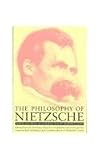
The Philosophy of Nietzsche: Thus Spake Zarathustra; Beyond Good and Evil; The Genealogy of Morals; Ecce Homo; The Birth of Tragedy
by Friedrich Nietzsche 
On This Page
Description
Translations selected from the Levy ed.(London,1921);arrangement based on the Schlechts ed.(Munich,1954-56).Tags
Recommendations
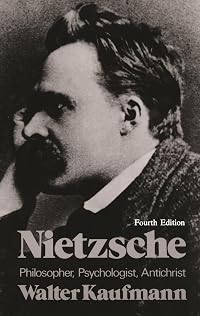









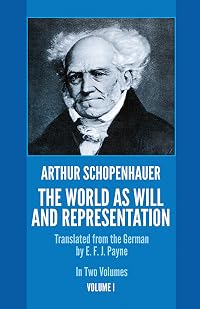






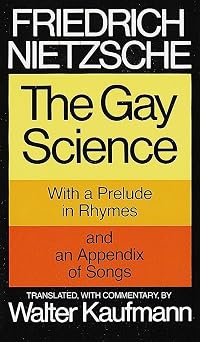










Member Recommendations
Member Reviews
This translation of Nietzsche is by far, the one I would most recommend. Geoffrey Clive maintains the structural integrity, necessary for one to truly embrace and absorb, the raw emotions felt by Nietzsche. Whether translated from French or German, Geoffrey Clive accomplishes, as best one can hope to achieve when English is the final read, transferring to the intuitive & empathic reader of Nietzsche, the opportunity to unearth, as Nietzsche did, the truth of a dual reality, available to all; attainable by few.
Engrossed in Nietzsche's words, as given to me by Geoffrey Clive, I began to wonder if Nietzsche has been misinterpreted, not by any fault controllable by the interpreter, but by constraints of that which Nietzsche painfully tried show more to convey as conventional wisdom (an oxymoron, possibly the source of all that followed). I believe that Nietzsche was an empath in the very real physiological sense of the word. A man embracing yet revolting against the other side of truth.
Nietzsche throughout every one of his writings, speaks through the confusion of an alternate plane of existance; "A philosopher who has made the tour of many states of health, and always makes it anew, had also gone through just as many philosophies; he really cannot do otherwise than transform his condition on every occasion into the more ingenious posture and position--this is the art of transfiguration is just philosophy. We philosophers are not at liberty to separate soul and body, as the people separate them; and we are still less at liberty to separate soul and spirit." (From the Prefaces of The Joyful Wisdom, 2nd edition, #3.)
If I am correct, then his critique of religion actually links science and theology, allowing both to coexist as one! The completion of this unity lies in our midst today. I believe it is in our best interest as the whole of mankind to accept dual realities, to seek to understand each other and to be receptive to all that the other side of truth may hold.
Please forgive my lack of correct citation, my rolling sentences ( of which I share with Nietzsche), and the lengthy review. I feel within my soul, I am on to something here. Please read the 3rd preface referenced above in its entirety.
I believe most the readers of my review will fall into one of the following categories, of which I will try to direct you to your next destination. The rest of you are more likely than not to be way ahead of me in matters relating to philosophy, writing and or parapsychology.
1.) Blood is rushing to your head. Your ears hear clearer, your energy abounds and soon you will question the initial awareness of truth coming to life inside you. Do not let your trained conscious undermine your inner voice. Immediately, do not give conventional reality the chance to repress the other side of truth. Run out and buy Judith Orloff's, "Second Sight", isbn 0-446-67335-8.
2.) You are doubting my intelligence and motives after being referred to "Second Sight". You share the journey of Nietzsche; unable to let your inner voice balance with conventionality in a dual reality. Your battle in an alternate universe will come to an end when the balance is reached. I cannot help you on that journey. For me it was a leap of faith. A fearful leap of faith because like Nietzsche, the stigma of insanity is more real to you than believing you possess a amazing gift.
3.) You have no clue to which I refer and are convinced I will share the same fate as Nietzsche; paralytic insanity to the very end. I half agree with you. However, it is also worth while of you to read the above mentioned book. It is a basic introduction to the world of empaths written by a medical doctor as she describes her contemporary journey. Read in tandem with Philosophy of Nietzsche, edited by Geoffrey Clive, will at the very least, offer a pleasurable scholarly elementary exercise of patience.
4.) If you are still with me, then I am with you. I currently am contacting as many people allowed me in the time before the swarm of my environment kick starts the need for self preservation, resulting in what I call "Brain Freeze". At that point it is yoga or couch potato. Nietzsche refers to it as one of the three required elements of health; recreation; the time for recharge.
If I can help you, or you can help me, please email me. It may take up to a week for me to reply. With the short days and cold weather coupled with my financial constraints restricting my ability to spend these months leisurely along the equator, as Nietzsche was able to do, I find myself indisposed all to often.
Believe in yourself! Conviction is worse than lies! Be very reluctant if not opposed to accepting the belief in one reality as truth. Love thy neighbor! show less
Engrossed in Nietzsche's words, as given to me by Geoffrey Clive, I began to wonder if Nietzsche has been misinterpreted, not by any fault controllable by the interpreter, but by constraints of that which Nietzsche painfully tried show more to convey as conventional wisdom (an oxymoron, possibly the source of all that followed). I believe that Nietzsche was an empath in the very real physiological sense of the word. A man embracing yet revolting against the other side of truth.
Nietzsche throughout every one of his writings, speaks through the confusion of an alternate plane of existance; "A philosopher who has made the tour of many states of health, and always makes it anew, had also gone through just as many philosophies; he really cannot do otherwise than transform his condition on every occasion into the more ingenious posture and position--this is the art of transfiguration is just philosophy. We philosophers are not at liberty to separate soul and body, as the people separate them; and we are still less at liberty to separate soul and spirit." (From the Prefaces of The Joyful Wisdom, 2nd edition, #3.)
If I am correct, then his critique of religion actually links science and theology, allowing both to coexist as one! The completion of this unity lies in our midst today. I believe it is in our best interest as the whole of mankind to accept dual realities, to seek to understand each other and to be receptive to all that the other side of truth may hold.
Please forgive my lack of correct citation, my rolling sentences ( of which I share with Nietzsche), and the lengthy review. I feel within my soul, I am on to something here. Please read the 3rd preface referenced above in its entirety.
I believe most the readers of my review will fall into one of the following categories, of which I will try to direct you to your next destination. The rest of you are more likely than not to be way ahead of me in matters relating to philosophy, writing and or parapsychology.
1.) Blood is rushing to your head. Your ears hear clearer, your energy abounds and soon you will question the initial awareness of truth coming to life inside you. Do not let your trained conscious undermine your inner voice. Immediately, do not give conventional reality the chance to repress the other side of truth. Run out and buy Judith Orloff's, "Second Sight", isbn 0-446-67335-8.
2.) You are doubting my intelligence and motives after being referred to "Second Sight". You share the journey of Nietzsche; unable to let your inner voice balance with conventionality in a dual reality. Your battle in an alternate universe will come to an end when the balance is reached. I cannot help you on that journey. For me it was a leap of faith. A fearful leap of faith because like Nietzsche, the stigma of insanity is more real to you than believing you possess a amazing gift.
3.) You have no clue to which I refer and are convinced I will share the same fate as Nietzsche; paralytic insanity to the very end. I half agree with you. However, it is also worth while of you to read the above mentioned book. It is a basic introduction to the world of empaths written by a medical doctor as she describes her contemporary journey. Read in tandem with Philosophy of Nietzsche, edited by Geoffrey Clive, will at the very least, offer a pleasurable scholarly elementary exercise of patience.
4.) If you are still with me, then I am with you. I currently am contacting as many people allowed me in the time before the swarm of my environment kick starts the need for self preservation, resulting in what I call "Brain Freeze". At that point it is yoga or couch potato. Nietzsche refers to it as one of the three required elements of health; recreation; the time for recharge.
If I can help you, or you can help me, please email me. It may take up to a week for me to reply. With the short days and cold weather coupled with my financial constraints restricting my ability to spend these months leisurely along the equator, as Nietzsche was able to do, I find myself indisposed all to often.
Believe in yourself! Conviction is worse than lies! Be very reluctant if not opposed to accepting the belief in one reality as truth. Love thy neighbor! show less
Ratings
Members
- Recently Added By
Lists

Trinity College Booklist (1951): Class Three, Philosophy and Religion
80 works; 3 members
Author Information

1,397+ Works 78,557 Members
The son of a Lutheran pastor, Friedrich Wilhelm Nietzsche was born in 1844 in Roecken, Prussia, and studied classical philology at the Universities of Bonn and Leipzig. While at Leipzig he read the works of Schopenhauer, which greatly impressed him. He also became a disciple of the composer Richard Wagner. At the very early age of 25, Nietzsche show more was appointed professor at the University of Basel in Switzerland. In 1870, during the Franco-Prussian War, Nietzsche served in the medical corps of the Prussian army. While treating soldiers he contracted diphtheria and dysentery; he was never physically healthy afterward. Nietzsche's first book, The Birth of Tragedy Out of the Spirit of Music (1872), was a radical reinterpretation of Greek art and culture from a Schopenhaurian and Wagnerian standpoint. By 1874 Nietzsche had to retire from his university post for reasons of health. He was diagnosed at this time with a serious nervous disorder. He lived the next 15 years on his small university pension, dividing his time between Italy and Switzerland and writing constantly. He is best known for the works he produced after 1880, especially The Gay Science (1882), Thus Spake Zarathustra (1883-85), Beyond Good and Evil (1886), On the Genealogy of Morals (1887), The Antichrist (1888), and Twilight of the Idols (1888). In January 1889, Nietzsche suffered a sudden mental collapse; he lived the last 10 years of his life in a condition of insanity. After his death, his sister published many of his papers under the title The Will to Power. Nietzsche was a radical questioner who often wrote polemically with deliberate obscurity, intending to perplex, shock, and offend his readers. He attacked the entire metaphysical tradition in Western philosophy, especially Christianity and Christian morality, which he thought had reached its final and most decadent form in modern scientific humanism, with its ideals of liberalism and democracy. It has become increasingly clear that his writings are among the deepest and most prescient sources we have for acquiring a philosophical understanding of the roots of 20th-century culture. (Bowker Author Biography) show less
Friedrich Nietzsche has a Legacy Library. Legacy libraries are the personal libraries of famous readers, entered by LibraryThing members from the Legacy Libraries group.
Some Editions
Work Relationships
Contains
Common Knowledge
- Canonical title
- The Philosophy of Nietzsche: Thus Spake Zarathustra; Beyond Good and Evil; The Genealogy of Morals; Ecce Homo; The Birth of Tragedy
- Original publication date
- 1927
Classifications
Statistics
- Members
- 389
- Popularity
- 80,612
- Reviews
- 1
- Rating
- (3.87)
- Languages
- English
- Media
- Paper
- ISBNs
- 3
- ASINs
- 14