
S. S. Van Dine (1888–1939)
Author of The Canary Murder Case
About the Author
Image credit: Library of Congress
Series
Works by S. S. Van Dine
Philo Vance : Four Complete Novels (The Benson Murder Case / The "Canary" Murder Case / The Bishop Murder Case / The Scarab Murder Case) (1984) 48 copies, 1 review
The Philo Vance Murder Cases 3: The Scarab Murder Case & The Kennel Murder Case (2008) 9 copies, 1 review
The Philo Vance Murder Cases 6: The Gracie Allen Murder Case & The Winter Murder Case (2008) 5 copies
Philo Vance;la strana morte del sign Benson-la fine dei greene-l'enigma dell'alfiere-la dea della vendetta-la canarina assassinata ,etc 1°vol (1969) 4 copies
Philo Vance 4 copies
Philo Vance murder cases: The scarab murder case, The kennel murder case, The dragon murder case (1936) 3 copies
The Bishop Murder Case 2 copies
The Kennel Murder Case | The Dragon Murder Case | The Garden Murder Case | The Kidnap Murder Case (1970) 2 copies
Il Mistero Del Casinò 1 copy
Sprawa Bensona 1 copy
El caso Garden 1 copy
El caso del secuestro 1 copy
The Canary Murder Case 1 copy
Il Caso Del Terrier Scozzese 1 copy
Le fine dei Greene 1 copy
The Benson Murder Case | The Casino Murder Case | The Garden Murder Case | The Kidnap Murder Case | The Winter Murder Case (1962) 1 copy
Philo Vance Omnibus Vol 2 1 copy
The Casino Murder Case 1 copy
The Garden Murder Case 1 copy
The Kidnap Murder Case 1 copy
Philo Vance Omnibus Vol 2 1 copy
Il mistero di casa Giardino 1 copy
El caso de los asesinatos del Obispo: Una aventura de Philo Vance (Literatura Reino de Cordelia) (Spanish Edition) (2020) 1 copy
Los crímenes de " El Obispo" 1 copy
O crime do dragão 1 copy
Il Mistero di casa Giardino 1 copy
The Garden Murder Case 1 copy
Associated Works
The Philosophy of Nietzsche: Thus Spake Zarathustra; Beyond Good and Evil; The Genealogy of Morals; Ecce Homo; The Birth of Tragedy (1927) — Introduction, some editions — 389 copies, 1 review
Bodies from the Library 2: Forgotten Stories of Mystery and Suspense by the Queens of Crime and other Masters of Golden Age Detection (2019) — Contributor — 96 copies, 3 reviews
Bodies from the Library 5: Forgotten Stories of Mystery and Suspense from the Golden Age of Detection (2022) — Contributor — 47 copies, 1 review
Murder Plus: True Crime Stories from the Masters of Detective Fiction (1992) — Contributor — 46 copies
Tagged
Common Knowledge
- Legal name
- Wright, Willard Huntington
- Other names
- S. S. Van Dine
- Birthdate
- 1888-10-15
- Date of death
- 1939-04-11
- Gender
- male
- Education
- Pomona College
Harvard University
St. Vincent College - Occupations
- art critic
novelist
short story writer
journalist
literary editor - Nationality
- USA
- Birthplace
- Charlottesville, Virginia, USA
- Places of residence
- Charlottesville, Virginia, USA
New York, New York, USA
Los Angeles, California, USA - Place of death
- New York, New York, USA
- Burial location
- New York, New York, USA
- Associated Place (for map)
- New York, USA
Members
Reviews
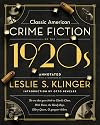
This book is massive. 1100 pages, hardbound. This is the kind of book you want to use to wallop burglars. That'd be an especially appropriate use of this anthology, too, since it covers a full range of 1920s crime novels. Overall, it's a fascinating read. You get the first books of several major detective series, like Charlie Chan and Ellery Queen. Even the book with an almost unbearable protagonist, Philo Vance, gave me oodles of useful research notes and an interesting mystery as the show more backbone of the piece. Dashiell Hammet's first book is a veritable blood bath, but a masterfully done one at that. Reading Little Caesar, I can well understand how this established the gangster novel--and movie--genres.
There is a lengthy introduction at the start, giving context for each book. The annotations throughout were very useful (indeed, for the gangster novel Little Caesar, the lingo would've been a challenge to parse otherwise) but I also found myself wanting more annotations.
If you love classic mysteries and want a showcase book, this is worth the hefty price. (I bought my signed edition from Poisoned Pen Bookstore in Scottsdale, Arizona.) But do be aware it is a difficult read because of the sheer size of the book. Not only is this book impossible to tuck away in a purse to read on the go, it's awkward to read wherever you may be. Still, I found the challenge to be more than worthwhile in the end.
My reviews for each included book are found below, and are also posted under the individual book listings on Goodreads and LibraryThing.
---
The House Without a Key: Charlie Chan #1 by by Earl Derr Biggers
Charlie Chan is an iconic character, and it was interesting to see him within the context of his first novel, published with its original text. The book surprised me in many ways. First of all, the settings within the book are masterfully portrayed. I've never seen a book so vividly describe Hawaii in the 1920s. The annotations remarked a few times on inaccuracies or fictionalized bits, but many of the details felt spot-on (I say that, having extensively read on early 20th century Hawaii for my own novel). While I expected issues with racism and caricatures because of the era, this was not as bad as I expected it would be (how's that for an endorsement?). Charlie Chan is regarded as something of a mockery now, but as the notes observed, he does not speak pidgin Chinese, but talks as a very highly educated man. The text of the book demonstrated that well. The way white characters reacted to Chan felt realistic (though sad), but I also understood well why the original text had Chan racist against the Japanese. Within the context of the time, that made perfect sense; it's worth noting that these racist snippets were toned down or removed in later editions of the book.
This does not develop as a modern murder mystery does--often with a corpse in chapter one. Instead, the start is slow as the reader gets to know the Winterslip family of both Boston and Honolulu. The dead body doesn't show up until almost a hundred pages in, with Charlie Chan's arrival immediately after. I think my biggest surprise about the book was that Chan was a minor character with a pivotal role. Instead, most of the novel followed the stuffy scion of the Winterslip family. His was not a bad perspective--it was enjoyable to watch him grow across the book--but I expected a Charlie Chan book to, well, be more about Charlie Chan. The murderer was fairly obvious to be from early on, though there were some nice twists and turns leading up to the big reveal at the end.
I feel no urge to read onward in the series, but if I need to do more research on 1920s Hawaii, I just might. The book was not a bad read at all. Intriguing, I'd say.
---
The Benson Murder Case (Philo Vance #1)
by S.S. Van Dine
I must say, the first chapter of this book convinced me that it was going to be absolutely dreadful. It probably didn't help that preceding information in the book had pointed out that the Philo Vance series eventually withered and died because the insufferable, rambling nature of the lead character became too aggravating to bear. But once I made it past that initial introductory chapter and to the actual murder, the story was much more engaging.
The positives: It's a good murder mystery. The set-up is complex and intriguing, and it nicely utilizes New York City. Alvin Benson is found dead, shot in the head, and the clues in his house are myriad, from the handbag and gloves left on the mantle to the car parked out front during the night. The district attorney invites his friend Philo Vance to see the crime, and on a whim, the insufferable art collector digs into the mystery, and digs in deep. The way Philo Vance psychologically examines people is fascinating. I liked that I guessed the murderer quite early on.
The negatives: Philo Vance. He's aggravating. He boasts throughout that he's known who the murderer is from the time he first viewed the corpse at the crime scene, but he strings along his DA friend for days, relentlessly teasing him and shredding apart his reliance on circumstantial evidence. While the latter is necessary (the DA was ready to convict several people on tenuous evidence), the whole know-it-all aspect gets old really fast.
The choice of narrator felt utterly useless, too. Another of Vance's friends is the observer of everything, and he contributes nothing to the story. He's no Watson, there to offer occasional advice or act as a foil or do medical examinations. No, this guy is just there, a shadow. I can't even remember his name; it only came up at the very beginning, I think.
The annotations probably helped my reading experience a lot, too, providing translations or context for the French and Latin Vance often employs, explaining Vance's commentary on art, and noting what NYC locations were real and fictional. Interestingly, the author muddled a lot of period details himself. By the calendar within the book, the murder should be set in 1918, but various details on geographical locations or police technology didn't exist until the early 1920s. Writers these days can check those kinds of things through Google...
I wouldn't read onward in this series, I think, because the very idea of Philo Vance becoming even more annoying is a big turn off. That said, this book offered me a tremendous boon in terms of research, with fantastic period details and cultural references.
---
The Roman Hat Mystery by Ellery Queen
Thus far in this collection, I've read the first books about Charlie Chan and Philo Vance. Both had issues, from my modern perspective--a painfully slow start and barely any Charlie Chan in the first, and the rambling, annoying presence of Philo Vance in the second. But in this, the first Ellery Queen novel, I finally encountered a 1920s mystery I absolutely loved. The writing is fantastic from page one, the mystery utterly intriguing, and the cast of characters diverse and amusing. I could see myself reading and enjoying more Ellery Queen novels.
---
Red Harvest (The Continental Op #1) by Dashiell Hammett
Red Harvest is aptly named, a bloodbath of a 1920s noir novel. When the unnamed private detective rolls into Personville to meet a new client, the client is found murdered. The Op goes about solving that murder, and becomes embroiled in pretty intense gang warfare that gets far nastier after the original murder is solved. This is a fast read, with knife-sharp language and wit. The Op is a character with virtually no background or personality, but he has a brutal edge and a will to survive. It's no wonder this character helped to establish the very trope of the hard-boiled PI, complete with steady applications of scotch.
---
Little Caesar by W.R. Burnett
Little Caesar is the first major gangster novel, published in 1929. It was made into a famous 1931 movie--and essentially created the gangster stereotype (one I became most familiar with through Bugs Bunny cartoons). The book itself is an interesting study on the 'voice' of a book, as the author goes deep into gangster lingo. At the end of my edition, the editor included a foreword that the author wrote in the 1950s about the writing and rejection process behind the book. He made a conscious choice to strip away adjectives to make the prose bloody and blunt. It works. The book doesn't try to make you like its characters--it just shows them as they are. I was grateful to have the annotations to help me parse the lingo and explain details about Chicago and guns of the period.
I never would have expected to like the book this much, but it fascinated me. It shows the era with all its ugliness and racism and dames and plates of spaghetti with wine. Now I want to watch the movie to compare.
--- show less
There is a lengthy introduction at the start, giving context for each book. The annotations throughout were very useful (indeed, for the gangster novel Little Caesar, the lingo would've been a challenge to parse otherwise) but I also found myself wanting more annotations.
If you love classic mysteries and want a showcase book, this is worth the hefty price. (I bought my signed edition from Poisoned Pen Bookstore in Scottsdale, Arizona.) But do be aware it is a difficult read because of the sheer size of the book. Not only is this book impossible to tuck away in a purse to read on the go, it's awkward to read wherever you may be. Still, I found the challenge to be more than worthwhile in the end.
My reviews for each included book are found below, and are also posted under the individual book listings on Goodreads and LibraryThing.
---
The House Without a Key: Charlie Chan #1 by by Earl Derr Biggers
Charlie Chan is an iconic character, and it was interesting to see him within the context of his first novel, published with its original text. The book surprised me in many ways. First of all, the settings within the book are masterfully portrayed. I've never seen a book so vividly describe Hawaii in the 1920s. The annotations remarked a few times on inaccuracies or fictionalized bits, but many of the details felt spot-on (I say that, having extensively read on early 20th century Hawaii for my own novel). While I expected issues with racism and caricatures because of the era, this was not as bad as I expected it would be (how's that for an endorsement?). Charlie Chan is regarded as something of a mockery now, but as the notes observed, he does not speak pidgin Chinese, but talks as a very highly educated man. The text of the book demonstrated that well. The way white characters reacted to Chan felt realistic (though sad), but I also understood well why the original text had Chan racist against the Japanese. Within the context of the time, that made perfect sense; it's worth noting that these racist snippets were toned down or removed in later editions of the book.
This does not develop as a modern murder mystery does--often with a corpse in chapter one. Instead, the start is slow as the reader gets to know the Winterslip family of both Boston and Honolulu. The dead body doesn't show up until almost a hundred pages in, with Charlie Chan's arrival immediately after. I think my biggest surprise about the book was that Chan was a minor character with a pivotal role. Instead, most of the novel followed the stuffy scion of the Winterslip family. His was not a bad perspective--it was enjoyable to watch him grow across the book--but I expected a Charlie Chan book to, well, be more about Charlie Chan. The murderer was fairly obvious to be from early on, though there were some nice twists and turns leading up to the big reveal at the end.
I feel no urge to read onward in the series, but if I need to do more research on 1920s Hawaii, I just might. The book was not a bad read at all. Intriguing, I'd say.
---
The Benson Murder Case (Philo Vance #1)
by S.S. Van Dine
I must say, the first chapter of this book convinced me that it was going to be absolutely dreadful. It probably didn't help that preceding information in the book had pointed out that the Philo Vance series eventually withered and died because the insufferable, rambling nature of the lead character became too aggravating to bear. But once I made it past that initial introductory chapter and to the actual murder, the story was much more engaging.
The positives: It's a good murder mystery. The set-up is complex and intriguing, and it nicely utilizes New York City. Alvin Benson is found dead, shot in the head, and the clues in his house are myriad, from the handbag and gloves left on the mantle to the car parked out front during the night. The district attorney invites his friend Philo Vance to see the crime, and on a whim, the insufferable art collector digs into the mystery, and digs in deep. The way Philo Vance psychologically examines people is fascinating. I liked that I guessed the murderer quite early on.
The negatives: Philo Vance. He's aggravating. He boasts throughout that he's known who the murderer is from the time he first viewed the corpse at the crime scene, but he strings along his DA friend for days, relentlessly teasing him and shredding apart his reliance on circumstantial evidence. While the latter is necessary (the DA was ready to convict several people on tenuous evidence), the whole know-it-all aspect gets old really fast.
The choice of narrator felt utterly useless, too. Another of Vance's friends is the observer of everything, and he contributes nothing to the story. He's no Watson, there to offer occasional advice or act as a foil or do medical examinations. No, this guy is just there, a shadow. I can't even remember his name; it only came up at the very beginning, I think.
The annotations probably helped my reading experience a lot, too, providing translations or context for the French and Latin Vance often employs, explaining Vance's commentary on art, and noting what NYC locations were real and fictional. Interestingly, the author muddled a lot of period details himself. By the calendar within the book, the murder should be set in 1918, but various details on geographical locations or police technology didn't exist until the early 1920s. Writers these days can check those kinds of things through Google...
I wouldn't read onward in this series, I think, because the very idea of Philo Vance becoming even more annoying is a big turn off. That said, this book offered me a tremendous boon in terms of research, with fantastic period details and cultural references.
---
The Roman Hat Mystery by Ellery Queen
Thus far in this collection, I've read the first books about Charlie Chan and Philo Vance. Both had issues, from my modern perspective--a painfully slow start and barely any Charlie Chan in the first, and the rambling, annoying presence of Philo Vance in the second. But in this, the first Ellery Queen novel, I finally encountered a 1920s mystery I absolutely loved. The writing is fantastic from page one, the mystery utterly intriguing, and the cast of characters diverse and amusing. I could see myself reading and enjoying more Ellery Queen novels.
---
Red Harvest (The Continental Op #1) by Dashiell Hammett
Red Harvest is aptly named, a bloodbath of a 1920s noir novel. When the unnamed private detective rolls into Personville to meet a new client, the client is found murdered. The Op goes about solving that murder, and becomes embroiled in pretty intense gang warfare that gets far nastier after the original murder is solved. This is a fast read, with knife-sharp language and wit. The Op is a character with virtually no background or personality, but he has a brutal edge and a will to survive. It's no wonder this character helped to establish the very trope of the hard-boiled PI, complete with steady applications of scotch.
---
Little Caesar by W.R. Burnett
Little Caesar is the first major gangster novel, published in 1929. It was made into a famous 1931 movie--and essentially created the gangster stereotype (one I became most familiar with through Bugs Bunny cartoons). The book itself is an interesting study on the 'voice' of a book, as the author goes deep into gangster lingo. At the end of my edition, the editor included a foreword that the author wrote in the 1950s about the writing and rejection process behind the book. He made a conscious choice to strip away adjectives to make the prose bloody and blunt. It works. The book doesn't try to make you like its characters--it just shows them as they are. I was grateful to have the annotations to help me parse the lingo and explain details about Chicago and guns of the period.
I never would have expected to like the book this much, but it fascinated me. It shows the era with all its ugliness and racism and dames and plates of spaghetti with wine. Now I want to watch the movie to compare.
--- show less
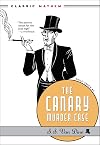
The literate, intelligent, and almost insufferably smug at times creation of culturally influential art critic Willard Huntington Wright, amateur detective Philo Vance, was Wright incognito. Philo Vance could drone on about art, dogs, arcane historical facts and languages all while solving the most intricately designed murder puzzle. The Philo Vance mysteries made Wright, who eventually owned up to writing them and embraced the celebrity hoisted upon him by the masses who read mysteries — show more as he viewed them — a literary sensation. William Powell’s portrayal of the urbane know-it-all who helped DA Markham solve the unsolvable cases in the movie adaptation of the wildly popular books added glamour to the mix.
Van Dine’s detective was a sensation in print and in the movies. Wright’s creation would eventually become out of step with the genre as it gravitated to the hardboiled detective, but there’s no denying his impact on the genre; if you doubt it, read the Spenser series by Robert B. Parker sometime; you’ll run across several fun references to Philo Vance.
Today, Van Dine’s mystery novels and his creation Philo Vance seem more arcane than some of the tidbits about ancient history and art that would come out of the detective’s mouth while he was deciphering clues. But these mysteries are very nostalgic of another time — specifically the jazz age — and the murder puzzles are still top-notch, some of the best ever, in fact. But you as a reader will either loathe them, or love them. And in a strange irony many other reviewers have noted, the reason some readers loathe them is much the same reason others like myself love them. Vance is like escargot — there’s no middle ground; you either partake, or you don’t.
Canary is a very early Vance novel, with Vance the ultimate version of the urbane intellectual know-it-all. Trouble is, he seemingly does know it all, and expects the people around him to understand even the most arcane cultural reference he applies to working the Canary case. Markham usually does, but not everyone else, don’t y’ know?
The brutal strangulation of Broadway’s Margaret Odell is as sensational as she was to the opposite sex. But there seems no way possible for anyone to have been present with her at the time of her demise. But there’s a closet locked from the inside, and a steel box opened with a steel chisel; but only after someone tried to open it another way. An amateur? Did she interrupt a robbery? Was it one of her lovers? Or does it all point to blackmail?
What makes matters worse, is the more people Markham, his man Heath, and Vance talk to, the murkier it all gets. The more details they have, the more impossible the murder seems at all. This leads to Vance good-naturedly needling his old pal, DA Markham:
“Y’ know, Markham, it appears to me that the testimony in this case constitutes conclusive legal proof that no one could have been with the deceased at the hour of her passing, and that, ergo, she is presumably alive. The strangled body of the lady is, I take it, simply an irrelevant circumstance from the standpoint of legal procedure. I know that learned lawyers won’t admit a murder without a body; but how, in Heaven’s name, do you get around a corpus delicti without a murder?”
As one possible avenue of inquiry after another leads to solid alibis or no possibility of the suspect having anything to do with the murder, Vance jokes with the frustrated Markham:
“I say, if you keep up this elimination much longer,” observed Vance, “you won’t have anything left but the lady’s corpse.”
When there finally appears to be a break in the case regarding who the man hiding in the closet may have been, Vance turns the murder investigation upside down with an entirely new theory he’s been holding back:
“Markham,” said Vance quietly, but with unwonted seriousness, “if that’s what you really believe, you might as well drop the case now; for you’re foredoomed to failure. You think it’s an obvious crime. But let me tell you, it’s a subtle crime, if ever there was one. And it’s as clever as it is subtle. No common criminal committed it — believe me. It was done by a man of very superior intellect and astoundin’ ingenuity.”
Eventually when the case seems like a circular dead end, Vance, his lawyer Van Dine (our narrator) in tow, does a bit of sleuthing sans Markham and Heath, altering alibis and the suspects various connections to Odell and each other. But when he passes what he can on to Markham, all this info only creates new conundrums. That is until the person who was actually in the room when Odell was strangled makes arrangements to spill the beans. Only in an epiphany which arrives too late to Vance — his mind had been on Monet, don’t y’ know — does he realize the real reason for the call, and the imminent danger.
Despite the highfalutin banter and attitude, it’s a poker game with all the suspects who clues Vance into the real killer. But that alibi can’t be broken. Or can it?
Hidden beneath the erudite goings on, obscured by the two dollar words and the intellectual highhandedness, and veiled by the delicious murder puzzle of Canary, and every other Philo Vance novel penned by S.S. Van Dine, is pulp-style movement. Yes, you read that correctly. Philo Vance is/was touted as a mystery and detective series for the smarter and more intellectual members of the reading public; by design, it began as a lark by a man not dissimilar to his own creation. How ironic then that the thing which makes these so readable and enjoyable to those who’ve acquired an appreciation for them — and Philo Vance is undoubtedly an acquired taste — is the most basic staple of pulp writing: movement within the narrative.
You may feel like you’ve read 25 pages when you look up to discover that you’ve only read 10 in a Philo Vance novel; the reason is because it’s overflowing with dialog and actions that create movement in the story. Van Dine may have been a culture-centric snob, but my oh my could he write! There is a sweeping sense of being carried along somewhere by the highfalutin jargon flying between Vance and Markham in Canary. That’s no accident; it can’t be, because it’s an earmark of every Philo Vance novel. One has to surmise that somewhere in Heaven, Willard Huntington Wright, aka S.S. Van Dine, is probably smirking, because the masses finally figured it out, don’t y’ know, eh what?
While it’s impossible to in good conscience make a general recommendation to readers on a book like this — because you may end up in the camp who just can’t take Philo Vance, rather than the camp who embrace the classic mystery novels — for those fans of Van Dine and his high-brow detective of the jazz age, this one is very fun. show less
Van Dine’s detective was a sensation in print and in the movies. Wright’s creation would eventually become out of step with the genre as it gravitated to the hardboiled detective, but there’s no denying his impact on the genre; if you doubt it, read the Spenser series by Robert B. Parker sometime; you’ll run across several fun references to Philo Vance.
Today, Van Dine’s mystery novels and his creation Philo Vance seem more arcane than some of the tidbits about ancient history and art that would come out of the detective’s mouth while he was deciphering clues. But these mysteries are very nostalgic of another time — specifically the jazz age — and the murder puzzles are still top-notch, some of the best ever, in fact. But you as a reader will either loathe them, or love them. And in a strange irony many other reviewers have noted, the reason some readers loathe them is much the same reason others like myself love them. Vance is like escargot — there’s no middle ground; you either partake, or you don’t.
Canary is a very early Vance novel, with Vance the ultimate version of the urbane intellectual know-it-all. Trouble is, he seemingly does know it all, and expects the people around him to understand even the most arcane cultural reference he applies to working the Canary case. Markham usually does, but not everyone else, don’t y’ know?
The brutal strangulation of Broadway’s Margaret Odell is as sensational as she was to the opposite sex. But there seems no way possible for anyone to have been present with her at the time of her demise. But there’s a closet locked from the inside, and a steel box opened with a steel chisel; but only after someone tried to open it another way. An amateur? Did she interrupt a robbery? Was it one of her lovers? Or does it all point to blackmail?
What makes matters worse, is the more people Markham, his man Heath, and Vance talk to, the murkier it all gets. The more details they have, the more impossible the murder seems at all. This leads to Vance good-naturedly needling his old pal, DA Markham:
“Y’ know, Markham, it appears to me that the testimony in this case constitutes conclusive legal proof that no one could have been with the deceased at the hour of her passing, and that, ergo, she is presumably alive. The strangled body of the lady is, I take it, simply an irrelevant circumstance from the standpoint of legal procedure. I know that learned lawyers won’t admit a murder without a body; but how, in Heaven’s name, do you get around a corpus delicti without a murder?”
As one possible avenue of inquiry after another leads to solid alibis or no possibility of the suspect having anything to do with the murder, Vance jokes with the frustrated Markham:
“I say, if you keep up this elimination much longer,” observed Vance, “you won’t have anything left but the lady’s corpse.”
When there finally appears to be a break in the case regarding who the man hiding in the closet may have been, Vance turns the murder investigation upside down with an entirely new theory he’s been holding back:
“Markham,” said Vance quietly, but with unwonted seriousness, “if that’s what you really believe, you might as well drop the case now; for you’re foredoomed to failure. You think it’s an obvious crime. But let me tell you, it’s a subtle crime, if ever there was one. And it’s as clever as it is subtle. No common criminal committed it — believe me. It was done by a man of very superior intellect and astoundin’ ingenuity.”
Eventually when the case seems like a circular dead end, Vance, his lawyer Van Dine (our narrator) in tow, does a bit of sleuthing sans Markham and Heath, altering alibis and the suspects various connections to Odell and each other. But when he passes what he can on to Markham, all this info only creates new conundrums. That is until the person who was actually in the room when Odell was strangled makes arrangements to spill the beans. Only in an epiphany which arrives too late to Vance — his mind had been on Monet, don’t y’ know — does he realize the real reason for the call, and the imminent danger.
Despite the highfalutin banter and attitude, it’s a poker game with all the suspects who clues Vance into the real killer. But that alibi can’t be broken. Or can it?
Hidden beneath the erudite goings on, obscured by the two dollar words and the intellectual highhandedness, and veiled by the delicious murder puzzle of Canary, and every other Philo Vance novel penned by S.S. Van Dine, is pulp-style movement. Yes, you read that correctly. Philo Vance is/was touted as a mystery and detective series for the smarter and more intellectual members of the reading public; by design, it began as a lark by a man not dissimilar to his own creation. How ironic then that the thing which makes these so readable and enjoyable to those who’ve acquired an appreciation for them — and Philo Vance is undoubtedly an acquired taste — is the most basic staple of pulp writing: movement within the narrative.
You may feel like you’ve read 25 pages when you look up to discover that you’ve only read 10 in a Philo Vance novel; the reason is because it’s overflowing with dialog and actions that create movement in the story. Van Dine may have been a culture-centric snob, but my oh my could he write! There is a sweeping sense of being carried along somewhere by the highfalutin jargon flying between Vance and Markham in Canary. That’s no accident; it can’t be, because it’s an earmark of every Philo Vance novel. One has to surmise that somewhere in Heaven, Willard Huntington Wright, aka S.S. Van Dine, is probably smirking, because the masses finally figured it out, don’t y’ know, eh what?
While it’s impossible to in good conscience make a general recommendation to readers on a book like this — because you may end up in the camp who just can’t take Philo Vance, rather than the camp who embrace the classic mystery novels — for those fans of Van Dine and his high-brow detective of the jazz age, this one is very fun. show less
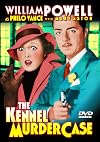
S.S. Van Dine's Philo Vance has sadly been all but forgotten today, seeming too perfect and erudite for today’s reading audience. The dapper detective was adapted to film several times, however. The Kennel Murder Case is by far the best film adaptation of the highbrow sleuth. Famed director Michael Curtiz used that early 1930s soft focus look and a well-written and witty script to bring Vance to life in the form of William Powell, who proved perfect for the part.
From the opening moments show more of Vance at the Long Island Kennel Club with his dog, Captain McDavish, this is a classy and breezily-paced little mystery. The murder of Hilda Lake’s dog escalates into a human murder with lots of suspects. But how was the murder committed, since the victim is found dead in a room locked from the inside? It’s just the type of puzzle relished by Philo Vance, so he cancels his vacation cruise to lend Detective Heath (Eugene Pallet) a hand.
A young and very stylish Mary Astor stars as Hilda Lake, with a supporting cast which includes Helen Vinson, Ralph Morgan, Frank Conroy, and Paul Cavanagh. James Lee Liang as a cook obsessed with Chinese treasures adds flavor to this delicious little concoction. Vance has a locked room puzzle to solve, which could make this film seem stage-bound. Director Curtiz, however, manages enough flair and visual touches to offset that drawing-room feel many early 1930's mysteries had.
Shady business dealings, spurned affections, and valuable Chinese artifacts all play a part in this tight little mystery. Powell’s Vance is uptown, cool as a cucumber, and fun to watch as he’s always one step ahead of everyone else. In many ways, what makes Van Dine’s written characterization of Philo Vance seem insufferable to modern readers, lends the screen Vance, influenced by William Powell’s charm, almost hip. Vance’s solution to the mystery is unique, but the best part is the fun we have getting there.
This is a great little rainy night mystery for those times you’re in a nostalgic mood. Mystery lovers won’t want to miss this little gem. show less
From the opening moments show more of Vance at the Long Island Kennel Club with his dog, Captain McDavish, this is a classy and breezily-paced little mystery. The murder of Hilda Lake’s dog escalates into a human murder with lots of suspects. But how was the murder committed, since the victim is found dead in a room locked from the inside? It’s just the type of puzzle relished by Philo Vance, so he cancels his vacation cruise to lend Detective Heath (Eugene Pallet) a hand.
A young and very stylish Mary Astor stars as Hilda Lake, with a supporting cast which includes Helen Vinson, Ralph Morgan, Frank Conroy, and Paul Cavanagh. James Lee Liang as a cook obsessed with Chinese treasures adds flavor to this delicious little concoction. Vance has a locked room puzzle to solve, which could make this film seem stage-bound. Director Curtiz, however, manages enough flair and visual touches to offset that drawing-room feel many early 1930's mysteries had.
Shady business dealings, spurned affections, and valuable Chinese artifacts all play a part in this tight little mystery. Powell’s Vance is uptown, cool as a cucumber, and fun to watch as he’s always one step ahead of everyone else. In many ways, what makes Van Dine’s written characterization of Philo Vance seem insufferable to modern readers, lends the screen Vance, influenced by William Powell’s charm, almost hip. Vance’s solution to the mystery is unique, but the best part is the fun we have getting there.
This is a great little rainy night mystery for those times you’re in a nostalgic mood. Mystery lovers won’t want to miss this little gem. show less
The Philo Vance Murder Cases: 3-The Scarab Murder Case & The Kennel Murder Case (v. 3) by S. S. Van Dine
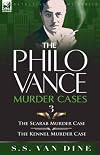
“Almost any man may be a murderer, but only a certain type of man can injure a dog the way Scottie was injured here the other night.” — Philo Vance: The Kennel Murder Case
Literate, incredibly intelligent, insufferably smug and deeply flawed, Philo Vance has endured more in part to the portrayal of him on film by William Powell (initially) than due to the books by Van Dyne. One has to wonder, with all that we know about culturally influential art critic Willard Huntington Wright in our show more day, whether Philo Vance was not the softened version of the writer himself; or perhaps the reflection Wright saw when he passed by a mirror.
Disgraced and abandoned by a few old friends for his Prussian sympathies during the first World War, and trying to recover from an addiction to cocaine, he began devouring mysteries; mostly as a lark, since such low-brow literature was beneath him. He finally approached the famous Maxwell Perkins about writing a detective series with a character very similar to himself. Because the highbrow Wright could not bear the thought of the friends he had left discovering he had sold out his intellectual ideals by dipping into the waters of detective fiction for the uneducated unenlightened masses, he initially used the pseudonym S.S. Van Dyne.
His meticulously plotted and literate detective fiction was firmly steeped in the Jazz Age, and immediately became so popular that Wright was soon unmasked as the author. While at the zenith of his fame and wealth brought to him by his creation, Philo Vance, he even wrote a self-deprecating article, “I Used to be a Highbrow and Look at Me Now.” Hardboiled detectives like Race Williams and Sam Spade eventually got a foothold on the reading public, however, and suddenly they wanted grit and guts and gats, not a sophisticated detective who could drone on about art, dogs, languages, and arcane history while solving the most elaborate and intricately conceived murder cases.
One of the better Philo Vance novels, such as the fun Kennel Murder Case, feels nostalgic when read today, while one of the more insufferable (but still fun) entries, such as The Scarab Murder Case, feels genuinely dated. For this reason Van Dyne’s Philo Vance novels have largely become viewed as somewhat archaic, difficult to read, and of historical interest only to document the evolution of the mystery and detective novel form. The person who has changed that, posthumously, is actor William Powell. When film buffs rediscovered the films where he portrayed the erudite detective the renaissance of S.S. Van Dyne began. It didn’t hurt that the best of the films, The Kennel Murder Case, filmed shortly before Powell began playing Hammett’s Nick Charles in all those wonderful Thin Man films, had fallen into Public Domain, making it easily accessible to — ironically for Wright — the masses. It also didn’t hurt that Michael Curtiz, the director of Casablanca, filmed it, turning it into a classic in the locked-room variety of drawing room mystery.
The book The Kennel Murder Case is based on, is a fun and nostalgic read with much to recommend it. It outshines The Scarab Murder Case, which, while having a fun setting in a private museum, some exciting moments, facts about Egypt, and a good puzzle, is a bit too talky. In The Scarab Murder Case, Vance comes off too insufferable at times. The solution to the mystery, while inventive, is also a bit far-fetched and maddening, considering actions taken early on by Vance that I can’t get into without spoiling everything for the reader. Don’t get me wrong, it’s still fun, but don’t judge the series by it. Instead, let’s consider how much fun The Kennel Murder Case is for the reader.
With the image of William Powell in the mind of the reader, the urbane and sophisticated Vance holds a certain charm that isn’t quite pulled off as well in Scarab. In conjunction with a story where the snobbery is softened, and less grating, The Kennel Murder Case becomes quite a fun read. In fact, solving the murder of Archer Coe, found dead in a room locked from the inside, with no other access but the door, is a blast for mystery lovers. The reader is virtually stepping into a time machine, traveling back to an era when Manhattan was glamorous rather than gauche, and when solving mysteries was a fun hobby for gentleman of means and imagination. This was a time in both books and film when sleuths led police around in circles as they picked up on one arcane or seemingly insignificant clue after another until they had figured it out — long before the cops. No one exemplified that style of mystery better than Van Dyne’s erudite creation, Philo Vance. It’s all an intellectual game, you see, even though it’s murder — a very serious business.
Coe’s shoes and a fountain pen lead Vance to believe he was murdered. Hilda Lake is one of the suspects, but so is the entire household. Then another murder occurs. A vase of no value is conspicuously placed among finer pieces, and there’s blood on it. A dagger is found, and a dog was attacked on the night in question. While Vance is helping District Attorney Markham with the case, we’re privy to Vance’s knowledge in regard to the proper breeding of the Scottish terrier. He does so in such a snobbish manner, it’ll make your eyes roll, yet there’s humor also, and more charm than in Scarab. You’ll hear some highfalutin jargon in both dialog and narrative on occasion in both books, yet it’s softened just enough in The Kennel Murder Case to give that one more nostalgic charm when read today.
The ending to The Kennel Murder Case is a good one, and it reads faster than you’d think with all the talk and the puzzling over this clue and that one. For a belligerent highbrow, Wright could, well, write. Terrific stuff in its own way, if you’re in the mood for something of this nature in the mystery genre. There’s a very late 1920s, early '30s feel of men-about-town in Manhattan to both these stories. Philo Vance was a frighteningly smart, dapper and erudite detective who enjoyed the challenge. Three and a half stars for The Scarab Murder Case, but Five for The Kennel Murder Case. Great old-fashioned stuff for when you’re in the mood. show less
Literate, incredibly intelligent, insufferably smug and deeply flawed, Philo Vance has endured more in part to the portrayal of him on film by William Powell (initially) than due to the books by Van Dyne. One has to wonder, with all that we know about culturally influential art critic Willard Huntington Wright in our show more day, whether Philo Vance was not the softened version of the writer himself; or perhaps the reflection Wright saw when he passed by a mirror.
Disgraced and abandoned by a few old friends for his Prussian sympathies during the first World War, and trying to recover from an addiction to cocaine, he began devouring mysteries; mostly as a lark, since such low-brow literature was beneath him. He finally approached the famous Maxwell Perkins about writing a detective series with a character very similar to himself. Because the highbrow Wright could not bear the thought of the friends he had left discovering he had sold out his intellectual ideals by dipping into the waters of detective fiction for the uneducated unenlightened masses, he initially used the pseudonym S.S. Van Dyne.
His meticulously plotted and literate detective fiction was firmly steeped in the Jazz Age, and immediately became so popular that Wright was soon unmasked as the author. While at the zenith of his fame and wealth brought to him by his creation, Philo Vance, he even wrote a self-deprecating article, “I Used to be a Highbrow and Look at Me Now.” Hardboiled detectives like Race Williams and Sam Spade eventually got a foothold on the reading public, however, and suddenly they wanted grit and guts and gats, not a sophisticated detective who could drone on about art, dogs, languages, and arcane history while solving the most elaborate and intricately conceived murder cases.
One of the better Philo Vance novels, such as the fun Kennel Murder Case, feels nostalgic when read today, while one of the more insufferable (but still fun) entries, such as The Scarab Murder Case, feels genuinely dated. For this reason Van Dyne’s Philo Vance novels have largely become viewed as somewhat archaic, difficult to read, and of historical interest only to document the evolution of the mystery and detective novel form. The person who has changed that, posthumously, is actor William Powell. When film buffs rediscovered the films where he portrayed the erudite detective the renaissance of S.S. Van Dyne began. It didn’t hurt that the best of the films, The Kennel Murder Case, filmed shortly before Powell began playing Hammett’s Nick Charles in all those wonderful Thin Man films, had fallen into Public Domain, making it easily accessible to — ironically for Wright — the masses. It also didn’t hurt that Michael Curtiz, the director of Casablanca, filmed it, turning it into a classic in the locked-room variety of drawing room mystery.
The book The Kennel Murder Case is based on, is a fun and nostalgic read with much to recommend it. It outshines The Scarab Murder Case, which, while having a fun setting in a private museum, some exciting moments, facts about Egypt, and a good puzzle, is a bit too talky. In The Scarab Murder Case, Vance comes off too insufferable at times. The solution to the mystery, while inventive, is also a bit far-fetched and maddening, considering actions taken early on by Vance that I can’t get into without spoiling everything for the reader. Don’t get me wrong, it’s still fun, but don’t judge the series by it. Instead, let’s consider how much fun The Kennel Murder Case is for the reader.
With the image of William Powell in the mind of the reader, the urbane and sophisticated Vance holds a certain charm that isn’t quite pulled off as well in Scarab. In conjunction with a story where the snobbery is softened, and less grating, The Kennel Murder Case becomes quite a fun read. In fact, solving the murder of Archer Coe, found dead in a room locked from the inside, with no other access but the door, is a blast for mystery lovers. The reader is virtually stepping into a time machine, traveling back to an era when Manhattan was glamorous rather than gauche, and when solving mysteries was a fun hobby for gentleman of means and imagination. This was a time in both books and film when sleuths led police around in circles as they picked up on one arcane or seemingly insignificant clue after another until they had figured it out — long before the cops. No one exemplified that style of mystery better than Van Dyne’s erudite creation, Philo Vance. It’s all an intellectual game, you see, even though it’s murder — a very serious business.
Coe’s shoes and a fountain pen lead Vance to believe he was murdered. Hilda Lake is one of the suspects, but so is the entire household. Then another murder occurs. A vase of no value is conspicuously placed among finer pieces, and there’s blood on it. A dagger is found, and a dog was attacked on the night in question. While Vance is helping District Attorney Markham with the case, we’re privy to Vance’s knowledge in regard to the proper breeding of the Scottish terrier. He does so in such a snobbish manner, it’ll make your eyes roll, yet there’s humor also, and more charm than in Scarab. You’ll hear some highfalutin jargon in both dialog and narrative on occasion in both books, yet it’s softened just enough in The Kennel Murder Case to give that one more nostalgic charm when read today.
The ending to The Kennel Murder Case is a good one, and it reads faster than you’d think with all the talk and the puzzling over this clue and that one. For a belligerent highbrow, Wright could, well, write. Terrific stuff in its own way, if you’re in the mood for something of this nature in the mystery genre. There’s a very late 1920s, early '30s feel of men-about-town in Manhattan to both these stories. Philo Vance was a frighteningly smart, dapper and erudite detective who enjoyed the challenge. Three and a half stars for The Scarab Murder Case, but Five for The Kennel Murder Case. Great old-fashioned stuff for when you’re in the mood. show less
Lists
Awards


You May Also Like


Associated Authors
Statistics
- Works
- 81
- Also by
- 12
- Members
- 2,826
- Popularity
- #9,075
- Rating
- 3.4
- Reviews
- 102
- ISBNs
- 305
- Languages
- 12
- Favorited
- 3