
Earl Derr Biggers (1884–1933)
Author of The House without a Key
About the Author
Earl Derr Biggers was born in 1884 in Warren, Ohio. He graduated from Harvard University in 1907 with a Bachelor of Arts degree. After college, Biggers went to work at The Boston Traveler, where he wrote a humorous column, and then reviews, until 1911. By that time he had finished his first novel, show more "Seven Keys To Baldpate," migrated to New York with his first novel and also his first comedy, "If You're Only Human" and began writing plays. Biggers wrote magazine articles, stories, novels and plays, including a war play, "Inside The Lines," which ran 500 nights in London in 1915 and 1916. He published two more novels during the 1910s, Love Insurance in 1914 and The Agony Column in 1916, but his main activity was focused on humor writing, particularly in magazines and short stories. In 1919, Biggers decided to quit playwriting and go to California to write for motion pictures. His reputation spread among the public with his most famous creation, Charlie Chan. He developed the character of Charlie Chan for his novel "The House Without A Key" in 1925. He wrote six Charlie Chan novels, all moderately popular. All were adapted to the cinema, except for "Keeper Of The Keys". The Charlie Chan movies were one of the most successful screen series in history, with over 40 movies based on the character. There were also numerous Chan radio adaptations and comic strips, as well as attempts to bring the character to television. Earl Biggers died in Pasadena, California, in April of 1933 at the age of 48, from a heart attack. (Bowker Author Biography) show less
Series
Works by Earl Derr Biggers
Charlie Chan: Five Complete Novels: The House Without a Key; The Chinese Parrot; Behind That Curtain; The Black Camel; Keeper of the Keys (1925) 146 copies, 1 review
Charlie Chan's Caravan 9 copies
Delphi Collected Works of Earl Derr Biggers (Illustrated) (Delphi Series Ten Book 8) (2019) 6 copies
Seven Keys to Baldpate Annotated 4 copies
NOVELAS ESCOGIDAS 3 copies
Novelas escogidas: Tras esa cortina / El misterio de las siete cartas / El camello negro (1996) 2 copies
Novelas policíacas completas 2 copies
The Dollar Chasers 2 copies
Earl Derr Biggers: The Complete Works: (Illustrated) (Bauer Classics) (All Time Best Writers Book 9) (2020) 2 copies
Hazudj, csak szeress 1 copy
Charlie Chan The Black Camel 1 copy
Hazudj, csak szeress Regény 1 copy
Misteri a Hollywood 1 copy
Novelas policíacas completas 1 copy
Charlie Chan 1 copy
Charlie Chan Vol. II 1 copy
The Bird in the Cage 1 copy
The Cruel Town 1 copy
Mannen med nøklene 1 copy
O LADRÃO DE DIAMANTES 1 copy
Charlie Chan Carries On 1939 1 copy
Associated Works
Charlie Chan Collection: Volume One — Original characters — 23 copies
Tagged
Common Knowledge
- Birthdate
- 1884-08-24
- Date of death
- 1933-04-05
- Gender
- male
- Education
- Harvard University (1907)
- Occupations
- playwright
novelist - Organizations
- The Plain Dealer
Boston Traveller - Short biography
- Biggers is probably best known for his creation of Charlie Chan who was based on a real Chinese-American police detective he met in Honolulu.[from reprint of The Chinese Parrot]
Earl Derr Biggers (1884-1933) was an American novelist and playwright. Born in Ohio, Biggers went on to graduate from Harvard University, where he was a member of The Harvard Lampoon, a humor publication for undergraduates. Following a brief career as a journalist, most significantly for Cleveland-based newspaper The Plain Dealer, Biggers turned to fiction, writing novels and plays for a popular audience. Many of his works have been adapted into film and theater productions, including the novel Seven Keys to Baldpate (1913), which was made into a Broadway stage play the same year it was published. Toward the end of his career, he produced a highly popular series of novels centered on Honolulu police detective Charlie Chan. Beginning with The House Without a Key (1925), Biggers intended his character as an alternative to Yellow Peril stereotypes prominent in the early twentieth century. His series of Charlie Chan novels inspired dozens of films in the United States and China and has been recognized as an imperfect attempt to use popular media to depict Chinese Americans in a positive light. - Cause of death
- heart attack
- Nationality
- USA
- Birthplace
- Warren, Ohio, USA
- Places of residence
- San Marino, California, USA
- Place of death
- Pasadena, California, USA
- Burial location
- Cremated
- Associated Place (for map)
- California, USA
Members
Reviews
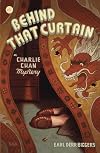
"The moment has charm." -- Charlie Chan
Earl Derr Biggers wrote in a style which lent itself to romance as well as mystery. Perhaps only M.M. Kaye blended the two as perfectly as Biggers. His greatest creation, Charlie Chan, is in romantic San Francisco in Behind That Curtain, but he can feel the trade winds of Hawaii calling him back to Honolulu for the birth of his eleventh child. Yet the romance of a misty San Francisco filled with the Orient beckon him to remain long enough to solve a show more crime.
Bill Rankin is the reporter bringing the visiting sleuth from Honolulu, together with Scotland Yard's, Sir Frederic Bruce, to write a feature based on their exploits. But it is Frederic's regrets in connection with an unsolved murder, and the seemingly unrelated disappearance of Eve Durand from India nearly 15 years prior, that haunt their conversation. Barry Kirk and the pretty young D.A. he's immediately smitten with, June Morrow, plead for Charlie to stay when Sir Frederic is murdered. There are as many suspects to ponder over as there are mysterious clues. But which is that elusive "essential clue" so beloved by Scotland Yard?
Charlie initially wants no part in the investigation. Only once onboard the S.S. Maui does Charlie overhear a conversation which has him rushing down the gangplank to join Barry and June. Captain Flannery's methods, however, are as heavy-handed as Charlie's are subtle. Charlie discovers evidence of two other missing young women, and suspects a possible connection to yet another unsolved murder. How does a world famous adventurer fit into the picture? Are the slippers the essential clue, or something else? In the end, of course, our favorite detective from the Islands realizes the clue has been there all along.
Behind That Curtain has so much atmosphere it washes over the reader like a sudden rain shower. San Francisco during the '20s is alive with cable cars, and quaint bungalows for shelter from the rain, beneath the delicate pen of Earl Derr Biggers. Dark passages and murder do exist in Biggers's mysteries, but he always allows the elegant Chan to guide us away from danger, and towards romance.
There is an innocence to the romance between Barry and June indicative of another time, as is the writing style of Biggers. Both Biggers and his creation, Charlie Chan, are at the top of their game here, funny and wise. The final scenes hold humor and a dash of romance. Behind That Curtain offers one of the most charming endings of any entry in the Charlie Chan canon. A must read for those who like their mysteries very old-fashioned, and a bit on the romantic side. show less
Earl Derr Biggers wrote in a style which lent itself to romance as well as mystery. Perhaps only M.M. Kaye blended the two as perfectly as Biggers. His greatest creation, Charlie Chan, is in romantic San Francisco in Behind That Curtain, but he can feel the trade winds of Hawaii calling him back to Honolulu for the birth of his eleventh child. Yet the romance of a misty San Francisco filled with the Orient beckon him to remain long enough to solve a show more crime.
Bill Rankin is the reporter bringing the visiting sleuth from Honolulu, together with Scotland Yard's, Sir Frederic Bruce, to write a feature based on their exploits. But it is Frederic's regrets in connection with an unsolved murder, and the seemingly unrelated disappearance of Eve Durand from India nearly 15 years prior, that haunt their conversation. Barry Kirk and the pretty young D.A. he's immediately smitten with, June Morrow, plead for Charlie to stay when Sir Frederic is murdered. There are as many suspects to ponder over as there are mysterious clues. But which is that elusive "essential clue" so beloved by Scotland Yard?
Charlie initially wants no part in the investigation. Only once onboard the S.S. Maui does Charlie overhear a conversation which has him rushing down the gangplank to join Barry and June. Captain Flannery's methods, however, are as heavy-handed as Charlie's are subtle. Charlie discovers evidence of two other missing young women, and suspects a possible connection to yet another unsolved murder. How does a world famous adventurer fit into the picture? Are the slippers the essential clue, or something else? In the end, of course, our favorite detective from the Islands realizes the clue has been there all along.
Behind That Curtain has so much atmosphere it washes over the reader like a sudden rain shower. San Francisco during the '20s is alive with cable cars, and quaint bungalows for shelter from the rain, beneath the delicate pen of Earl Derr Biggers. Dark passages and murder do exist in Biggers's mysteries, but he always allows the elegant Chan to guide us away from danger, and towards romance.
There is an innocence to the romance between Barry and June indicative of another time, as is the writing style of Biggers. Both Biggers and his creation, Charlie Chan, are at the top of their game here, funny and wise. The final scenes hold humor and a dash of romance. Behind That Curtain offers one of the most charming endings of any entry in the Charlie Chan canon. A must read for those who like their mysteries very old-fashioned, and a bit on the romantic side. show less
Charlie Chan Volume 1-The House Without a Key & The Chinese Parrot: Two Complete Novels Featuring the Legendary Chinese-Hawaiian Detective: The House Without a Key AND The Chinese Parrot v. 1 by Earl Derr Biggers
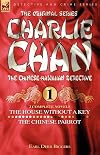
This coupling of the first two entries in Earl Derr Biggers’ Charlie Chan series, is a great way to become acclimated with his adept blending of romance and mystery. The writing style is refreshingly old-fashioned, with wonderful descriptive prose which creates atmosphere you can almost feel in a tangible way while you "watch" Chan solve a mystery, while he helps out young lovers.
THE HOUSE WITHOUT A KEY
You can almost feel the gentle trade winds of Hawaii during the 1920s in this classic show more novel by Earl Derr Biggers. Romantic and full of atmosphere, this is a most enjoyable read that was our first introduction to Charlie Chan. Biggers was always a great romance writer who simply incorporated mystery into his books to propel the story forward. This is never more evident than in The House Without a Key.
The story centers on young and proper John Quincy Winterslip of Boston, who has been sent to retrieve the elder Minerva Winterslip from the 'semi-barbaric' Pacific Islands of Hawaii. When his ship stops in San Francisco on its journey to the islands, however, John Quincy's idea of who he is begins to change. The possibility that there is a world outside of Boston and Beacon Hill, has begun to take shape in Quincy's soul. A mysterious errand in an exciting and mysterious San Francisco for the black sheep of the family, Dan Winterslip, who is also living in Hawaii, will kick off an adventure that will, in the end, turn John into a man.
A murder shortly before John's arrival will reveal old family secrets from a time when Hawaii was wild and dangerous, and a port for all the world. John Quincy does not understand the nostalgia Minerva and others feel for this time in Hawaii's history, but soon discovers for himself that romance is alive in those trade winds blowing the palms fronds. John will meet Carlota Egan, a girl who could not be further away from the fiancée awaiting him back in Boston. As John Quincy begins to help his lovely cousin Barbara and Minerva get to the bottom of the murder, Boston seems more and more like a distant memory.
Luckily for John, Hawaii's best police detective will become his friend while helping to unravel the clues. That detective, of course, is Charlie Chan. An Asian who has been in Hawaii many years, Chan navigates the mystery with little to go on, but with much wisdom and humor. The Charlie Chan of The House Without a Key is subtle and endearing. Chan may be Chinese, but his very American take on a piece of pie with which he is unhappy he is a hoot!
Biggers truly makes both his characters and the islands of Hawaii come alive in the first novel in which Charlie Chan appeared. His descriptions of Hawaii as seen through the eyes of the characters are both nostalgic, and filled with beauty. The House Without a Key is that rare novel which can be read with pleasure by those who love a good mystery, or those who love a light and atmospheric romance. If both are your cup of tea, this great classic is definitely for you. It is a great read during summer, when things are bright and cheery, or during winter, when you want a tropical escape. The writing style is of another era, of course, but all the lovelier for it. A true mystery classic.
THE CHINESE PARROT
"Trifles sometimes blossom big. Detective business consist of one unsignificant detail placed beside other of same. Then with sudden dazzle, light begins to dawn." -- Charlie Chan to Bob Eden
Charlie's first trip to the Mainland is a sparkling adventure full of mystery and old-fashioned romance. It will take the Honolulu detective from exciting 1920s San Francisco to the purple desert.
As in the first Charlie Chan novel, The House Without a Key, Biggers writes a mystery and romance in which Charlie plays an integral part while not being the main focus. Beginning with Behind That Curtain, Charlie would be more at the forefront, the author using his romantic style to frame the mystery rather than the other way around. I must confess a special affection for the first two Charlie Chan novels featuring Charlie as the secondary lead. In The Chinese Parrot, it will be young Bob Eden who works hand-in-hand with our favorite Hawaiian detective from China, finding adventure and romance in one of Charlie's most perplexing cases.
San Francisco's Bob Eden is a young man about town until his father brokers Sally Jordan's expensive string of pearls. He is sent to meet her former houseboy, Charlie Chan, who is bringing them across the ocean on the President Pierce. From the moment he's shadowed at the dock, the young man without a care in the world finds himself in the greatest adventure of his life. He and Charlie will head to the desert to meet the buyer, with Charlie posing as a Chinese cook. They decide to stall rather than part with the pearls, however, after the words of a Chinese parrot indicate something terrible may have happened prior to their arrival. Harboring suspicions that a man has been murdered in this purple desert, the difficulty for Bob and Charlie rests in discovering who the victim was and who did the deed.
Just as John Quincy was at the heart of the action in The House Without a Key, so Bob Eden finds adventure and mystery far from home. Romance is found with Paula, a location scout for the movies. Biggers, who always had a fascination with the movies, works it deftly into this Chan entry when a murder weapon proves to have belonged to legendary silent Western star, William S. Hart.
A secretary, a gambling house, a dead man's clothes, and a second murder with a tangible body make up a complex and confusing mystery which has Charlie and Bob Eden stumped, not to mention the reader. Reporter Will Holley becomes an ally but just when they think they know who was killed at the ranch, and why, their theory is turned upside down and there seems to be no course of action but to hand over the pearls.
The exciting twist which follows, augmented by the only trick Charlie was ever to learn from the Japanese, makes for a fine and surprising end to all the intrigue and mystery in the desert. The blend of romance and mystery perfected by Biggers is one no modern mystery writer has ever come close to attaining. The Chinese Parrot is an old-fashioned and delightful mix of fun for mystery fans.
SUMMATION
If you’re a fan of romance blended with mystery, engaging stories with magical descriptive prose and laced with tremendous charm, you can’t go wrong reading Biggers. The style of writing is, in my opinion, a lovelier narrative style than much of today’s pretentious dribble. You’ll marvel at how enjoyable the first two Charlie Chan books were, and still remain so after all these decades. Fabulous stuff. show less
THE HOUSE WITHOUT A KEY
You can almost feel the gentle trade winds of Hawaii during the 1920s in this classic show more novel by Earl Derr Biggers. Romantic and full of atmosphere, this is a most enjoyable read that was our first introduction to Charlie Chan. Biggers was always a great romance writer who simply incorporated mystery into his books to propel the story forward. This is never more evident than in The House Without a Key.
The story centers on young and proper John Quincy Winterslip of Boston, who has been sent to retrieve the elder Minerva Winterslip from the 'semi-barbaric' Pacific Islands of Hawaii. When his ship stops in San Francisco on its journey to the islands, however, John Quincy's idea of who he is begins to change. The possibility that there is a world outside of Boston and Beacon Hill, has begun to take shape in Quincy's soul. A mysterious errand in an exciting and mysterious San Francisco for the black sheep of the family, Dan Winterslip, who is also living in Hawaii, will kick off an adventure that will, in the end, turn John into a man.
A murder shortly before John's arrival will reveal old family secrets from a time when Hawaii was wild and dangerous, and a port for all the world. John Quincy does not understand the nostalgia Minerva and others feel for this time in Hawaii's history, but soon discovers for himself that romance is alive in those trade winds blowing the palms fronds. John will meet Carlota Egan, a girl who could not be further away from the fiancée awaiting him back in Boston. As John Quincy begins to help his lovely cousin Barbara and Minerva get to the bottom of the murder, Boston seems more and more like a distant memory.
Luckily for John, Hawaii's best police detective will become his friend while helping to unravel the clues. That detective, of course, is Charlie Chan. An Asian who has been in Hawaii many years, Chan navigates the mystery with little to go on, but with much wisdom and humor. The Charlie Chan of The House Without a Key is subtle and endearing. Chan may be Chinese, but his very American take on a piece of pie with which he is unhappy he is a hoot!
Biggers truly makes both his characters and the islands of Hawaii come alive in the first novel in which Charlie Chan appeared. His descriptions of Hawaii as seen through the eyes of the characters are both nostalgic, and filled with beauty. The House Without a Key is that rare novel which can be read with pleasure by those who love a good mystery, or those who love a light and atmospheric romance. If both are your cup of tea, this great classic is definitely for you. It is a great read during summer, when things are bright and cheery, or during winter, when you want a tropical escape. The writing style is of another era, of course, but all the lovelier for it. A true mystery classic.
THE CHINESE PARROT
"Trifles sometimes blossom big. Detective business consist of one unsignificant detail placed beside other of same. Then with sudden dazzle, light begins to dawn." -- Charlie Chan to Bob Eden
Charlie's first trip to the Mainland is a sparkling adventure full of mystery and old-fashioned romance. It will take the Honolulu detective from exciting 1920s San Francisco to the purple desert.
As in the first Charlie Chan novel, The House Without a Key, Biggers writes a mystery and romance in which Charlie plays an integral part while not being the main focus. Beginning with Behind That Curtain, Charlie would be more at the forefront, the author using his romantic style to frame the mystery rather than the other way around. I must confess a special affection for the first two Charlie Chan novels featuring Charlie as the secondary lead. In The Chinese Parrot, it will be young Bob Eden who works hand-in-hand with our favorite Hawaiian detective from China, finding adventure and romance in one of Charlie's most perplexing cases.
San Francisco's Bob Eden is a young man about town until his father brokers Sally Jordan's expensive string of pearls. He is sent to meet her former houseboy, Charlie Chan, who is bringing them across the ocean on the President Pierce. From the moment he's shadowed at the dock, the young man without a care in the world finds himself in the greatest adventure of his life. He and Charlie will head to the desert to meet the buyer, with Charlie posing as a Chinese cook. They decide to stall rather than part with the pearls, however, after the words of a Chinese parrot indicate something terrible may have happened prior to their arrival. Harboring suspicions that a man has been murdered in this purple desert, the difficulty for Bob and Charlie rests in discovering who the victim was and who did the deed.
Just as John Quincy was at the heart of the action in The House Without a Key, so Bob Eden finds adventure and mystery far from home. Romance is found with Paula, a location scout for the movies. Biggers, who always had a fascination with the movies, works it deftly into this Chan entry when a murder weapon proves to have belonged to legendary silent Western star, William S. Hart.
A secretary, a gambling house, a dead man's clothes, and a second murder with a tangible body make up a complex and confusing mystery which has Charlie and Bob Eden stumped, not to mention the reader. Reporter Will Holley becomes an ally but just when they think they know who was killed at the ranch, and why, their theory is turned upside down and there seems to be no course of action but to hand over the pearls.
The exciting twist which follows, augmented by the only trick Charlie was ever to learn from the Japanese, makes for a fine and surprising end to all the intrigue and mystery in the desert. The blend of romance and mystery perfected by Biggers is one no modern mystery writer has ever come close to attaining. The Chinese Parrot is an old-fashioned and delightful mix of fun for mystery fans.
SUMMATION
If you’re a fan of romance blended with mystery, engaging stories with magical descriptive prose and laced with tremendous charm, you can’t go wrong reading Biggers. The style of writing is, in my opinion, a lovelier narrative style than much of today’s pretentious dribble. You’ll marvel at how enjoyable the first two Charlie Chan books were, and still remain so after all these decades. Fabulous stuff. show less
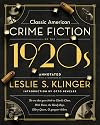
This book is massive. 1100 pages, hardbound. This is the kind of book you want to use to wallop burglars. That'd be an especially appropriate use of this anthology, too, since it covers a full range of 1920s crime novels. Overall, it's a fascinating read. You get the first books of several major detective series, like Charlie Chan and Ellery Queen. Even the book with an almost unbearable protagonist, Philo Vance, gave me oodles of useful research notes and an interesting mystery as the show more backbone of the piece. Dashiell Hammet's first book is a veritable blood bath, but a masterfully done one at that. Reading Little Caesar, I can well understand how this established the gangster novel--and movie--genres.
There is a lengthy introduction at the start, giving context for each book. The annotations throughout were very useful (indeed, for the gangster novel Little Caesar, the lingo would've been a challenge to parse otherwise) but I also found myself wanting more annotations.
If you love classic mysteries and want a showcase book, this is worth the hefty price. (I bought my signed edition from Poisoned Pen Bookstore in Scottsdale, Arizona.) But do be aware it is a difficult read because of the sheer size of the book. Not only is this book impossible to tuck away in a purse to read on the go, it's awkward to read wherever you may be. Still, I found the challenge to be more than worthwhile in the end.
My reviews for each included book are found below, and are also posted under the individual book listings on Goodreads and LibraryThing.
---
The House Without a Key: Charlie Chan #1 by by Earl Derr Biggers
Charlie Chan is an iconic character, and it was interesting to see him within the context of his first novel, published with its original text. The book surprised me in many ways. First of all, the settings within the book are masterfully portrayed. I've never seen a book so vividly describe Hawaii in the 1920s. The annotations remarked a few times on inaccuracies or fictionalized bits, but many of the details felt spot-on (I say that, having extensively read on early 20th century Hawaii for my own novel). While I expected issues with racism and caricatures because of the era, this was not as bad as I expected it would be (how's that for an endorsement?). Charlie Chan is regarded as something of a mockery now, but as the notes observed, he does not speak pidgin Chinese, but talks as a very highly educated man. The text of the book demonstrated that well. The way white characters reacted to Chan felt realistic (though sad), but I also understood well why the original text had Chan racist against the Japanese. Within the context of the time, that made perfect sense; it's worth noting that these racist snippets were toned down or removed in later editions of the book.
This does not develop as a modern murder mystery does--often with a corpse in chapter one. Instead, the start is slow as the reader gets to know the Winterslip family of both Boston and Honolulu. The dead body doesn't show up until almost a hundred pages in, with Charlie Chan's arrival immediately after. I think my biggest surprise about the book was that Chan was a minor character with a pivotal role. Instead, most of the novel followed the stuffy scion of the Winterslip family. His was not a bad perspective--it was enjoyable to watch him grow across the book--but I expected a Charlie Chan book to, well, be more about Charlie Chan. The murderer was fairly obvious to be from early on, though there were some nice twists and turns leading up to the big reveal at the end.
I feel no urge to read onward in the series, but if I need to do more research on 1920s Hawaii, I just might. The book was not a bad read at all. Intriguing, I'd say.
---
The Benson Murder Case (Philo Vance #1)
by S.S. Van Dine
I must say, the first chapter of this book convinced me that it was going to be absolutely dreadful. It probably didn't help that preceding information in the book had pointed out that the Philo Vance series eventually withered and died because the insufferable, rambling nature of the lead character became too aggravating to bear. But once I made it past that initial introductory chapter and to the actual murder, the story was much more engaging.
The positives: It's a good murder mystery. The set-up is complex and intriguing, and it nicely utilizes New York City. Alvin Benson is found dead, shot in the head, and the clues in his house are myriad, from the handbag and gloves left on the mantle to the car parked out front during the night. The district attorney invites his friend Philo Vance to see the crime, and on a whim, the insufferable art collector digs into the mystery, and digs in deep. The way Philo Vance psychologically examines people is fascinating. I liked that I guessed the murderer quite early on.
The negatives: Philo Vance. He's aggravating. He boasts throughout that he's known who the murderer is from the time he first viewed the corpse at the crime scene, but he strings along his DA friend for days, relentlessly teasing him and shredding apart his reliance on circumstantial evidence. While the latter is necessary (the DA was ready to convict several people on tenuous evidence), the whole know-it-all aspect gets old really fast.
The choice of narrator felt utterly useless, too. Another of Vance's friends is the observer of everything, and he contributes nothing to the story. He's no Watson, there to offer occasional advice or act as a foil or do medical examinations. No, this guy is just there, a shadow. I can't even remember his name; it only came up at the very beginning, I think.
The annotations probably helped my reading experience a lot, too, providing translations or context for the French and Latin Vance often employs, explaining Vance's commentary on art, and noting what NYC locations were real and fictional. Interestingly, the author muddled a lot of period details himself. By the calendar within the book, the murder should be set in 1918, but various details on geographical locations or police technology didn't exist until the early 1920s. Writers these days can check those kinds of things through Google...
I wouldn't read onward in this series, I think, because the very idea of Philo Vance becoming even more annoying is a big turn off. That said, this book offered me a tremendous boon in terms of research, with fantastic period details and cultural references.
---
The Roman Hat Mystery by Ellery Queen
Thus far in this collection, I've read the first books about Charlie Chan and Philo Vance. Both had issues, from my modern perspective--a painfully slow start and barely any Charlie Chan in the first, and the rambling, annoying presence of Philo Vance in the second. But in this, the first Ellery Queen novel, I finally encountered a 1920s mystery I absolutely loved. The writing is fantastic from page one, the mystery utterly intriguing, and the cast of characters diverse and amusing. I could see myself reading and enjoying more Ellery Queen novels.
---
Red Harvest (The Continental Op #1) by Dashiell Hammett
Red Harvest is aptly named, a bloodbath of a 1920s noir novel. When the unnamed private detective rolls into Personville to meet a new client, the client is found murdered. The Op goes about solving that murder, and becomes embroiled in pretty intense gang warfare that gets far nastier after the original murder is solved. This is a fast read, with knife-sharp language and wit. The Op is a character with virtually no background or personality, but he has a brutal edge and a will to survive. It's no wonder this character helped to establish the very trope of the hard-boiled PI, complete with steady applications of scotch.
---
Little Caesar by W.R. Burnett
Little Caesar is the first major gangster novel, published in 1929. It was made into a famous 1931 movie--and essentially created the gangster stereotype (one I became most familiar with through Bugs Bunny cartoons). The book itself is an interesting study on the 'voice' of a book, as the author goes deep into gangster lingo. At the end of my edition, the editor included a foreword that the author wrote in the 1950s about the writing and rejection process behind the book. He made a conscious choice to strip away adjectives to make the prose bloody and blunt. It works. The book doesn't try to make you like its characters--it just shows them as they are. I was grateful to have the annotations to help me parse the lingo and explain details about Chicago and guns of the period.
I never would have expected to like the book this much, but it fascinated me. It shows the era with all its ugliness and racism and dames and plates of spaghetti with wine. Now I want to watch the movie to compare.
--- show less
There is a lengthy introduction at the start, giving context for each book. The annotations throughout were very useful (indeed, for the gangster novel Little Caesar, the lingo would've been a challenge to parse otherwise) but I also found myself wanting more annotations.
If you love classic mysteries and want a showcase book, this is worth the hefty price. (I bought my signed edition from Poisoned Pen Bookstore in Scottsdale, Arizona.) But do be aware it is a difficult read because of the sheer size of the book. Not only is this book impossible to tuck away in a purse to read on the go, it's awkward to read wherever you may be. Still, I found the challenge to be more than worthwhile in the end.
My reviews for each included book are found below, and are also posted under the individual book listings on Goodreads and LibraryThing.
---
The House Without a Key: Charlie Chan #1 by by Earl Derr Biggers
Charlie Chan is an iconic character, and it was interesting to see him within the context of his first novel, published with its original text. The book surprised me in many ways. First of all, the settings within the book are masterfully portrayed. I've never seen a book so vividly describe Hawaii in the 1920s. The annotations remarked a few times on inaccuracies or fictionalized bits, but many of the details felt spot-on (I say that, having extensively read on early 20th century Hawaii for my own novel). While I expected issues with racism and caricatures because of the era, this was not as bad as I expected it would be (how's that for an endorsement?). Charlie Chan is regarded as something of a mockery now, but as the notes observed, he does not speak pidgin Chinese, but talks as a very highly educated man. The text of the book demonstrated that well. The way white characters reacted to Chan felt realistic (though sad), but I also understood well why the original text had Chan racist against the Japanese. Within the context of the time, that made perfect sense; it's worth noting that these racist snippets were toned down or removed in later editions of the book.
This does not develop as a modern murder mystery does--often with a corpse in chapter one. Instead, the start is slow as the reader gets to know the Winterslip family of both Boston and Honolulu. The dead body doesn't show up until almost a hundred pages in, with Charlie Chan's arrival immediately after. I think my biggest surprise about the book was that Chan was a minor character with a pivotal role. Instead, most of the novel followed the stuffy scion of the Winterslip family. His was not a bad perspective--it was enjoyable to watch him grow across the book--but I expected a Charlie Chan book to, well, be more about Charlie Chan. The murderer was fairly obvious to be from early on, though there were some nice twists and turns leading up to the big reveal at the end.
I feel no urge to read onward in the series, but if I need to do more research on 1920s Hawaii, I just might. The book was not a bad read at all. Intriguing, I'd say.
---
The Benson Murder Case (Philo Vance #1)
by S.S. Van Dine
I must say, the first chapter of this book convinced me that it was going to be absolutely dreadful. It probably didn't help that preceding information in the book had pointed out that the Philo Vance series eventually withered and died because the insufferable, rambling nature of the lead character became too aggravating to bear. But once I made it past that initial introductory chapter and to the actual murder, the story was much more engaging.
The positives: It's a good murder mystery. The set-up is complex and intriguing, and it nicely utilizes New York City. Alvin Benson is found dead, shot in the head, and the clues in his house are myriad, from the handbag and gloves left on the mantle to the car parked out front during the night. The district attorney invites his friend Philo Vance to see the crime, and on a whim, the insufferable art collector digs into the mystery, and digs in deep. The way Philo Vance psychologically examines people is fascinating. I liked that I guessed the murderer quite early on.
The negatives: Philo Vance. He's aggravating. He boasts throughout that he's known who the murderer is from the time he first viewed the corpse at the crime scene, but he strings along his DA friend for days, relentlessly teasing him and shredding apart his reliance on circumstantial evidence. While the latter is necessary (the DA was ready to convict several people on tenuous evidence), the whole know-it-all aspect gets old really fast.
The choice of narrator felt utterly useless, too. Another of Vance's friends is the observer of everything, and he contributes nothing to the story. He's no Watson, there to offer occasional advice or act as a foil or do medical examinations. No, this guy is just there, a shadow. I can't even remember his name; it only came up at the very beginning, I think.
The annotations probably helped my reading experience a lot, too, providing translations or context for the French and Latin Vance often employs, explaining Vance's commentary on art, and noting what NYC locations were real and fictional. Interestingly, the author muddled a lot of period details himself. By the calendar within the book, the murder should be set in 1918, but various details on geographical locations or police technology didn't exist until the early 1920s. Writers these days can check those kinds of things through Google...
I wouldn't read onward in this series, I think, because the very idea of Philo Vance becoming even more annoying is a big turn off. That said, this book offered me a tremendous boon in terms of research, with fantastic period details and cultural references.
---
The Roman Hat Mystery by Ellery Queen
Thus far in this collection, I've read the first books about Charlie Chan and Philo Vance. Both had issues, from my modern perspective--a painfully slow start and barely any Charlie Chan in the first, and the rambling, annoying presence of Philo Vance in the second. But in this, the first Ellery Queen novel, I finally encountered a 1920s mystery I absolutely loved. The writing is fantastic from page one, the mystery utterly intriguing, and the cast of characters diverse and amusing. I could see myself reading and enjoying more Ellery Queen novels.
---
Red Harvest (The Continental Op #1) by Dashiell Hammett
Red Harvest is aptly named, a bloodbath of a 1920s noir novel. When the unnamed private detective rolls into Personville to meet a new client, the client is found murdered. The Op goes about solving that murder, and becomes embroiled in pretty intense gang warfare that gets far nastier after the original murder is solved. This is a fast read, with knife-sharp language and wit. The Op is a character with virtually no background or personality, but he has a brutal edge and a will to survive. It's no wonder this character helped to establish the very trope of the hard-boiled PI, complete with steady applications of scotch.
---
Little Caesar by W.R. Burnett
Little Caesar is the first major gangster novel, published in 1929. It was made into a famous 1931 movie--and essentially created the gangster stereotype (one I became most familiar with through Bugs Bunny cartoons). The book itself is an interesting study on the 'voice' of a book, as the author goes deep into gangster lingo. At the end of my edition, the editor included a foreword that the author wrote in the 1950s about the writing and rejection process behind the book. He made a conscious choice to strip away adjectives to make the prose bloody and blunt. It works. The book doesn't try to make you like its characters--it just shows them as they are. I was grateful to have the annotations to help me parse the lingo and explain details about Chicago and guns of the period.
I never would have expected to like the book this much, but it fascinated me. It shows the era with all its ugliness and racism and dames and plates of spaghetti with wine. Now I want to watch the movie to compare.
--- show less
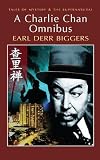
Earl Derr Biggers’s A Charlie Chan Omnibus contains the first three 1920s mysteries in the series: “The House Without a Key”, “The Chinese Parrot”, and “Behind That Curtain.” The stories are quite well written with crisp dialogue and the main characters clearly drawn, though the peripheral characters tend to be more like flat caricatures. There’s always a young wisecracking male protagonist, his chaste romantic interest, and the invaluable assistance of Detective Charlie Chan show more to discover the key piece of evidence to nab the murderer. Biggers has a very winning way of describing the setting, whether it be Hawaii, the California desert, or the streets of San Francisco, always with a colorful evocative touch. The stories are quite convoluted with an abundance of suspects and red herrings, and a solution that only the modest and soft spoken Mr. Chan could discern. show less
Lists
Global Mysteries (2)
Which house? (1)
Awards


You May Also Like


Associated Authors
Statistics
- Works
- 68
- Also by
- 11
- Members
- 2,410
- Popularity
- #10,642
- Rating
- 3.7
- Reviews
- 115
- ISBNs
- 352
- Languages
- 12
- Favorited
- 7
