

Clayton Rawson (1906–1971)
Author of Death from a Top Hat
About the Author
Image credit: Mysterious Press
Series
Works by Clayton Rawson
The Enchanted Dagger 1 copy
Off the Face of the Earth 1 copy
The Claws of Satan 1 copy
Pictures Don't Lie 1 copy
From Another World 1 copy
Murder From The Grave 1 copy
Associated Works
The Mammoth Book of Locked-Room Mysteries and Impossible Crimes (2000) — Contributor — 134 copies, 1 review
Bodies from the Library 2: Forgotten Stories of Mystery and Suspense by the Queens of Crime and other Masters of Golden Age Detection (2019) — Contributor — 96 copies, 3 reviews
All but Impossible! An Anthology of Locked Room and Impossible Crime Stories by Members of the Mystery Writers of America (1981) — Contributor — 30 copies
Academy Mystery Novellas: Women Sleuths, Police Procedurals, Locked Room Puzzles, Great British Detectives (1991) — Contributor — 13 copies
Tagged
Common Knowledge
- Legal name
- Rawson, Clayton Ashley
- Birthdate
- 1906-08-15
- Date of death
- 1971-03-01
- Gender
- male
- Education
- The Ohio State University
- Occupations
- mystery writer
editor
amateur magician
novelist - Nationality
- USA
- Birthplace
- Elyria, Ohio, USA
- Places of residence
- Ohio, USA
Chicago, Illinois, USA - Place of death
- Mamaroneck, New York, USA
- Associated Place (for map)
- USA
Members
Reviews
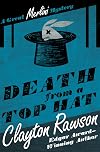
The first of four novels Rawson wrote between 1938 and 1942 featuring the amateur detective The Great Merlini, a stage magician who runs a magic shop in New York. He returned to the character for a dozen short stories over the next thirty years, most of them published in Ellery Queen's Mystery Magazine, many of them originally published without the solution as a contest for the readers.
The Merlini mysteries are usually built around some aspect of magic, and most of them are locked-room show more mysteries. In this one, the police turn to Merlini for advice when a magician is found strangled inside his locked apartment, hoping that he might explain how the killer could have left the room. Because magicians tend to hang out with other magicians -- can't talk shop and trade secrets with civilians, after all -- the field of suspects is made up of other magicians (with the odd mentalist and ventriloquist thrown in for good measure), and Merlini knows them all reasonably well.
I enjoyed this book a lot. The suspects are a colorful group; the relationship among Merlini, the policeman leading the investigation, and the reporter who stumbles across the body (and narrates the story) is entertaining; and the solution is clever. I have reservations about one specific aspect of the solution, which relies on an aspect of stagecraft that I think is largely hokum, and (even viewed in the most generous light) is far too unreliable for a would-be murderer to rely on, but that's a small objection.
And it is worth noting that this novel is significantly less plagued by awkward social attitudes and bigotry than many from this era. There aren't more than a half dozen moments in the book that are uncomfortable by modern standards, and even those are relatively mild. They are phrases that we wouldn't feel comfortable using today, but they aren't used with hostile or derogatory intent.
Almost all of Rawson's writing is in print today, including a separate series of stories about Don Diavolo, another magician, originally published under the name "Stuart Towne." I look forward to reading more of his work. show less
The Merlini mysteries are usually built around some aspect of magic, and most of them are locked-room show more mysteries. In this one, the police turn to Merlini for advice when a magician is found strangled inside his locked apartment, hoping that he might explain how the killer could have left the room. Because magicians tend to hang out with other magicians -- can't talk shop and trade secrets with civilians, after all -- the field of suspects is made up of other magicians (with the odd mentalist and ventriloquist thrown in for good measure), and Merlini knows them all reasonably well.
I enjoyed this book a lot. The suspects are a colorful group; the relationship among Merlini, the policeman leading the investigation, and the reporter who stumbles across the body (and narrates the story) is entertaining; and the solution is clever. I have reservations about one specific aspect of the solution, which relies on an aspect of stagecraft that I think is largely hokum, and (even viewed in the most generous light) is far too unreliable for a would-be murderer to rely on, but that's a small objection.
And it is worth noting that this novel is significantly less plagued by awkward social attitudes and bigotry than many from this era. There aren't more than a half dozen moments in the book that are uncomfortable by modern standards, and even those are relatively mild. They are phrases that we wouldn't feel comfortable using today, but they aren't used with hostile or derogatory intent.
Almost all of Rawson's writing is in print today, including a separate series of stories about Don Diavolo, another magician, originally published under the name "Stuart Towne." I look forward to reading more of his work. show less

A locked-room mystery always carries some element of the magical or even the supernatural, at least at first, as the police and the detectives on scene try to explain the seemingly unexplainable. Therefore, it makes perfect sense that former stage magician The Great Merlini would be able to help Inspector Gavigan of the NYPD solve the murders of two noted occultists, with his friend Ross Harte playing the Watson/Boswell to his Holmes/Johnson. The cast of characters is similarly magical, with show more mediums, escape artists, magicians, and telepaths among the list of suspects.
This story was OK. Merlini was an amusing fellow, smart but not too obnoxious about it. And his magic shop includes a pet rabbit, perhaps not very creatively named Peter, but who was still extremely adorable. (This was probably my favourite part of the book, to be honest—Merlini, Harte, and Gavigan discussing the crime at Merlini’s shop while Merlini fed Peter carrots and cuddled him.)
I liked that John Dickson Carr and Dr. Fell were established as real people in-universe, with particular reference to Dr. Fell’s “locked room lecture” in The Three Coffins. The explanation of the solution made sense to me, eventually. I do sometimes find locked-room mysteries annoying because they are not easy to figure out on one’s own and when there are a lot of characters, as in this story, it’s hard to keep track of everyone and come up with a plausible theory. By the end of the book I was kind of worn down and just wanted it to be all tied up and solved, hence my 2.5-star rating. Almost liked it, but not quite.
Other readers with more patience for a locked-room mystery may get more out of this. show less
This story was OK. Merlini was an amusing fellow, smart but not too obnoxious about it. And his magic shop includes a pet rabbit, perhaps not very creatively named Peter, but who was still extremely adorable. (This was probably my favourite part of the book, to be honest—Merlini, Harte, and Gavigan discussing the crime at Merlini’s shop while Merlini fed Peter carrots and cuddled him.)
I liked that John Dickson Carr and Dr. Fell were established as real people in-universe, with particular reference to Dr. Fell’s “locked room lecture” in The Three Coffins. The explanation of the solution made sense to me, eventually. I do sometimes find locked-room mysteries annoying because they are not easy to figure out on one’s own and when there are a lot of characters, as in this story, it’s hard to keep track of everyone and come up with a plausible theory. By the end of the book I was kind of worn down and just wanted it to be all tied up and solved, hence my 2.5-star rating. Almost liked it, but not quite.
Other readers with more patience for a locked-room mystery may get more out of this. show less

FOOTPRINTS ON THE CEILING is the second of four mystery novels featuring a magician – one mythically inspired Great Merlini – as the amateur sleuth and a wise-cracking sidekick-cum-narrator in the form of publicity writer Ross Harte. Rawson was a magician himself which probably explains his choice of protagonist and possibly has something to do with the fact he only published four mystery novels and a handful of short stories despite being one of the founding members of Mystery Writers show more of America.
The book starts with Harte seeing a classified ad seeking a haunted house which turns out to have been placed by his old friend Merlini so Harte drops by Merlini’s magic shop to find out more. He and Merlini are soon deeply embroiled in a bizarre whodunit which plays out on a fortuitously isolated island in New York’s East River. A wealthy heiress named Linda Skelton is found dead in the locked room of an outbuilding of her home while a house party of suitably suspicious guests and hangers-on take part in a séance. Mayhem ensues.
As locked-room stories goes this one offers the classic elements of an impossible crime, as evidenced by the plot hint provided by the title, and gets points from me for having a logical resolution not requiring any paranormal intervention or other such silliness. That said, the plot does rely on some oddities and several people having highly specialised knowledge of vastly disparate subjects. There are for example two characters with extremely rare medical conditions and different elements of the plot which rely on a knowledge of such things as photographic dark room techniques, deep-sea diving and spiritualism. But somehow Rawson – and Merlini – do pull this all together and have a lot of fun along the way. This is not a book that takes itself too seriously and there are even some mild digs at the detective fiction genre.
This is a traditional whodunit which focuses almost entirely on providing an intriguing plot with little consideration given to character development which is par for the course for mystery novels of the period. But other than this the book does not read in a particularly ‘dated’ way even though much of the technology relied upon is of course obsolete now. But Rawson’s writing is good enough to explain all that needs explaining and to easily draw the reader in to the environment. I did wonder if it was because the book is American rather than European that there is absolutely no sense of the story unfolding at a time when much of the world is on the brink of war or if it’s my own hindsight that makes me assume everyone would have been pondering world politics at the time.
I’ll admit I got a bit lost a couple of times when the narrative delved very deeply into very specific technical matters but overall I thoroughly enjoyed the book. It is a light-hearted tale in which spiritualism is debunked, circus acts make cameo appearances, the magician’s art of misdirection takes centre stage and the resolution to the locked-room plot element is elegant. show less
The book starts with Harte seeing a classified ad seeking a haunted house which turns out to have been placed by his old friend Merlini so Harte drops by Merlini’s magic shop to find out more. He and Merlini are soon deeply embroiled in a bizarre whodunit which plays out on a fortuitously isolated island in New York’s East River. A wealthy heiress named Linda Skelton is found dead in the locked room of an outbuilding of her home while a house party of suitably suspicious guests and hangers-on take part in a séance. Mayhem ensues.
As locked-room stories goes this one offers the classic elements of an impossible crime, as evidenced by the plot hint provided by the title, and gets points from me for having a logical resolution not requiring any paranormal intervention or other such silliness. That said, the plot does rely on some oddities and several people having highly specialised knowledge of vastly disparate subjects. There are for example two characters with extremely rare medical conditions and different elements of the plot which rely on a knowledge of such things as photographic dark room techniques, deep-sea diving and spiritualism. But somehow Rawson – and Merlini – do pull this all together and have a lot of fun along the way. This is not a book that takes itself too seriously and there are even some mild digs at the detective fiction genre.
This is a traditional whodunit which focuses almost entirely on providing an intriguing plot with little consideration given to character development which is par for the course for mystery novels of the period. But other than this the book does not read in a particularly ‘dated’ way even though much of the technology relied upon is of course obsolete now. But Rawson’s writing is good enough to explain all that needs explaining and to easily draw the reader in to the environment. I did wonder if it was because the book is American rather than European that there is absolutely no sense of the story unfolding at a time when much of the world is on the brink of war or if it’s my own hindsight that makes me assume everyone would have been pondering world politics at the time.
I’ll admit I got a bit lost a couple of times when the narrative delved very deeply into very specific technical matters but overall I thoroughly enjoyed the book. It is a light-hearted tale in which spiritualism is debunked, circus acts make cameo appearances, the magician’s art of misdirection takes centre stage and the resolution to the locked-room plot element is elegant. show less

The closest anyone other than Carr has come to writing a [a:John Dickson Carr|5622|John Dickson Carr|http://photo.goodreads.com/authors/1238207184p2/5622.jpg] novel. Like a desperate magician, Rawson pulls out all the stops to entertain the reader: The Great Merlini solves not one but two locked-room murders, explains a seemingly inexplicable disappearance from a taxicab, and casually discloses the secrets to numerous magic tricks while passing on arcane, possibly accurate details about show more medieval mysticism. Too bad Rawson was a terrible writer with no gift for creating memorable characters. The solutions to the two murders, while generally satisfying, are in some respects unconvincing. Still, recommended for Carr fans. show less
Lists
Awards

You May Also Like


Associated Authors
Statistics
- Works
- 30
- Also by
- 14
- Members
- 579
- Popularity
- #43,292
- Rating
- 3.6
- Reviews
- 15
- ISBNs
- 51
- Languages
- 4
- Favorited
- 1