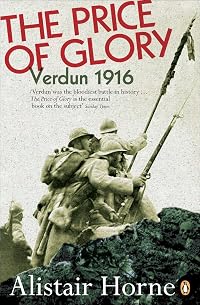
The Price of Glory: Verdun 1916
by Alistair Horne
On This Page
Description
The battle of Verdun lasted ten months. It was a battle in which at least 700,000 men fell, along a front of fifteen miles; whose aim was less to defeat the enemy than bleed him to death; a battleground whose once fertile terrain even now resembles a haunted wilderness. Alistair Horne's classic work, continuously in print for nearly forty years, is a profoundly moving, sympathetic study of the battle and the men who fought there. It shows that Verdun is a key to understanding the First World show more War - the minds of those who waged it, the traditions that bound them and the world that gave them the opportunity. show lessTags
Recommendations
















Member Recommendations


Member Reviews
I have a Sick Child right now, which means I'm currently running on less than three hours' sleep. This feels to me like total exhaustion. Still, things could be a lot worse. It's been instructive to remind myself that French soldiers in the line at Verdun not uncommonly went eleven days without any rest at all. Although when I cheerfully reminded my wife of this fact at 4 a.m. she didn't seem to find it very reassuring.
Eleven days though! Imagine trying to confront an armed Brandenburger with that level of sleep-deprivation. Luckily, such an eventuality rarely came up: one of the most striking things about Verdun was the fact that you were unlikely ever to face up to the enemy, or even see him. All you had to do was wait until your turn show more in the front-line trenches, and then endure as much shelling as you could before you were eviscerated.
This perhaps sounds like some grimly comic exaggeration, but in fact the French commanders were quite explicit about the pointless deaths they expected from their men. General Nivelle's orders were to ‘Ne pas se rendre, ne pas reculer d'un pouce, se faire tuer sur place’, while one colonel told his troops: ‘On the day they want to, they will massacre you to the last man, and it is your duty to fall.’
As pep-talks go, that's not exactly the St. Crispin's Day speech from Henry V. In fact it's only a couple of rungs up from ‘Men, why don't all of you fuck off and die.’
What was it all about? Well, the Germans guessed rightly that France would never surrender Verdun, which was a key fortress-town near the front lines. They therefore reckoned that by attacking it continually, they would force the French to sacrifice themselves in order to prevent its loss: ‘the forces of France will bleed to death,’ in the words of the famous German memo, ‘whether we reach our goal or not.’
This subtle plan had, as Captain E. Blackadder would later put it, just one tiny flaw: it was bollocks. The problem was that the Germans attacking Verdun were compelled to haemorrhage troops almost as fast as the French. So you had both armies hurling great bodies of men at each other, both sides constantly decimated by extremely heavy artillery fire, all over an objective that the Germans never even seriously expected to win.
It was very quickly obvious that the whole affair was pointless; but, because of astonishingly limp leadership on both sides, it went on for fully ten months. At the end of which, the front line was in roughly the same place it had been at the beginning and three hundred thousand boys were dead.
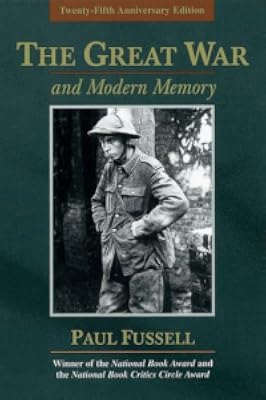
As Paul Fussell has pointed out elsewhere, to call Verdun a ‘battle’ – as though this relentless endurance of shelling were remotely similar to Blenheim or Waterloo – is to give entirely the wrong impression. Men did not fight men at Verdun, or very rarely; instead, men were pitted against heavy artillery. They heard little but screaming shells and lived – if they were lucky – half-underground in trenches where the water was often waist-high. The ground had been churned up so many times that corpses were (to borrow a cooking term) folded in throughout, and body-parts protruded from the trench walls or confounded your spade when you tried to dig in.
The psychological effect of this on the soldiers is…well, it can hardly be imagined. One priest, Sergeant Dubrelle, wrote home with some decidedly un-Catholic feelings:
Having despaired of living amid such horror, we begged God not to have us killed – the transition is too atrocious – but just to let us be dead. We had but one desire; the end!
Alistair Horne – rising to the peaks of desperate irony that Verdun demands – comments: ‘At least this part of Dubrelle's prayers was answered the following year.’ Horne's tone and command of his material really is excellent throughout; he is very good on the political side, he offers outstanding character sketches of the major players, but he is also determined to make clear the experience of the regular soldiers who, amidst the horror, enacted ‘countless, unrecorded Thermopylaes’.
Many of the peripheral details here are fascinating. I knew of course that cavalry was still considered a strong tactic at the start of the war, but I had not previously appreciated how proportionally undeveloped was the use of motor-cars. In 1914, there were only 170 vehicles in the entire French army, and the Senegalese troops brought in to the service depots at first ate the grease.
One of the most riveting aspects of learning about the First World War, for me, has been the extent to which it is inseparable from the Second, so that whole period of 1914-1945 can be understood (as one historian said) almost as another Thirty Years War. This element comes across strongly in Horne as well, in unexpectedly tragic ways. It was Verdun that convinced French commanders of the vital necessity of strong forts, leading to their later over-dependence on the Maginot Line; indeed, ‘more than any isolated event of the First War, Verdun led to France's defeat in 1940’. While on the other side of the lines, it created ‘a vacuum of leadership in Germany into which rushed the riff-raff of the Himmlers and Goebbels’.
The most prominent symbol of this trajectory is poor Pétain, who emerges here as one of the great tragic figures of the century. Deeply protective of his troops, by far the most humanitarian French general, he would almost certainly have evacuated the whole Verdun salient if he'd been allowed; instead, he was forced to preside over a protracted slaughter. His resulting defeatism and pessimism were the first steps on the road that led inexorably to Vichy France.
In terms of raw numbers, there were probably more outrageous encounters; 20,000 British alone were killed on just the first day of the Somme, for instance. But what made Verdun uniquely horrific was how long it went on for. Even academic, judicious Horne finds himself concluding that ‘It is probably no exaggeration to call Verdun the “worst” battle in history’, and a microcosm of the wider conflagration:
It was the indecisive battle in an indecisive war; the unnecessary battle in an unnecessary war; the battle that had no victors in a war that had no victors.
One feels deeply that what happened from February to December 1916 was a ghastly mistake for the species as a whole. Then again, perhaps the most appalling thing is the possibility that this is not so. ‘War is less costly than servitude,’ writes the French novelist Jean Dutourd, in a comment that Horne quotes twice and that I found utterly chilling: ‘the choice is always between Verdun and Dachau.’ Now there's a choice to keep you up at night. show less
Eleven days though! Imagine trying to confront an armed Brandenburger with that level of sleep-deprivation. Luckily, such an eventuality rarely came up: one of the most striking things about Verdun was the fact that you were unlikely ever to face up to the enemy, or even see him. All you had to do was wait until your turn show more in the front-line trenches, and then endure as much shelling as you could before you were eviscerated.
This perhaps sounds like some grimly comic exaggeration, but in fact the French commanders were quite explicit about the pointless deaths they expected from their men. General Nivelle's orders were to ‘Ne pas se rendre, ne pas reculer d'un pouce, se faire tuer sur place’, while one colonel told his troops: ‘On the day they want to, they will massacre you to the last man, and it is your duty to fall.’
As pep-talks go, that's not exactly the St. Crispin's Day speech from Henry V. In fact it's only a couple of rungs up from ‘Men, why don't all of you fuck off and die.’
What was it all about? Well, the Germans guessed rightly that France would never surrender Verdun, which was a key fortress-town near the front lines. They therefore reckoned that by attacking it continually, they would force the French to sacrifice themselves in order to prevent its loss: ‘the forces of France will bleed to death,’ in the words of the famous German memo, ‘whether we reach our goal or not.’
This subtle plan had, as Captain E. Blackadder would later put it, just one tiny flaw: it was bollocks. The problem was that the Germans attacking Verdun were compelled to haemorrhage troops almost as fast as the French. So you had both armies hurling great bodies of men at each other, both sides constantly decimated by extremely heavy artillery fire, all over an objective that the Germans never even seriously expected to win.
It was very quickly obvious that the whole affair was pointless; but, because of astonishingly limp leadership on both sides, it went on for fully ten months. At the end of which, the front line was in roughly the same place it had been at the beginning and three hundred thousand boys were dead.
As Paul Fussell has pointed out elsewhere, to call Verdun a ‘battle’ – as though this relentless endurance of shelling were remotely similar to Blenheim or Waterloo – is to give entirely the wrong impression. Men did not fight men at Verdun, or very rarely; instead, men were pitted against heavy artillery. They heard little but screaming shells and lived – if they were lucky – half-underground in trenches where the water was often waist-high. The ground had been churned up so many times that corpses were (to borrow a cooking term) folded in throughout, and body-parts protruded from the trench walls or confounded your spade when you tried to dig in.
The psychological effect of this on the soldiers is…well, it can hardly be imagined. One priest, Sergeant Dubrelle, wrote home with some decidedly un-Catholic feelings:
Having despaired of living amid such horror, we begged God not to have us killed – the transition is too atrocious – but just to let us be dead. We had but one desire; the end!
Alistair Horne – rising to the peaks of desperate irony that Verdun demands – comments: ‘At least this part of Dubrelle's prayers was answered the following year.’ Horne's tone and command of his material really is excellent throughout; he is very good on the political side, he offers outstanding character sketches of the major players, but he is also determined to make clear the experience of the regular soldiers who, amidst the horror, enacted ‘countless, unrecorded Thermopylaes’.
Many of the peripheral details here are fascinating. I knew of course that cavalry was still considered a strong tactic at the start of the war, but I had not previously appreciated how proportionally undeveloped was the use of motor-cars. In 1914, there were only 170 vehicles in the entire French army, and the Senegalese troops brought in to the service depots at first ate the grease.
One of the most riveting aspects of learning about the First World War, for me, has been the extent to which it is inseparable from the Second, so that whole period of 1914-1945 can be understood (as one historian said) almost as another Thirty Years War. This element comes across strongly in Horne as well, in unexpectedly tragic ways. It was Verdun that convinced French commanders of the vital necessity of strong forts, leading to their later over-dependence on the Maginot Line; indeed, ‘more than any isolated event of the First War, Verdun led to France's defeat in 1940’. While on the other side of the lines, it created ‘a vacuum of leadership in Germany into which rushed the riff-raff of the Himmlers and Goebbels’.
The most prominent symbol of this trajectory is poor Pétain, who emerges here as one of the great tragic figures of the century. Deeply protective of his troops, by far the most humanitarian French general, he would almost certainly have evacuated the whole Verdun salient if he'd been allowed; instead, he was forced to preside over a protracted slaughter. His resulting defeatism and pessimism were the first steps on the road that led inexorably to Vichy France.
In terms of raw numbers, there were probably more outrageous encounters; 20,000 British alone were killed on just the first day of the Somme, for instance. But what made Verdun uniquely horrific was how long it went on for. Even academic, judicious Horne finds himself concluding that ‘It is probably no exaggeration to call Verdun the “worst” battle in history’, and a microcosm of the wider conflagration:
It was the indecisive battle in an indecisive war; the unnecessary battle in an unnecessary war; the battle that had no victors in a war that had no victors.
One feels deeply that what happened from February to December 1916 was a ghastly mistake for the species as a whole. Then again, perhaps the most appalling thing is the possibility that this is not so. ‘War is less costly than servitude,’ writes the French novelist Jean Dutourd, in a comment that Horne quotes twice and that I found utterly chilling: ‘the choice is always between Verdun and Dachau.’ Now there's a choice to keep you up at night. show less
A book that sat of my shelf far too long! This was absolutely outstanding. The subject matter is as grim as anything you've ever read, but Horne's telling of the story is superb. I've been reading military history all my life, and to have never known the story of Fort Vaux is a scandal. I myself am guilty of telling the "France can't fight" jokes, but I know better now.
Read this book. It will teach you more about what the human spirit can survive. It will also remind you that man's greatest enemy is, and will always be, himself.
Read this book. It will teach you more about what the human spirit can survive. It will also remind you that man's greatest enemy is, and will always be, himself.
Yowza. It is a doozy. Reading this book takes a lot of courage? insight? foolhardiness? and it's best to read it in a few weeks rather than pick up and put down. But gosh how rewarding it is to read it again.
It was originally assigned in my freshman year of college and I only made it through the seizure of Fort Douaumont before I stopped. Could not handle the deaths and the description of the devastated landscapes, and those only got worse as the war progressed.
Re-read it in 1990-91 and just mourned the horrendous loss of life that happened day after day during this longest battle of World War I. I had also visited one of the smaller soldiers' graveyards in Verdun as a result of this book and that certainly changed me.
This book was show more written with great insight into the thinking on both sides, German and French, and how the generals' flawed way of viewing warfare as a way to settle scores or to reclaim their nation's past glory was what led to a this ten-month long battle.
For the Germans, General Falkenhayn's indecisiveness lost several chances for successful German victory during key advances. The idea of l'Attaque à l'outrance of Colonel de Grandmaison was the drumbeat the French side: to attack without a care for the munitions on the other side, let alone one's own life, as a way to purge the shame the French retreat in 1870 during the Franco-Prussian War.
Alistair Horne wrote this detailed book in 1962 and added to it in the early 1990's after the fall of the Berlin Wall. The details he brings to his research span from the French HQ at Chantilly and the disconnect of the generals from the trenches, to the letters home from soldiers detailing the harsh conditions under which they lived during the 10 months of fighting.
There were times I would take a moment from reading and think about 40 shells falling in that minute or two of respite, such as happened on 21st February on the first day of fighting. Then there were the runners who could maybe advance 300 yards before enemy shells killed them or they found shelter in a shell hole full of water and corpses. Descriptions of the aftermath included finding remains of 3 people in the undergrowth, even as late as the 50's and 60's: a wounded soldier and his two stretcher bearers killed by a shell. Horne does not hold back from describing the realities of war, nor should he.
The maps were key to understanding what and where, and I can only wish there were more authors and publishers who would add them to their works.
What we can learn from The Great War is vast. This book is one of the pillars of that study. show less
It was originally assigned in my freshman year of college and I only made it through the seizure of Fort Douaumont before I stopped. Could not handle the deaths and the description of the devastated landscapes, and those only got worse as the war progressed.
Re-read it in 1990-91 and just mourned the horrendous loss of life that happened day after day during this longest battle of World War I. I had also visited one of the smaller soldiers' graveyards in Verdun as a result of this book and that certainly changed me.
This book was show more written with great insight into the thinking on both sides, German and French, and how the generals' flawed way of viewing warfare as a way to settle scores or to reclaim their nation's past glory was what led to a this ten-month long battle.
For the Germans, General Falkenhayn's indecisiveness lost several chances for successful German victory during key advances. The idea of l'Attaque à l'outrance of Colonel de Grandmaison was the drumbeat the French side: to attack without a care for the munitions on the other side, let alone one's own life, as a way to purge the shame the French retreat in 1870 during the Franco-Prussian War.
Alistair Horne wrote this detailed book in 1962 and added to it in the early 1990's after the fall of the Berlin Wall. The details he brings to his research span from the French HQ at Chantilly and the disconnect of the generals from the trenches, to the letters home from soldiers detailing the harsh conditions under which they lived during the 10 months of fighting.
There were times I would take a moment from reading and think about 40 shells falling in that minute or two of respite, such as happened on 21st February on the first day of fighting. Then there were the runners who could maybe advance 300 yards before enemy shells killed them or they found shelter in a shell hole full of water and corpses. Descriptions of the aftermath included finding remains of 3 people in the undergrowth, even as late as the 50's and 60's: a wounded soldier and his two stretcher bearers killed by a shell. Horne does not hold back from describing the realities of war, nor should he.
The maps were key to understanding what and where, and I can only wish there were more authors and publishers who would add them to their works.
What we can learn from The Great War is vast. This book is one of the pillars of that study. show less
Horne's writing is delicate, elaborate, and sweeping. He lavishly paints a picture of the events leading up to Verdun and the battle itself, highlighting the major players in command and tracking the nightmare on the front lines. I always knew Verdun as a "meat grinder" and while that's true, there are distinct beats to this 10 month long battle and I came away with a more nuanced understanding of them.
The author depicts the flow of battle with expertise, and illustrates the effects it had on both sides. He dives into the nightmare of the new weaponry introduced at Verdun, like flamethrowers or phosgene gas - and you can almost feel the panic as your own heart starts racing imagining what it must have been like to confront these show more terrors.
I have only two criticisms of the book. Horne will sometimes reference a "well known" figure without giving any context. If you don't happen to know what person or their backstory, it's up to you to figure it out. He will also regularly cite quotes in French (less often German) without any translation, so you'll need to have at least a basic understanding of the language if you want to understand these, or run them through a translator.
Regardless, this stands as one of the best books I've read on WWI and I highly recommend it. show less
The author depicts the flow of battle with expertise, and illustrates the effects it had on both sides. He dives into the nightmare of the new weaponry introduced at Verdun, like flamethrowers or phosgene gas - and you can almost feel the panic as your own heart starts racing imagining what it must have been like to confront these show more terrors.
I have only two criticisms of the book. Horne will sometimes reference a "well known" figure without giving any context. If you don't happen to know what person or their backstory, it's up to you to figure it out. He will also regularly cite quotes in French (less often German) without any translation, so you'll need to have at least a basic understanding of the language if you want to understand these, or run them through a translator.
Regardless, this stands as one of the best books I've read on WWI and I highly recommend it. show less
This 1993 edition, reprinted & updated from the 1962 edition, has essentially remained the classic work on the Verdun battle of World War I. His narration of the February to December 1916 is stark & at times brutal in the scale of death meted out on both sides. It is definitely not timid reading. From the moment of conception in the mind of the German command staff to its disastrous consequences proved a microcosm of the entire First World War. Endless movement but little gains & counter losses only served to bleed both the French & the German armies to sheer exhaustion.
Here Horne presents both sides with equal candor with all the prejudices & overweening pride blinding both sides to the utter futility of what they were in the middle show more of. As the author demonstrates, war is a messy business & all the battle plans carefully thought out can be wrecked merely by nature or by sheer stupidity or by incredible timing.
More specifically, the French army was saddled with an inept high command, poor planning, failure to adjust to ever changing tactics resulting in the bleeding of the French army. It was not a surprise that the French army revolted but incredibly its rebellion was brutally crushed without mercy after the battle. The French army would not recover afterwards necessitating the infusion of the Americans, who came just in time to offset Hindenburg's assault in 1917, to hold up the front.
The German high command faced with shrinking windows of opportunity drew up a plan that might have worked except it relied on too narrow of a front, overreliance on 1 or 2 corps at a time, failure to assess possible issues, increasing inability to control the air for intelligence, & finally, indecisiveness of the Commander in Chief which added to a growing litany of mistakes & failure to adjust early on. (The Germans did adjust in the next battle but the French did not).
Mr. Horne has done a masterful job in his assessment of this battle which served no purpose but to extend the war far longer & left both France & Germany worse off than before the Battle of Verdun started. He carefully presents the players both the high command down to the soldiers on the field sympathetically. An excellent read for those who are interested in how the First World War was fought. show less
Here Horne presents both sides with equal candor with all the prejudices & overweening pride blinding both sides to the utter futility of what they were in the middle show more of. As the author demonstrates, war is a messy business & all the battle plans carefully thought out can be wrecked merely by nature or by sheer stupidity or by incredible timing.
More specifically, the French army was saddled with an inept high command, poor planning, failure to adjust to ever changing tactics resulting in the bleeding of the French army. It was not a surprise that the French army revolted but incredibly its rebellion was brutally crushed without mercy after the battle. The French army would not recover afterwards necessitating the infusion of the Americans, who came just in time to offset Hindenburg's assault in 1917, to hold up the front.
The German high command faced with shrinking windows of opportunity drew up a plan that might have worked except it relied on too narrow of a front, overreliance on 1 or 2 corps at a time, failure to assess possible issues, increasing inability to control the air for intelligence, & finally, indecisiveness of the Commander in Chief which added to a growing litany of mistakes & failure to adjust early on. (The Germans did adjust in the next battle but the French did not).
Mr. Horne has done a masterful job in his assessment of this battle which served no purpose but to extend the war far longer & left both France & Germany worse off than before the Battle of Verdun started. He carefully presents the players both the high command down to the soldiers on the field sympathetically. An excellent read for those who are interested in how the First World War was fought. show less
Popularly at least, the First World War is often seen as uniquely bad among wars and Verdun as its worst battle. In this middle volume of his trilogy on Franco-German military conflict from 1870 to 1940, [a:Alistair Horne|11016|Alistair Horne|https://d.gr-assets.com/authors/1231165127p2/11016.jpg] does an excellent job on both the levels which require success to make good military history. First, he clearly conveys the changing tactical picture of the battle. Second, he comes as close as it might be possible to recreate the experience of living and dying at Verdun between February and December 1916.
Horne is also unsparing in his strategic judgments. Condemned are Joffre, Falkenhayn, Haig (in asides), and Nivelle. Such heroes as emerge show more among the generals are Petain and the German Crown Prince.
More than fifty years after its first publication, this remains, perhaps, the best book on the battle of Verdun. show less
Horne is also unsparing in his strategic judgments. Condemned are Joffre, Falkenhayn, Haig (in asides), and Nivelle. Such heroes as emerge show more among the generals are Petain and the German Crown Prince.
More than fifty years after its first publication, this remains, perhaps, the best book on the battle of Verdun. show less
"The Price of Glory" is a true masterpiece of First World War history with the author striking a perfect balance in recounting the events of the Battle of Verdun. He presents the all important historical background concerning the humiliating defeat of the French by the Prussians in 1870 and spends a good deal of time on the flawed generals of both sides who wasted hundreds of thousands of young lives over the space of 10 months.
Verdun became a totem to both the French and German nations leading to an overwhelming commitment by both sides that went far beyond military logic. Horne shows the astounding inability of the generals (particularly the French) to adapt to the reality of fixed position warfare using heavy artillery and machine show more guns. The ethos of the French GHQ typified by Joffre was the "L'Attaque à Outrance", a sort of wild romantic attack with light artillery along Napoleonic lines, to which end for example, he removed most of the guns and men from the vital strategic fort of Douaumont (too positional) allowing ten surprised German soldiers to walk in unchallenged. Its worth reading the book just for the story of sergeant Kunze and the progress of his nine men.
Eventually the French won a Pyrrhic victory as German reserves were exhausted, Falkenhayn vacillated and France finally found a capable general in Philippe Petain. He shunted out the romantics and adapted to the new environment, organising supply, rotating exhausted troops and carefully studying terrain and reserves in defence and attack. The victory was his and in the epilogue the author clearly sides with him in his post WW2 trial for collaborating with France's German occupiers. He was 90 years old at the time and said," My thought, my only thought, was to remain with them (the French) on the soil of France, according to my promise, so as to protect them and lessen their suffering". His ADC he knew him better than anyone and said quite correctly that, " You think too much about the French and not enough about France".
In stark contrast, the inflexible romantic Charles De Gaulle thought much about "La Gloire de La France" and hounded the saviour of Verdun to a death sentence which was eventually commuted to life imprisonment.
An extraordinarily good book in many ways. show less
Verdun became a totem to both the French and German nations leading to an overwhelming commitment by both sides that went far beyond military logic. Horne shows the astounding inability of the generals (particularly the French) to adapt to the reality of fixed position warfare using heavy artillery and machine show more guns. The ethos of the French GHQ typified by Joffre was the "L'Attaque à Outrance", a sort of wild romantic attack with light artillery along Napoleonic lines, to which end for example, he removed most of the guns and men from the vital strategic fort of Douaumont (too positional) allowing ten surprised German soldiers to walk in unchallenged. Its worth reading the book just for the story of sergeant Kunze and the progress of his nine men.
Eventually the French won a Pyrrhic victory as German reserves were exhausted, Falkenhayn vacillated and France finally found a capable general in Philippe Petain. He shunted out the romantics and adapted to the new environment, organising supply, rotating exhausted troops and carefully studying terrain and reserves in defence and attack. The victory was his and in the epilogue the author clearly sides with him in his post WW2 trial for collaborating with France's German occupiers. He was 90 years old at the time and said," My thought, my only thought, was to remain with them (the French) on the soil of France, according to my promise, so as to protect them and lessen their suffering". His ADC he knew him better than anyone and said quite correctly that, " You think too much about the French and not enough about France".
In stark contrast, the inflexible romantic Charles De Gaulle thought much about "La Gloire de La France" and hounded the saviour of Verdun to a death sentence which was eventually commuted to life imprisonment.
An extraordinarily good book in many ways. show less
Members
- Recently Added By
Lists

Best Military History Books
123 works; 21 members

Books bought at library sales
98 works; 4 members

r/AskHistorians' Recommended Books
1,068 works; 19 members

Books recommended in the history category on FiveBooks.com
329 works; 4 members
Author Information

31+ Works 5,878 Members
Alistair Allan Horne was born in London, England on November 9, 1925. He enlisted in the Royal Air Force, but failed to qualify for pilot training because of poor eyesight. He later joined the Coldstream Guards, attaining the rank of captain. When the war ended, he was transferred to the Intelligence Corps and stationed in Cairo where he monitored show more Soviet activity in the Balkans. He received a master's degree in English in 1949 from Jesus College, Cambridge. Before becoming an author, he was a foreign correspondent for The Daily Telegraph and a spy for MI6, Britain's foreign intelligence service. His books included The Fall of Paris: The Siege and the Commune, 1870-71; To Lose a Battle: France 1940; Small Earthquake in Chile: A Visit to Allende's South America; The French Army and Politics, 1870-1970; Seven Ages of Paris; The Age of Napoleon; La Belle France: A Short History; and Kissinger: 1973, The Crucial Year. The Price of Glory: Verdun 1916 won the Hawthornden Prize and A Savage War of Peace: Algeria 1954-1962 won the Wolfson Prize. He wrote several memoirs including A Bundle from Britain and But What Do You Actually Do?: A Literary Vagabondage. He was knighted in 2003. He died on May 25, 2017 at the age of 91. (Bowker Author Biography) show less
Some Editions
Awards and Honors
Awards
Series
Belongs to Publisher Series
Common Knowledge
- Canonical title*
- Il Prezzo della Gloria - Verdun 1916 - La leggendaria battaglia che chiuse un'epoca.
- Original title
- The price of gloriy - Verdun 1916.
- Original publication date
- 1962
- People/Characters
- Philippe Pétain (General); Erich von Falkenhayn; Wilhelm II, German Kaiser and King of Prussia; Joseph Joffre; Kiffin Rockwell; Wilhelm, Crown Prince of Prussia
- Important places
- Verdun, Meuse, Grand-Est, France; France
- Important events
- World War I (1914 | 1918); Battle of Verdun (1916-02-21 | 1916-12-20)
- Epigraph
- This Western-front business couldn't be done again, not for a long time. The young men think they could do it again but they couldn't. They could fight the first Marne again but not this, this took religion and years of plent... (show all)y and tremendous sureties and the exact relation that existed between the classes. The Russians and Italians weren't any good on this front. You had to have a whole-souled sentimental equipment going back further than you could remember. You had to remember Christmas, and postcards of the Crown Prince and his fiancee, and little cafes in Valence and beer gardens in Unter den Linden and weddings at the Mairie, and going to the Derby, and your grandfather's whiskers....This was a love battle-there was a century of middle-class love spent here....All my beautiful lovely safe world blew itself up here with a great gust of high explosive love.... - F. Scott Fitzgerald, Tender is the Night
- Dedication
- To Francis and Jacqueline
- First words
- Three and a half years elapsed between the First Battle of the Marne, when the Kaiser's armies reached the gates of Paris, and Ludendorff's last-gasp offensive that so nearly succeeded in the Spring of 1918.
- Quotations
- Throughout the line the first day of battle had been for the French one of minor disasters alternating with countless, unrecorded small Thermopylaes.
- Last words
- (Click to show. Warning: May contain spoilers.)Or will France have to wait until the eery forests on the Mort Homme mature and are hewn down, and farms and happy villages once again populate its dead slopes?
- Original language*
- Inglese
*Some information comes from Common Knowledge in other languages. Click "Edit" for more information.
Classifications
Statistics
- Members
- 924
- Popularity
- 28,991
- Reviews
- 22
- Rating
- (4.18)
- Languages
- 5 — Czech, Dutch, English, Finnish, Italian
- Media
- Paper, Audiobook, Ebook
- ISBNs
- 13
- ASINs
- 18