On This Page
Description
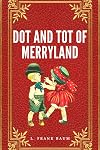
From the author of The Wonderful Wizard of Oz comes this tale of two children and their river voyage to an enchanted world. L. Frank Baum's fantasy features whimsical images by famed Oz illustrator W. W. Denslow. Young readers and listeners will be eager to join Dot and Tot on a journey to Merryland and share their adventures in the Valley of the Clowns, the Valley of Lost Things, and other magical places.Tags
Recommendations

















Member Reviews
I read this aloud to my four-year-old son between Oz novels. Like many of Baum's early books, you can (retrospectively, at least) look back and see why Wonderful Wizard worked and this did not. "Dot" and "Tot" are two small children—she a child of privilege whose father buys a country estate just so she can get some fresh air, he the child of the estate's gardener—who fall asleep in a boat while exploring, which comes unmoored and drifts down an underground river into Merryland. Merryland is a country divided into seven valleys, which are home to, in turn, clowns, candy, babies, dolls, cats, wind-up animals, and lost things. Dot and Tot basically drift from valley to valley, interacting with each one's inhabitants and then moving show more on; there's no real quest here except for a vague sense they want to get home. It's nowhere near as purposeful as Dorothy's trip to Oz; it's much more akin to the seemingly purposeless wanderings in The Sea Fairies, The Enchanted Island of Yew, and The Master Key.
On the other hand, it lacks the violence of the latter two, and for a kid hearing a chapter every day, that kind of focus matters less. He had fun hearing about each strange place in turn, which is clearly what Baum wanted.
Baum's wild imagination is on display here; though some of the valleys aren't very interesting (cats, clowns), others are filled with neat ideas and evocative imagery, such as the Valley of Babies, where babies fall from the sky in giant blossoms, and are tended to by storks until they are ready to be carried to the outside world to be born. Mr. Split, the man who can split himself into two parts is a great concept, and the Valley of Lost Things is suitably creepy and forlorn. In the Valley of Dolls, Dot and Tot are joined by the Queen of Merryland, who goes to the remaining valleys with them, thus removing what modicum of danger there was. The idea that she kind of needs to force them to stay by adopting them is interesting, but at the end of the book, she just changes her mind and lets them leave anyway.
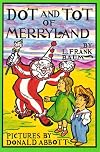
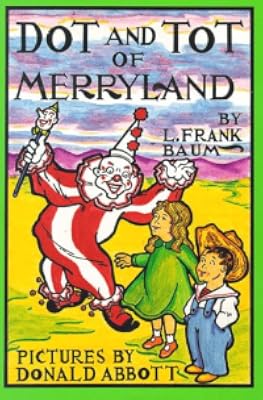
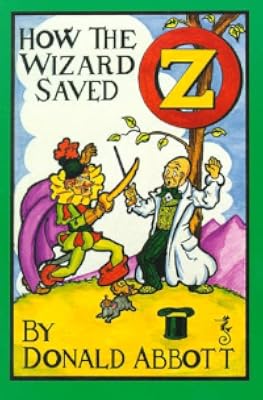
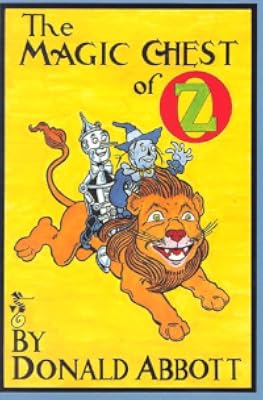
We read the 1990s Books of Wonder edition, which replaces the original illustrations by W. W. Denslow with new ones by Donald Abbott, which are clearly designed to emulate Denslow's as much as possible. They're nice enough.
(Worldbuilding implications: the book indicates that there are "real" clowns from the Valley of Clowns in Merryland, who go into the outside world to entertain children, and fake clowns, who are just humans putting on make-up. This means Notta Bit More from Cowardly Lion is a fake clown... which is, frankly, not too surprising. Does the Valley of Clowns have any connection to Oz's Play City, a settlement of pierrettes and pierrots in the Winkie Country from Grampa in Oz?) show less
On the other hand, it lacks the violence of the latter two, and for a kid hearing a chapter every day, that kind of focus matters less. He had fun hearing about each strange place in turn, which is clearly what Baum wanted.
Baum's wild imagination is on display here; though some of the valleys aren't very interesting (cats, clowns), others are filled with neat ideas and evocative imagery, such as the Valley of Babies, where babies fall from the sky in giant blossoms, and are tended to by storks until they are ready to be carried to the outside world to be born. Mr. Split, the man who can split himself into two parts is a great concept, and the Valley of Lost Things is suitably creepy and forlorn. In the Valley of Dolls, Dot and Tot are joined by the Queen of Merryland, who goes to the remaining valleys with them, thus removing what modicum of danger there was. The idea that she kind of needs to force them to stay by adopting them is interesting, but at the end of the book, she just changes her mind and lets them leave anyway.
We read the 1990s Books of Wonder edition, which replaces the original illustrations by W. W. Denslow with new ones by Donald Abbott, which are clearly designed to emulate Denslow's as much as possible. They're nice enough.
(Worldbuilding implications: the book indicates that there are "real" clowns from the Valley of Clowns in Merryland, who go into the outside world to entertain children, and fake clowns, who are just humans putting on make-up. This means Notta Bit More from Cowardly Lion is a fake clown... which is, frankly, not too surprising. Does the Valley of Clowns have any connection to Oz's Play City, a settlement of pierrettes and pierrots in the Winkie Country from Grampa in Oz?) show less
There is, I think, a reason why this "novel" - L. Frank Baum's first after the seminal Wonderful Wizard of Oz - has rarely been reprinted. Simply put, it isn't very good. The protagonists are unlikeable, and they don't really do anything; they just glide through the story, bouncing from one magical island to another, commenting and moving on. Similarly, there's only the barest semblance of a plot: if the Oz books are episodic, this one's basically a series of vignettes strung together. Some of them, like the visit to the land of babies, are rather sweet and charming; others, like the land of "pussy cats," fade almost immediately into insignificance. There's even a slight undercurrent of horror in the middle chapters, focusing on the show more start-stop lives of an island of dolls and toys controlled by a "thinking machine," but Baum never explores the possibilities - he just lets them sit there, vaguely unsettling.
It's not a terrible book, but there's really nothing about it to appeal to anyone who isn't a dedicated Baum fan or scholar. Indeed, the most interesting aspect of it is probably the illustration and design of W.W. Denslow, which can only now be found preserved in online editions. More than nearly any other of Baum's fantasy works, Dot and Tot deserves to drift into obscurity. There are literally dozens of better works to have come from his pen. show less
It's not a terrible book, but there's really nothing about it to appeal to anyone who isn't a dedicated Baum fan or scholar. Indeed, the most interesting aspect of it is probably the illustration and design of W.W. Denslow, which can only now be found preserved in online editions. More than nearly any other of Baum's fantasy works, Dot and Tot deserves to drift into obscurity. There are literally dozens of better works to have come from his pen. show less
Written after the success of The Wizard of Oz and yuo can see allthe touches but just not as good a story. The Gutenberg version has the illustrations but some seem to be recycled from other stories. Still, a fun and light listen/read.
Ratings
Members
- Recently Added By
Lists

Books Read in 2020
4,379 works; 124 members

Isle Royale
18 works; 1 member
Author Information

605+ Works 72,627 Members
Best known as the author of the Wizard of Oz series, Lyman Frank Baum was born on May 15, 1856, in New York. When Baum was a young man, his father, who had made a fortune in oil, gave him several theaters in New York and Pennsylvania to manage. Eventually, Baum had his first taste of success as a writer when he staged The Maid of Arran, a show more melodrama he had written and scored. Married in 1882 to Maud Gage, whose mother was an influential suffragette, the two had four sons. Baum often entertained his children with nursery rhymes and in 1897 published a compilation titled Mother Goose in Prose, which was illustrated by Maxfield Parrish. The project was followed by three other picture books of rhymes, illustrated by William Wallace Denslow. The success of the nursery rhymes persuaded Baum to craft a novel out of one of the stories, which he titled The Wonderful Wizard of Oz. Some critics have suggested that Baum modeled the character of the Wizard on himself. Other books for children followed the original Oz book, and Baum continued to produce the popular Oz books until his death in 1919. The series was so popular that after Baum's death and by special arrangement, Oz books continued to be written for the series by other authors. Glinda of Oz, the last Oz book that Baum wrote, was published in 1920. (Bowker Author Biography) show less
Some Editions
Series

Common Knowledge
- Original publication date
- 1901
Classifications
- Genres
- Fiction and Literature, Kids
- DDC/MDS
- 813.4 — Literature & rhetoric American literature in English American fiction in English Later 19th Century 1861-1900
- LCC
- PZ7 .B327 .D — Language and Literature Fiction and juvenile belles lettres Fiction and juvenile belles lettres Juvenile belles lettres
- BISAC
Statistics
- Members
- 65
- Popularity
- 479,208
- Reviews
- 3
- Rating
- (3.78)
- Languages
- English, German
- Media
- Paper, Audiobook, Ebook
- ISBNs
- 18
- ASINs
- 5