On This Page
Description
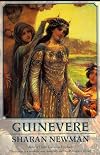
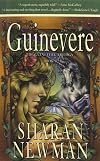
Tells of Guinevere's childhood when she was guarded by a majestic beast and prepared for holy sacrifice by the disciples of the Earth Mother.Tags
Recommendations



















Member Reviews
I think this is one of the best portrayals of Guinevere I've ever read. It may have been written for a young adult audience due to the point of view of the title character: we arrive at the end of the book when she marries Arthur, and do not go into Guinevere's queenship.
Guinevere is introduced as a child with an affinity for nature, and her parents, Leodegrance and Guenlain maintain their home in the style of the Romans who left nearly 200 years ago. But they also left behind a sense of order and running water, and Guinevere's parents know the value of both these things!
Making a prominent place in this re-telling are the incursions of the Saxon invaders as well as hints of an earlier religion. Flora, Guinevere's nurse is one of the show more practitioners of this Old Way, as are many of the house servants with their darker hair and slighter build. New characters are Geraldus, a traveling priest beset by an invisible chorus that only he can hear (though Guinevere can see several of them), and three older brothers to Guinevere: Matthew, Mark, and John. And Guinevere's mother, Guenlian, is mentioned by name and given a great deal of character. She is also cousin to Merlin.
As Guinevere grows, her affinity with nature includes her finding and bonding with a unicorn who is the most beautiful creature Guinevere has ever seen. It is while she is spending time with her unicorn that a young Arthur and several of his early band, including Gawain, come riding up. While the unicorn runs away from this armed band of men, Guinevere is still in her trance and the aura that surrounds her enraptures Arthur and he thinks he has seen the Virgin Mary.
Other adventures occur in Guinevere's life, fleshing her out as a whole person during her earlier years. It is well-written, full of detail, and describes this time in British history and develops this famous young woman's life. show less
Guinevere is introduced as a child with an affinity for nature, and her parents, Leodegrance and Guenlain maintain their home in the style of the Romans who left nearly 200 years ago. But they also left behind a sense of order and running water, and Guinevere's parents know the value of both these things!
Making a prominent place in this re-telling are the incursions of the Saxon invaders as well as hints of an earlier religion. Flora, Guinevere's nurse is one of the show more practitioners of this Old Way, as are many of the house servants with their darker hair and slighter build. New characters are Geraldus, a traveling priest beset by an invisible chorus that only he can hear (though Guinevere can see several of them), and three older brothers to Guinevere: Matthew, Mark, and John. And Guinevere's mother, Guenlian, is mentioned by name and given a great deal of character. She is also cousin to Merlin.
As Guinevere grows, her affinity with nature includes her finding and bonding with a unicorn who is the most beautiful creature Guinevere has ever seen. It is while she is spending time with her unicorn that a young Arthur and several of his early band, including Gawain, come riding up. While the unicorn runs away from this armed band of men, Guinevere is still in her trance and the aura that surrounds her enraptures Arthur and he thinks he has seen the Virgin Mary.
Other adventures occur in Guinevere's life, fleshing her out as a whole person during her earlier years. It is well-written, full of detail, and describes this time in British history and develops this famous young woman's life. show less
Sharan Newman's Guinevere trilogy was on of my favorite trilogies when I was younger, and I am surprised that it never became more popular. I recently reread this book, and while I can see how the character of Guinevere might be a bit too much of an ingenue for some, I still adore the book overall.
Newman's blend of fantasy with myth enchanted me when I was younger, and I'm afraid that no other Arthurian retelling has grabbed my imagination in quite the same way. For instance, Newman's Gawain has a strange affliction where he grows stronger as the sun rises, but falls sound asleep no matter where he is or what he is doing once the sun sets. Saint Geraldus is a friend of Guinevere's family; he is called 'saint' because he is surrounded show more by mysterious singing voices that no one else can hear, and which everyone assumes must be a choir of angels (Geraldus himself thinks that angel choirs would probably have better voices). Although it is not a fantastical element, the story of Guinevere's brothers at war, and the unlikely friendship Guinevere forms with a Saxon girl who has been taken as a hostage, also stands out for me.
But one of the most striking parts of the trilogy for me is its portrayal of Arthur and Camelot (although, admittedly, Arthur doesn't feature until the second half of this book). Arthur is shown as fiercely idealistic, and at the same troubled by self-doubt. He wants to unite Britain and create a peaceful and civilized country, but is very much aware that his right to kingship flows from his father, who was a brute and rapist. Arthur, himself more at home fighting than anywhere else, doubts whether he is even capable of creating the peace necessary.
All this informs his relationship with Guinevere. Guinevere, from a very young age, was marked out as something other than human, for better or for worse. She is not meant to stay in the earthly world, and that unearthly quality is part of what attracts Arthur and causes him to equate her (in my mind) with his own dreams of Camelot. Just as the trilogy tells the story of the rise and ultimate splintering of Camelot, it also tells the story of Guinevere's growing from an unearthly ingenue to a a very human, and to a certain extent broken (and, of course, the stronger for it) woman who can outlast her own promise. For this reason, I think that the ingenue qualities that annoy some are a necessary groundwork for the last book. I can't blame anyone for not wanting to continue a series where they dislike the main character, but I do hope I have managed to explain a little bit of why I think the overall trilogy is worthwhile.
I apologize for my only semi-coherent gushing, but as I mentioned, this trilogy is one of my absolute child/teenager-hood favorites, and I really can't be impartial. Feel free to roll your eyes - to tell you the truth, I feel more than a little ridiculous going on so long. However, when I absolutely love a book, and no other reviewers seem to have felt the same way, I feel like I ought to at least try and explain why I love it so much. show less
Newman's blend of fantasy with myth enchanted me when I was younger, and I'm afraid that no other Arthurian retelling has grabbed my imagination in quite the same way. For instance, Newman's Gawain has a strange affliction where he grows stronger as the sun rises, but falls sound asleep no matter where he is or what he is doing once the sun sets. Saint Geraldus is a friend of Guinevere's family; he is called 'saint' because he is surrounded show more by mysterious singing voices that no one else can hear, and which everyone assumes must be a choir of angels (Geraldus himself thinks that angel choirs would probably have better voices). Although it is not a fantastical element, the story of Guinevere's brothers at war, and the unlikely friendship Guinevere forms with a Saxon girl who has been taken as a hostage, also stands out for me.
But one of the most striking parts of the trilogy for me is its portrayal of Arthur and Camelot (although, admittedly, Arthur doesn't feature until the second half of this book). Arthur is shown as fiercely idealistic, and at the same troubled by self-doubt. He wants to unite Britain and create a peaceful and civilized country, but is very much aware that his right to kingship flows from his father, who was a brute and rapist. Arthur, himself more at home fighting than anywhere else, doubts whether he is even capable of creating the peace necessary.
All this informs his relationship with Guinevere. Guinevere, from a very young age, was marked out as something other than human, for better or for worse. She is not meant to stay in the earthly world, and that unearthly quality is part of what attracts Arthur and causes him to equate her (in my mind) with his own dreams of Camelot. Just as the trilogy tells the story of the rise and ultimate splintering of Camelot, it also tells the story of Guinevere's growing from an unearthly ingenue to a a very human, and to a certain extent broken (and, of course, the stronger for it) woman who can outlast her own promise. For this reason, I think that the ingenue qualities that annoy some are a necessary groundwork for the last book. I can't blame anyone for not wanting to continue a series where they dislike the main character, but I do hope I have managed to explain a little bit of why I think the overall trilogy is worthwhile.
I apologize for my only semi-coherent gushing, but as I mentioned, this trilogy is one of my absolute child/teenager-hood favorites, and I really can't be impartial. Feel free to roll your eyes - to tell you the truth, I feel more than a little ridiculous going on so long. However, when I absolutely love a book, and no other reviewers seem to have felt the same way, I feel like I ought to at least try and explain why I love it so much. show less
I picked this up used, so had no idea it was part of a series. Finding that out gets it an extra half star. I liked a lot of the secondary characters, but Guinevere was , as another reviewer put it, as stupid as a turnip. And that's insulting to turnips. She doesn't seem to understand anything and is horribly self centered, although she seems to have gotten that from her mother. This was one of those books where I feel compelled to keep reading, but only because it has to get better, right? Now I'm a little afraid to read this author's other series.
Reading the whole trilogy. Intriguing portrayal of Guinevere's early years, tying in hidden pagan practices, remnant Roman & Christian culture.
I did not like this book, and wanted to give up on it nearly the whole time I was reading it. I did not give up because I am a fan and seeker of Arthurian tales. I'm giving it the extra half star just for that.
The Guinevere portrayed in this novel is a self-absorbed, stupid little girl with no redeeming qualities, yet everyone who meets her loves and adores her because she is so beautiful. Everyone, that is, except for Merlin-- and his reasons for not liking her, even though we all know them already, are nonetheless painstakingly spelled out for us.
Which brings me to my second reason for disliking this book. In the author's condescension to the reader, she spells out exactly what every character thinks and feels and doesn't allow show more anyones actions to speak for them:
"It wasn't just the shock of watching others engaging in what should be private activities, but the constant necessity of being around other people and having to deal with their emotions and desires. Strong feelings frightened her."
The third thing I hated about this book was the UNICORN. UGH! A UNICORN? Give me a break. A unicorn can be used well in a story (as in the Roger Zelazny's Amber Chronicles, but here it's just a schmaltzy wahh-wahh teenage girl lovey velvet painting device, wherein she throws her arms around the unicorn's neck and loves him and begs him and his cool and shining silver mane not to leave her, while a single wet tear runs down his cheek.
Over the course of the book there were quite a few anachronisms, or so I thought. I was annoyed by the hot water pipes running under Guinevere's tile floors, and went to look up the history of plumbing -- apparently it was possible during the time that this is set, but. . . I'm thinking it was unlikely that bathing was a favorite pastime in Arthur's court. In this story, though, the first offer made to a traveler was a hot bath. Guinevere also has a tutor and spends a lot of time reading classic Greek literature. Hmm, really? She managed to do that, in Medieval England, and yet she was still as stupid as a turnip.
The book ends with the marriage of Arthur and Guinevere, and there are more books in this series. I'm hard pressed to believe that the girl portrayed in this book puts any thought into what will happen in the following books. This book, to me, is just one big loser. show less
The Guinevere portrayed in this novel is a self-absorbed, stupid little girl with no redeeming qualities, yet everyone who meets her loves and adores her because she is so beautiful. Everyone, that is, except for Merlin-- and his reasons for not liking her, even though we all know them already, are nonetheless painstakingly spelled out for us.
Which brings me to my second reason for disliking this book. In the author's condescension to the reader, she spells out exactly what every character thinks and feels and doesn't allow show more anyones actions to speak for them:
"It wasn't just the shock of watching others engaging in what should be private activities, but the constant necessity of being around other people and having to deal with their emotions and desires. Strong feelings frightened her."
The third thing I hated about this book was the UNICORN. UGH! A UNICORN? Give me a break. A unicorn can be used well in a story (as in the Roger Zelazny's Amber Chronicles, but here it's just a schmaltzy wahh-wahh teenage girl lovey velvet painting device, wherein she throws her arms around the unicorn's neck and loves him and begs him and his cool and shining silver mane not to leave her, while a single wet tear runs down his cheek.
Over the course of the book there were quite a few anachronisms, or so I thought. I was annoyed by the hot water pipes running under Guinevere's tile floors, and went to look up the history of plumbing -- apparently it was possible during the time that this is set, but. . . I'm thinking it was unlikely that bathing was a favorite pastime in Arthur's court. In this story, though, the first offer made to a traveler was a hot bath. Guinevere also has a tutor and spends a lot of time reading classic Greek literature. Hmm, really? She managed to do that, in Medieval England, and yet she was still as stupid as a turnip.
The book ends with the marriage of Arthur and Guinevere, and there are more books in this series. I'm hard pressed to believe that the girl portrayed in this book puts any thought into what will happen in the following books. This book, to me, is just one big loser. show less
It's been a long time since I read this book. What I most remember was the relationship of Guinevere to her unicorn. That has stayed with me for many years. I also enjoyed reading a book about Guinevere rather than King Arthur.
Ratings
Members
- Recently Added By
Lists

Modern Arthurian Fiction
237 works; 15 members
Author Information

Sharan Newman is a medieval historian and author. She took her Master's degree in Medieval Literature at Michigan State University and then did her doctoral work at the University of California at Santa Barbara in Medieval Studies, specializing in twelfth-century France. She is a member of the Medieval Academy and the Medieval Association of the show more Pacific. Newman has done research at the Bibliotheque Nationale in Paris, the centre National de la Recherche Scientifique France Meridionale et Espagne at the University of Toulouse and the Institute for Jewish History at the University of Trier, as well as many departmental archives. show less
Some Editions
Series

Common Knowledge
- Original title
- Guinevere
- Original publication date
- 1981
- People/Characters
- Guinevere; Guenlian; Leondegrance; Caet; St. Geraldus; Flora (show all 11); Ecgfrith; Alswytha; King Arthur (Arthur Pendragon); Gawain; Merlin (as Merlyn)
- Important places
- England, UK; Camelot
- Important events
- Sub-Roman Britain; Rise of King Arthur
- Dedication
- For Lisa
Who has golden hair - First words
- There was a sound in the night.
- Last words
- (Click to show. Warning: May contain spoilers.)Slowly she crossed the room and climbed back into bed beside her husband.
- Blurbers
- McCaffrey, Anne; L'Engle, Madeleine
Classifications
- Genres
- Fiction and Literature, General Fiction, Fantasy, Historical Fiction
- DDC/MDS
- 813.54 — Literature & rhetoric American literature in English American fiction in English 1900-1999 1945-1999
- LCC
- PS3564 .E926 .G8 — Language and Literature American literature American literature Individual authors 1961-
- BISAC
Statistics
- Members
- 259
- Popularity
- 124,832
- Reviews
- 6
- Rating
- (3.61)
- Languages
- English, German
- Media
- Paper, Ebook
- ISBNs
- 9
- ASINs
- 2