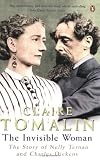
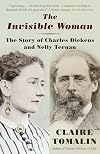
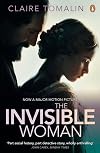
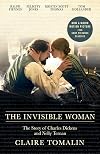
The Invisible Woman: The Story of Nelly Ternan and Charles Dickens
by Claire Tomalin
On This Page
Description
Biography & Autobiography. Nonfiction. Charles Dickens and Nelly Ternan met in 1857; she was 18, a hard-working actress performing in his production of The Frozen Deep, and he was 45, the most lionized writer in England. Out of their meeting came a love affair that lasted thirteen years and destroyed Dickens's marriage while effacing Nelly Ternan from the public record. In this remarkable work of biography and scholarly reconstruction, the acclaimed biographer of Mary Wollstonecraft, Thomas show more Hardy, Samuel Pepys and Jane Austen rescues Nelly from the shadows of history, not only returning the neglected actress to her rightful place, but also providing a compelling portrait of the great Victorian novelist himself. The result is a thrilling literary detective story and a deeply compassionate work that encompasses all those women who were exiled from the warm, well-lighted parlors of Victorian England. show lessTags
Recommendations















Member Recommendations
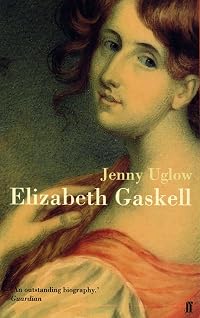
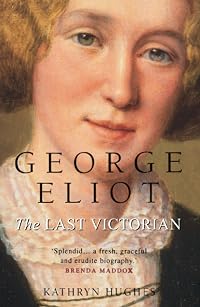
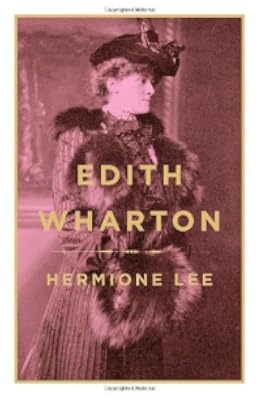
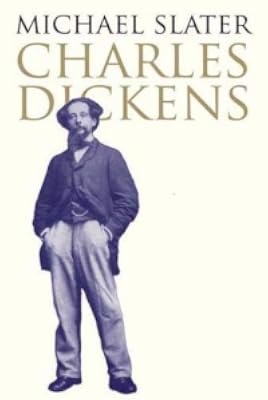
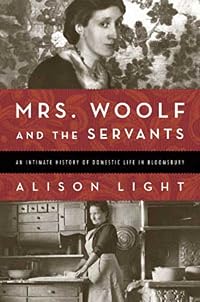
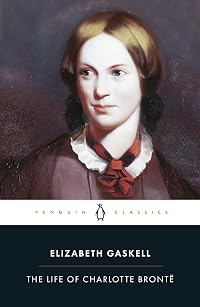
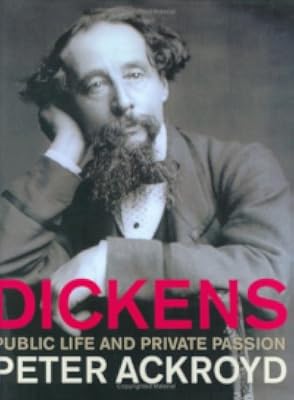
mambo_taxi While Tomalin provides the biographical and social background, Slater provides an equally fascinating look at the documentary evidence uncovered through time.
20
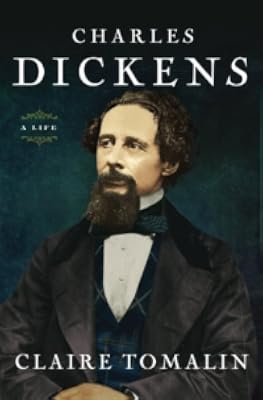
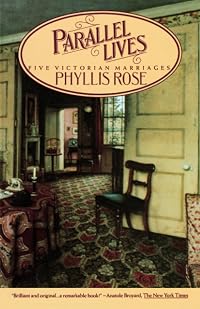
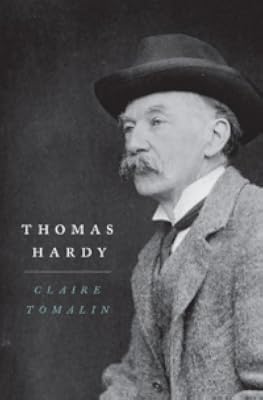
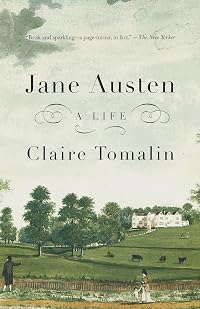
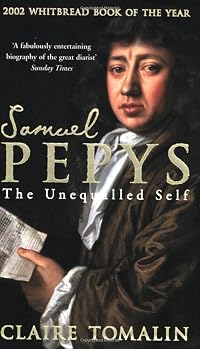
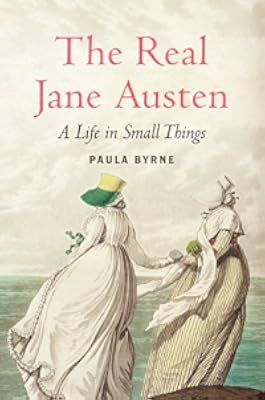
lilithcat Tomalin is one of the finest biographers writing today, with a real knack for explaining the societal context in which her subject lived. Readers of The Invisible Woman will find the same excellent work in Jane Austen: A Life, and vice versa.

Member Reviews
The invisible woman of the title is Charles Dickens' mistress Ellen Ternan: a challenging subject for a biographer, because of the sheer dearth of material. Many relevant letters and diaries were destroyed by Dickens himself or members of the family. Consequently, there's a lot of speculation in this. Claire Tomalin is scrupulous about pointing out what she doesn't know, and what's conjecture; I was less bothered by her outlining a plausible turn of events than I was by her guessing about what people 'must have' felt. With so little left on which to base a reading of character, the Victorian mores become the villain of the piece, both as an evil in themselves and as the cause of the erasure of so much detail of a woman's life.
What I show more really found this worth reading for, however, was the background detail about the theatre in the nineteenth century, and particularly women's lives within it. show less
What I show more really found this worth reading for, however, was the background detail about the theatre in the nineteenth century, and particularly women's lives within it. show less
Just as good as her bio of Jane Austen, and with the added difficulty of fighting off years of Dickens' admirers either defaming Ternan or trying to bury her existence. You will not look at Dickens the same way after this book, but you may well have a better understanding of why he couldn't write a well-rounded, psychologically full female character to save his life. As always, Tomalin tells us as much about the world in which Ternan and Dickens lived as she does about the people themselves. My edition is a later one, and has an added chapter which casts new light on the circumstances of Dickens' death. Tomalin's further investigations were spurred by the receipt of a letter she received following the book's initial publication, a show more letter describing a family story suggesting that Dickens did not die at Gad's Hill, but that his body had been transported there after his death. It is, of course, a story that at this juncture cannot be proved or disproved, but it is interesting to consider the steps that Tomalin took to investigate its plausibility, steps that show her to be a true scholar. show less
I have to begin by saying that I am not a Dickens fan, and as I read this book, I began to like him even less. Tomalin focuses on Dickens's relationship with the Ternan family, in particular his presumed affair with the youngest daughter, Ellen, best known as Nelly. She was only 18 at the time their affair began, Dickens 45. The Ternans were an acting family, and Dickens used his prestige first to persuade Mrs. Ternan and the girls to perform in his play 'The Frozen Deep,' then to secure various roles for her with his theatrical friends. Before long, he abandoned his wife (the mother of his 10 children), spreading rumors about her mental health and the ingratitude of her family members for all his assistance. (Wikipedia notes, "Matters show more came to a head in 1858 when Catherine Dickens opened a packet delivered by a London jeweller which contained a gold bracelet meant for Ternan with a note written by her husband.") Dickens began to lead a double life, leasing and purchasing a series of homes for Nelly, her sisters and her widowed mother--homes deliberately located further and further from the public eye. After all, the man whose works were supposed to be the moral compass of England couldn't be caught with a mistress! His financial and personal arrangements were handled through coded letters to friends who acted as go-betweens, including Wilkie Collins. Nelly was kept such a deep, dark secret that her identity was even hidden when she suffered a serious injury in a train derailment while traveling with Dickens. Tomalin posits that she had at least one, and perhaps two, pregnancies by Dickens but lost both babies shortly after birth. Later in life, long after Dickens's death, Nelly supposedly confessed the affair to her pastor, saying that she greatly regretted it and loathed Dickens in those last years but could not, financially, break away.
The last section of the book addresses Nelly's life post-Dickens and the history of both the coverup and revelation of the affair.
I felt sorry for both Catherine, Dickens's long-suffering wife, and for Nelly, a young woman pressured by poverty and impressed by celebrity. As for Dickens, what a pompous, self-righteous hypocrite! show less
The last section of the book addresses Nelly's life post-Dickens and the history of both the coverup and revelation of the affair.
I felt sorry for both Catherine, Dickens's long-suffering wife, and for Nelly, a young woman pressured by poverty and impressed by celebrity. As for Dickens, what a pompous, self-righteous hypocrite! show less
Claire Tomalin, maybe the best biographer of the classics (Jane Austen, Thomas Hardy, Charles Dickens), has taken a chapter of Dickens' biography and made this excellent book about the Inimitable's affair with the actress Nelly Ternan, based on documents, letters and original research. "The Invisible Woman" shows one of Dickens' less bright sides, while at the same time creating a fascinating caleidoscope of his time and a look behind the facade of one of Dickens' favourite pastimes: the theatre. Nelly Ternan's story is one of truly Dickensian scope in itself and gives its readers a new image of women in the days of the greatest English writer of all times.
This is an analysis of the family background and life of Ellen (Nelly) Ternan, the young actress who was almost certainly the mistress of Charles Dickens from 1858 until his death in 1870. Tomalin pieces together a range of evidence from different sources and, while there is no smoking gun, the circumstantial evidence for an affair seems overwhelming. Dickens's associates, in particular his sister-in-law and housekeeper, Georgina Hogarth, and his biographer John Forster, kept the affair secret during his life and after his death. Nelly went along with it, largely keeping the evidence secret until after her own death in 1914, the last of her immediate family; her son Geoffrey found out about it afterwards from examining his mother's show more papers and talking to the author's last surviving son, Sir Henry Dickens, and it seems to have blighted the remaining 45 years of his life. This collusion was, of course, very much the flavour of the 19th and early 20th centuries, and Dickens's and his family's desire to maintain his uniformly positive public image added an edge to this drive . The book is also interesting in its coverage of the life of actresses in the early 19th century - Nelly's sisters, parents and grandparents were all in the profession, which was then regarded as very disreputable and actresses little better than whores. Interesting stuff, and good photos as well. show less
Quite an interesting read about a woman who has been largely written out of Dicken's life. A woman who may or may not have been his mistress but with the secrecy surrounding her and her relationship with Dicken, and from the belief of many of the people around her (including at least one of Dicken's children) was.
This is an interesting account of her life and the way she was written out of the story. You can see the frustration of the author as she tries to link some details together but fail because of the lack of evidence, evidence that was burnt or destroyed.
Nelly Ternan was an actress, from a family of actresses and lived on the fringes of society. When she and Dickens met (and there is evidence that they did act together, in show more playbills etc) her life changed, along with the life of her family. The jury is still out whether it was all a good or bad thing. show less
This is an interesting account of her life and the way she was written out of the story. You can see the frustration of the author as she tries to link some details together but fail because of the lack of evidence, evidence that was burnt or destroyed.
Nelly Ternan was an actress, from a family of actresses and lived on the fringes of society. When she and Dickens met (and there is evidence that they did act together, in show more playbills etc) her life changed, along with the life of her family. The jury is still out whether it was all a good or bad thing. show less
Very good historical research and marvelous view on women's history and women's life in the nineteenth century.
Members
- Recently Added By
Published Reviews
One feels degraded when Dickens’s private letters are subjected to infra-red photographic analysis (as they were in the 1950s). Beneath the crossings-out are references to Ellen Ternan, his mistress – or perhaps not his mistress. It is only by chance that any incriminating letters survive: Dickens’s son Henry and Ellen Ternan’s son Geoffrey Robinson destroyed all such correspondence. show more Dickens himself burned any personal letters that he could come by. He also destroyed his diaries at the end of every year. One diary – that for 1867 – was lost or, more likely, stolen in America. It resurfaced in 1943. ‘Since then,’ as Claire Tomalin puts it, ‘scholars have been squeezing it like a tiny sponge for every drop of information it can yield.’ Scholars justify their curiosity on the grounds that anything which throws light on Dickens’s art is justified, however faint that light may be. But it looks very like keyhole-peeping. One of Tomalin’s achievements is that she investigates the private recesses of Dickens’s life without prurience and without making the reader feel prurient. One comes away with a sense that justice has at last been done. show less
added by KayCliff
Lists

Club Read's Recommended Nonfiction Written by Women
618 works; 30 members
Author Information

18+ Works 7,489 Members
Awards and Honors
Awards
Notable Lists
Work Relationships
Has the adaptation
Common Knowledge
- Canonical title*
- La donna invisibile: la storia di Nelly Ternan e Charles Dickens
- Original publication date
- 1990
- People/Characters
- Ellen Ternan; Charles Dickens; William Charles Macready; William Makepeace Thackeray; Catherine Dickens; Georgina Hogarth (show all 20); Fanny Jarman; Thomas Ternan; Maria Ternan; Fanny Ternan; Fanny Kemble; Caroline Maynard Thompson; Wilkie Collins; Rowland Taylor; Thomas Adolphus Trollope; Reverend George Wharton Robinson; Gladys Storey; Geoffrey Wharton Robinson; Sir Henry Dickens; Kate Perugini
- Important places
- Bethnal Green Insane Asylum, London, England, UK; Southsea, Portsmouth, Hampshire, England, UK
- Related movies
- The Invisible Woman (2013 | IMDb)
- Dedication
- For Katherine M. Longley
- First words
- This is the story of someone who - almost - wasn't there; who vanished into thin air.
- Last words
- (Click to show. Warning: May contain spoilers.)It seemed a good moment to start putting something on paper which might restore Nelly to visibility.
*Some information comes from Common Knowledge in other languages. Click "Edit" for more information.
Classifications
Statistics
- Members
- 550
- Popularity
- 53,916
- Reviews
- 15
- Rating
- (3.95)
- Languages
- English, Italian
- Media
- Paper, Audiobook, Ebook
- ISBNs
- 21
- ASINs
- 5