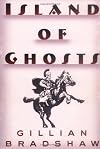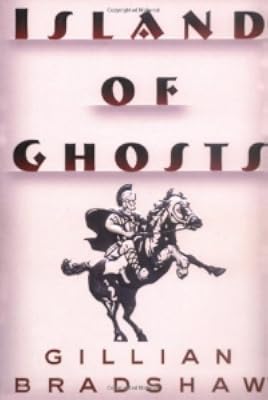
Island of Ghosts
by Gillian Bradshaw
On This Page
Description
Ariantes is a Sarmatian, a barbarian warrior-prince, uprooted from his home and customs and thrust into the honorless lands of the Romans. The victims of a wartime pact struck with the emperor Marcus Aurelius to ensure the future of Sarmatia, Ariantes and his troop of accomplished horsemen are sent to Hadrian's Wall. Unsurprisingly, the Sarmatians hate Britain--an Island of Ghosts, filled with pale faces, stone walls, and an uneasy past. Struggling to command his own people to defend a land show more they despise, Ariantes is accepted by all, but trusted by none. The Romans fear his barbarian background, and his own men fear his gradual Roman assimilation. When Ariantes uncovers a conspiracy sure to damage both his Roman benefactors and his beloved countrymen, as well as put him and the woman he loves in grave danger, he must make a difficult decision--one that will change his own life forever. show lessTags
Recommendations






















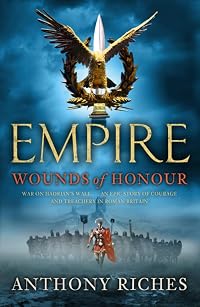
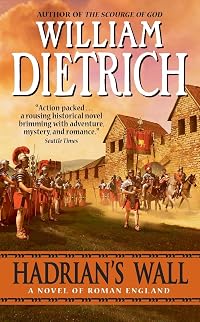



Member Recommendations
DeltaQueen50 Setting of Roman Britain
karatelpek Steppe people and Romans collide.
Member Reviews
If you have had the misfortune, fellow reader, of seeing the 2004 King Arthur film, starring Clive Owen, Ioan Gruffudd, and Kiera Knightley as a warrior-babe Guinevere, then you will perhaps be aware that there is a school of thought which holds that much of the King Arthur mythology comes from an Indo-Iranian people called the Sarmatians. Don't be put off by the ahistoric melodrama of the movie - the notion of a Sarmatian influence in ancient British mythology is actually the hot new theory in Arthurian Studies, and is not as far-fetched as it might first appear. Those interested in pursuing the topic should locate a copy of C. Scott Littleton & Linda A. Malcor's From Scythia to Camelot: A Radical Reassessment of the Legends of King show more Arthur, the Knights of the Round Table, and the Holy Grail.
It was in my own search for more material concerning the Sarmatian presence in Roman Britain that I first came upon Gillian Bradshaw's novel, Island of Ghosts, which I would rank as the best work of historical fiction I have read in the last decade. It follows the story of Ariantes, a second-century Sarmatian prince and cavalry commander who finds himself transplanted from his homeland to far-off Britain, as part of the peace settlement between his people and the Roman Empire. Here, on this "island of ghosts," Ariantes struggles to adjust to and survive in a new world, to protect the interests of his men, and to retain the essential values of his own culture.
This was a satisfying novel on many levels. As an adventure story it offered action, suspense, and romance. Bradshaw's skillful handling of the many intersecting threads of her narrative, her clear understanding of the complexities of intercultural communication and exchange, and her lucid and restrained, but somehow emotive prose, all combined to create an unforgettable reading experience. In many ways I was reminded of Robin McKinley, one of my all-time favorite authors...
Ariantes' personal struggle to overcome the demons of his past, is mirrored by his experiences as a barbarian being incorporated into the vast, multicultural Roman Empire. Island of Ghosts is in many ways the classic immigrant story, for all that it is set in ancient times, and Bradshaw is to be commended for her dead-on historical accuracy. Not only does she show a keen appreciation for the larger themes of the period, with the barbarian-Roman divide playing out in the story of one man, but the minutest historical details of her story have been well-researched. show less
It was in my own search for more material concerning the Sarmatian presence in Roman Britain that I first came upon Gillian Bradshaw's novel, Island of Ghosts, which I would rank as the best work of historical fiction I have read in the last decade. It follows the story of Ariantes, a second-century Sarmatian prince and cavalry commander who finds himself transplanted from his homeland to far-off Britain, as part of the peace settlement between his people and the Roman Empire. Here, on this "island of ghosts," Ariantes struggles to adjust to and survive in a new world, to protect the interests of his men, and to retain the essential values of his own culture.
This was a satisfying novel on many levels. As an adventure story it offered action, suspense, and romance. Bradshaw's skillful handling of the many intersecting threads of her narrative, her clear understanding of the complexities of intercultural communication and exchange, and her lucid and restrained, but somehow emotive prose, all combined to create an unforgettable reading experience. In many ways I was reminded of Robin McKinley, one of my all-time favorite authors...
Ariantes' personal struggle to overcome the demons of his past, is mirrored by his experiences as a barbarian being incorporated into the vast, multicultural Roman Empire. Island of Ghosts is in many ways the classic immigrant story, for all that it is set in ancient times, and Bradshaw is to be commended for her dead-on historical accuracy. Not only does she show a keen appreciation for the larger themes of the period, with the barbarian-Roman divide playing out in the story of one man, but the minutest historical details of her story have been well-researched. show less
Ariantes, a Sarmatian prince, tries to keep his horsemen (and their morale) intact after they're traded to the Romans for peace and sent off to Britain. He's clever, but handicapped by his own grief. The tension mounts as he tries to deal with other Sarmatian nobles, suspicious Roman soldiers and bureaucrats, and the locals' multiple agendas.
Well-researched and well-written, this book should especially please military fiction readers, historical fiction readers, and horse lovers. Other readers may enjoy watching Ariantes find his feet in the new land, as other characters become distinct individuals we can also root for (and against). I wouldn't change a thing about this book. The culture clashes, spiritual/ethical component, and show more lighter moments between characters make it an excellent re-read even after knowing the plot. show less
Well-researched and well-written, this book should especially please military fiction readers, historical fiction readers, and horse lovers. Other readers may enjoy watching Ariantes find his feet in the new land, as other characters become distinct individuals we can also root for (and against). I wouldn't change a thing about this book. The culture clashes, spiritual/ethical component, and show more lighter moments between characters make it an excellent re-read even after knowing the plot. show less
I generally enjoy Gillian Bradshaw a lot, her novels of classical antiquity are historically accurate but still extremely readable. In this book as in several others she chooses a protagonist that is a bit of an outsider, in this case a Sarmatian who has ended up as an auxiliary to the Roman legions in Britain. The outsider perspective is a great choice, because in his struggle to understand and come to terms with unfamliar Roman ways, the protagonist explains things that a modern reader might not understand while still remaining entirely in character.
I often like Bradshaw's protagonists but for some reason Ariantes pretty quickly became one of my favorites. He was smart and honorable without being annoyingly or unrealistically perfect show more and yet just a little bit of an ox in ways that I found endearing. All the people in this novel felt real to me, and I liked very much that many of them changed during the course of the novel, it wasn't just the protagonist that was learning and changing but the people he was in relationships with were doing the same, so that alliances kept shifting as the people in them altered. show less
I often like Bradshaw's protagonists but for some reason Ariantes pretty quickly became one of my favorites. He was smart and honorable without being annoyingly or unrealistically perfect show more and yet just a little bit of an ox in ways that I found endearing. All the people in this novel felt real to me, and I liked very much that many of them changed during the course of the novel, it wasn't just the protagonist that was learning and changing but the people he was in relationships with were doing the same, so that alliances kept shifting as the people in them altered. show less
Bradshaw is best known for her Arthurian trilogy. My first work by her, read in my teens, happened to be the third book in that trilogy, In Winter's Shadow. I loved the portrait of Guinevere, who with Arthur sought to form a firebreak to keep the guttering flame of civilization from going out in Britain after the Roman withdrawal. When I finally hunted down the first two books, I was actually disappointed. Because the first two books were really fantasy--the last really was historical fiction. And I think Bradshaw is at her best presenting history without fantastic embellishments--and she has a special way with Ancient history--especially Roman history. In a way Ariantes is the flip side of Guenevere, on the other side of the divide. show more He's a Sarmartan (ie "barbarian") Prince exiled in a Roman Britain where there's only hints that the Roman Empire and the civilization it engenders might be beginning to ebb. I can't say I know enough about this period and place to say Bradshaw got it all right--but it feels as if she does; I felt transported to a different place and time--you can ask little more of a work of historical fiction. show less
Capitulated troops from the steppe in the east are sent to Britain to guard another frontier. At home they are declared dead, their wives widows, and they don’t believe in an island across the ocean, unless ghosts inhabit it.
So starts this story of cultural intersection. The captain Ariantes needs to learn Roman ways to look after the welfare of his troops – the only concern left to him now – but this is to Romanize, which he has no wish to do. The book is first person Ariantes and he came alive for me at once. He’s an extremely sympathetic character.
It’s a gently-told story. The Sarmatians’ old scalp collections are a great talking-point for the Romans, but Ariantes is weary of war, and though he’s matter-of-fact and show more unapologetic about scalps of the past he’s not here to take more. The first thing I noticed is what humanity she gives to Sarmatians – and then to unexpected Romans too. I’m such a believer that human decency was alive and well in the second century (not invented in the twentieth) that I can’t believe the complaint I’m about to make. As we went on I found the novel a little too gentle, too easily solved. People came around too soon. Not that it’s happy-happy – he knows his Sarmatians won’t be Sarmatians in a few years’ time, so we have that melancholy tinge. show less
So starts this story of cultural intersection. The captain Ariantes needs to learn Roman ways to look after the welfare of his troops – the only concern left to him now – but this is to Romanize, which he has no wish to do. The book is first person Ariantes and he came alive for me at once. He’s an extremely sympathetic character.
It’s a gently-told story. The Sarmatians’ old scalp collections are a great talking-point for the Romans, but Ariantes is weary of war, and though he’s matter-of-fact and show more unapologetic about scalps of the past he’s not here to take more. The first thing I noticed is what humanity she gives to Sarmatians – and then to unexpected Romans too. I’m such a believer that human decency was alive and well in the second century (not invented in the twentieth) that I can’t believe the complaint I’m about to make. As we went on I found the novel a little too gentle, too easily solved. People came around too soon. Not that it’s happy-happy – he knows his Sarmatians won’t be Sarmatians in a few years’ time, so we have that melancholy tinge. show less
An excellent, well researched historical fiction, Island of Ghosts by Gillian Bradshaw is about how Rome, with a need to constantly supply men to their own army, takes an oath of fealty from defeated warriors, transfers them to another place in the empire and uses them to help vanquish their enemies and keep the peace among those they have conquered.
Ariantes is a Sarmatian, a warrior-prince, uprooted and sent to the Island of Britain and posted to Hadrian’s Wall, Officially here to guard and fight the northern tribe of Picts, but he soon finds the real danger is not on the other side of the wall. Uncovering a conspiracy that will not only damage Rome’s control over northern Britain, but force his own people into choosing whether to show more break their oath and pick up arms against Rome, or fight on the side of the people that destroyed their own homeland.
I have found Gilliam Bradshaw to be a reliable writer of historical fiction, as a classics scholar, she blends actual facts with a great story to produce a read that is both adventurous, colourful, and rich in period detail. show less
Ariantes is a Sarmatian, a warrior-prince, uprooted and sent to the Island of Britain and posted to Hadrian’s Wall, Officially here to guard and fight the northern tribe of Picts, but he soon finds the real danger is not on the other side of the wall. Uncovering a conspiracy that will not only damage Rome’s control over northern Britain, but force his own people into choosing whether to show more break their oath and pick up arms against Rome, or fight on the side of the people that destroyed their own homeland.
I have found Gilliam Bradshaw to be a reliable writer of historical fiction, as a classics scholar, she blends actual facts with a great story to produce a read that is both adventurous, colourful, and rich in period detail. show less
Another one of Bradshaw's with an "outsider" protagonist. Sarmatians in Roman Britain on the Wall, helping to defend the Empire. The hero, Ariantes, helps foil a plot against the Empire, falls in love with a Briton, and all the time tries to maintain his own steppe culture while adapting somewhat to the Roman culture. Ariantes was one of the most appealing figures in fiction--stalwart, tactful, and a good strong leader. Most highly recommended.
Members
- Recently Added By
Lists

Best Historical Fiction
620 works; 261 members

Best historical fiction set in the ancient world
126 works; 40 members
Best Roman Empire Books
49 works; 18 members

My Wishlist-Mystery/Fiction
14 works; 1 member

al.vick-wishlist-historical fiction
128 works; 1 member

Books discovered on LibraryThing
256 works; 36 members
Author Information

32+ Works 4,410 Members
Some Editions
Series
Belongs to Publisher Series
Goldmann (41523)
Common Knowledge
- Canonical title
- Island of Ghosts
- People/Characters
- Ariantes; Arshak; Gatalas; Pervica; Julia Bodica; Tiberius Julius Priscus (show all 12); Marcus Flavius Facilis; Lucius Javolenus Comittus; Eukarios; Leimanos; Banadaspos; Siyavak
- Important places
- Britannia, Roman Empire; England, UK
- Dedication
- Für Robin
To Robin - First words
- Wir meuterten, als wir den Ozean erreicht hatten.
We mutinied when we reached the ocean. - Last words
- (Click to show. Warning: May contain spoilers.)Mein Herz hatte seine Wahl getroffen. Es hatte sich für eine Welt entschieden, die niemand mir geben konnte: die Welt jenseits des Jadetores, die nur der Sehnsucht erreichbar war.
(Click to show. Warning: May contain spoilers.)In that part of me that was neither Roman nor Sarmatian, I kicked shut the doors of all the worlds that offered, and chose the one that no one would give me, the way to the Jade Gate, where I could never go. - Original language*
- Englisch USA
*Some information comes from Common Knowledge in other languages. Click "Edit" for more information.
Classifications
Statistics
- Members
- 289
- Popularity
- 111,445
- Reviews
- 15
- Rating
- (4.07)
- Languages
- English, French, German
- Media
- Paper, Ebook
- ISBNs
- 6
- ASINs
- 1