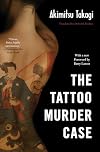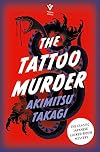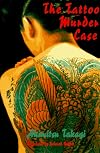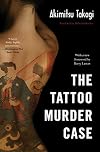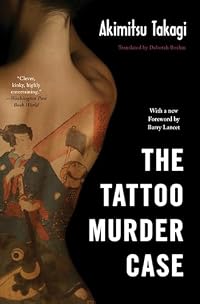
The Tattoo Murder Case
by Akimitsu Takagi
On This Page
Description
Kinue Nomura survived World War II only to be murdered in Tokyo, her severed limbs discovered in a room locked from the inside. Gone is the part of her that bore one of the most beautiful full-body tattoos ever rendered. Kenzo Matsushita, a young doctor who was first to discover the crime scene, feels compelled to assist his detective brother, who is in charge of the case. But Kenzo has a secret: he was Kinue's lover, and soon his involvement in the investigation becomes as twisted and show more complex as the writhing snakes that once adorned Kinue's torso. show lessTags
Recommendations


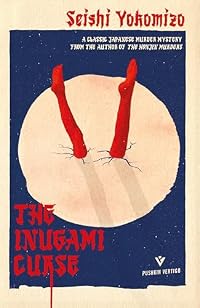
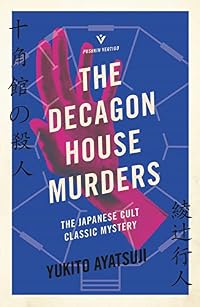
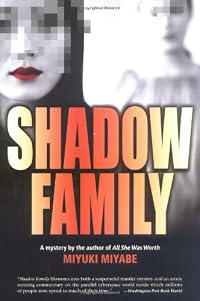
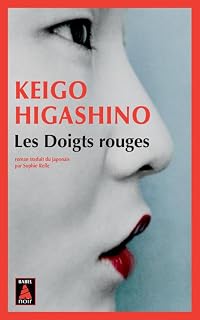

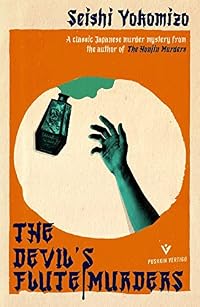

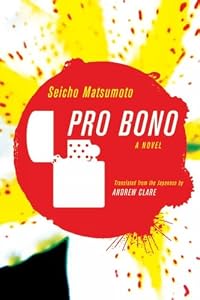
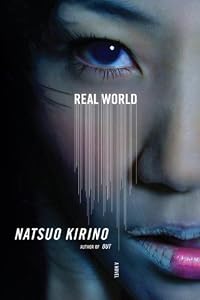
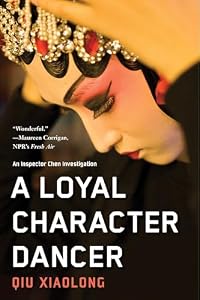
Member Recommendations
Member Reviews
No, I still don’t want a tattoo
Tokyo, 1947. This is a traumatized city, where many struggle to survive. In this book, published in 1948, the author did not have to explain things to his contemporary readers. I think this is what made this mystery especially powerful to me, there were so many glimpses of post-war Tokyo and its people. The women were mostly treated abominably. I don’t know if I was reading too much between the lines, but it seemed that the author had a thing or two to say about the Japanese society...
There has been a gruesome locked-room murder. Kenzo Matsushito, a former military doctor with PTSD; now a forensics student becomes involved. It so happens that his older brother Daiyu is the Detective Chief Inspector of show more Tokyo police. The investigation stumbles, goes nowhere. There are more murders. Kenzo makes all the mistakes a character in a mystery novel can possibly make. Isn’t it lucky that Kenzo’s old friend Kyosuke is a genius who just happens to show up and agrees to help? I’m sure that Kyosuke is the literary ancestor of Keigo Higashino’s Detective Galileo! Higashino did it better, but he is hard to compete with.
This is dark and gory, and pulpy in ways I don’t normally like, but it was done in “I know exactly what I am writing” style that was enjoyable. I’ve also learned more about tattooing in Japan than I ever wanted to ask (I never wanted to ask). I knew tattooing was a sensitive subject in Japan, but I had no idea is was outlawed there for decades. The collection of tattooed human skins at the University of Tokyo is real and it’s still there, I googled it. You are welcome.
The translation is excellent. I got into “one more chapter” mode almost immediately. The pacing suffered towards the end, unfortunately, with too may long conversations, theories and explanations. Still, the solutions to all the mysteries were very well done.
Quotes I liked:
”In fact, he could take a pulse or do a tracheotomy with one highly skilled hand tied behind his back.”
”The dapper attire was like a suit of armour, worn as a shield against a world in chaos.”
”Too bad there’s no way to deliver a subpoena to the afterworld.”
”…a shaft of brilliant golden light illuminated the two men. For a moment they looked like Renaissance seraphs in contemporary dress.”
”Since the case is almost solved, can we order some noodles now?” show less
Tokyo, 1947. This is a traumatized city, where many struggle to survive. In this book, published in 1948, the author did not have to explain things to his contemporary readers. I think this is what made this mystery especially powerful to me, there were so many glimpses of post-war Tokyo and its people. The women were mostly treated abominably. I don’t know if I was reading too much between the lines, but it seemed that the author had a thing or two to say about the Japanese society...
There has been a gruesome locked-room murder. Kenzo Matsushito, a former military doctor with PTSD; now a forensics student becomes involved. It so happens that his older brother Daiyu is the Detective Chief Inspector of show more Tokyo police. The investigation stumbles, goes nowhere. There are more murders. Kenzo makes all the mistakes a character in a mystery novel can possibly make. Isn’t it lucky that Kenzo’s old friend Kyosuke is a genius who just happens to show up and agrees to help? I’m sure that Kyosuke is the literary ancestor of Keigo Higashino’s Detective Galileo! Higashino did it better, but he is hard to compete with.
This is dark and gory, and pulpy in ways I don’t normally like, but it was done in “I know exactly what I am writing” style that was enjoyable. I’ve also learned more about tattooing in Japan than I ever wanted to ask (I never wanted to ask). I knew tattooing was a sensitive subject in Japan, but I had no idea is was outlawed there for decades. The collection of tattooed human skins at the University of Tokyo is real and it’s still there, I googled it. You are welcome.
The translation is excellent. I got into “one more chapter” mode almost immediately. The pacing suffered towards the end, unfortunately, with too may long conversations, theories and explanations. Still, the solutions to all the mysteries were very well done.
Quotes I liked:
”In fact, he could take a pulse or do a tracheotomy with one highly skilled hand tied behind his back.”
”The dapper attire was like a suit of armour, worn as a shield against a world in chaos.”
”Too bad there’s no way to deliver a subpoena to the afterworld.”
”…a shaft of brilliant golden light illuminated the two men. For a moment they looked like Renaissance seraphs in contemporary dress.”
”Since the case is almost solved, can we order some noodles now?” show less
Kinue, a woman with a full body tattoo, is murdered--her torso is missing, but her head and other body parts are found in a locked room in her home. Attempting to solve the case is the pov character, Kenzo, a medical student who is helping his brother Daiyu, a detective. But the case is going nowhere, other murders are occurring (including that of the initial prime suspect), until Kenzo's genius friend Kyosue steps in. There is a very elegant solution.
I learned lots about tattoos, especially that in Tokyo there is a tattoo museum that contains the skins of humans who had had full body tattoos. In Japan, tattoo was an art form that was much admired, though also, at times, illegal. It has often been associated with gangsters. Japanese show more tattoo connoseurs scorn American tattoos and call them "sushi tattoos" because "they're scattered about on the skin like pieces of sushi with no artistic continuity or coherence."
I enjoyed the book, but found it a bit of a period piece. show less
I learned lots about tattoos, especially that in Tokyo there is a tattoo museum that contains the skins of humans who had had full body tattoos. In Japan, tattoo was an art form that was much admired, though also, at times, illegal. It has often been associated with gangsters. Japanese show more tattoo connoseurs scorn American tattoos and call them "sushi tattoos" because "they're scattered about on the skin like pieces of sushi with no artistic continuity or coherence."
I enjoyed the book, but found it a bit of a period piece. show less
A Japanese version of a closed room murder. When a woman is murdered, her fully tattooed torso stolen, and her limbs and head left behind in the bathroom, is found, the suspects range from her boyfriend, boyfriend's brother, a professor with a penchant for buying tattooed skin from owners upon their demise, and an ex-boyfriend recently released from prison. The woman is the daughter of a reknown and controversial Japanese tattoo artist.
Kenzo Matsushita, a young doctor with a secret association with the dead woman, tries to assist his detective brother in the investigations, but his efforts end up contributing to the death of the dead woman's brother who is found with his tattooed skin peeled off his body.
The mystery behind not just show more the closed room murder, but the identity of the murderer is unveiled when a friend of Kenzo's, in possession of a brilliant mind, enters the picture and slowly, almost in the style of Sherlock Holmes, points out the inconsistencies in witness testimonials, items of importance that had been overlooked or deemed insignificant to the police, and plays games of strategy with 2 suspects. show less
Kenzo Matsushita, a young doctor with a secret association with the dead woman, tries to assist his detective brother in the investigations, but his efforts end up contributing to the death of the dead woman's brother who is found with his tattooed skin peeled off his body.
The mystery behind not just show more the closed room murder, but the identity of the murderer is unveiled when a friend of Kenzo's, in possession of a brilliant mind, enters the picture and slowly, almost in the style of Sherlock Holmes, points out the inconsistencies in witness testimonials, items of importance that had been overlooked or deemed insignificant to the police, and plays games of strategy with 2 suspects. show less
Well-written. This novel about 1950's Tokyo taught me that Japan (as many countries) suffered during and for years after WWII. As well as about Japan's excellence in block and tattoo art.Seems like while men were treated as kings, women were not treated as full equals.How surprising!!
But... book's pace is slow. And I simply didn't feel satisfied after reading this.
I haven't decided if I will try another of Takagi's books.
But... book's pace is slow. And I simply didn't feel satisfied after reading this.
I haven't decided if I will try another of Takagi's books.
Would I read another book by this author?
Yes.
Would I recommend this book?
Yes.
Who would I recommend this book to?
Anyone who enjoys golden age murder mysteries.
Did this book inspire me to do anything?
I have a handful of other Japanese murder mystery books and I am now likely to read them sooner that later as a result of this book.
This is a locked-room murder mystery set in Japan in 1947. The book is interesting not simply because of its murder mystery nature, but also because it is set in post WWII Japan and gives a glimpse of life in Post-war Japan. It was interesting to read about the cultural norms in Japan in relation to greeting people, visiting their homes, and general politeness.
In terms of culture, the position of women in show more Japanese homes was highlighted. One quote that brought it home to me is:
The three men shared a light meal of rice, miso soup with tofu and straw mushrooms, grilled butterfish, and various savory side dishes. (Daiyu's wife Mariko, as was customary, served them in silence, the ante later by herself in the kitchen.)
The approach to murder mystery involved setting the scene, describing the scene, setting out the evidence as gleaned from various interviews and investigations, and then the build up to the big reveal.
I found the characters engaging and the story held my interest and attention. There was a slight slowing of pace in the third quarter of the book and that has led me to give the book 3.5 stars rather than 4. show less
Yes.
Would I recommend this book?
Yes.
Who would I recommend this book to?
Anyone who enjoys golden age murder mysteries.
Did this book inspire me to do anything?
I have a handful of other Japanese murder mystery books and I am now likely to read them sooner that later as a result of this book.
This is a locked-room murder mystery set in Japan in 1947. The book is interesting not simply because of its murder mystery nature, but also because it is set in post WWII Japan and gives a glimpse of life in Post-war Japan. It was interesting to read about the cultural norms in Japan in relation to greeting people, visiting their homes, and general politeness.
In terms of culture, the position of women in show more Japanese homes was highlighted. One quote that brought it home to me is:
The three men shared a light meal of rice, miso soup with tofu and straw mushrooms, grilled butterfish, and various savory side dishes. (Daiyu's wife Mariko, as was customary, served them in silence, the ante later by herself in the kitchen.)
The approach to murder mystery involved setting the scene, describing the scene, setting out the evidence as gleaned from various interviews and investigations, and then the build up to the big reveal.
I found the characters engaging and the story held my interest and attention. There was a slight slowing of pace in the third quarter of the book and that has led me to give the book 3.5 stars rather than 4. show less
From 1948! Hard to believe, the murder investigated is quite gruesome. Reads much like the mysteries of the time like Agatha Christie or Ngaio Marsh, except with the cultural Japanese flavor of tattoo art and more. A very interesting mystery and engaging read.
This book was fascinating - set and written in Japan in the 1940s, it gave me so many fascinating insights about this time period. I also liked the lively depictions of several characters. The mystery itself was "obviously" quite convoluted, and not sure I was convinced by the back and forth of point of views at the beginning. The translation itself was interesting, probably challenging to do. It read as more "modern" than the 1940s and while it helped me get into the book more quickly and read it fast, it was also a bit jarring at times. But it's really hard to do :)
I want to thank NetGalley and Pushkin Press for a free copy of the book in exchange for an honest review.
I want to thank NetGalley and Pushkin Press for a free copy of the book in exchange for an honest review.
Members
- Recently Added By
Author Information

28+ Works 892 Members
Some Editions
Series
Belongs to Publisher Series
Common Knowledge
- Canonical title
- The Tattoo Murder Case
- Original title
- Shisei satsujin jiken
- Original publication date
- 1948
- People/Characters
- Kinue Nomura; Kenzo Matsushita
- Important places
- Tokyo, Japan; Japan
- Original language
- Japanese
Classifications
- Genres
- Fiction and Literature, Mystery
- DDC/MDS
- 813 — Literature & rhetoric American literature in English American fiction in English
- LCC
- PL862 .A4 .I7416 — Language and Literature Languages and literatures of Eastern Asia, Africa, Oceania Languages of Eastern Asia, Africa, Oceania Japanese language and literature Japanese literature Individual authors and works
- BISAC
Statistics
- Members
- 460
- Popularity
- 65,937
- Reviews
- 11
- Rating
- (3.60)
- Languages
- English, French, Italian, Spanish
- Media
- Paper, Audiobook, Ebook
- ISBNs
- 17
- ASINs
- 8