
Quality of Witness: A Romanian Diary, 1937-1944
by Emil Dorian
On This Page
Description
The diary of Dorian (1893-1956), a Jewish physician and writer, documents the period between December 1937 (the period of the first antisemitic government, led by Goga and Cuza) and August 1944 (when Romania switched sides in World War II). The diary echoes the reactions of Jews and non-Jews (including anti-Jewish stereotypes) to the persecution of Jews in Romania. Refers also to the antisemitic legislation, the pogrom in Bucharest in January 1941, the deportations to Transnistria, and show more forced labor. Dorian survived the war in Bucharest. show lessTags
Recommendations
























Member Recommendations
Member Reviews
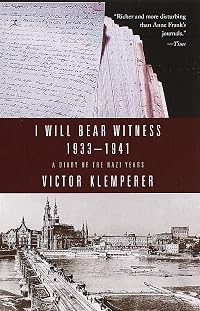
One might compare this diary to Victor Klemperer’s. Both diarists were intelligent, educated, cultured middle-aged Jewish men living under the Nazi terror. Both of them kept detailed diaries throughout the war, and survived the Holocaust.
However, there are significant differences. Klemperer was married to an Aryan woman and a nominal convert to Christianity, though he seemed to have no religion at all, and he didn't really have much to do with Jewish life. Dorian on the other hand was very involved with the Romanian-Jewish culture, literature in particular. Klemperer focused much more on his private life in his diary than Dorian did; Dorian usually wrote about the war or the Yiddish translations he was doing.
This book is quite show more interesting from a historical standpoint. Dorian is a keen and discerning observer of the events around him and it's intriguing to see just how much he knew about the persecution of the Jews in Europe. He knew, for instance, about the Warsaw Ghetto uprising. He knew that poison gas was being used to kill Jews in large numbers, though he significantly underestimated the death rate. Dorian also was a novelist and poet with obvious literary talent. I include a sample of quotes from his diary:
"I stopped in front of a florist's window. Behind me, the screeching and throbbing boulevard vanished. Gone, too, were the voices of newspaper vendors selling their daily poisoned flowers. Facing me, behind the glass curtain, a fairyland. Shining, plump carnations, with the pink voluptuousness of women about to reach maturity, poised for the first step of a sprightly dance; shamelessly lascivious gladioli; virginal branches of white lilac; roses lost in pure meditation, undecided between the metaphysical white and the unreal yellow of a sky after the rain." (page 17)
"The [park] is all decked out. Nothing new. The same bushes in bloom in the same spots, the same babies, like flowers, drinking the spring out of their bottles. The magnolias have shed their petals...the peacocks cry out their desolation." (page 28)
"The fatigue I've gathered year after year and stored inside now heaves a muted cry of helplessness. Nothing but fatigue, rounding my shoulders, heavier than ever on this late autumn day with a useless sun, a world of unforgiving disasters. So many struggles and tragedies, so much sorrow and egotism in this dark, in this rotting century of hate." (page 127)
"The garden has wrapped itself in autumn haze. An unusual autumn, lacking that thrill of vegetal warmth when the sap is still alive and runs up the trees, drunk on solar gold. It is the sorrowful climax of a summer's drought. Never before was I so struck by the cancerous emaciation in a garden. The leaves started turning yellow in July and began falling, like a dance of prematurely withered bodies." (page 226)
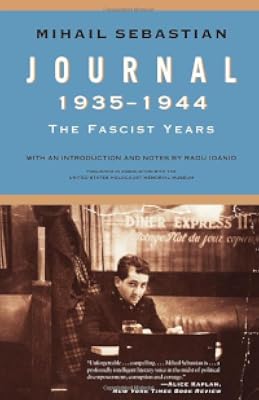
Another Romanian Jewish writer, Mihail Sebastian, kept a diary during this same time period. show less
However, there are significant differences. Klemperer was married to an Aryan woman and a nominal convert to Christianity, though he seemed to have no religion at all, and he didn't really have much to do with Jewish life. Dorian on the other hand was very involved with the Romanian-Jewish culture, literature in particular. Klemperer focused much more on his private life in his diary than Dorian did; Dorian usually wrote about the war or the Yiddish translations he was doing.
This book is quite show more interesting from a historical standpoint. Dorian is a keen and discerning observer of the events around him and it's intriguing to see just how much he knew about the persecution of the Jews in Europe. He knew, for instance, about the Warsaw Ghetto uprising. He knew that poison gas was being used to kill Jews in large numbers, though he significantly underestimated the death rate. Dorian also was a novelist and poet with obvious literary talent. I include a sample of quotes from his diary:
"I stopped in front of a florist's window. Behind me, the screeching and throbbing boulevard vanished. Gone, too, were the voices of newspaper vendors selling their daily poisoned flowers. Facing me, behind the glass curtain, a fairyland. Shining, plump carnations, with the pink voluptuousness of women about to reach maturity, poised for the first step of a sprightly dance; shamelessly lascivious gladioli; virginal branches of white lilac; roses lost in pure meditation, undecided between the metaphysical white and the unreal yellow of a sky after the rain." (page 17)
"The [park] is all decked out. Nothing new. The same bushes in bloom in the same spots, the same babies, like flowers, drinking the spring out of their bottles. The magnolias have shed their petals...the peacocks cry out their desolation." (page 28)
"The fatigue I've gathered year after year and stored inside now heaves a muted cry of helplessness. Nothing but fatigue, rounding my shoulders, heavier than ever on this late autumn day with a useless sun, a world of unforgiving disasters. So many struggles and tragedies, so much sorrow and egotism in this dark, in this rotting century of hate." (page 127)
"The garden has wrapped itself in autumn haze. An unusual autumn, lacking that thrill of vegetal warmth when the sap is still alive and runs up the trees, drunk on solar gold. It is the sorrowful climax of a summer's drought. Never before was I so struck by the cancerous emaciation in a garden. The leaves started turning yellow in July and began falling, like a dance of prematurely withered bodies." (page 226)
Another Romanian Jewish writer, Mihail Sebastian, kept a diary during this same time period. show less
Ratings
Members
- Recently Added By
Author Information
2 Works 37 Members
Awards and Honors
Awards
Common Knowledge
- Important places
- Romania
- First words
- An explosion which has stirred bewilderment and fear: the victory of Goga's government.
- Last words
- (Click to show. Warning: May contain spoilers.)They are still unaware of the storm ahead.
Classifications
- Genres
- Nonfiction, History, Biography & Memoir
- DDC/MDS
- 949.8 — History & geography History of Europe Greece, Albania, Yugoslavia, Serbia, Romania, Bulgaria Romania
- LCC
- DS135 .R73 .D67313 — History of Europe, Asia, Africa and Oceania Asia History of Asia Israel (Palestine). The Jews Jews outside of Palestine
Statistics
- Members
- 36
- Popularity
- 801,418
- Reviews
- 1
- Rating
- (4.75)
- Languages
- English
- Media
- Paper
- ISBNs
- 1
- ASINs
- 1

