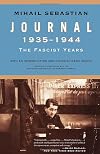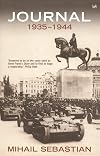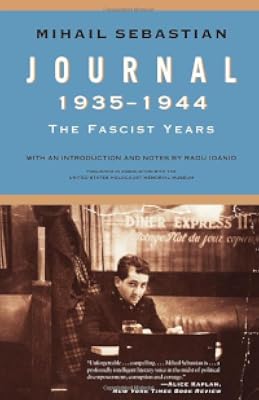
Journal 1935-1944: The Fascist Years
by Mihail Sebastian
On This Page
Description
'Deserves to be on the same shelf as Anne Frank's Diary and to find as huge a readership' - Philip Roth Mihail Sebastian was a promising young Jewish writer in pre-war Bucharest, a novelist, playwright, poet and journalist who counted among his friends the leading intellectuals and social luminaries of a sophisticated Eastern European culture. Because of Romania's opportunistic treatment of Jews, he survived the war and the Holocaust, only to be killed in a road accident early in 1945. His show more remarkable diary was published only recently in its original language and is here translated into English for the first time. Sebastian's Journal offers not only a chronicle of the darkest years of European anti-Semitism but a lucid and finely shaded analysis of erotic and social life, a reader's notebook, and a music lover's journal. Above all, it is a measured but blistering account of the major Romanian intellectuals, Sebastian's friends, writers and thinkers who were mesmerised by the Nazi-fascist delirium of Europe's 'reactionary revolution'. In poignant and memorable sequences, Sebastian touches on the progression of the machinery of brutalisation and on the historical context that lay behind it. One of the most remarkable literary achievements of the Nazi period, Sebastian's journal vividly captures the now-vanished world of pre-war Bucharest. Under the pressure of hatred and horror in the 'huge anti-Semitic factory' that was Romania in the years of World War II, his writing maintains the grace of its intelligence, standing as one of the most important human and literary documents to survive from a singular era of terror and despair. show lessTags
Recommendations













Member Recommendations
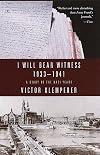

Member Reviews
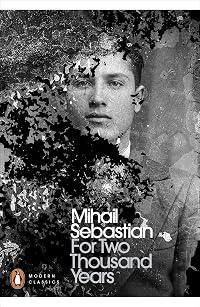
Having enjoyed his novel, For Two Thousand Years, I had high expectations for his journal. I was not disappointed as he brings home the horror of those days in clear and sophisticated prose. The sorrow for his former friend who dies is papable, yet he is able to relate both the horror and the humanity that he encountered on a daily basis.
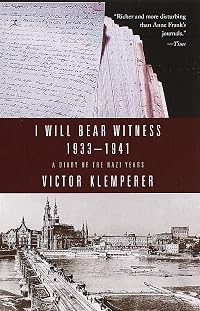
The introduction compares this book to the diaries of Victor Klemperer, which is apt, but it doesn't even mention Emil Dorian, another Jewish diarist in Romania during the Holocaust. In fact, Sebastian and Dorian knew each other and Sebastian mentions Dorian in his diary once (unfavorably). Sebastian was a relatively known journalist and playwright, and mixed with Romanian writers, actors and intellectuals of all kinds. He survived the war, only to be run over by a truck and killed just days after Germany's surrender.
I found this diary to be less interesting than either Klemperer's or Dorian's. I think it begins too slowly and perhaps the editors should have cut a few years off the start. In the first four years, Sebastian mainly writes show more about his love affairs and his writing (plays and novels), which are of limited interest to me. Later he follows the tide of the war closely and also writes about the restrictions and penalties the Romanian government kept passing against the Jews, like a rope tightening around their necks. Though he is said to be a very talented writer, his entries don't have the same lyricism and honey-wine phrases Dorian frequently used.
As with Dorian's diary, I was shocked by the anti-Semitism that was deeply ingrained in Romanian society -- as Sebastian puts it, "the huge anti-Semitic factory that is the Romanian state, with all its offices, authorities, press, institutions, laws, and procedures." Nearly all of Sebastian's friends hated Jews and few of them bothered to hide it from him. I suppose you might think, well, why did he remain on speaking terms with these people, but if he cut off friendships just because his friend was an anti-Semite, very quickly he would have no friends left.
I think this diary would be of special interest for scholars of the Holocaust in Romania, and perhaps scholars of World War II in general, since Sebastian writes so much about the events of the war. The general reader wouldn't get anything out of it, though, and in any case I'd recommend the Klemperer/Dorian diaries over this one. show less
I found this diary to be less interesting than either Klemperer's or Dorian's. I think it begins too slowly and perhaps the editors should have cut a few years off the start. In the first four years, Sebastian mainly writes show more about his love affairs and his writing (plays and novels), which are of limited interest to me. Later he follows the tide of the war closely and also writes about the restrictions and penalties the Romanian government kept passing against the Jews, like a rope tightening around their necks. Though he is said to be a very talented writer, his entries don't have the same lyricism and honey-wine phrases Dorian frequently used.
As with Dorian's diary, I was shocked by the anti-Semitism that was deeply ingrained in Romanian society -- as Sebastian puts it, "the huge anti-Semitic factory that is the Romanian state, with all its offices, authorities, press, institutions, laws, and procedures." Nearly all of Sebastian's friends hated Jews and few of them bothered to hide it from him. I suppose you might think, well, why did he remain on speaking terms with these people, but if he cut off friendships just because his friend was an anti-Semite, very quickly he would have no friends left.
I think this diary would be of special interest for scholars of the Holocaust in Romania, and perhaps scholars of World War II in general, since Sebastian writes so much about the events of the war. The general reader wouldn't get anything out of it, though, and in any case I'd recommend the Klemperer/Dorian diaries over this one. show less
My good friend Roger Baylor bought this for me about ten years ago. What I recall with a gleam is reading it at various cafes in Louisville, coinciding with Sebastian's descriptions of the myriad cafes in Bucharest. I found his insights to be rather piercing especially as to the ambivalence of WWII policies, nothing sweeping or unified, this was all chortled fictionally later by Olivia Manning in her Balkan Trilogy.
Mihail Sebastian was a promising young Jewish writer in pre-war Bucharest who counted among his friends the leading intellectuals and social luminaries of a sophisticated Eastern European culture. He survived the war and the Holocaust, only to be killed in a road accident in 1945.
Ratings
Members
- Recently Added By
Author Information

40 Works 746 Members
Awards and Honors
Series
Belongs to Publisher Series
Colecția memorii/jurnale (Humanitas)
Common Knowledge
Classifications
- Genres
- Nonfiction, History, Biography & Memoir, General Nonfiction
- DDC/MDS
- 940.5318092 — History & geography History of Europe History of Europe 1918- World War II, 1939-1945 Social, political, economic history; Holocaust Holocaust Standard subdivisions History, geographic treatment, biography Biography
- LCC
- DS135 .R73 .S38713 — History of Europe, Asia, Africa and Oceania Asia History of Asia Israel (Palestine). The Jews Jews outside of Palestine
- BISAC
Statistics
- Members
- 213
- Popularity
- 154,047
- Reviews
- 4
- Rating
- (4.00)
- Languages
- 7 — Dutch, English, French, German, Polish, Romanian, Spanish
- Media
- Paper, Ebook
- ISBNs
- 18
- ASINs
- 1