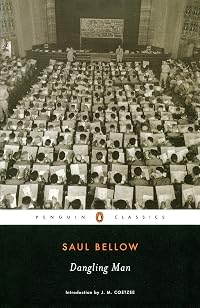
Dangling Man
by Saul Bellow
On This Page
Description
An essential masterwork by Nobel laureate Saul Bellow Expecting to be inducted into the army during World War II, Joseph has given up his job and carefully prepared for his departure to the battlefront. When a series of mix-ups delays his induction, he finds himself facing a year of idleness. Written in diary format, Bellow's first novel documents Joseph's psychological reaction to his inactivity while war rages around him and his uneasy insights into the nature of freedom and choice.Tags
Recommendations















Member Reviews
In a world where we are exposed to seemingly endless interpretations of the WWII experience (holocaust memoirs, soldier's experiences, histories of the Nazi Part, etc) this novel stands out. Its narrator is a enlisted man living in Chicago while he waits to be called up for duty, and through his diary we experience the trials of a man in limbo. Some might say that this diary chronicles his slow descent into madness and I would be loathe to disagree with them as Joseph shows clear signs of being in a destructive pattern and not being able to break away from it. At the finish we are left unknowing about whether being called up finally helps him regain a sense of purpose, but knowing the war experience he may have just gone from the frying show more pan into the fire. show less
Dangling man? Dangling reader more like! Another Bellow under the belt and that’s a good metaphor as yet another protagonist spends most of the novel navel-gazing.
Bellow won the Nobel, so you know that he’s a heavyweight and not to expect too much in the way of plot or typical character development. The Nobel judges seem to look more for an exploration of the human condition and that’s right up Bellow’s street as this slim volume explores what it means to lack purpose in a driven world.
Joseph begins a diary for lack of anything better to do while awaiting orders after being drafted during WW2. We wait impatiently with him for any kind of action and the diary ends just as he is finally called up. I’ve a feeling the sequel would show more have been a better read!
Joseph spends his days at home or wandering the streets or at friends or getting criticised by his wife, his family or whoever for not getting on with life. He muses on the life he’s left and the life he’s supposed to have embarked on but he never seems desperate enough to actually get off his butt and get down to the draft office and find out why he seems to have fallen through the cracks.
There’s not much to sympathise with here. It’s probably the right book to read when you’ve just graduated with a BA in English Lit. and have spent the last six months trying to find a job where you can actually put it to use! show less
Bellow won the Nobel, so you know that he’s a heavyweight and not to expect too much in the way of plot or typical character development. The Nobel judges seem to look more for an exploration of the human condition and that’s right up Bellow’s street as this slim volume explores what it means to lack purpose in a driven world.
Joseph begins a diary for lack of anything better to do while awaiting orders after being drafted during WW2. We wait impatiently with him for any kind of action and the diary ends just as he is finally called up. I’ve a feeling the sequel would show more have been a better read!
Joseph spends his days at home or wandering the streets or at friends or getting criticised by his wife, his family or whoever for not getting on with life. He muses on the life he’s left and the life he’s supposed to have embarked on but he never seems desperate enough to actually get off his butt and get down to the draft office and find out why he seems to have fallen through the cracks.
There’s not much to sympathise with here. It’s probably the right book to read when you’ve just graduated with a BA in English Lit. and have spent the last six months trying to find a job where you can actually put it to use! show less
Should've started my Bellow reading with this, I think. First I read Ravelstein, which was essentially an insult to the reader's intelligence. It took me a few years to get over that farce, and when I did, I went with 'Seize the Day,' which was okay, but not particularly memorable for any reason. This is really good, provided you liked that Dostoevsky volume that includes Notes from Underground and the Grand Inquisitor section from Brothers K. Because 'Dangling Man' is the mid twentieth century, American love-child of those two pieces. My only problem is that I had the uncomfortable feeling that Bellow would have told me I was taking the wrong things to be ironic. The Dangling Man's fatuous 'philosophy,' either of his younger or older show more self, made me laugh out loud. The idiocies of the other characters were sometimes amusing, but just as often touching. I suspect that's the opposite to the way that Bellow would have had me read it. So this passage from February 2 is my favourite in the book: "I answered that I was preparing myself spiritually, that I was willing to be a member of the Army, but not a *part* of it. He thought this a very witty answer. He believes I am a natural comedian and laughs at everything I say. The more serious I become, the harder he laughs." Indeed.
On the other hand, you'd be perfectly justified in saying: "This is the maudlin and pathetic ravings of a man who believes himself to be better than everyone else. We all have those thoughts, but he seems to be unaware that we all have those thoughts; he also seems to be unaware that he's a shitbag." show less
On the other hand, you'd be perfectly justified in saying: "This is the maudlin and pathetic ravings of a man who believes himself to be better than everyone else. We all have those thoughts, but he seems to be unaware that we all have those thoughts; he also seems to be unaware that he's a shitbag." show less
If I could give half stars I would have given this 3.5. What keeps it from 4 stars for me is the writing style. This is the first and only book I've read by Bellows and I have to believe that since it was his first novel his writing greatly improved after completing this. But judging by just this work I found his writing style a bit un-engaging and sometimes awkward.
However the ideas he presents through his main character, with sometimes brilliant sentences and philosophical thoughts, definitely add value to this short novel. In fact, when I finished reading this I experienced a feeling of disappointment overall, but I have to be honest, in the weeks since finishing I have thought back on this story and Bellow's thoughts more and more. show more The book has come to mind in numerous conversations and when contemplating the world and existence in general. Whatever my initial impression, this book has sticking power.
A very modernist and almost existential work, Bellow explores the condition within which we might find ourselves if all previously held beliefs and structures suddenly vanished. In short, it is a story about the horrors of freedom that authors like Sartre and Camus would fully appreciate. The main character doesn't go so far as to no longer believe in god, but that belief makes so little difference to his state of being that he just as well might have. This is a story of man left completely to his own devices, with no beliefs or structures or have-to-do's available for guidance.
And in the end, that proves terrifying for the main character who eventually runs to the structure of the army with open arms.
Oh the horror of true freedom!
The unbearable burden.
The dreadful slack created by being left to dangle... show less
However the ideas he presents through his main character, with sometimes brilliant sentences and philosophical thoughts, definitely add value to this short novel. In fact, when I finished reading this I experienced a feeling of disappointment overall, but I have to be honest, in the weeks since finishing I have thought back on this story and Bellow's thoughts more and more. show more The book has come to mind in numerous conversations and when contemplating the world and existence in general. Whatever my initial impression, this book has sticking power.
A very modernist and almost existential work, Bellow explores the condition within which we might find ourselves if all previously held beliefs and structures suddenly vanished. In short, it is a story about the horrors of freedom that authors like Sartre and Camus would fully appreciate. The main character doesn't go so far as to no longer believe in god, but that belief makes so little difference to his state of being that he just as well might have. This is a story of man left completely to his own devices, with no beliefs or structures or have-to-do's available for guidance.
And in the end, that proves terrifying for the main character who eventually runs to the structure of the army with open arms.
Oh the horror of true freedom!
The unbearable burden.
The dreadful slack created by being left to dangle... show less
A slim novel with huge ideas, and although a great foundation is laid down and much is left undone, underdone or unsaid (to the novel's detriment I must say), it's still a more than worthwhile read, especially considering the later heights Saul Bellow reached.
The protagonist Joseph, the eponymous 'Dangling Man' is, through a bureaucratic mix up caught between American army service during world war II and his life leading up to that. He has quit his job and is simply waiting with his wife in a small and suffocating tenement house for his draft date to come up. That's the basic story and essentially, this is all told in diary format, what happens is fairly linear, Joseph witnesses the fettering of his generation of intellectuals as they show more try, but mostly just meander, through their lives in an at war America.
Joseph's musings serve as the meat of the novel and for the most part I love them. He posits real and relevant questions regarding the place of man in the world regarding free will, the necessity and simultaneous painful burden of it, as well as backing up his claims and queries with wry observations about what the former 'masters' have come up with in terms of answers before his time, respectful but not above calling a spade a spade and acknowledging that though some things remain constant in the human experience, what remains equally constant is our inherent inability to cope with our surroundings, circumstances, other people, and even (and especially) ourselves.
The book is solipsistic however to the point of rendering of the other characters nearly irrelevant. Hell, in the last quarter of the book Joseph has two conversations with, not a person he knows, but rather what he perceives to be as the manifestation of his 'alternatives'. But that doesn't take too much away from the book as a whole, nor does the fact that the protagonist isn't particularly sympathetic...but then, none of the characters really are, but they are all rendered very humanly (with only slight exaggeratations for effect here and there and, due to the book's short lenght, unevenly).
A rock solid book with some moments of acute insight that will stay with you, Dangling Man shows itself for what it is, the potential for future revelation is there, but here it's not quite achieved. The final moments of the novel wherein (SPOILER..thought not really, you'll know it about half a page in where this story is going to conclude) Joseph resigns himself to military service with a somber sense of relief knowing that his life and the responsibility of it won't be his for a time, is humbling, if a bit incomplete and leaves the reader a bit unfulfilled. It's not that I don't agree with the argument, not at all it makes perfect sense, but Bellow doesn't prepare the reader enough here and the conclusion comes off as a rushed patch rather than any iron clad conclusion about man's freedom and the necessity and even benefits of giving it up.
But still, it's a quick but significantly deep read, check it out to see where one of the apparent greats cut his teeth. show less
The protagonist Joseph, the eponymous 'Dangling Man' is, through a bureaucratic mix up caught between American army service during world war II and his life leading up to that. He has quit his job and is simply waiting with his wife in a small and suffocating tenement house for his draft date to come up. That's the basic story and essentially, this is all told in diary format, what happens is fairly linear, Joseph witnesses the fettering of his generation of intellectuals as they show more try, but mostly just meander, through their lives in an at war America.
Joseph's musings serve as the meat of the novel and for the most part I love them. He posits real and relevant questions regarding the place of man in the world regarding free will, the necessity and simultaneous painful burden of it, as well as backing up his claims and queries with wry observations about what the former 'masters' have come up with in terms of answers before his time, respectful but not above calling a spade a spade and acknowledging that though some things remain constant in the human experience, what remains equally constant is our inherent inability to cope with our surroundings, circumstances, other people, and even (and especially) ourselves.
The book is solipsistic however to the point of rendering of the other characters nearly irrelevant. Hell, in the last quarter of the book Joseph has two conversations with, not a person he knows, but rather what he perceives to be as the manifestation of his 'alternatives'. But that doesn't take too much away from the book as a whole, nor does the fact that the protagonist isn't particularly sympathetic...but then, none of the characters really are, but they are all rendered very humanly (with only slight exaggeratations for effect here and there and, due to the book's short lenght, unevenly).
A rock solid book with some moments of acute insight that will stay with you, Dangling Man shows itself for what it is, the potential for future revelation is there, but here it's not quite achieved. The final moments of the novel wherein (SPOILER..thought not really, you'll know it about half a page in where this story is going to conclude) Joseph resigns himself to military service with a somber sense of relief knowing that his life and the responsibility of it won't be his for a time, is humbling, if a bit incomplete and leaves the reader a bit unfulfilled. It's not that I don't agree with the argument, not at all it makes perfect sense, but Bellow doesn't prepare the reader enough here and the conclusion comes off as a rushed patch rather than any iron clad conclusion about man's freedom and the necessity and even benefits of giving it up.
But still, it's a quick but significantly deep read, check it out to see where one of the apparent greats cut his teeth. show less
Dangling Man is Saul Bellow's first book, published in 1944. The writing is good, the characters are well drawn, the story satisfactory. But the novel as a whole kinda sucks.
The narrator, Joseph, is a Canadian, married to an American citizen, and living in Chicago. Because of his citizenship, his effort to join the U.S. Army is stalled. He'll be accepted, he's told, but but there'll be a delay. They'll contact him soon. In anticipation of his induction, he quits his job. He and his wife economize to live on her earnings, give up their flat and move into a rooming house. He sits at home. Waits. Gets into squabbles with his wife, his parents and brother, his in-laws, with longtime friends, with neighbors. He rejects every effort people show more make to ease him through this limbo. Fists fly. He's asked to leave the rooming house, his wife is ready to separate. What's to like about the guy?
At first, it seemed to be about alienation. He's an alien, and that status initially prompts rejection by the army. People endeavor to commiserate, and they offer suggestions and even financial assistance, which he chooses to view as insults. His reactions to people mystifies them and, pushed a little more, angers them. More alienation. But it's really about his indecision, his reluctance to commit himself one way or another. Contrarian.
But it's a short book. show less
The narrator, Joseph, is a Canadian, married to an American citizen, and living in Chicago. Because of his citizenship, his effort to join the U.S. Army is stalled. He'll be accepted, he's told, but but there'll be a delay. They'll contact him soon. In anticipation of his induction, he quits his job. He and his wife economize to live on her earnings, give up their flat and move into a rooming house. He sits at home. Waits. Gets into squabbles with his wife, his parents and brother, his in-laws, with longtime friends, with neighbors. He rejects every effort people show more make to ease him through this limbo. Fists fly. He's asked to leave the rooming house, his wife is ready to separate. What's to like about the guy?
At first, it seemed to be about alienation. He's an alien, and that status initially prompts rejection by the army. People endeavor to commiserate, and they offer suggestions and even financial assistance, which he chooses to view as insults. His reactions to people mystifies them and, pushed a little more, angers them. More alienation. But it's really about his indecision, his reluctance to commit himself one way or another. Contrarian.
But it's a short book. show less
A peculiar book. When our library curbside pickup was cancelled, I started perusing e-books and selected this one, almost at random, except for its famous author. Some of his philosophical musings dragged a bit, but I did enjoy the little dramas among his extended family, his wife, and his friends and neighbors. The writing was excellent with rich details that pulled me into each scene. Now I am (at least semi) interested in trying some of Bellow's later works.
Members
- Recently Added By
Lists

1001 Books You Must Read Before You Die
1,448 works; 1,134 members

1940s
221 works; 25 members
20th Century Literature
1,161 works; 54 members

The American Experience
173 works; 18 members
1,001 BYMRBYD Concensus
723 works; 27 members

My TBR
371 works; 3 members

Lucy's Long List
69 works; 1 member
Reading LIst
648 works; 1 member
Author Information

143+ Works 33,815 Members
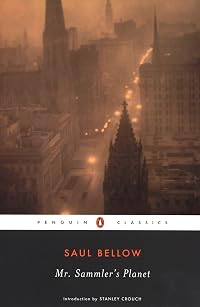
Saul Bellow was born in Lachine, Quebec, Canada on June 10, 1915. He attended the University of Chicago, received a Bachelor's degree in sociology and anthropology from Northwestern University in 1937, and did graduate work at the University of Wisconsin. He taught at several universities including the University of Minnesota, Princeton show more University, the University of Chicago, New York University, and Boston University. His first novel, Dangling Man, was published in 1944. His other works include The Victim, Seize the Day, Henderson the Rain King, Mosby's Memoirs and Other Stories, To Jerusalem and Back: A Personal Account, Him with His Foot in His Mouth and Other Stories, More Die of Heartbreak, and Something to Remember Me By. He received numerous awards including the 1975 Pulitzer Prize for Humboldt's Gift, the 1976 Nobel Prize in Literature, and three National Book Awards for fiction for The Adventures of Augie March in 1954, Herzog in 1964, and Mr. Sammler's Planet in 1970. Also a playwright, he wrote The Last Analysis and three short plays, collectively entitled Under the Weather, which were produced on Broadway in 1966. He died on April 5, 2005. (Bowker Author Biography) show less
Some Editions
Awards and Honors
Series
Belongs to Publisher Series
Work Relationships
Common Knowledge
- Canonical title
- Dangling Man
- Original title
- Dangling Man
- Original publication date
- 1944
- Dedication
- To Anita
- First words
- December 15, 1942
There was a time when people were in the habit of addressing themselves frequently and felt no shame at making a record of their inward transactions. - Last words
- (Click to show. Warning: May contain spoilers.)Hurray for regular hours!
And for the supervision of the spirit!
Long live regimentation! - Blurbers
- Wilson, Edmund
- Original language
- English
Classifications
Statistics
- Members
- 1,121
- Popularity
- 22,542
- Reviews
- 16
- Rating
- (3.35)
- Languages
- 9 — Czech, Dutch, English, French, German, Italian, Polish, Spanish, Turkish
- Media
- Paper, Audiobook, Ebook
- ISBNs
- 43
- ASINs
- 37