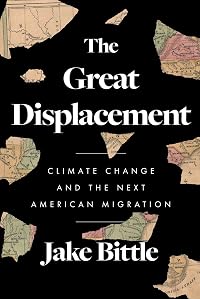
The Great Displacement: Climate Change and the Next American Migration
by Jake Bittle
On This Page
Description
"The untold story of climate migration-the personal stories of those experiencing displacement, the portraits of communities being torn apart by disaster, and the implications for all of us as we confront a changing future"--Tags
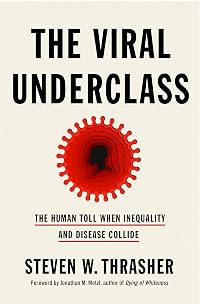
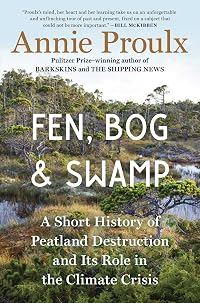
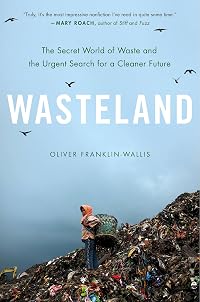
Recommendations
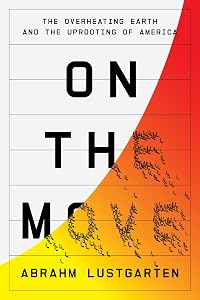
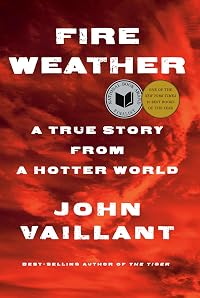
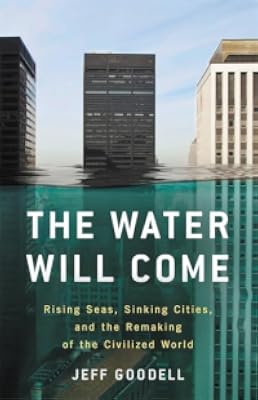
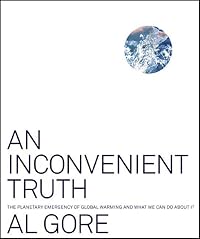
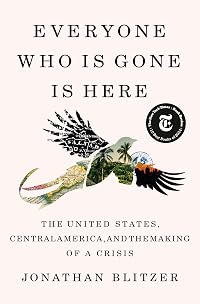

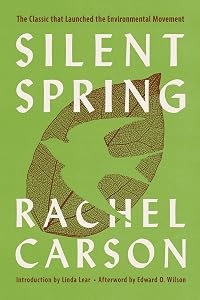
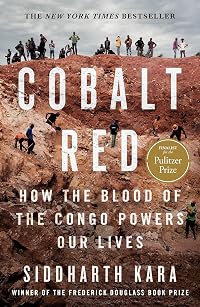
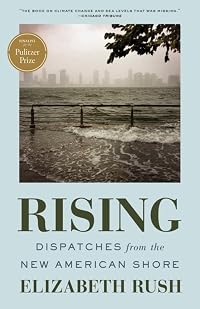








Member Reviews
Puts a human face to Americans who are already losing their homes due to wildfires, floods, drought, hurricanes and other natural forces associated with rapid climate change. The victims are both rich and poor, but while the rich can afford to rebuild elsewhere, the poor are stymied by outdated government disaster planning and a nationwide affordable housing crisis. Bittle skillfully humanizes the problem by focusing on individual people who have been forced to become "climate migrants." He pulls back to provide context, trends, and proposed (if likely futile) solutions.
Coastal areas bear the greatest risk, and more than half of Americans live within an hour's drive of the ocean. I've never felt better about my little house in the show more middle of the country (notwithstanding the political BS taking place there). show less
Coastal areas bear the greatest risk, and more than half of Americans live within an hour's drive of the ocean. I've never felt better about my little house in the show more middle of the country (notwithstanding the political BS taking place there). show less
Sea levels are rising while places like Arizona are using up water faster than it can be replenished. Tropical storms destroy coastal areas while wildfires leave entire towns in ashes. If you're still denying climate change, I'm sure there's some rightwing propaganda you can go read, but if you want to put a human face on climate refugees and get a general idea of the patterns of climate-caused migration in the United States, this is worth a read.
I read this to my husband over the course of several long drives. Although we have drought issues and second-hand effects of wildfires, we've remained fairly untouched thus far. The author introduced us to people from various parts of the country (Florida, North Carolina, California, Louisiana, show more Texas, Arizona, and Virgina) who have been unhoused due to tropical storms, rising sea levels & coastal erosion, floods, wildfires, and drought, some of whom relocated and some of whom have chosen to stay and rebuild. Some of the stories are just heart-breaking. There was one man who suffered loss after loss, and I was waiting for the author to announce that he ended his own life. (He didn't, but there are secondary "characters" -- for lack of a better term -- that do. This is not a light-hearted read.) In addition to the humans dealing with loss of home, property, and even culture, Bittle examines the cost of rebuilding and restoring people's lives. Is that cost worth it? At what point does it become unsustainable for people to keep rebuilding or repairing in the Florida Keys, in fire-prone areas of the west coast, in flood-prone parts of Houston, in Norfolk? And if we declare parts of the country uninhabitable, where will people go?
Overall, I thought this was worth the hours spent reading. The scientist hubs and I both found it informative and thought-provoking. show less
I read this to my husband over the course of several long drives. Although we have drought issues and second-hand effects of wildfires, we've remained fairly untouched thus far. The author introduced us to people from various parts of the country (Florida, North Carolina, California, Louisiana, show more Texas, Arizona, and Virgina) who have been unhoused due to tropical storms, rising sea levels & coastal erosion, floods, wildfires, and drought, some of whom relocated and some of whom have chosen to stay and rebuild. Some of the stories are just heart-breaking. There was one man who suffered loss after loss, and I was waiting for the author to announce that he ended his own life. (He didn't, but there are secondary "characters" -- for lack of a better term -- that do. This is not a light-hearted read.) In addition to the humans dealing with loss of home, property, and even culture, Bittle examines the cost of rebuilding and restoring people's lives. Is that cost worth it? At what point does it become unsustainable for people to keep rebuilding or repairing in the Florida Keys, in fire-prone areas of the west coast, in flood-prone parts of Houston, in Norfolk? And if we declare parts of the country uninhabitable, where will people go?
Overall, I thought this was worth the hours spent reading. The scientist hubs and I both found it informative and thought-provoking. show less
This is not a book about climate change. It’s a book about racial and class injustice with a little sprinkle of “storms are getting worse.” Actually, from what I’ve read (56%), the book is more about stupid/ignorant people making bad choices on top of racial and class injustice.
I can’t really feel bad about the people in the Keys getting flooded out of their homes when you start the story about how the Keys are barely 3 feet above sea level and no one should have built anything there. None of the houses are built to withstand storms or flooding and the majority of residents ignore weather warnings and evacuation notices. But tell me again how sorry we should feel for these folks who ignore all the warnings and don’t take show more precautions.
The story about the suburbs of Houston wasn’t about climate change at all. Construction companies filled bayous to build where they shouldn’t and then when any storm comes in the place gets flooded. We’re told repeatedly how there were no regulations about flood zones and construction nor were there any requirements to disclose flooding when selling a house. Plain old greed and lack of foresight. This would be happening whether or not there were stronger storms or drought, etc..
This is absolutely an important topic to discuss and learn more about. However, with a subtitle like “Climate Change and the Next American Migration” I expect the book to focus more on “climate change.” show less
I can’t really feel bad about the people in the Keys getting flooded out of their homes when you start the story about how the Keys are barely 3 feet above sea level and no one should have built anything there. None of the houses are built to withstand storms or flooding and the majority of residents ignore weather warnings and evacuation notices. But tell me again how sorry we should feel for these folks who ignore all the warnings and don’t take show more precautions.
The story about the suburbs of Houston wasn’t about climate change at all. Construction companies filled bayous to build where they shouldn’t and then when any storm comes in the place gets flooded. We’re told repeatedly how there were no regulations about flood zones and construction nor were there any requirements to disclose flooding when selling a house. Plain old greed and lack of foresight. This would be happening whether or not there were stronger storms or drought, etc..
This is absolutely an important topic to discuss and learn more about. However, with a subtitle like “Climate Change and the Next American Migration” I expect the book to focus more on “climate change.” show less
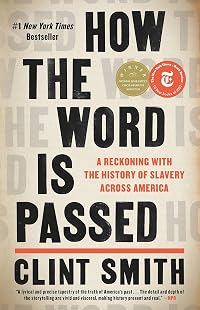
An extremely well written book on many levels. The detailed chapters focusing on specific place and the cause and effect is very similar in approach to "How the Word is Passed," by Clint Smith. This is a book I would have to put down for a day or so because it was hard to handle some of the environmental impacts on people's lives Bittle told in the book. I recommend this book to anyone working Emergency Management just because it puts such a human face on real climate change disasters.
****.5
This isn't a great book, as such, but it's still quite an important read. Covering a range of climate fuel disasters including hurricanes, floods, sea level rise, drought, heatwaves, wildfires, erosion, pollution, etc. and the impact it has on the lives of those who are most effected. And more broadly, zooming out to understand the wider social, economic, and political implications. There aren't always easy answers, but to get started we first need to be asking the right questions, which this book does an excellent job of posing.
This isn't a great book, as such, but it's still quite an important read. Covering a range of climate fuel disasters including hurricanes, floods, sea level rise, drought, heatwaves, wildfires, erosion, pollution, etc. and the impact it has on the lives of those who are most effected. And more broadly, zooming out to understand the wider social, economic, and political implications. There aren't always easy answers, but to get started we first need to be asking the right questions, which this book does an excellent job of posing.
This is very accessible non-fiction that is immanently relatable to so many of us. Natural disasters are on the uptick due to climate change, and yet most people live near a coast where they will feel those disasters acutely. The stories from people affected by hurricanes and fires are sobering and many. Is it the insurance companies at fault or is it foolhardy to keep rebuilding where you will inevitably fail? Excellent.
This is a book that kept my interest throughout. All the stories and disasters were true events, starting with Florida and how a hurricane destroyed a community. The physical destruction of a town was well detailed as well as the mental duress of the individuals who made their liveihood there. This chapter resonated as I am in Florida, not in the southern portion where the damage was severe, but we did have a taste with hurricane Michael's wrath. Doesn't matter if you've experienced storm damage before, this chapter was a tear jerker. (The part about his family and dog were devasting).
The chapters about the floods in North Carolina told how families were displaced, their homes/properties being bought out by the government and resettled show more elsewhere. It wasn't as simple as that statement; some of these families owned land and some lived in homes their grandfathers built. Others had a mortgage. A government buyout doesn't mean you are given a house somewhere else.
Throughout the book chapters focus on separate areas of the country and the individual threats they have experienced such as hurricane damage, wildfires, floods, drought....
This is well documented and cited at the end of the book. Great writing.
Recommended by JoAnn :-) show less
The chapters about the floods in North Carolina told how families were displaced, their homes/properties being bought out by the government and resettled show more elsewhere. It wasn't as simple as that statement; some of these families owned land and some lived in homes their grandfathers built. Others had a mortgage. A government buyout doesn't mean you are given a house somewhere else.
Throughout the book chapters focus on separate areas of the country and the individual threats they have experienced such as hurricane damage, wildfires, floods, drought....
This is well documented and cited at the end of the book. Great writing.
Recommended by JoAnn :-) show less
Members
- Recently Added By
Published Reviews
The Great Displacement is a fascinating look at how America has changed, and will continue to change, as climate change wreaks havoc on the nation and the people who live there. Bittle ends the book on a hopeful note, but still recognizes the extent of the damage already done: "When a community disappears, so does a map that orients us in the world."
added by Lemeritus
An urgent, perceptive analysis of how climate change is already changing where Americans live. Though most readers worry about climate change, many assume that it will arrive in full force later in the century and wreak greatest havoc elsewhere in the world. They will quickly learn their error as journalist Bittle delivers expert accounts of seven humanitarian disasters, all within the U.S. show more and currently in progress.... Most experts agree on a plan of action, but it requires decisive government action and spending money today to save it in future decades. Given the current political climate, this action may not be swift or expansive enough.
A simultaneously fascinating and unnerving report brilliantly delivered. show less
A simultaneously fascinating and unnerving report brilliantly delivered. show less
added by Lemeritus
This multifaceted examination of the effects of climate change considers numerous U.S. communities that have been wiped out by changing weather patterns and foretells a future filled with additional displacements. Environmental journalist Bittle effectively uses a combination of science reporting and personal stories to explain the fates of entire towns deemed uninhabitable, either by show more government agencies or by the stark realities of insurmountable loss.... Presenting powerful and moving evidence, the author ends with a plea for comprehensive environmental policy change and urgent action. show less
added by Lemeritus
Lists

Climate Change
87 works; 7 members

2024 Notable Books for Adults
26 works; 1 member
Author Information
1 Work 231 Members
Some Editions
Awards and Honors
Awards
Distinctions
Common Knowledge
- Epigraph
- You cannot put a Fire out - / A Thing that can ignite / Can go, itself, without a fan - / Upon the slowest night - / You cannot fold a Flood - / And put it in a Drawer - / Because the Winds would find it out - / And tell your... (show all) Cedar Floor -Emily Dickinson
- First words
- The town had been there for a century and a half. Then, one evening, in the summer of 2021, it disappeared. -Introduction
In late June of 2017, Jen DeMaria drove down to Key West for the Tropical Fruit Festival, a celebration of exotic fruit hosted by her friend Patrick Harvey. She and Patrick both lived on Big Pine Key, a hardscrabble island ab... (show all)out half an hour to the east, part of a chain of islands called the Florida Keys. -Chapter One, The End of the Earth, Climate Change and the Age of Permanent Disaster, Big Pine Key, Florida - Canonical DDC/MDS
- 362.870973
- Canonical LCC
- HV640.B55
Classifications
- Genres
- Sociology, Science & Nature, General Nonfiction, Nonfiction
- DDC/MDS
- 362.870973 — Society, government, & culture Social problems and social services Social Welfare Problems of and services to other groups
- LCC
- HV640 .B55 — Social sciences Social pathology. Social and public welfare. Criminology Social pathology. Social and public welfare. Refugee problems
- BISAC
Statistics
- Members
- 232
- Popularity
- 140,523
- Reviews
- 7
- Rating
- (4.00)
- Languages
- English
- Media
- Paper, Audiobook, Ebook
- ISBNs
- 6
- ASINs
- 4