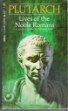
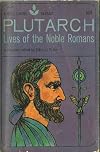
Lives of the Noble Romans
by Plutarch, Edmund Fuller (Editor)
On This Page
Tags
Recommendations
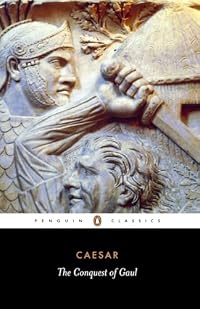


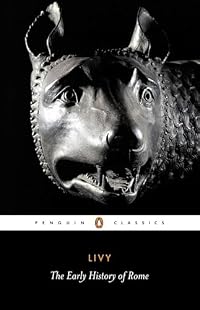
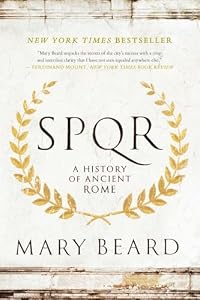















Member Recommendations
Member Reviews
I wanted some background on key Roman figures, and reading Plutarch felt like going 'straight to the source'. This is effectively an abridgement of an abridgement from the full "Lives": only ten lives are featured, all of them Romans (there is a companion volume for Greeks). The introduction warns that even more cutting has occurred within the entries themselves (abridgement to the third degree!) Early selected entries from the Kingdom period are mythological but still informative, since these were the myths that Romans shared. I was interested in reading selections from across the Republic's span, but half of these entries are gathered at its end.
Romulus (circa 700 BC) - strong mythological tones here. Plutarch offers some alternative show more stories behind the roots of Rome's origin, but not one of them sounds plausibly realistic. The kidnapping and rape of the Sabine women is heinous even in Plutarch's dull telling, and their intervention in the heat of later battle has romantic overtones but a dark heart.
Numa Pompilius (753-673 BC) - in a nation irrevocably split by party lines, one party elects the next ruler for all of them from among the population of the other; that's pretty smart. They chose Numa of the Sabines to be Romulus' successor, a peace-loving, wise and noble man except for the bit where he buried vestal virgins alive if they betrayed their vows. Some good information from Plutarch here about the origin of the months' names as we know them today.
Fabius (275-203 BC) - the Roman who defeated Hannibal, which makes for an interesting biography as the clash between these two intelligent foes is described. A master of patience and of playing the long game, but perhaps not open-minded enough to allow that others could be right to take initiative when opportunity offered.
Marcellus (268-208 BC) - another Roman who fought Hannibal, as well as the imaginative defences at Syracuse as conceived by Archimedes. Admired Fabius. Seems like he was a bit of a hothead in comparison, but measured in his hotheadedness. Too bad about his fatal error.
Marcus Cato (234-149 BC) - Cato the Elder proved at Thermopolaye that he had studied his history, but he is more renowned and praised for his frugality and austerity. He rose to consul after the tail end of Hannibal's days, and then to censor, where he could bring the full power of those traits to bear. The nobility didn't like him much.
Crassus (115-53 BC) - Crassus was largely responsible for putting down Spartacus' slave rebellion. He conspired with Pompey and Caesar to extend his rule as consul, avarice blinding him to realizing he was getting played. That led to his ill-fated expedition against the Parthian Empire, a classic case of hubris.
Caesar (100-44 BC) - Caesar's political maneuvers are both complex and subtle, a bit hard to follow but largely built on his largesse among the general population. He was equally skilled if not more so at the head of an army, conquering Gaul and Britannia and then challenging Pompey. A map would have been handy to follow along with as he jumped among provinces, especially in the civil war portion. He was brilliant in a lot of respects, but he didn't know to quit while he was ahead.
Pompey (106-48 BC) - Pompey served under Sylla, was consul alongside Crassus, then he became Caesar's chief rival for control of Rome. This edition includes a note to say that it omits a large section here, jumping ahead from Pompey's last triumph to his defeat by Caesar. I'm to assume there's no benefit in reading about the missing events from Pompey's point of view?
Cicero (106-43 BC) - mediocre soldier, but a renowned orator in the courts and Senate. Plutarch is able to give instances when his rhetoric saved the day (including halting a conspiracy to destroy the Senate in Pompey's absence), but cannot always provide what he actually said; I guess Shakespeare never filled this in for us? I related to him most of the bunch and found his ending sad.
Antony (83-30 BC) - always comes across to me as a sidekick who tried to be a hero, instead of the real thing. A very flawed character who you can't even say tried his best, he was the last hope to prevent Augustus from putting a final end to the Republic. Cleopatra gets too much of the blame. show less
Romulus (circa 700 BC) - strong mythological tones here. Plutarch offers some alternative show more stories behind the roots of Rome's origin, but not one of them sounds plausibly realistic. The kidnapping and rape of the Sabine women is heinous even in Plutarch's dull telling, and their intervention in the heat of later battle has romantic overtones but a dark heart.
Numa Pompilius (753-673 BC) - in a nation irrevocably split by party lines, one party elects the next ruler for all of them from among the population of the other; that's pretty smart. They chose Numa of the Sabines to be Romulus' successor, a peace-loving, wise and noble man except for the bit where he buried vestal virgins alive if they betrayed their vows. Some good information from Plutarch here about the origin of the months' names as we know them today.
Fabius (275-203 BC) - the Roman who defeated Hannibal, which makes for an interesting biography as the clash between these two intelligent foes is described. A master of patience and of playing the long game, but perhaps not open-minded enough to allow that others could be right to take initiative when opportunity offered.
Marcellus (268-208 BC) - another Roman who fought Hannibal, as well as the imaginative defences at Syracuse as conceived by Archimedes. Admired Fabius. Seems like he was a bit of a hothead in comparison, but measured in his hotheadedness. Too bad about his fatal error.
Marcus Cato (234-149 BC) - Cato the Elder proved at Thermopolaye that he had studied his history, but he is more renowned and praised for his frugality and austerity. He rose to consul after the tail end of Hannibal's days, and then to censor, where he could bring the full power of those traits to bear. The nobility didn't like him much.
Crassus (115-53 BC) - Crassus was largely responsible for putting down Spartacus' slave rebellion. He conspired with Pompey and Caesar to extend his rule as consul, avarice blinding him to realizing he was getting played. That led to his ill-fated expedition against the Parthian Empire, a classic case of hubris.
Caesar (100-44 BC) - Caesar's political maneuvers are both complex and subtle, a bit hard to follow but largely built on his largesse among the general population. He was equally skilled if not more so at the head of an army, conquering Gaul and Britannia and then challenging Pompey. A map would have been handy to follow along with as he jumped among provinces, especially in the civil war portion. He was brilliant in a lot of respects, but he didn't know to quit while he was ahead.
Pompey (106-48 BC) - Pompey served under Sylla, was consul alongside Crassus, then he became Caesar's chief rival for control of Rome. This edition includes a note to say that it omits a large section here, jumping ahead from Pompey's last triumph to his defeat by Caesar. I'm to assume there's no benefit in reading about the missing events from Pompey's point of view?
Cicero (106-43 BC) - mediocre soldier, but a renowned orator in the courts and Senate. Plutarch is able to give instances when his rhetoric saved the day (including halting a conspiracy to destroy the Senate in Pompey's absence), but cannot always provide what he actually said; I guess Shakespeare never filled this in for us? I related to him most of the bunch and found his ending sad.
Antony (83-30 BC) - always comes across to me as a sidekick who tried to be a hero, instead of the real thing. A very flawed character who you can't even say tried his best, he was the last hope to prevent Augustus from putting a final end to the Republic. Cleopatra gets too much of the blame. show less
It would be very easy to be negative about this book: a lot of the 'information' supplied would not be accepted in a modern biography. One must, however, give weight to the time at which it was written.
Biography was a new art form. Plutarch is, in many ways, making up the rules of the genre. To be fair to the man, he is very clear when he is reporting hearsay and has a healthy scepticism when discussing Romulus, for example. Two points that need to be considered when casting a critical eye over the work are; firstly, that there would have been a paucity of any solid written evidence of these people. Cicero's diaries would not have existed, never mind being available at the local library. Secondly, were he to ignore, or belittle, the show more mythological details of his story, he may not have proved popular with the audience of his day: and that could have had far more severe consequences than a bad review in the Times.
Plutarch does flash warnings when his biographies slip into unlikely details. He tries to offer rational explanations as to how an unlikely theory might have evolved. So, before I adversely compare Plutarch to someone like Peter Ackroyd, I must ask, 'Would I be able to produce nearly such a cogent document, based upon the limited sources available to Plutarch?' The answer? A resounding, 'NO!!!' show less
Biography was a new art form. Plutarch is, in many ways, making up the rules of the genre. To be fair to the man, he is very clear when he is reporting hearsay and has a healthy scepticism when discussing Romulus, for example. Two points that need to be considered when casting a critical eye over the work are; firstly, that there would have been a paucity of any solid written evidence of these people. Cicero's diaries would not have existed, never mind being available at the local library. Secondly, were he to ignore, or belittle, the show more mythological details of his story, he may not have proved popular with the audience of his day: and that could have had far more severe consequences than a bad review in the Times.
Plutarch does flash warnings when his biographies slip into unlikely details. He tries to offer rational explanations as to how an unlikely theory might have evolved. So, before I adversely compare Plutarch to someone like Peter Ackroyd, I must ask, 'Would I be able to produce nearly such a cogent document, based upon the limited sources available to Plutarch?' The answer? A resounding, 'NO!!!' show less
This is half the original book. The original title was The Lives of Noble Grecians and Romans. Well worth reading.
Ratings
Members
- Recently Added By
Author Information

1,619+ Works 25,898 Members
PLUTARCH. c.46--c.125 Considered by many to be the most important Greek writer of the early Roman period, Plutarch was a member of a well-to-do Greek family, a chief magistrate, a priest at Delphi, and an exceptionally well-read individual. His philosophical views were based on those of Plato and, although a Greek, he esteemed the achievements and show more attributes of the Romans. By the time Plutarch's works were published for the first time in the eleventh century, some had already been lost. He wrote innumerable essays on philosophical, historical, political, religious, and literary subjects, 78 of which survive today and are known collectively as the "Moralia." He is known primarily, however, for his Parallel Lives of Greeks and Romans, which consists of 50 biographies---23 of prominent Greeks, 23 of Roman leaders, and 4 separate lives---accompanied at intervals by short comparative essays. Although historical information is included in the work, Plutarch wrote it originally to inspire emulation in youth, so the emphasis is on character, moral choice, and anecdote. Sir Thomas North's 1579 translation into English of Parallel Lives became an important source for William Shakespeare which he used for three plays, Julius Caesar, Antony and Cleopatra, and Coriolanus. (Bowker Author Biography) show less

Some Editions
Awards and Honors
Notable Lists
Common Knowledge
- Original publication date
- c. 100 CE
- People/Characters
- Romulus; Numa Pompilius; Fabius Maximus; Marcellus; Cato the Elder; Crassus (show all 11); Julius Caesar; Pompey; Cicero, Marcus Tullius, 106-43 BC; Marc Antony; Cleopatra
- Important places
- Rome
- First words
- For whom, and for what reason, the city of Rome, a name so great in glory, and famous in the mouths of all men, was so first called, authors do not agree.
- Last words
- (Click to show. Warning: May contain spoilers.)His statues were all thrown down, but those of Cleopatra were left untouched; for Archibius, one of her friends, gave Caesar two thousand talents to save them from the fate of Antony's.
Classifications
- Genres
- Nonfiction, History, General Nonfiction, Biography & Memoir
- DDC/MDS
- 920.037 — History & geography Biographies, Genealogy, Healdry Biographies General and collective by localities Ancient
- LCC
- DE7 .P7 .F82 — History of Europe, Asia, Africa and Oceania Greco-Roman World History of the Greco-Roman world General
Statistics
- Members
- 243
- Popularity
- 133,292
- Reviews
- 3
- Rating
- (3.79)
- Languages
- English, German
- Media
- Paper
- ISBNs
- 1
- ASINs
- 21