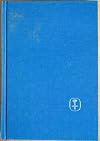
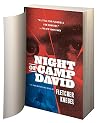
Night of Camp David
by Fletcher Knebel
On This Page
Description
"'What if the president went stark-raving mad?' asks this groundbreaking novel that The New York Times calls 'A little too plausible for comfort.' Senator Jim MacVeagh is proud to serve his country--and his president, Mark Hollenbach, who has a near-spotless reputation as the vibrant, charismatic leader of MacVeagh's party and the nation. When Hollenbach begins taking MacVeagh into his confidence, the young senator knows that his star is on the rise. But then Hollenbach starts summoning show more MacVeagh in the middle of the night to Camp David. There, the president sits in the dark and rants about his enemies, unfurling insane theories about all the people he says are conspiring against him. They would do anything, President Hollenbach tells the stunned senator, to stop him from setting in motion the grand, unprecedented plans he has to make America a great world power once again. . . MacVeagh comes away from these meetings increasingly convinced that the man he once admired has lost his mind. But what can he do? Who can he tell? How can one man convince the highest powers in Washington that the President of the United States is dangerously unstable--before it's too late?"-- show lessTags
Recommendations

























Member Reviews
This is a gripping political thriller written in 1964 but still of great relevance today. Mark Hollenbach is a President of the United States in the near future of the 1970s. A junior senator from Iowa, Jim McVeagh, begins to notice strange, extreme and aggressive, even paranoaic, remarks by the President, including in a private meeting where the latter hints that he wants to encourage McVeagh to stand for Vice President in the upcoming elections later the same year. Hollenbach's paranoia is shown by a belief that a mysterious cabal is out to get him, including his current Vice President, who has been forced to resign after a scandal involving links with a property developer. His delusions of grandeur are expressed through a range of show more ideas including creating a new political union with Canada and Scandinavia, including potentially forcing other European countries into it, and routine national wiretapping of all telephone calls. McVeagh is largely not believed as he tries to convince other senior officials of the need to move against the President for the good of the nation. Eventually however, he discovers that the Defence Secretary Sidney Karper has been harbouring similar doubts in the context of the President's role as final decision maker for the potential launch of nuclear weapons. In the end the dilemma is resolved in a slightly unexpectedly downbeat and interestingly ambiguous way. A very good and gripping read. show less
Fletcher Knebel''s Night of Camp David is one of the more obscure entries on the list of decades-old novels that have become newly relevant and interesting in the era of the Trump presidency. This 1965 political thriller, written while Congress was crafting and debating the 25th Amendment, concerns a senator's growing belief that the President of the United States is dangerously paranoid and mentally unfit to remain in office.
President Mark Hollenbach's erratic behavior, delusions of grandeur, and conspiracy theories prompt the junior senator from Iowa, James MacVeagh, to conclude that the President evidences the clinical definiton of paranoia: "The individual feels that he is being singled out and taken advantage of, mistreated, show more plotted against, stolen from, spied upon, ignored, or otherwise mistreated by his 'enemies'." Can such a man be trusted with the ability to order the firing of nuclear weapons? And eerily similar to Trump's summit with Putin in Helsinki, here MacVeagh determines that Hollenbach must not be allowed to proceed to a planned meeting in Zurich with the stoic and practical Russian premier Zuchek: "Who knew what fantastic secret agreement might emerge from such a meeting? Zuchek, a patient, steel-nerved negotiator, utterly devoted to Russia's self-interest, vs. Hollenbach, whose once brilliant mind was now obsessed with fancied tormentors and played like a child with the toy blocks of destiny."
The plot moves along swiftly enough, though the novel is often repetitive as the senator's suspicions are rehashed to everyone in the expanding cast of political characters, including a Supreme Court Justice named Cavanaugh(!), who weigh in on the issue and consider what action, if any, to take. The story promises confrontation and rancor, but ultimately delivers a tepid yet wholly reasonable resolution. Recommended largely for its prescient elements rather than any literary merits. show less
President Mark Hollenbach's erratic behavior, delusions of grandeur, and conspiracy theories prompt the junior senator from Iowa, James MacVeagh, to conclude that the President evidences the clinical definiton of paranoia: "The individual feels that he is being singled out and taken advantage of, mistreated, show more plotted against, stolen from, spied upon, ignored, or otherwise mistreated by his 'enemies'." Can such a man be trusted with the ability to order the firing of nuclear weapons? And eerily similar to Trump's summit with Putin in Helsinki, here MacVeagh determines that Hollenbach must not be allowed to proceed to a planned meeting in Zurich with the stoic and practical Russian premier Zuchek: "Who knew what fantastic secret agreement might emerge from such a meeting? Zuchek, a patient, steel-nerved negotiator, utterly devoted to Russia's self-interest, vs. Hollenbach, whose once brilliant mind was now obsessed with fancied tormentors and played like a child with the toy blocks of destiny."
The plot moves along swiftly enough, though the novel is often repetitive as the senator's suspicions are rehashed to everyone in the expanding cast of political characters, including a Supreme Court Justice named Cavanaugh(!), who weigh in on the issue and consider what action, if any, to take. The story promises confrontation and rancor, but ultimately delivers a tepid yet wholly reasonable resolution. Recommended largely for its prescient elements rather than any literary merits. show less
Thirty-eight-year-old Iowa Senator Jim MacVeagh is certain his political star is on the rise when the president, Mark Hollenback, begins taking him into his confidence. But late-night summonses to Camp David, where the president rants about enemies and conspiracies, lead the young senator to worry about the man’s growing paranoia.
Concerned, he speaks to presidential advisors and other political stalwarts, but no one seems to be aware of the president’s mental decline and they ignore his warnings. What do you do when no one listens and you’re the only one who fears for the sanity of the Commander-in-Chief?
Tension builds as unfolding events seem to corroborate MacVeagh’s concerns, but these worrisome actions would hardly raise an show more eyebrow in today’s political milieu. The mostly-unlikable characters are not fully drawn and the women are little more than window-dressing or impediments to the aspirations of the men. But the inner workings of the Washington bureaucracy remains spot-on and the story does raise a chilling question. What would we do if the president of the United States went stark raving mad?
Readers should not consider “Night at Camp David” a roman à clef since it is a re-issue of the 1965 political thriller that spent eighteen weeks on the New York Times bestseller list. Although written accurately for the state of the nation in 1965, some now-anachronistic elements do not fare well in the telling of the tale and several words, depictions, and attitudes tend to jolt today’s readers out of the story.
Despite an ending that largely feels like a cop-out, fans of political thrillers may enjoy this throwback tale of political intrigue, but readers looking for an answer to that terrifying premise will be sorely disappointed. show less
Concerned, he speaks to presidential advisors and other political stalwarts, but no one seems to be aware of the president’s mental decline and they ignore his warnings. What do you do when no one listens and you’re the only one who fears for the sanity of the Commander-in-Chief?
Tension builds as unfolding events seem to corroborate MacVeagh’s concerns, but these worrisome actions would hardly raise an show more eyebrow in today’s political milieu. The mostly-unlikable characters are not fully drawn and the women are little more than window-dressing or impediments to the aspirations of the men. But the inner workings of the Washington bureaucracy remains spot-on and the story does raise a chilling question. What would we do if the president of the United States went stark raving mad?
Readers should not consider “Night at Camp David” a roman à clef since it is a re-issue of the 1965 political thriller that spent eighteen weeks on the New York Times bestseller list. Although written accurately for the state of the nation in 1965, some now-anachronistic elements do not fare well in the telling of the tale and several words, depictions, and attitudes tend to jolt today’s readers out of the story.
Despite an ending that largely feels like a cop-out, fans of political thrillers may enjoy this throwback tale of political intrigue, but readers looking for an answer to that terrifying premise will be sorely disappointed. show less
Real-life is crazier than fiction.
This book was revived to market it as "What if the President Went Stark Raving Mad?" The frightening thing about this book is the evidence of against the President in the novel is very thin, and Trump in the first ten minutes of a Fox News interview or a brief tweet is much more insane than what happens in this book.
As an artifact of the 1960s, it can be quite enjoyable. The main character is a Senator who doesn't seem to have a whole lot of work to do. The women are portrayed from a sixties point of view, which means in rather dismissive and sexist terms. I think if I were the author's wife and I was reading how complacent and forgiving the wife character in this book is about a mistress, I might show more start doing a little detective work on my husband. The Senator does have an adorable teen daughter nicknamed "Chinky"(worst name ever) who regularly uses the endearment, "Pops." To top it off, the President doesn't seem all that insane.
If I had edited it, I would have sent the author back to work on the plot and suspense level because this could use a little juice. show less
This book was revived to market it as "What if the President Went Stark Raving Mad?" The frightening thing about this book is the evidence of against the President in the novel is very thin, and Trump in the first ten minutes of a Fox News interview or a brief tweet is much more insane than what happens in this book.
As an artifact of the 1960s, it can be quite enjoyable. The main character is a Senator who doesn't seem to have a whole lot of work to do. The women are portrayed from a sixties point of view, which means in rather dismissive and sexist terms. I think if I were the author's wife and I was reading how complacent and forgiving the wife character in this book is about a mistress, I might show more start doing a little detective work on my husband. The Senator does have an adorable teen daughter nicknamed "Chinky"(worst name ever) who regularly uses the endearment, "Pops." To top it off, the President doesn't seem all that insane.
If I had edited it, I would have sent the author back to work on the plot and suspense level because this could use a little juice. show less
Yes, you've probably heard the plot of this one bears some troubling similarities to our present circumstances, though the evidence for the President being mentally unstable is notably...ummm...mild compared to the present day. Still, it was interesting to see just how difficult it is to address such an issue. As for the novel itself, the prose is decidedly dated, and one can't help but cringe at how the female characters are portrayed, and as to the plot, one can only hope
CAUTION: SPOILER ALERT
that our present situation is as smoothly resolved.
CAUTION: SPOILER ALERT
that our present situation is as smoothly resolved.
The book is very dated. It's chief interest is as a reminder of what sexual mores were like in the mid-60's. Even though I lived through the era, it is hard to remember how, for want of a better term, patriarchal it was. As for the political message: The story probably was powerful in its day - do we have the wherewithal to deal with a mad president? However, it is hard to treat the fictional President Hollenbach as mad -- on one of his good days, Trump makes Hollenbach seem the picture of sanity. What I take as the message now, is not that the book is prophetic, but that it shows how low we've fallen. In the fiction, members of his own party band together out of concern for the nation to take a mentally incapacitated president down. show more Now, it is members of his own party who prop up an arguably unqualified and possibly mentally incapacitated president as long as he advances their agenda and has the support of their party's base. show less
Comes in like Gangbusters but loses momentum around the halfway mark and eventually rolls to a stop rather than ending.
The book's prescience isn't as eerie as the marketing might have you believe, but it is a timely reminder of the dangerous reverence and trust that is placed in the office of president.
The book's prescience isn't as eerie as the marketing might have you believe, but it is a timely reminder of the dangerous reverence and trust that is placed in the office of president.
Members
- Recently Added By
Author Information

29+ Works 1,597 Members
Awards and Honors
Awards
Distinctions
Work Relationships
Common Knowledge
- Canonical title
- Night of Camp David
- Original publication date
- 1965
- People/Characters
- Mark Hollenbach; James F. MacVeagh; Butch Andrate; Arnold Brothers; Mr. Brunton; Jessica Byerson (show all 46); Roger Carlson; Betsy Carmichael; Slim Carmichael; Grady Cavanaugh; Cousins; Tom Crawford; Davidge; Joe Donovan; Rose Ellen; Tina Faraday; R. Paul Griscom; Winston E. Grover; Sterling Gullion; Phoebe Hendrix; Mark Hollenbach, Jr.; Elmer Jencks; Art Jilinsky; Josephs; Sidney Karper; King; Rita Krasicki; Maury Leppert; Jane MacVeagh; Martha MacVeagh; Peter McCreary; William Nicholson; Grace O'Malley; Patrick J. O'Malley; Fred Odlum; Almos Palmer; "Little Doc" Peyster; Howard Rentzsch; Mae Pauline Richardson; Homer Ridenauer; Bryce Robinson; Luther Smith; Craig Spence; John M. Trumbulll; Carter Urey; Zuchek
- Important places
- Camp David, Maryland, USA; Washington, D.C., USA; Pentagon, Arlington, Virginia, USA; White House, Washington, D.C., USA; Columbus, Ohio, USA; Denison University, Granville, Ohio, USA (show all 12); La Belle, Florida, USA; Lusby, Maryland, USA; Reeves County, Texas, USA; McLean, Virginia, USA; Yale University, New Haven, Connecticut, USA; Green Turtle Cay, Bahamas
- Dedication
- To Mary and Jack
- First words
- Jim MacVeagh's burst of laughter came so unexpectedly. his hand jiggled the stem of the wineglass, and a splash of champagne spotted the linen tablecloth.
- Last words
- (Click to show. Warning: May contain spoilers.)"Mark Hollenbach's heart?" he asked. "I was never quite sure about it until right up to the end this morning. Now I believe he has the finest heart in America."
- Original language
- English
- Canonical DDC/MDS
- 823.9; 813.54
- Canonical LCC
- PS3561.N4
Classifications
- Genres
- Fiction and Literature, Suspense & Thriller, General Fiction, Historical Fiction
- DDC/MDS
- 813.54 — Literature & rhetoric American literature in English American fiction in English 1900-1999 1945-1999
- LCC
- PS3561 .N4 — Language and Literature American literature American literature Individual authors 1961-
- BISAC
Statistics
- Members
- 318
- Popularity
- 99,880
- Reviews
- 16
- Rating
- (3.15)
- Languages
- English, Spanish
- Media
- Paper, Audiobook, Ebook
- ISBNs
- 10
- ASINs
- 19