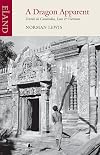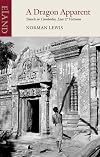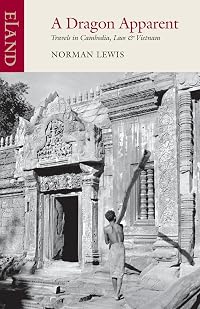
A Dragon Apparent: Travels in Cambodia, Laos, and Vietnam
by Norman Lewis
On This Page
Description
Said to have inspired Greene's The Quiet American, A Dragon Apparent chronicles the charm and grandeur of the ancient native civilizations that survived until the devastation of the Vietnam War.Tags
Recommendations





























Member Recommendations

Member Reviews
Published in 1951 this is the story of British novelist and travel writer Norman Lewis' journeys through Vietnam and French Indo-China made in 1950. Lewis realised that French colonial power was being challenged and was under no illusion that he was heading to a war zone and that there was no time to lose before travel became impossible. In the middle of January 1950 deciding to risk no further delays he caught an Air France plane from Paris to Saigon.
This is not a guide book; it is a narrative of Lewis' travels. It is also a socio-political account of the situation that he found in the countries that he visited. Travel writing of this kind treads a line between either giving too much information so that the reader becomes bogged down show more in facts or not enough information so that the reader cannot appreciate the situation that is being described. In my opinion Lewis gets the balance just right and he does this within his narrative so that the reader does not lose sight of the story, but can also appreciate, just what is going on, for example, the dangers, the cultural differences, the military situation, and the geography. In other words Lewis is a very good travel writer.
Starting off in Saigon and a relative newcomer to Asian culture Lewis expects to find difficulties. He says the difficulties and frustrations usually turn out to be worse than one has feared, especially a traveller like Lewis who wants to visit tribal areas which are increasingly becoming a battleground. Lewis was armed with letters of introduction and a journalist pass, but found himself reliant on individual French colonial administrators to find means of travel. At this time Saigon was suffering terrorist attacks and military convoys were the only means of travel into the interior. The administrators were a mottley crew, some were enthusiastic, but had little knowledge of the situation, others were more cautious, but Lewis paints a portrait of individuals who were doing their best to adapt to an ever changing situation and probably welcomed the distraction of someone like Lewis, who was quite happy to risk his life and was prepared to suffer periods of a military existence.
Lewis describes difficult journeys to the tribal area, he was lucky his convoys saw a minimum of military action. He got to stay in very remote villages where Europeans had hardly ever ventured. He describes the life and culture in these remote places never looking down on their ways of life, and having enough knowledge of their culture to explain why they act in the way that they do. Travelling in this fashion where transport is difficult always means that where you can go, who you can see and what you can do is never clear with the likelihood that you can become stranded in dangerous situations. This all makes for an exciting account.
He travels through Cochin-China into Cambodia getting to Pnom-Penh. When he gets out of the big towns and into the villages he is amazed by the way of life of many of the people he comes across;
Cambodia the descendents of the Khmers are without a care in the world and wear wonderfully well. There are times when one feels that perhaps it would be even better to be a little poorer, if at the same it could be a little freer.
He came across French administrators in various stages of 'going native.' becoming enchanted with the culture, inspite of the atrocities of war being carried out by both sides. When he gets to Laos with its unexplored valleys he finds a land full of enchantment on the edge of being destroyed. He manages to wangle a ride in an aeroplane to Vientiane where he makes contact with a repesentative of the insurgents: the Viet-Minh and crosses over the shifting lines of engagement to spend an exciting evening with one of their small military groups, who are carrying out a raid on a temporary French fort.
Lewis although describing the situations in which he finds himself never strays into talking up his own exploits. He is intent on describing what he sees, giving a balanced view but veers towards the indigenous people, especially where they are in opposition to the missionaries. He reports gleefully that the missionaries are spectacularly unsuccessful in making converts. Lewis provides a first hand account of an area of the world that is about to undergo considerable change. He writes about what he sees without having any noticeable agenda (apart from the missionaries). His book is a valuable document and for me an exciting read 5 stars. show less
This is not a guide book; it is a narrative of Lewis' travels. It is also a socio-political account of the situation that he found in the countries that he visited. Travel writing of this kind treads a line between either giving too much information so that the reader becomes bogged down show more in facts or not enough information so that the reader cannot appreciate the situation that is being described. In my opinion Lewis gets the balance just right and he does this within his narrative so that the reader does not lose sight of the story, but can also appreciate, just what is going on, for example, the dangers, the cultural differences, the military situation, and the geography. In other words Lewis is a very good travel writer.
Starting off in Saigon and a relative newcomer to Asian culture Lewis expects to find difficulties. He says the difficulties and frustrations usually turn out to be worse than one has feared, especially a traveller like Lewis who wants to visit tribal areas which are increasingly becoming a battleground. Lewis was armed with letters of introduction and a journalist pass, but found himself reliant on individual French colonial administrators to find means of travel. At this time Saigon was suffering terrorist attacks and military convoys were the only means of travel into the interior. The administrators were a mottley crew, some were enthusiastic, but had little knowledge of the situation, others were more cautious, but Lewis paints a portrait of individuals who were doing their best to adapt to an ever changing situation and probably welcomed the distraction of someone like Lewis, who was quite happy to risk his life and was prepared to suffer periods of a military existence.
Lewis describes difficult journeys to the tribal area, he was lucky his convoys saw a minimum of military action. He got to stay in very remote villages where Europeans had hardly ever ventured. He describes the life and culture in these remote places never looking down on their ways of life, and having enough knowledge of their culture to explain why they act in the way that they do. Travelling in this fashion where transport is difficult always means that where you can go, who you can see and what you can do is never clear with the likelihood that you can become stranded in dangerous situations. This all makes for an exciting account.
He travels through Cochin-China into Cambodia getting to Pnom-Penh. When he gets out of the big towns and into the villages he is amazed by the way of life of many of the people he comes across;
Cambodia the descendents of the Khmers are without a care in the world and wear wonderfully well. There are times when one feels that perhaps it would be even better to be a little poorer, if at the same it could be a little freer.
He came across French administrators in various stages of 'going native.' becoming enchanted with the culture, inspite of the atrocities of war being carried out by both sides. When he gets to Laos with its unexplored valleys he finds a land full of enchantment on the edge of being destroyed. He manages to wangle a ride in an aeroplane to Vientiane where he makes contact with a repesentative of the insurgents: the Viet-Minh and crosses over the shifting lines of engagement to spend an exciting evening with one of their small military groups, who are carrying out a raid on a temporary French fort.
Lewis although describing the situations in which he finds himself never strays into talking up his own exploits. He is intent on describing what he sees, giving a balanced view but veers towards the indigenous people, especially where they are in opposition to the missionaries. He reports gleefully that the missionaries are spectacularly unsuccessful in making converts. Lewis provides a first hand account of an area of the world that is about to undergo considerable change. He writes about what he sees without having any noticeable agenda (apart from the missionaries). His book is a valuable document and for me an exciting read 5 stars. show less
Lewis writes well, but this is another travel book about things, not people. He parle French, so we get some insight into the various colonials he’s billeted with — and like colonials, they’re either outrageously entertaining (the administrator who wrecks his car in the jungle) or quite dull. But the language barrier means he can’t connect with the locals and resorts to filling space with boring descriptions of the art. The last chapter, about his trip to a Viet Minh hideout, is interesting enough, as are his accounts of the native people, the houseproud Moïs and the nomadic, highland-dwelling Meo.
At the beginning of A Dragon Apparent, Norman Lewis relates that he is advised to visit Indochina immediately if he has any wish to see the tribal people and their culture before they vanish forever. It was good advice. Lewis traveled there in early 1950, just as the fall of China to Mao's Communist forces was making an impact on the war between the French and the nationalists of Indochina, especially the Viet Minh, although Lewis also documents the role of the Issaraks in Cambodia (and even Laos) as well as the Cao Dai in Vietnam.
Most of Lewis' travels, however, focus on the minority tribes in Indochina. The greatest portion of the book is spent on the tribes of Mois (Dagar) in the Central Highlands of Vietnam. But there is also an show more intriguing chapter on the Meo (Hmong) of Laos. In both instances, these tribes of fiercely independent people were caught between the forces of dehumanizing colonialism, on one hand, and a Communist movement, on the other, that Lewis does not hesitate to compare to Nazi Germany. The Mois are sold into virtual slavery, to be worked to death on French plantations. And because they refuse to accede to the Communist ways that would trample their traditional way of life, the Viet Minh also mark them for extermination. The Meo, who may have been the most rugged of individualists in all of Indochina, meanwhile, come in for respect for their tenacity but criticism of their way of life in denuding the countryside of all vegetation in slash and burn agriculture.
Lewis is sympathetic, albeit somewhat paternalistic, in his attitude. It was 1950, after all. Nearly all the secondary characters Lewis interviews and describes are French officials or colonials. But the last chapter is devoted to Lewis' expedition into Viet Minh territory. His discussions with them clearly frighten him. They are described as putting into place a totalitarian system of life entirely too similar to Hitler's Strength through Joy program--these are Lewis' very words. But the book ends with Lewis recognizing that the end is in sight for France in Indochina. And this was four years before Dien Bien Phu and the final defeat of the French, forcing them out of the region once and for all.
This book is an historical document of a part of Southeast Asia about to be changed forever. Nevertheless, Lewis was also able to note the unique and, for him, terribly valuable ways of life about to disappear. His travels on roads into remote villages describe a landscape just barely in touch with the twentieth century. In particular, his description of the road convoy necessary to reach Vang Vieng from Vientiane tells of almost impassable valleys, washed out bridges, and narrow mountain roads that drop away into vast chasms. Anyone travelling there, today, of course, will find a much improved "highway," although it is still dangerous, filled with rock slides, rampaging rivers in rainy season, and sheer drops on switchback after switchback after switchback, snaking up and down the mountains.
Yet Lewis the travel writer was more akin to an explorer than what passes for travel writing these days. No GPS for him. No laptops reserving a cozy air conditioned room at the, now, tourist-laden venue of Vang Vieng. No help if shot by rebels, bandits, or colonial troops. No medical rescue for broken bones, malaria, or dysentery. Only in reading this book do you realize what changes have come over the region in the past almost seven decades. Where only the most fearless and adventurous would once have gone, there is now the millennial backpacker outfitted in all his technological splendor. It's a different world. show less
Most of Lewis' travels, however, focus on the minority tribes in Indochina. The greatest portion of the book is spent on the tribes of Mois (Dagar) in the Central Highlands of Vietnam. But there is also an show more intriguing chapter on the Meo (Hmong) of Laos. In both instances, these tribes of fiercely independent people were caught between the forces of dehumanizing colonialism, on one hand, and a Communist movement, on the other, that Lewis does not hesitate to compare to Nazi Germany. The Mois are sold into virtual slavery, to be worked to death on French plantations. And because they refuse to accede to the Communist ways that would trample their traditional way of life, the Viet Minh also mark them for extermination. The Meo, who may have been the most rugged of individualists in all of Indochina, meanwhile, come in for respect for their tenacity but criticism of their way of life in denuding the countryside of all vegetation in slash and burn agriculture.
Lewis is sympathetic, albeit somewhat paternalistic, in his attitude. It was 1950, after all. Nearly all the secondary characters Lewis interviews and describes are French officials or colonials. But the last chapter is devoted to Lewis' expedition into Viet Minh territory. His discussions with them clearly frighten him. They are described as putting into place a totalitarian system of life entirely too similar to Hitler's Strength through Joy program--these are Lewis' very words. But the book ends with Lewis recognizing that the end is in sight for France in Indochina. And this was four years before Dien Bien Phu and the final defeat of the French, forcing them out of the region once and for all.
This book is an historical document of a part of Southeast Asia about to be changed forever. Nevertheless, Lewis was also able to note the unique and, for him, terribly valuable ways of life about to disappear. His travels on roads into remote villages describe a landscape just barely in touch with the twentieth century. In particular, his description of the road convoy necessary to reach Vang Vieng from Vientiane tells of almost impassable valleys, washed out bridges, and narrow mountain roads that drop away into vast chasms. Anyone travelling there, today, of course, will find a much improved "highway," although it is still dangerous, filled with rock slides, rampaging rivers in rainy season, and sheer drops on switchback after switchback after switchback, snaking up and down the mountains.
Yet Lewis the travel writer was more akin to an explorer than what passes for travel writing these days. No GPS for him. No laptops reserving a cozy air conditioned room at the, now, tourist-laden venue of Vang Vieng. No help if shot by rebels, bandits, or colonial troops. No medical rescue for broken bones, malaria, or dysentery. Only in reading this book do you realize what changes have come over the region in the past almost seven decades. Where only the most fearless and adventurous would once have gone, there is now the millennial backpacker outfitted in all his technological splendor. It's a different world. show less
Having greatly enjoyed other books by Norman Lewis, this one took time to grow on me, only taking flight in the closing chapters - when his eye for detail and vivid description really came to the fore. This travelogue was originally published in 1951, reissued by Eland in 1982.
Lewis is apparently a celebrated travel writer who has written many books including novels. Set in the early 1950s before the Vietnam War, Lewis travels around Vietnam, Cambodia and Laos which are all still French colonies in 1950. He documents the lives of the persecuted Moi tribe scattered about Vietnam who have minimal household possessions but drums and jars for alcohol. The Moi men are conscripted to work for a pittance for rubber plantation owners where they are forced to work twelve hour days, seven days a week. The conscription of the Moi men leaves the tribal villages quiet and unproductive.
Although the book jarred at times because Lewis travelled around with French civil servants and stayed in their Résidences, he makes a show more compelling but subtle argument against the exploitation of the indigenous tribes such as the Moi, whose customs and way of life are being obliterated in the pursuit of profit. Lewis was also critical about the treatment of indigenous tribes in the Americas, which lead to the establishment of Survival International.
Really interesting book. not too dated. It is telling however that this is not a travel book written for twenty first century writers, there is very little commentary about the food! show less
Although the book jarred at times because Lewis travelled around with French civil servants and stayed in their Résidences, he makes a show more compelling but subtle argument against the exploitation of the indigenous tribes such as the Moi, whose customs and way of life are being obliterated in the pursuit of profit. Lewis was also critical about the treatment of indigenous tribes in the Americas, which lead to the establishment of Survival International.
Really interesting book. not too dated. It is telling however that this is not a travel book written for twenty first century writers, there is very little commentary about the food! show less
Norman Lewis traveled to French Indochina in 1950 as the war clouds were gathering in the region. He hoped to catch a glimpse of the people who lived in this remote and still unknown area, and record their way of life before war changed everything. These countries would very soon after and for the next four decades suffer terribly in a way nobody could have imagined. Lewis is one of the very few writers who saw these places in the twilight of the French regime, whose experience would provide a rare insight into the rich cultural diversity of Indochina, which the wars, genocide, and the communist governments that would come soon, would stifle or destroy altogether.
Saigon is his first stop, and he roams the streets forming his show more impressions. Like a typical Western tourist on his first trip to Asia, he is repelled and at the same time fascinated by the strange food, and had the rather naive notion that the national mania in Vietnam for gambling is explained by religion. He manages to arrange with local French officials trips inland to more dangerous territory, traveling on military convoys. He visits Cao-Daists who include Victor Hugo as one of their divinities, and continues to the high plateaus of Central Vietnam where he meets the Moïs, a tribal people of Malayo-Polynesian stock regarded in the early part of the century as "articulate animals rather than human beings" and whose numbers are rapidly dwindling. He is witness to their innumerable rituals, all of which require the participants to reach a drunken stupor in order to gain respectability. He learns about their conception of the universe and their motivation for everything, which was obedience to the spirits.
Lewis continues on and meets the M'nongs, the Rhadés, the Bahnars -- tribes which were vanishing, either because of Viet-Minh reprisals for supporting the French, or missionaries whose evangelizing work transformed their way of life in the most complete way. He crosses over to Cambodia and receives his introduction by way of Phnom Penh's leading opium den, and gets to meet the Prime Minister, as well as King Norodom both of whom lectured him about relations with the French and communist influence among the rebellious Issarak tribes. He heads to Siem Reap to the magnificent temples of Angkor, and then flies to Laos where he joins another convoy driving up from Vientiane to Luang Prabang, enjoying the fantastic, yet untouched landscape of Laos while at the same time, terrified of possible ambushes and road mines. He gets a chance to visit the Meos, a major tribe living in the mountains in the heart of Indochina, who cultivated poppy fields. On his return to Vietnam, he was able to arrange a visit to a Viet-Minh camp, and saw with his own eyes how a future victorious people's army was being shaped and moulded. show less
Saigon is his first stop, and he roams the streets forming his show more impressions. Like a typical Western tourist on his first trip to Asia, he is repelled and at the same time fascinated by the strange food, and had the rather naive notion that the national mania in Vietnam for gambling is explained by religion. He manages to arrange with local French officials trips inland to more dangerous territory, traveling on military convoys. He visits Cao-Daists who include Victor Hugo as one of their divinities, and continues to the high plateaus of Central Vietnam where he meets the Moïs, a tribal people of Malayo-Polynesian stock regarded in the early part of the century as "articulate animals rather than human beings" and whose numbers are rapidly dwindling. He is witness to their innumerable rituals, all of which require the participants to reach a drunken stupor in order to gain respectability. He learns about their conception of the universe and their motivation for everything, which was obedience to the spirits.
Lewis continues on and meets the M'nongs, the Rhadés, the Bahnars -- tribes which were vanishing, either because of Viet-Minh reprisals for supporting the French, or missionaries whose evangelizing work transformed their way of life in the most complete way. He crosses over to Cambodia and receives his introduction by way of Phnom Penh's leading opium den, and gets to meet the Prime Minister, as well as King Norodom both of whom lectured him about relations with the French and communist influence among the rebellious Issarak tribes. He heads to Siem Reap to the magnificent temples of Angkor, and then flies to Laos where he joins another convoy driving up from Vientiane to Luang Prabang, enjoying the fantastic, yet untouched landscape of Laos while at the same time, terrified of possible ambushes and road mines. He gets a chance to visit the Meos, a major tribe living in the mountains in the heart of Indochina, who cultivated poppy fields. On his return to Vietnam, he was able to arrange a visit to a Viet-Minh camp, and saw with his own eyes how a future victorious people's army was being shaped and moulded. show less
I try to visit Stanford's Travel bookshop when in London, and bought this on one of my visits. Why? Because I have visited South East Asia four times since retirement, and the region grows on me more, with every passing visit, and books like this give me an insight to all that i may have missed in earlier days
Members
- Recently Added By
Lists

Global Reads: Books Set in East Asia
139 works; 12 members
Author Information

41+ Works 2,987 Members
Work Relationships
Common Knowledge
- Original publication date
- 1951
- Important places
- Cambodia; Laos; Vietnam; French Indochina
Classifications
- Genres
- Travel, Nonfiction, General Nonfiction, Biography & Memoir
- DDC/MDS
- 915.9 — History & geography Geography & travel Geography of and travel in Asia Southeast Asia; Indochina; Mekong River
- LCC
- DS534 .L57 — History of Europe, Asia, Africa and Oceania Asia History of Asia Southeast Asia French Indochina
- BISAC
Statistics
- Members
- 242
- Popularity
- 134,671
- Reviews
- 9
- Rating
- (3.83)
- Languages
- English, French, Italian, Norwegian (Bokmål)
- Media
- Paper, Ebook
- ISBNs
- 5
- ASINs
- 9