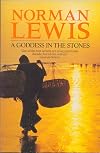
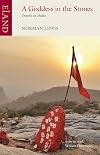
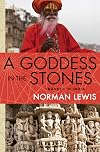
A Goddess in the Stones: Travels in India
by Norman Lewis
On This Page
Description
"An absorbing introduction" to the tribal peoples of India, their ancient traditions, and the remote regions that they inhabit (Kirkus Reviews). In the 1990s, the fifty-four million members of India's tribal colonies accounted for seven percent of the country's total population--yet very little about them was recorded. Norman Lewis depicts India's jungles as being endangered by "progress," and his sense of urgency in recording what he can about the country's distinct tribes results in a show more compelling and engaging narrative. From the poetic Muria people whose diet includes monkeys, red ants, and crocodiles, to the tranquil mountain tribes who may be related to the Australian Aborigines, to the naked Mundas people who may shoot, with bow and arrow, anyone who laughs in their direction, Lewis chronicles the unique characteristics of the many tribes that find their way of life increasingly threatened by the encroachment of modernity. show lessTags
Recommendations

















Member Recommendations

Member Reviews
When people visit India, a country with over 1 billion people, their senses are assaulted by the mass of humanity, smells, colours and sights in a country that is full of life. The religions and spiritually of the country adds to the cacophony of noise as they go about celebrating the living and the dead. People from the Adivasi tribes that made up seven percent of the population of India. These peoples and the places they lived were in constant danger of being swamped by the remainder of India. This is Lewis account of his visit in the 1990’s to find these people and record the things that made them different and distinct.
Lewis’ journey to see these tribes takes him away from the regular tourist haunts. Heading far from the beaten show more track to Orissa and Bihar in the north-western part of India, he reaches there at a time of heightened tensions and violence from a caste war. Seeking a local guide Lewis starts to venture into the jungles in search of the tribes that he wants to discover before the modern world subsumes them. He meets the Muria people who survive by eating crocodiles, monkey and insects, a tribe who marry their teenage boys off to older women. There are the Mundas who still hunt with bow and arrow, and who find laughter offensive and a tribe that may be related to Australian Aborigines and the Bonda who wear jewellery passed down from relatives and precious little else.
His evocative writing style brings alive the assault on the senses that India is, you feel that you are there standing amongst the grime and swirl of people. The writing is detailed without being cumbersome and his ability to draw out the stories from the people of the tribes that he meets lifts this book from good to great. This is the first Norman Lewis book that I have read and it will not be the last. show less
Lewis’ journey to see these tribes takes him away from the regular tourist haunts. Heading far from the beaten show more track to Orissa and Bihar in the north-western part of India, he reaches there at a time of heightened tensions and violence from a caste war. Seeking a local guide Lewis starts to venture into the jungles in search of the tribes that he wants to discover before the modern world subsumes them. He meets the Muria people who survive by eating crocodiles, monkey and insects, a tribe who marry their teenage boys off to older women. There are the Mundas who still hunt with bow and arrow, and who find laughter offensive and a tribe that may be related to Australian Aborigines and the Bonda who wear jewellery passed down from relatives and precious little else.
His evocative writing style brings alive the assault on the senses that India is, you feel that you are there standing amongst the grime and swirl of people. The writing is detailed without being cumbersome and his ability to draw out the stories from the people of the tribes that he meets lifts this book from good to great. This is the first Norman Lewis book that I have read and it will not be the last. show less
Another good travel book from Norman Lewis. Deals with the region south and east of Calcutta and largely with the tribal populations. Good insights....Finished 30.10.19.
Travel in the south of India, visiting remote areas and tribal peoples.
Viaggio nelle tradizioni millenarie dell'India, da una regione all'altra a contatto con gruppi etnici differenti, paesaggi e tradizioni diversi. L'autore è stato un profondo conoscitore del continente asiatico, del maghreb e dell'Amazzonia. I resoconti e le descrizioni sono puntuali e obiettivi, esenti da sentimentalismi e retoriche. Lewis rivela una sensibilità non comune nella lettura delle diversità culturali, verso cui espresse sempre altissimo rispetto.
Per gli appassionati e gli amici dell'India è un libro da leggere assolutamente.
Per gli appassionati e gli amici dell'India è un libro da leggere assolutamente.
Aug 29, 2013Italian
H2.1.7
Feb 11, 2022Catalan
Ratings
Members
- Recently Added By
Published Reviews
Returning to India with a certain wariness (his first visit, in 1950, left him with highly unpleasant memories), Lewis drifts through parts of the violence-torn country that few tourists ever see--from shabby Bihar in northwestern India, where recent caste wars have dominated the news, through poverty-ridden Calcutta, to the mountains of Orissa, home of the largest tribal population in the show more world. Led by a young, romantic Brahmin guide, Lewis infiltrates mountain communities whose ancestry may be traceable to the Aborigines of Australia or to prehistoric Asia. show less
added by John_Vaughan
Lists

Best Travel Writing - Non-Fiction
110 works; 6 members

Non-Fiction Worth Reading
1,016 works; 262 members
Author Information

41+ Works 2,987 Members
Awards and Honors
Awards
Series
Belongs to Publisher Series
Grote ABC (793)
Work Relationships
Common Knowledge
- Canonical title
- A Goddess in the Stones: Travels in India
- Original title
- A Goddess in the Stones: Travels in India
- Important places
- India
Classifications
Statistics
- Members
- 180
- Popularity
- 182,310
- Reviews
- 6
- Rating
- (3.53)
- Languages
- 5 — Dutch, English, Italian, Norwegian (Bokmål), Spanish
- Media
- Paper, Ebook
- ISBNs
- 13
- ASINs
- 3