On This Page
Description
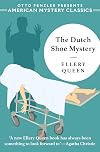
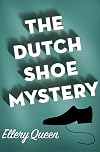
Queen visits an operating theater to witness a surgery, but finds a murder instead The son of a police detective, Ellery Queen grew up in a bloody atmosphere. Since he started lending his deductive powers to the New York City homicide squad, he has seen more than his fair share of mangled corpses. Though he is accustomed to gore, the thought of seeing a living person sliced open makes him ill. So when a doctor invites him to sit in on an operation, Queen braces his stomach. As it happens, show more his stomach is spared, but his brain must go to work. The patient is Abigail Doorn, a millionairess in a diabetic coma. To prepare her for surgery, the hospital staff has stabilized her blood sugar level and wheeled her to the operating theaterbut just before the first incision, the doctors realize she is dead, strangled while lying unconscious on her gurney. Queen came to the hospital to watch surgeons work, but now it's his time to operate. show lessTags
Recommendations













Member Reviews
Ellery Queen is a complicated name. It's the pseudonym used by cousins Frederic Dannay and Manfred Lee for more than 30 mystery novels and several collections of short stories; it's also the name of the amateur detective who stars in most of those books. Dannay and Lee also farmed the name out to other authors, and there are another 30-ish novels published under the name Ellery Queen, though none of the non-Dannay & Lee Queen novels involve the character Ellery Queen. And there are also eleven "Ellery Queen Jr." novels for kids, not written by Dannay & Lee, in which the central character is either Ellery's nephew, Gulliver, or his houseboy, Djuna.
As if that's not enough, Dannay and Lee also wrote four novels in the 1930s under the name show more "Barnaby Ross;" that pseudonym was revived by a different author for a series of historical romances in the 1960s, and the 1930s Barnaby Ross novels are today usually published as by Ellery Queen.
There was a time when Ellery Queen was among the best known fictional detectives, but aside from the namesake Ellery Queen's Mystery Magazine (founded in 1941), he's largely faded from the current culture. He was once a B-movie staple, but the last Ellery Queen movie is more than 80 years old, and the most recent TV series ran for a single season in 1975-76.
The book at hand is the third of Dannay and Lee's Queen novels, originally published in 1931. The central mystery is the death of Abigail Doorn, who is strangled in a hospital as she is about to be taken into the operating room. Abigail is a major donor to the hospital and to several of its doctors, some of whom might have reason to wish her dead.
Other suspects include her personal assistant/companion, whom she has clearly hated for years, but would not fire; her daughter and her attorney, who are engaged to be married; and her brother, who is deep in gambling debt.
One of the trademarks of the Queen novels is the "challenge to the reader;" Ellery the detective is not the narrator of the novels, but at the point where the solution is about to be revealed, there is a note "from Ellery Queen" informing the reader that all of the information necessary to solve the mystery has now been provided. "I've figured it out," is the gist of Ellery's challenge, "and you should be able to do the same."
As always with mysteries of this era, there are going to be a few character descriptions that make modern readers wince. Ellery and his father, an Inspector with the New York Police Department, live with Djuna, their "gypsy houseboy" whose age is never specified and almost seems to waver from teens to late 20s as required by the plot. Djuna is treated with respect and affection by the Queens, but words like "swarthy" pop up just often enough to be a little uncomfortable. Even worse is the treatment of Abigail's brother, Hendrik, who is quite obese, and is described as basically a grotesquely disgusting circus freak.
If you can get past those unfortunate historical artifacts, though, the mystery itself is an entertaining one. The prose is more formal in style and vocabulary than today's norm, but it's never stiff or difficult to read. Characters are sharply defined; clues are fairly planted; and the solution has the proper mix of feeling both surprising and inevitable. I enjoyed the book enough that I would gladly go back for more Ellery Queen. I gather that Ellery's personality changes significantly in various eras of the series, which lasted from 1929 until Lee's death in 1971, and it might be interesting to read a book from a different era. Perhaps I'll try one of the late 1930s novels, in which Ellery is working as a Hollywood screenwriter and hanging out with the stars. show less
As if that's not enough, Dannay and Lee also wrote four novels in the 1930s under the name show more "Barnaby Ross;" that pseudonym was revived by a different author for a series of historical romances in the 1960s, and the 1930s Barnaby Ross novels are today usually published as by Ellery Queen.
There was a time when Ellery Queen was among the best known fictional detectives, but aside from the namesake Ellery Queen's Mystery Magazine (founded in 1941), he's largely faded from the current culture. He was once a B-movie staple, but the last Ellery Queen movie is more than 80 years old, and the most recent TV series ran for a single season in 1975-76.
The book at hand is the third of Dannay and Lee's Queen novels, originally published in 1931. The central mystery is the death of Abigail Doorn, who is strangled in a hospital as she is about to be taken into the operating room. Abigail is a major donor to the hospital and to several of its doctors, some of whom might have reason to wish her dead.
Other suspects include her personal assistant/companion, whom she has clearly hated for years, but would not fire; her daughter and her attorney, who are engaged to be married; and her brother, who is deep in gambling debt.
One of the trademarks of the Queen novels is the "challenge to the reader;" Ellery the detective is not the narrator of the novels, but at the point where the solution is about to be revealed, there is a note "from Ellery Queen" informing the reader that all of the information necessary to solve the mystery has now been provided. "I've figured it out," is the gist of Ellery's challenge, "and you should be able to do the same."
As always with mysteries of this era, there are going to be a few character descriptions that make modern readers wince. Ellery and his father, an Inspector with the New York Police Department, live with Djuna, their "gypsy houseboy" whose age is never specified and almost seems to waver from teens to late 20s as required by the plot. Djuna is treated with respect and affection by the Queens, but words like "swarthy" pop up just often enough to be a little uncomfortable. Even worse is the treatment of Abigail's brother, Hendrik, who is quite obese, and is described as basically a grotesquely disgusting circus freak.
If you can get past those unfortunate historical artifacts, though, the mystery itself is an entertaining one. The prose is more formal in style and vocabulary than today's norm, but it's never stiff or difficult to read. Characters are sharply defined; clues are fairly planted; and the solution has the proper mix of feeling both surprising and inevitable. I enjoyed the book enough that I would gladly go back for more Ellery Queen. I gather that Ellery's personality changes significantly in various eras of the series, which lasted from 1929 until Lee's death in 1971, and it might be interesting to read a book from a different era. Perhaps I'll try one of the late 1930s novels, in which Ellery is working as a Hollywood screenwriter and hanging out with the stars. show less
When reading books that were, at one time, influential or popular it is often difficult for someone now to get what appealed to people then. I have written elsewhere about my frustrations on reading Ellery Queen. Although I had similar issues reading Philo Vance as I did Ellery Queen the two are notably different in that S. S. Van Dine’s popularity dropped precipitously several decades after he was first published while Queen, on the other hand, not only continued to be popular but went on to be very influential within the world of mystery writing. In this series of reviews I am trying to understand what made these books so popular at the time they were published, why the trajectories of their popularity were so different and why the show more modern reader receives them so differently than did their initial audience.
Two authorial choices unite these series are the nature of the New Yorks in which they were set and the structures used by the authors allow the detective access to sites, evidence and witnesses and the reader access to the thoughts and actions of the detective.
First, the nature of their New Yorks:
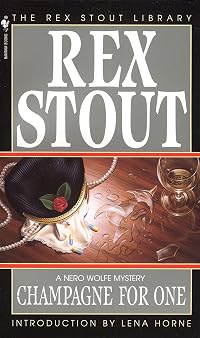
It is difficult to keep in mind while reading the early works of Queen and Vance that they were published within a few years of Hammett’s The Maltese Falcon and Stout’s Fer-de-Lance. The former was published in 1930 and the latter, the first Nero Wolfe novel, was published in 1934. Those two books seem to have been written in a different universe than either that of Philo Vance or these Ellery Queen novels.
One of the first things that strike one on reading either Vance or Queen is that they seem to be set in a world that is a strange amalgam of England and the United States. Both detectives work in New York City and both encounter the rather stereotypical individuals of New York -- the cops with the broad accents and apparently little education. Cab drivers and waiters have broad accents and cheerfully know their places. The rich, the upper classes, live with the same “different set” of rules as to members of the upper class in Ngaio Marsh’s. It is a New York without anything near the broad ethnic diversity one sees in Rex Stout and with a degree of deference from police officers towards “their betters" that no one shows in his books. Compare, if you will, Inspector Queen, with Inspector Cramer. Cramer doesn’t always get his man, true, but Cramer would not have put up with the affected manners and sense of privilege of either Vance or Queen.
Reviewers and analysts of murder/detective mysteries refer to a type of novel as a ‘cozy.’ Cozies seem to be set in an alternative universe where all the nice things about the past continue to exist without any of its more unpleasant elements. In some the detectives themselves are an element of that sanitized nostalgia. Ngaio Marsh’s Inspector Alleyn is the son and brother of members of the aristocracy. He is a card carrying gentleman who interviews the upstairs folks while one of his men (often Inspector Fox) interviews the maids, the butler and the rest of the downstairs staff. Not only do servants defer but often the greatest supporters of the class system are members of the “peasantry” whose adherence to an outdated caste system allows for others (their betters) to be protected against that system being breached while presenting themselves as enlightened and even egalitarian.
S. S. Van Dine and Ellery Queen can be argued to have been writing the American equivalent of the cozy, although in their cases this is masked by the fact that they set their murders in New York and present their detectives as world traveled and erudite. Make no mistake, though, these are cozies. In the world of Van Dine and Queen there is an attempt to transpose what the authors believe to be the English class system into the world of New York. The run-of-the-mill police officer in Queen treat Ellery with such a degree of respect that one imagines them tugging their forelocks when reporting to him. The idea that any of the monied and well-connected witnesses in the early Queen books would not have called their lawyers immediately upon being detained and questioned by a man whose only authority is a “pass” written out for him by his father is laughable. The idea that no one in the police force or at city hall would direct charges of nepotism and incompetence toward Inspector Queen is similarly ludicrous. However in these books the reader is assured that in a United States much changed over the last few decades, by immigration as well as the farm boys who returned from war duty overseas only to see their families wiped out by the crash of 1929.
The New York of these American urban cozies seems far more like the moderate sized towns than many readers lived or grew up in. There are important families and, without doubt, those important families can exert pressure on the police. But this pressure isn’t presented as a form of corruption rather as the natural consequence of people being important and monied. The daughter of a rich man may be a “drug fiend”* but it isn’t portrayed as a form of inappropriate wielding of power and influence for the police to treat her differently than they would the daughter of a working class man.
Second, the structural issues of both Van Dine and Queen:
The further frustrating thing about the Ellery Queen novels arose from their very structure. The original conceit is that they are written, years after the actual occurrences by a friend who had not witnessed the actual cases. The manuscripts are supposedly based on the notes that Ellery kept of the cases and from the clippings he and his father kept from contemporary coverage. It thus makes no sense for the writer to not “open up” the mind of Queen throughout the book. Why is the reader kept ignorant of Ellery’s deductions and even some of the information he has until the final unfolding of the criminal? The authors may have felt that if the reader was aware of everything Ellery thought and witnessed the reader would not be attempting to solve the problem themselves they would be witnessing Ellery solving it. The books themselves are set up with the premise that at a certain point the reader has all the information necessary to deduce who “did it” and they are invited to work it out for themselves before turning the page. From that point on the reader is supposed to have a front row seat as Ellery demonstrates his superior abilities to deduce.
This particular mystery demonstrates the problem with that format. The identity of the murderer and accomplice in the case of the first murder are actually quite obvious from the beginning if one ignores the author’s attempts to make Ellery’s questions and comments important and looks merely at the physical evidence. The authors make this difficult by having the behaviour of the police subsequent to the crime so unorganized and scattered that it is difficult to put together a coherent picture of the scene. In the case of the second murder the only person who could have committed it would have been immediately obvious if a major character had not changed the nature of the crime scene and if all the people who walked in and out of it had not been oblivious to the absence of key piece of furniture that they had either every reason to believe should be there and/or that they had actually seen themselves many times.
This structure/conceit will be dropped over time. The problem that the authors face, the difficulty of presented someone as having an outstanding deductive brain and giving that person reasonable access to the information, sites and people necessary to solve the crime remained. Reading these books underlines the brilliance of the formula that Rex Stout devised for his Nero Wolfe books where it is Archie Goodwin’s POV that is presented to the reader and where much of the setup of many books involves giving Wolfe and Goodwin a reason to have the type of access given so unquestioningly to Ellery Queen and Philo Vance.
If you want to amuse yourself imagine the field day any defense lawyer would have with evidence collected by and witnesses interviewed by someone who was not a sworn officer of the court and not a member of the police force. Of course these books were written long before the birth of the CSI franchise and it is likely that few readers would have heard of the concept of “chain of custody” but certainly any adequate lawyer would be able to call into question evidence and information gathered by the son of the man whose job would be in question if someone was not arrested with due speed.
S. S. Van Dine’s alternative to access through nepotism is scarcely more palatable since his detective gains access to persons and places because of a private relationship with the DA. One imagines that defense lawyers would enjoy the opportunities this irregular relationship would give them to undermine any evidence Vance might have had access to and any statements made to witnesses in response to Vance’s questions.
In summary, both the Philo Vance and Ellery Queen series provided for their readers the same type of reassuring universe that the English cozies did for theirs and neither solve the problem of how to entwine a private detective into the world of the police procedural. It will be interesting to see whether in future books the coziness continues and if the practical problems are handled more believably.
* Drug Fiend is the authors term not mine. The demonization of drug taking, including misleading descriptions of its symptoms has a long history in American crime fiction. show less
Two authorial choices unite these series are the nature of the New Yorks in which they were set and the structures used by the authors allow the detective access to sites, evidence and witnesses and the reader access to the thoughts and actions of the detective.
First, the nature of their New Yorks:
It is difficult to keep in mind while reading the early works of Queen and Vance that they were published within a few years of Hammett’s The Maltese Falcon and Stout’s Fer-de-Lance. The former was published in 1930 and the latter, the first Nero Wolfe novel, was published in 1934. Those two books seem to have been written in a different universe than either that of Philo Vance or these Ellery Queen novels.
One of the first things that strike one on reading either Vance or Queen is that they seem to be set in a world that is a strange amalgam of England and the United States. Both detectives work in New York City and both encounter the rather stereotypical individuals of New York -- the cops with the broad accents and apparently little education. Cab drivers and waiters have broad accents and cheerfully know their places. The rich, the upper classes, live with the same “different set” of rules as to members of the upper class in Ngaio Marsh’s. It is a New York without anything near the broad ethnic diversity one sees in Rex Stout and with a degree of deference from police officers towards “their betters" that no one shows in his books. Compare, if you will, Inspector Queen, with Inspector Cramer. Cramer doesn’t always get his man, true, but Cramer would not have put up with the affected manners and sense of privilege of either Vance or Queen.
Reviewers and analysts of murder/detective mysteries refer to a type of novel as a ‘cozy.’ Cozies seem to be set in an alternative universe where all the nice things about the past continue to exist without any of its more unpleasant elements. In some the detectives themselves are an element of that sanitized nostalgia. Ngaio Marsh’s Inspector Alleyn is the son and brother of members of the aristocracy. He is a card carrying gentleman who interviews the upstairs folks while one of his men (often Inspector Fox) interviews the maids, the butler and the rest of the downstairs staff. Not only do servants defer but often the greatest supporters of the class system are members of the “peasantry” whose adherence to an outdated caste system allows for others (their betters) to be protected against that system being breached while presenting themselves as enlightened and even egalitarian.
S. S. Van Dine and Ellery Queen can be argued to have been writing the American equivalent of the cozy, although in their cases this is masked by the fact that they set their murders in New York and present their detectives as world traveled and erudite. Make no mistake, though, these are cozies. In the world of Van Dine and Queen there is an attempt to transpose what the authors believe to be the English class system into the world of New York. The run-of-the-mill police officer in Queen treat Ellery with such a degree of respect that one imagines them tugging their forelocks when reporting to him. The idea that any of the monied and well-connected witnesses in the early Queen books would not have called their lawyers immediately upon being detained and questioned by a man whose only authority is a “pass” written out for him by his father is laughable. The idea that no one in the police force or at city hall would direct charges of nepotism and incompetence toward Inspector Queen is similarly ludicrous. However in these books the reader is assured that in a United States much changed over the last few decades, by immigration as well as the farm boys who returned from war duty overseas only to see their families wiped out by the crash of 1929.
The New York of these American urban cozies seems far more like the moderate sized towns than many readers lived or grew up in. There are important families and, without doubt, those important families can exert pressure on the police. But this pressure isn’t presented as a form of corruption rather as the natural consequence of people being important and monied. The daughter of a rich man may be a “drug fiend”* but it isn’t portrayed as a form of inappropriate wielding of power and influence for the police to treat her differently than they would the daughter of a working class man.
Second, the structural issues of both Van Dine and Queen:
The further frustrating thing about the Ellery Queen novels arose from their very structure. The original conceit is that they are written, years after the actual occurrences by a friend who had not witnessed the actual cases. The manuscripts are supposedly based on the notes that Ellery kept of the cases and from the clippings he and his father kept from contemporary coverage. It thus makes no sense for the writer to not “open up” the mind of Queen throughout the book. Why is the reader kept ignorant of Ellery’s deductions and even some of the information he has until the final unfolding of the criminal? The authors may have felt that if the reader was aware of everything Ellery thought and witnessed the reader would not be attempting to solve the problem themselves they would be witnessing Ellery solving it. The books themselves are set up with the premise that at a certain point the reader has all the information necessary to deduce who “did it” and they are invited to work it out for themselves before turning the page. From that point on the reader is supposed to have a front row seat as Ellery demonstrates his superior abilities to deduce.
This particular mystery demonstrates the problem with that format. The identity of the murderer and accomplice in the case of the first murder are actually quite obvious from the beginning if one ignores the author’s attempts to make Ellery’s questions and comments important and looks merely at the physical evidence. The authors make this difficult by having the behaviour of the police subsequent to the crime so unorganized and scattered that it is difficult to put together a coherent picture of the scene. In the case of the second murder the only person who could have committed it would have been immediately obvious if a major character had not changed the nature of the crime scene and if all the people who walked in and out of it had not been oblivious to the absence of key piece of furniture that they had either every reason to believe should be there and/or that they had actually seen themselves many times.
This structure/conceit will be dropped over time. The problem that the authors face, the difficulty of presented someone as having an outstanding deductive brain and giving that person reasonable access to the information, sites and people necessary to solve the crime remained. Reading these books underlines the brilliance of the formula that Rex Stout devised for his Nero Wolfe books where it is Archie Goodwin’s POV that is presented to the reader and where much of the setup of many books involves giving Wolfe and Goodwin a reason to have the type of access given so unquestioningly to Ellery Queen and Philo Vance.
If you want to amuse yourself imagine the field day any defense lawyer would have with evidence collected by and witnesses interviewed by someone who was not a sworn officer of the court and not a member of the police force. Of course these books were written long before the birth of the CSI franchise and it is likely that few readers would have heard of the concept of “chain of custody” but certainly any adequate lawyer would be able to call into question evidence and information gathered by the son of the man whose job would be in question if someone was not arrested with due speed.
S. S. Van Dine’s alternative to access through nepotism is scarcely more palatable since his detective gains access to persons and places because of a private relationship with the DA. One imagines that defense lawyers would enjoy the opportunities this irregular relationship would give them to undermine any evidence Vance might have had access to and any statements made to witnesses in response to Vance’s questions.
In summary, both the Philo Vance and Ellery Queen series provided for their readers the same type of reassuring universe that the English cozies did for theirs and neither solve the problem of how to entwine a private detective into the world of the police procedural. It will be interesting to see whether in future books the coziness continues and if the practical problems are handled more believably.
* Drug Fiend is the authors term not mine. The demonization of drug taking, including misleading descriptions of its symptoms has a long history in American crime fiction. show less
Penzler Press is releasing The Dutch Shoe Mystery as part of its series of Ellery Queen mysteries, arguably the American paragon of Golden Age Mystery writing. Written by two cousins in the mid/post- World War Era, these puzzlers were extremely popular with readers in their day, and the Ellery Queen Magazine based on them is still being published. Each of the stories follow the same formula: a crime occurs that is seemingly impossible to decipher; writer Ellery and his Police Inspector father collect clues and conduct interviews; there is a summary of the clues along with a challenge to the reader to solve the mystery; the story culminates with a satisfying revelation of the responsible party and a detailed explanation of how the crime show more was committed. In The Dutch Shoe Mystery, Ellery and Richard Queen are challenged by the murder of a wealthy matriarch just as she was being prepped for surgery at the hospital she financially supported. The family of the woman and other suspects are introduced and questioned about their connections and whereabouts. An abundance of contradictory clues and artifacts are discovered that seem to make the case impenetrable. During the investigation, one of the main suspects also ends up being killed, and the sleuths are confounded by hidden motives and misdirection. Due to the notoriety of the victims, Ellery and Richard are also under pressure from the mayor and DA to solve the case as quickly as possible. Despite some antiquated attitudes and questionable portrayals of women and minorities, the Ellery Queen mysteries are a quaint reminder of classic mystery storytelling. They are a flashback to a time when a good mystery was considered an opportunity for cerebral exercise rather than a chance to merely shock the reader. Fans of Christie, Doyle and other classics would enjoy The Dutch Shoe Mystery and the other Penzler reissues of these entertaining titles.
Thanks to Edelweiss and Penzler for an ARC of this book in exchange for an unbiased review. show less
Thanks to Edelweiss and Penzler for an ARC of this book in exchange for an unbiased review. show less
Here Richard Queen definitely takes on the role of a mere cipher to his son, Ellery, and something is lost in the process. The solution to the case is fairly obvious relatively early, perhaps obscured by the gender expectations of the time the book was published. As always, the title itself forces the reader to stare at the key clue from its first appearance. If you've read enough mysteries, it's hard not to solve the case quite a bit sooner than Ellery does. Motive is far trickier, and rather ho-hum. But the cliches are cliches for a reason?
While more entertaining than "The Roman Hat Mystery" (the first EQ book, and one that I checked out from the Rexburg library and struggled to get through before returning it to said library in disgust), this fourth entry in the series is still heavy on exposition and light on action. The hospital setting, as well as the corpse discovered on the operating table, are intriguing, but there is so much interviewing and tiresome things (like thirty pages of anti-climactic end-story), that they kill any desire to find out who dunnit. Tiresome as well is the introduction by one "J.J. McC" (a feature/gimmick in the early books), where the individual attempts to drum up enthusiasm for the impending adventure, but which comes off more as a lame show more effort to make the Queen's out to be more than they really are. The inclusion of manservant Djuna is another wasted effort, the Queen's adoration of him coming off as condescending, maudlin, and a little weird (when you get right down to it). Thankfully, Djuna disappears, a few novels into the series. show less
This early Ellery Queen takes place in a New York City hospital. The pace is brisk and about the right length. All the reasoning is actually rather straightforward. I would rate it higher but for one logical failure: How did the nurse put the men's pants on over her skirt?
Ellery Queen is similar to the English detective. Horne Fisher, of Chesterton’s The Face in the Target. A similar intellectual yet languid young man, proud of his knowledge and ability to apply that knowledge to the current situation or crime; the difference instead of being attached to the British political scene, Ellery is attached to the New York police.
The murder takes place in a hospital, a benefactor of the hospital, Abigail Doorn, has fallen and requires surgery to repair the damage. She is a diabetic so must undergo treatment to bring her insulin in line prior to surgery, fortunately she is in a coma so doesn't require anesthetic. The family is in the waiting room so all those with financial motive for the murder are present. show more
After presenting all the facts of the case Ellery Queen offers the reader a chance to solve the crime for themselves before the denouncement. I have to admit I failed.
An enjoyable read, a little slow because the language is from the 1920’s, and I was reading a hard back library copy, so I would have to put it down to pick up my dictionary to check a word. show less
The murder takes place in a hospital, a benefactor of the hospital, Abigail Doorn, has fallen and requires surgery to repair the damage. She is a diabetic so must undergo treatment to bring her insulin in line prior to surgery, fortunately she is in a coma so doesn't require anesthetic. The family is in the waiting room so all those with financial motive for the murder are present. show more
After presenting all the facts of the case Ellery Queen offers the reader a chance to solve the crime for themselves before the denouncement. I have to admit I failed.
An enjoyable read, a little slow because the language is from the 1920’s, and I was reading a hard back library copy, so I would have to put it down to pick up my dictionary to check a word. show less
Members
- Recently Added By
Lists

Books mentioned in Julian Symons’ Bloody Murder
438 works; 6 members

Tozai Mystery Best 100 | The Top 100 Mystery Novels
111 works; 3 members
Author Information

284+ Works 14,480 Members
Some Editions
Series

Belongs to Publisher Series
Colecção Vampiro (14)
Crimen & Cia. (21)
Penguin Crime (1151)
I classici del giallo [Mondadori] (297, 1321)
DuMont's Kriminal-Bibliothek (1115)
Prisma detectives (436)
SaPo (171)
Work Relationships
Common Knowledge
- Canonical title
- The Dutch Shoe Mystery
- Original title
- The Dutch Shoe Mystery
- Alternate titles
- Reader: Can You Solve the Dutch Shoe Mystery?
- Original publication date
- 1931
- People/Characters
- Ellery Queen; Richard Queen (Inspector); Abigail Doorn; Hendrik Doorn; Sarah Fuller; Dr. Francis Janney (show all 36); Dr. Lucius Dunning; Edith Dunning; Dr. Florence Pennini; Dr. John Minchen; Dr. Arthur Leslie; Dr. Robert Gold; Dr. Edward Byers; Lucille Price; Grace Obermann; Moritz Kneisel; James Paradise; Isaac Cobb; Philip Morehouse; Michael Cudahy; Thomas Swanson; Pete Harper; Bristol; Timothy Cronin; Henry Sampson; Sergeant Velie; Ritter; Piggott; Dr. Prouty; Hesse; Flint; Johnson; Lieutenant Ritchie; Little Willie; Joe Gecko; Snapper
- Related movies
- Ellery Queen and the Murder Ring (1941 | IMDb)
- Dedication
- To
Dr S J Essenson
For his invaluable advice
on certain medical matters - First words
- Inspector Richard Queen's alter ego, which was in startling contrast with his ordinary spry and practical old manner, often prompted him to utter didactic remarks on the general subject of criminology.
- Last words
- (Click to show. Warning: May contain spoilers.)It was a photostatic copy of a marriage certificate.
- Original language*
- English
*Some information comes from Common Knowledge in other languages. Click "Edit" for more information.
Classifications
Statistics
- Members
- 423
- Popularity
- 73,144
- Reviews
- 11
- Rating
- (3.49)
- Languages
- 16 — Chinese, simplified, Danish, Dutch, English, Finnish, French, German, Italian, Japanese, Korean, Farsi/Persian, Portuguese (Brazil), Portuguese (Portugal), Slovak, Spanish, Swedish
- Media
- Paper, Audiobook, Ebook
- ISBNs
- 33
- ASINs
- 26